
.png?width=48&height=48&name=Group%201%20(3).png)























16 February, 2026

Pediatric Speech Therapy: More Than Just Teaching Words
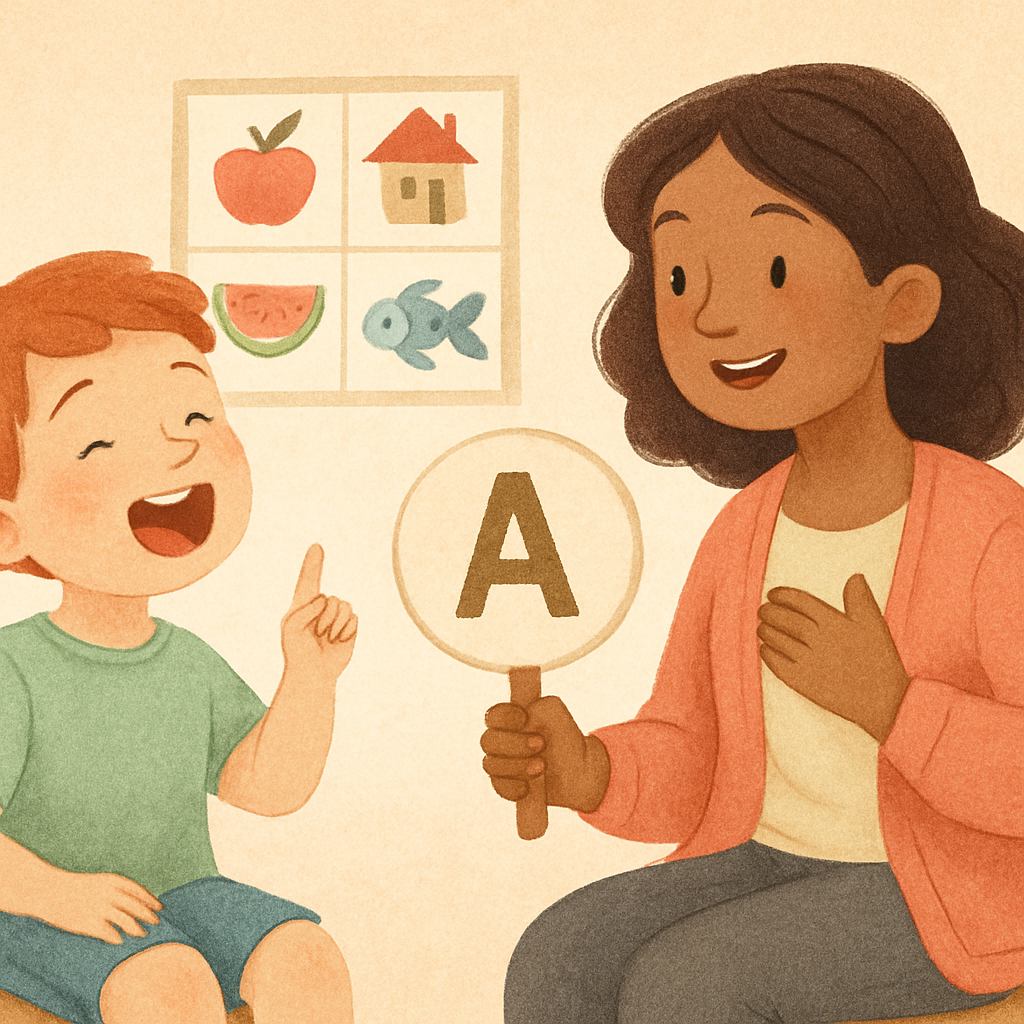
"Mama." "Dada." "Ball."
For most parents, these first words are eagerly anticipated milestones. They signal the beginning of a new chapter where we can finally understand what our little ones are thinking and feeling. But for some families, the waiting game lasts a little longer than expected. Or perhaps the words come, but they are hard to understand, or the child struggles to connect with others on the Playground.
If you are navigating these challenges, you are likely hearing a lot about pediatric speech therapy.
It is a common misconception that Speech Therapy is just about fixing a lisp or helping a late talker catch up. While that is part of it, the field of Speech Pathology is vast and transformative. It covers everything from the physical mechanics of Speech to the complex nuances of Social Communication.
In this guide, we will explore how pediatric speech therapy works, why it is about so much more than just talking, and how it can give your child the confidence to navigate the world.
Understanding the Scope of Speech Pathology
When you visit a pediatric Speech-Language Pathologist (SLP), you are seeing a specialist trained in the science of communication. Their work generally falls into three main buckets:
- Speech: This refers to the "how" of talking. It involves the coordination of the muscles in the mouth (tongue, lips, jaw) to produce sounds. Disorders here include articulation issues (saying "wabbit" for "rabbit"), phonological disorders (patterns of sound errors), and fluency disorders like stuttering.
- Language: This refers to the "what" of talking. It involves understanding words (receptive language) and putting them together to express thoughts (expressive language).
- Social Communication: This refers to the "why" and "where" of talking. It involves using language to interact with others appropriately.
Pediatric speech therapy looks at the whole child. An SLP doesn't just want your child to say words; they want your child to be able to use those words to build relationships and advocate for their needs.
Why "Speech" is Only Half the Story
One of the first things a therapist will explain is the difference between Speech and language. This distinction is crucial for understanding your child's diagnosis.
- Speech is the physical motor ability to produce sounds. A child with a speech delay might have a lot to say but physically struggles to make the sounds clear.
- Language is the cognitive ability to use symbols (words or signs) to convey meaning. A child with a language delay might be able to pronounce sounds perfectly but struggles to find the right word or put a sentence together.
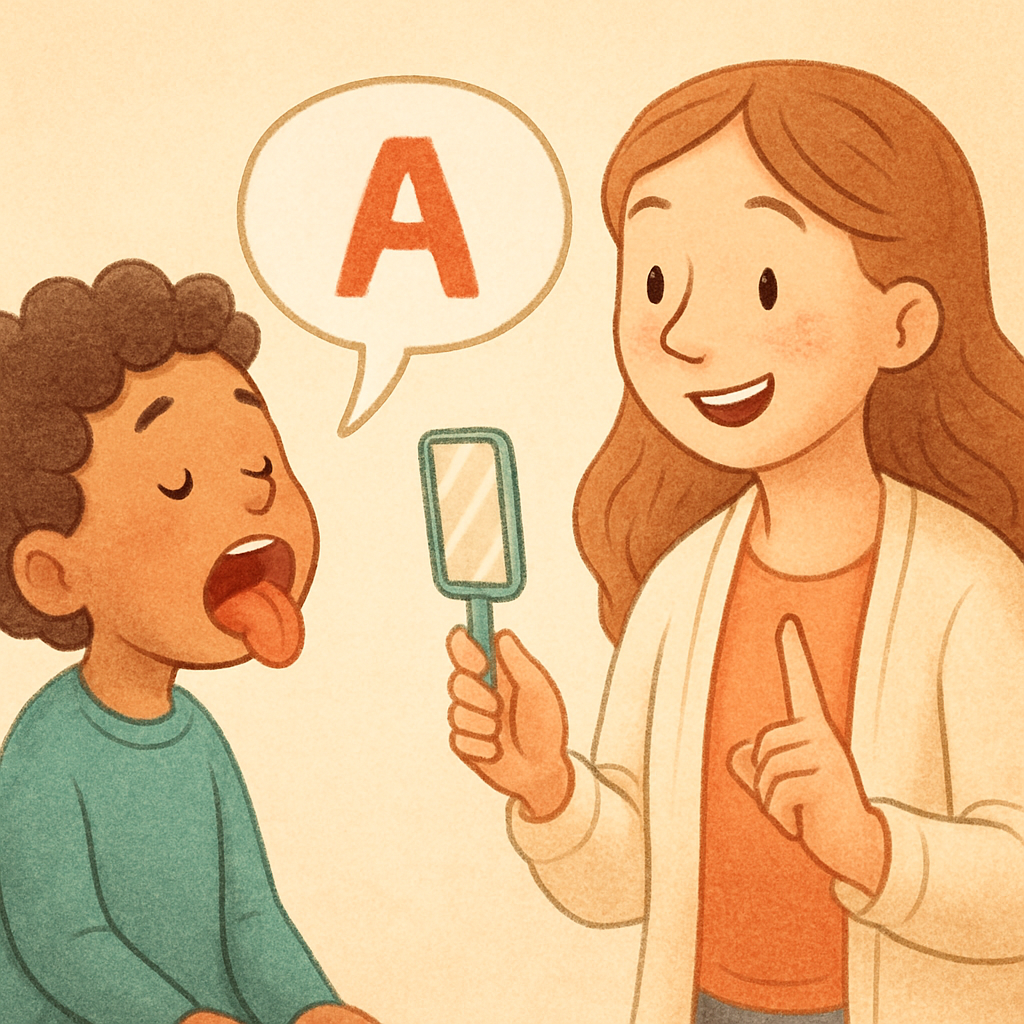
Speech Therapy targets both. For Speech, therapy might involve looking in a mirror and practicing tongue placement. For language, it might involve play-based scenarios where the child learns to label objects or follow directions like "put the bear in the box."
The Critical Role of Social Communication
Perhaps the most complex area of Speech Pathology is Social Communication (also known as pragmatics).
Imagine a child who has a huge vocabulary and perfect pronunciation but stands too close to people when talking, interrupts constantly, or doesn't understand when a peer is joking. This child has strong speech skills but struggles with Social Communication.
Social Communication is the invisible glue that holds conversations together. It includes:
- Non-verbal cues: Reading facial expressions and body language.
- Turn-taking: Knowing when to speak and when to listen.
- Topic maintenance: Staying on the same subject as the person you are talking to.
- Perspective-taking: Understanding that other people have different thoughts and feelings.
For children with Autism Spectrum Disorder (ASD) or ADHD, these skills often need to be explicitly taught. Pediatric speech therapy provides a safe, structured environment to learn these "rules of the road" before testing them out on the Playground.
Signs Your Child Might Benefit from Therapy
"Wait and see" is a common approach, but research consistently shows that early intervention leads to the best outcomes. You know your child best. If your gut tells you something is amiss, it is worth seeking an evaluation.
Consider pediatric speech therapy if your child:
- By 18 Months: Isn't using gestures like pointing or waving.
- By 2 Years: Has fewer than 50 words and isn't putting two words together.
- By 3 Years: Is difficult for strangers to understand (parents often understand their own children better than others do).
- Any Age: Gets frustrated when trying to communicate, leading to tantrums.
- Any Age: Struggles to make friends or seems "in their own world" in social settings.
The Parent's Role in Therapy
The most effective Speech Therapy doesn't happen in the clinic; it happens at home.
An SLP might only see your child for 45 minutes a week. You see them for the other 10,000 minutes. A huge part of pediatric speech therapy is parent coaching. Your therapist will give you strategies to turn everyday moments—bath time, meal prep, car rides—into language-rich learning opportunities.
You aren't just the parent; you are the most important member of the therapy team.
Conclusion
Communication is the key to connection. It is how we share our love, our fears, our needs, and our dreams.
When a child struggles with Speech or Social Communication, it can feel like a door is closed. Pediatric speech therapy is the key that unlocks that door. Whether your child needs help articulating the "R" sound or learning how to make a friend, Speech Pathology offers the expertise and support to help them find their voice.
Don't wait for the "right time." The right time to support your child's voice is now.
If you have concerns about your child’s speech or social development, we are here to help. Our team of experienced, compassionate Speech-Language Pathologists specializes in pediatric speech therapy.
Contact us today to schedule a consultation or call daar at 02 9133 2500 for an evaluation and start your child’s journey toward confident communication.
FAQ: Common Questions for Parents
At what age should I start pediatric speech therapy?
There is no "too young." SLPs work with infants on feeding and pre-linguistic skills (like eye contact). If you suspect a delay, the earlier you start, the better. The brain is most "plastic" (able to learn and change) in the first three years of life.
What is the difference between a speech delay and a disorder?
A delay means the child is developing skills in the typical order but at a slower rate. A disorder means the development is atypical (e.g., making sound errors that are not usually seen in young children) or there is a physical/neurological barrier.
How does Speech Pathology help with social skills?
Therapists use "Social Stories," role-playing games, and video modeling to teach children how to read social cues. They break down complex interactions (like joining a game of tag) into small, manageable steps.
.svg)




.svg)