
.png?width=48&height=48&name=Group%201%20(3).png)
























29 June, 2026

From Screen Time to Scream Time: Why Kids Get Angry When Gadgets Are Taken Away (And How to Fix It)
Introduction
The timer beeps. You walk into the living room and gently say, "Okay, time to turn off the iPad."
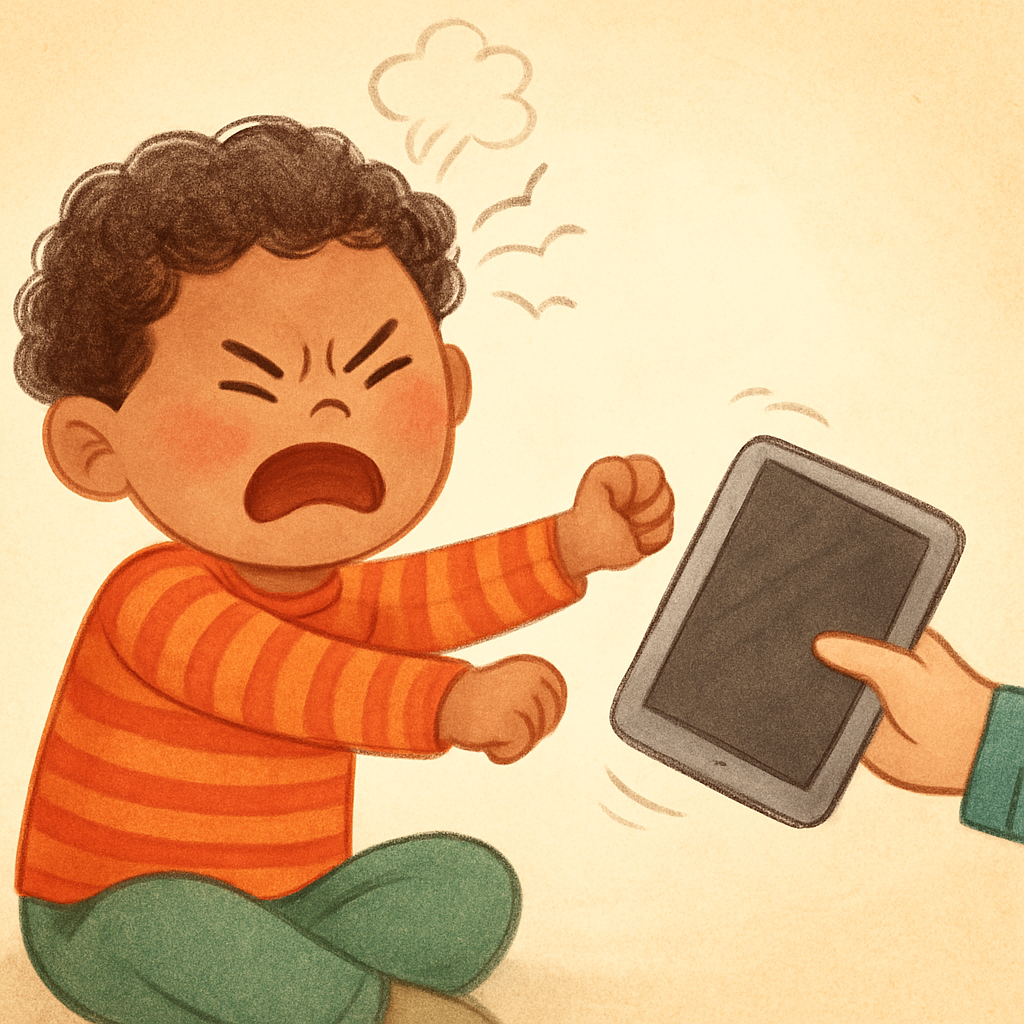
In an instant, the atmosphere changes. Your calm, engaged child transforms. There is screaming, crying, foot-stomping, or perhaps even throwing the controller across the room. This explosive reaction is one of the most stressful challenges modern parents face.
If you are dealing with kids angry when gadgets are taken away, you might feel like you are walking on eggshells. You might worry that your child is "addicted" or that you have lost control of your household.
The good news is that this behavior has a name: device withdrawal tantrums. It is not necessarily a sign of a "bad" kid; it is a physiological response to a high-stimulation environment. This guide will explore the root causes of this anger and introduce professional approaches—including behaviour therapy and screen use behavior modification—to help you manage the meltdowns and build a healthier relationship with technology.
The Science of the Scream: Understanding Device Withdrawal Tantrums
To solve the problem, we must first understand the biology behind it. Why does a simple request to turn off a game trigger such a massive emotional event?
The Dopamine Crash
Video games and social media apps are engineered to trigger the release of dopamine—the "feel-good" neurotransmitter. When a child is playing, their brain is flooded with reward chemicals.
When you take the device away, you are abruptly cutting off that supply. The brain experiences a sudden drop in dopamine, which feels physically uncomfortable and emotionally distressing. This is the core of device withdrawal tantrums. The child isn't just being difficult; their brain is in a state of chemical panic.
The "Flow" Interruption
Children often enter a state of hyper-focus (or "flow") when using screens. Being pulled out of this state abruptly is disorienting. It is similar to being woken up from a deep sleep by a loud noise. The immediate reaction is irritability and confusion, which quickly escalates into anger.
When to Seek Help: Signs of Excessive Gadget Use
Every child gets upset occasionally, but when does it become a problem requiring excessive gadget use therapy? Look for these red flags:
- Intensity: The anger involves physical aggression, destruction of property, or self-harm.
- Duration: The child cannot calm down for 30 minutes or more after the device is removed.
- Preoccupation: The child talks about the device constantly when not using it and seems unable to enjoy offline activities.
- Deception: Lying about screen time or sneaking devices at night.
Core Therapeutic Approaches
If the daily battles are becoming unmanageable, professional therapeutic strategies can provide a roadmap to peace.
1. Behaviour Therapy
Behaviour therapy is highly effective for managing screen-related anger. It focuses on the connection between thoughts, feelings, and actions.
In the context of kids being angry when gadgets are taken away, a therapist helps the child:
- Identify Triggers: Understanding why they feel the need to play (boredom, anxiety, social pressure).
- Recognize Physical Cues: Teaching the child to notice when their body is getting tense or angry before they explode.
- Develop Coping Skills: Learning deep breathing or visualization techniques to self-soothe when the screen turns off.
2. Screen Use Behavior Modification
Screen use behavior modification is about changing the environment and the habits surrounding the device. It shifts the focus from "punishing the bad behavior" to "structuring the environment for success."
- The Premack Principle: Also known as "Grandma’s Rule." High-probability behaviors (screen time) must be contingent on low-probability behaviors (homework/chores).
- Stimulus Control: Removing the cues that trigger the craving. For example, keeping chargers in a locked drawer or having "device-free zones" like the dining table and bedroom.
- Graduated Exposure: Slowly reducing screen time to lower the brain's tolerance threshold, rather than going "cold turkey" which can spike anxiety.
3. Screen Time Control Therapy
Screen time control therapy often involves the whole family. It acknowledges that a child’s screen habits do not exist in a vacuum.
- Family Media Agreements: Creating a written contract that outlines clear rules and consequences.
- Parental Modeling: If parents are glued to their phones, children will mimic that behavior. This therapy coaches parents on how to model healthy disconnection.
- Routine Building: Establishing a predictable schedule so the child knows exactly when screen time begins and ends, removing the anxiety of the unknown.
Practical Strategies to Stop the Anger
While waiting for or working with a professional, you can implement these strategies at home to reduce device withdrawal tantrums.
The "Bridge" Activity
Going from high-stimulation (Fortnite) to low-stimulation (dinner) is too big a jump. You need a "bridge."
- Strategy: Transition the child from the screen to a fun, hands-on activity before moving to a boring task.
- Example: "Put the iPad down and come help me mix the cookie dough." The sensory input of mixing helps regulate the nervous system.
The Warning System (Visual vs. Verbal)
Verbal warnings ("5 more minutes") often go unheard when a child is in the zone.
- Strategy: Use a visual timer (like a sand timer or a red-dial clock).
- Why it works: The child can see time running out. It makes the device turning off feel like an objective reality, not a punishment inflicted by the parent.
Collaborative Endings
Give the child a sense of control.
- Strategy: Ask, "Do you want to turn it off now, or in two minutes?"
- Result: When they choose "two minutes," they have agreed. When the time is up, you are simply holding them to their word.
Handling the Meltdown: What to Do In the Moment
Despite your best efforts, the explosion might still happen. Here is how to handle kids angry when gadgets are taken away:
- Stay Calm (Co-Regulation): If you yell, they will yell louder. Keep your voice low and boring. You are the anchor in their emotional storm.
- Validate the Feeling: "I know you are mad. You were having fun and it sucks to stop."
- Hold the Boundary: Do not give the device back to stop the crying. If you do, you have just taught them that "screaming = more screen time."
- Physical Reset: Offer a glass of cold water or suggest a physical activity (jumping jacks) to burn off the adrenaline.
Conclusion
Dealing with kids angry when gadgets are taken away is exhausting, but it is also an opportunity. It is a chance to teach your child emotional regulation and healthy boundaries—skills that will serve them for the rest of their lives.
By understanding the physiology of device withdrawal tantrums and implementing screen use behavior modification, you can move your home from a battleground to a place of balance. Remember, you are not the enemy; you are the coach helping them navigate a complex digital world.
Contact us today to schedule a consultation or call daar at 02 9133 2500 with our child behavior specialists.
Frequently Asked Questions
Should I just ban screens entirely?
A temporary "digital detox" (3-7 days) can be excellent for resetting the brain's dopamine baseline. However, in the long run, screen time control therapy aims to teach regulation, not just avoidance.
Why is it worse with video games than TV?
Video games are interactive and achievement-based. Stopping a game often means losing progress or abandoning a team, which adds frustration and social anxiety to the dopamine withdrawal.
How long does it take to fix this behavior?
With consistent behaviour therapy and home structure, you can often see improvements in 2-4 weeks. However, deep-seated habits may take months to fully reshape.
NDIS Registered Provider
Ready to Get Started with NDIS Behaviour Therapy?
Our registered behaviour therapists support children and adults with autism, ADHD, and intellectual disability across Australia. NDIS-funded — in-home and telehealth available.
NDIS Registered Provider
Ready to Get Started with NDIS Behaviour Therapy?
Our registered behaviour therapists support children and adults with autism, ADHD, and intellectual disability across Australia. NDIS-funded — in-home and telehealth available.
.svg)




.svg)