
.png?width=48&height=48&name=Group%201%20(3).png)























5 February, 2026

Taming the Tech Tantrum: A Guide to Managing Device Limit-Setting Tantrums
Introduction
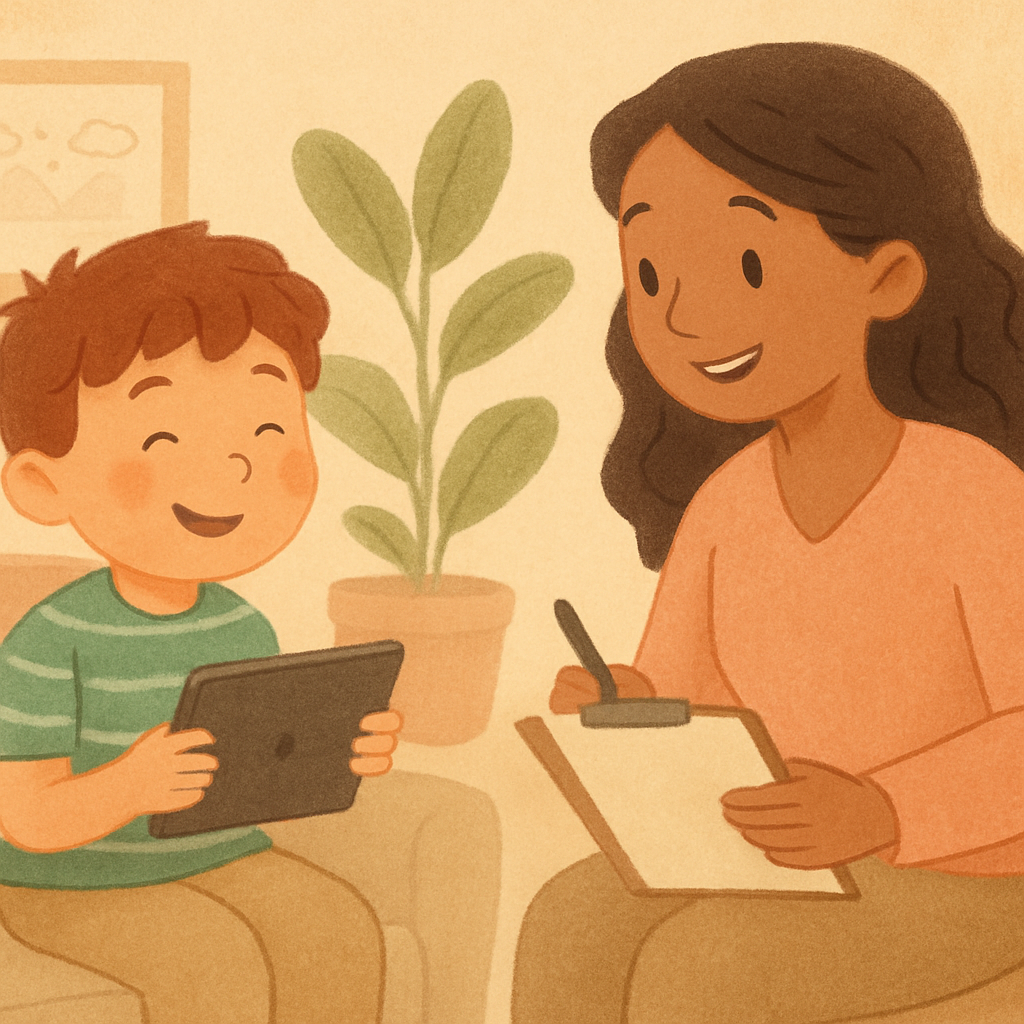
The timer beeps. You take a deep breath, walk into the living room, and say the words every modern parent dreads: "Okay, time to turn it off."
What follows isn't a polite nod. It’s an explosion. Screaming, crying, bargaining, or even physical aggression. The peaceful child who was playing Minecraft moments ago has been replaced by a whirlwind of rage.
If this scene sounds familiar, you are dealing with device limit-setting tantrums. It is one of the most stressful challenges in modern parenting, leaving many caregivers feeling helpless, guilty, and exhausted. You might wonder if your child is addicted or if you have failed to instill discipline.
The truth is that this reaction is often a physiological response known as technology withdrawal behavior. The transition from the high-stimulation digital world to the slower-paced real world can be jarring for a developing brain. This guide will help you understand the root causes of gadget separation distress and provide you with practical, compassionate strategies to handle the anger when gadgets are taken away.
The Science of the Meltdown: Understanding Technology Withdrawal Behavior
To handle the behavior, we must first understand the biology behind it. Why does a simple request to turn off a TV or tablet trigger such a massive reaction?
The Dopamine Drop
Video games, social media, and fast-paced cartoons are designed to trigger the release of dopamine—the "feel-good" neurotransmitter in the brain. When a child is engaged with a screen, they are in a state of high arousal and reward.
When you take the device away, you are abruptly cutting off that dopamine supply. The child’s brain experiences a sudden chemical drop, which feels physically uncomfortable and emotionally distressing. This is the core of technology withdrawal behavior. The child isn't just "mad" that the fun is over; their brain is panicking because the reward loop has been broken.
The "Flow" State Interruption
Children often enter a state of hyper-focus or "flow" when gaming. Being pulled out of this state abruptly is disorienting. It’s similar to being woken up from a deep sleep by a bucket of cold water. The immediate reaction is confusion and irritability, which quickly escalates into device withdrawal tantrums.
Identifying Gadget Separation Distress
How do you distinguish between a child who is simply disappointed and a child experiencing genuine gadget separation distress? While no parent likes being told "no," distress signals are usually more intense and prolonged.
Look for these red flags:
- Anticipatory Anxiety: The child becomes agitated, rude, or anxious as the end of screen time approaches.
- Disproportionate Rage: The anger when gadgets are taken away involves screaming, throwing controllers, or aggression toward parents or siblings.
- Inability to Self-Soothe: The child cannot calm down for 30 to 60 minutes after the device is removed.
- Loss of Interest: Once the device is gone, the child refuses to engage in any other activity, claiming they are "bored" or that "life sucks."
Strategies to Prevent Device Limit-Setting Tantrums
The most effective way to handle a meltdown is to prevent it from starting. By changing how you end screen time, you can significantly reduce device limit-setting tantrums.
1. The "Save Game" Protocol
Nothing triggers a tantrum faster than losing progress. Instead of setting a time limit (e.g., "You have 30 minutes"), set a task limit (e.g., "You can play until you finish this level" or "You can watch two episodes").
- Why it works: It provides a natural sense of closure. The child feels a sense of completion rather than interruption.
2. Visual Countdowns
Young children have a poor concept of time. "Five minutes" is an abstract concept. Use a visual timer (like a sand timer or a red-dial clock) that the child can see.
- The Warning System: Give warnings at 10 minutes, 5 minutes, and 1 minute. This prepares the brain for the transition, reducing the shock of technology withdrawal behavior.
3. The "Bridge" Activity
Going from high-stimulation (Fortnite) to low-stimulation (homework or chores) is a recipe for disaster. You need a "bridge"—an activity that is fun but offline.
- Try this: "When the timer goes off, we are going to have a snack" or "After the iPad, come help me walk the dog."
- The Goal: Give the brain a new, positive target to focus on, rather than just the loss of the device.
4. Collaborative Boundaries
Involve your child in setting the limits before they turn the device on. Ask them, "How long do you think is a fair amount of time to play today?"
- When they agree to the limit beforehand, they have "buy-in." When the time is up, you aren't the bad guy enforcing a rule; you are just holding them to their own agreement.
Managing the Storm: Handling Anger When Gadgets Are Taken Away
Despite your best prevention efforts, device withdrawal tantrums will still happen. When the storm breaks, your reaction determines how long it lasts.
1. Stay Calm (Co-Regulation)
Your child is dysregulated. If you get angry, yell, or snatch the device aggressively, you are adding fuel to the fire. You must be the calm anchor. Keep your voice low, slow, and boring.
- Mantra: "I am in control. My child is having a hard time, not giving me a hard time."
2. Validate, Don't Negotiate
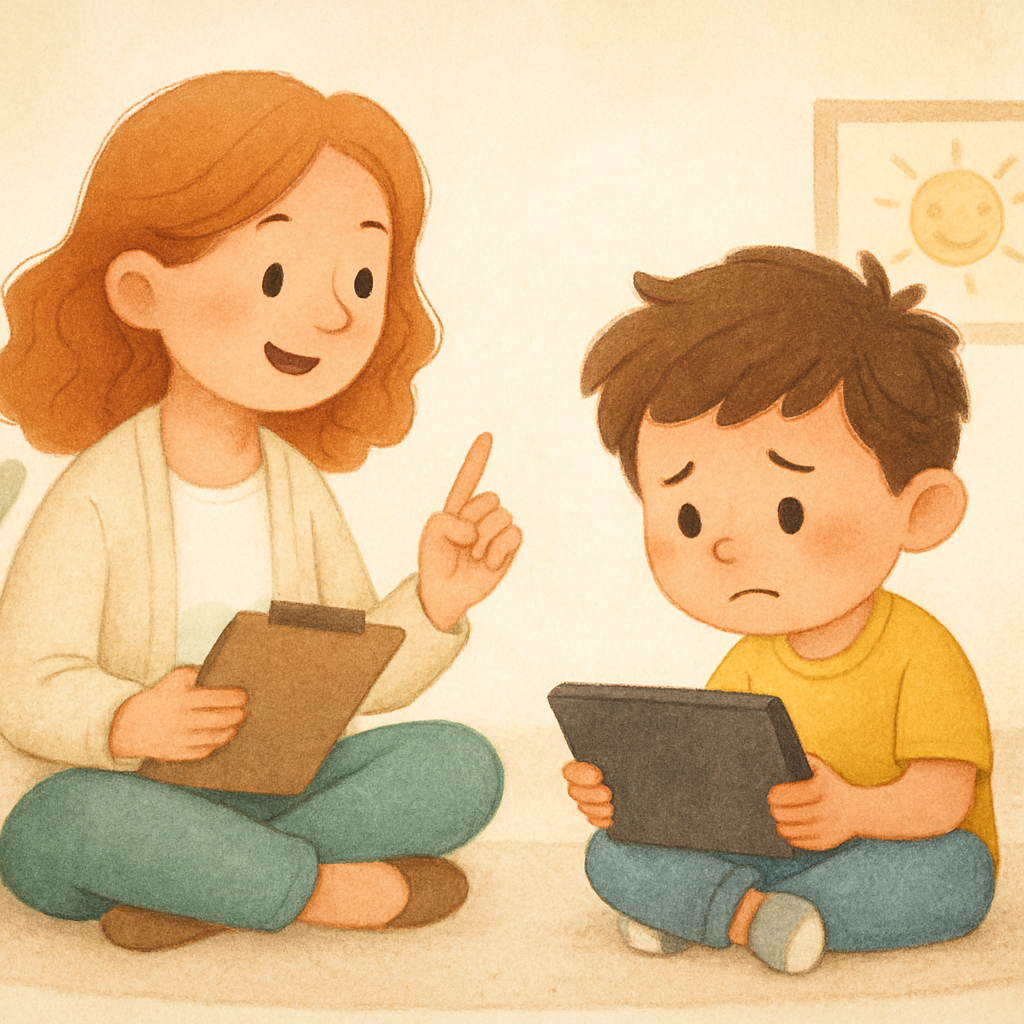
This is the golden rule of device limit-setting tantrums. You must validate their feelings while holding the boundary firm.
- Say: "I know you are furious. You were having so much fun, and it feels unfair to stop. It’s okay to be mad."
- Do: Gently but firmly remove the device. Do not give "five more minutes" to stop the screaming. If you do, you teach them that screaming is the currency used to buy more screen time.
3. The Physical Reset
Sometimes, the gadget separation distress is so high that words don't work. The child needs a physical reset to metabolize the stress hormones.
- Offer a glass of ice water (the cold shocks the system).
- Encourage "heavy work" like pushing against a wall, jumping jacks, or squeezing a stress ball.
- Change the environment: Step outside into the fresh air immediately.
Post-Tantrum Recovery: Reconnecting
Once the device withdrawal tantrum has subsided, avoid shaming the child. Do not say, "I can't believe you acted like a baby over the phone."
Instead, debrief calmly when everyone is relaxed.
- "I noticed it was really hard to turn off the game today. What do you think we can do tomorrow to make that transition easier?"
- This turns the conflict into a problem-solving opportunity, empowering the child to manage their own technology withdrawal behavior in the future.
Conclusion
Dealing with device limit-setting tantrums is exhausting, but it is also an opportunity. It is a chance to teach your child one of the most valuable skills of the 21st century: digital self-regulation.
By understanding the biology of technology withdrawal behavior and responding with empathy rather than anger, you can de-escalate the conflict. Remember, the anger when gadgets are taken away is not a sign of a bad child or a bad parent—it’s a sign of a brain learning to cope with high stimulation. With patience, consistency, and the right strategies, you can help your child navigate the digital world without losing their cool.
Need Help Managing the Meltdowns? Book a consultation or call daar at 02 9133 2500 to discuss your family's needs,
Frequently Asked Questions
My child hits me when I take the tablet. What should I do?
Safety is the priority. If physical aggression occurs, the screen privilege is lost for a longer period (e.g., 24 hours). You must firmly state, "I will not let you hit me. Screens are for people who can stay safe." If this behavior persists, consult a child psychologist.
Why is the anger worse with video games than TV?
Video games are interactive and offer variable rewards (loot boxes, leveling up), which spikes dopamine much higher than passive TV watching. The "crash" from gaming is steeper, leading to more intense anger when gadgets are taken away.
At what age does this get better?
As the prefrontal cortex develops (improving impulse control), tantrums usually decrease. However, without guidance, gadget separation distress can morph into sullen withdrawal or secrecy in teenagers. Consistency in early childhood is key.
.svg)




.svg)