
.png?width=48&height=48&name=Group%201%20(3).png)























5 February, 2026

The Meltdown Moment: Coping with Gadget Separation Distress
Introduction
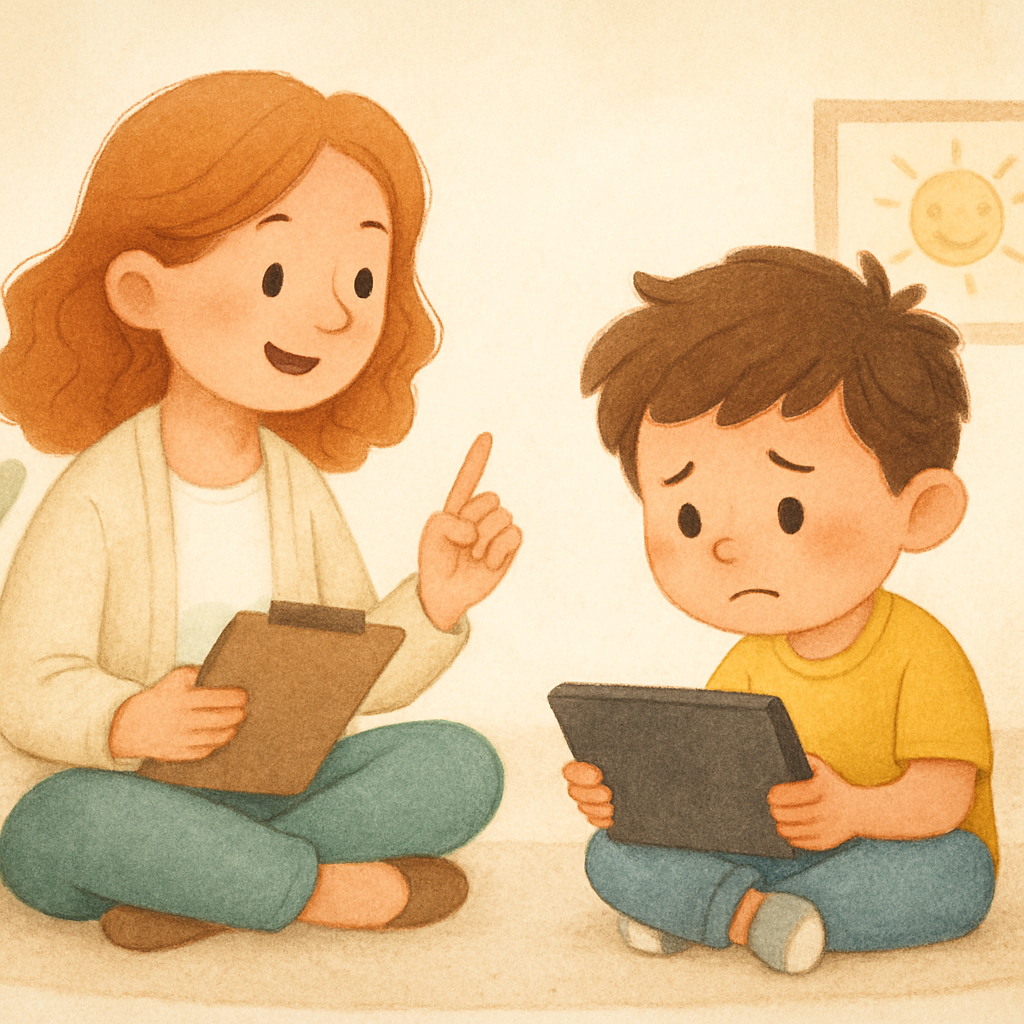
It is a scene familiar to millions of parents: The timer goes off. You gently say, "Okay, time's up, please hand over the tablet."
And then, chaos ensues.
Screaming, crying, throwing objects, or even physical aggression. The transformation from a quiet, engaged child to a whirlwind of rage can be terrifying and exhausting. This phenomenon is known as gadget separation distress, and it is one of the most challenging aspects of modern parenting.
It is easy to label this behaviour as simple "naughtiness" or a lack of discipline. However, the reaction is often rooted in genuine neurological and psychological withdrawal. The brain, suddenly deprived of its high-stimulation dopamine source, panics. This manifests as anger when gadgets are taken away—a defense mechanism to protect the source of pleasure.
If you are walking on eggshells every time you need to turn off the TV or take away the phone, this guide is for you. We will explore the root causes of device withdrawal tantrums and provide actionable, compassionate strategies to de-escalate the situation and build healthier transitions.
The Science of the Scream: Why Do They React Like That?
To handle the behaviour, we must understand the biology. When a child is playing a video game or watching fast-paced videos, their brain is flooded with dopamine. This is the neurotransmitter associated with reward, pleasure, and motivation.
When you take the device away, you are not just taking a toy; you are abruptly cutting off that dopamine supply. The child’s brain experiences a sudden drop in neurochemicals, which feels physically and emotionally painful.
- The "Zone" Drop: Children often enter a state of "flow" or hyper-focus when on screens. Being pulled out of this state abruptly can be jarring and disorienting, leading to immediate irritability.
- Emotional Regulation Gap: The prefrontal cortex—the part of the brain responsible for impulse control and emotional regulation—is still developing in children. They literally lack the biological hardware to say, "I am feeling frustrated, but I will calmly hand this over." Instead, the emotional center of the brain (the amygdala) takes over, resulting in a device withdrawal tantrum.
Identifying Gadget Separation Distress
How do you know if your child is experiencing genuine distress versus just being difficult? Look for these signs of gadget separation distress:
- Anticipatory Anxiety: The child becomes agitated or begs for "just one more minute" well before the time is actually up.
- Explosive Reaction: The level of anger is disproportionate to the situation. Screaming, hitting, or breaking things.
- Prolonged Recovery: It takes the child a long time (20-60 minutes) to calm down after the device is removed.
- Bargaining and Manipulation: Desperate attempts to negotiate, promising "good behaviour" tomorrow in exchange for more time now.
- Physical Symptoms: Shaking, clenched fists, or hyperventilating during the transition.
Strategies to Prevent the Explosion
The best way to handle anger when gadgets are taken away is to manage the transition before the device is actually removed.
1. The Warning System
Surprise is the enemy. Suddenly snatching a device is a guaranteed trigger for a meltdown. Use a countdown system.
- 10-Minute Warning: "You have 10 minutes left."
- 5-Minute Warning: "5 minutes. Start finishing your level."
- 1-Minute Warning: "1 minute. Time to save your game."
- Visual Timers: For younger children who don't understand time, use a visual timer (like a sand timer or a clock app) so they can see the time vanishing.
2. The "Bridge" Activity
Going from high-stimulation (screen) to low-stimulation (homework/dinner) is too big a jump. Create a "bridge" activity that is fun but offline.
- "When the timer goes off, we are going to have a snack."
- "After the iPad, it's time to help me mix the pancake batter."
This gives the brain a new, positive target to focus on, rather than just the loss of the device.
3. Collaborative Endings
Instead of you being the "bad guy" who ends the fun, make the device the authority. Set the sleep timer on the TV or use the "Screen Time" limits on the iPad so the device turns itself off.
- You can then empathize with the child: "Oh man, the iPad went to sleep. That’s annoying, isn't it? But we can play again tomorrow." This aligns you with the child, rather than against them.
De-escalating the Tantrum: What to Do in the Moment
Despite your best efforts, device withdrawal tantrums will still happen. Here is how to handle the storm when it breaks.
1. Stay Calm (The Hardest Part)
Your child is in a state of dysregulation. If you get angry, yell, or snatch the device aggressively, you are adding fuel to the fire. You must be the "external regulator." Keep your voice low, slow, and boring.
2. Validate the Feeling, Hold the Boundary
Acknowledge their pain without giving in.
- Say: "I know you are mad. You were having so much fun building that castle. It is really hard to stop."
- Do: Physically remove the device (gently) and put it out of sight. Do not negotiate. If you give them "5 more minutes" to stop the screaming, you have just taught them that screaming earns more screen time.
3. The Physical Reset
Sometimes, the brain needs a physical jolt to reset.
- Offer a glass of cold water.
- Encourage them to do jumping jacks or push against a wall (heavy work helps regulate the sensory system).
- Take them outside for fresh air immediately.
Long-Term Solutions for Reducing Distress
To permanently reduce gadget separation distress, you need to change the digital culture of your home.
- Scheduled Screen Time: If screen time is random, kids will fight for it constantly. If it is scheduled (e.g., "Screens are only from 4:00 PM to 5:00 PM"), the anxiety of "When will I get it?" disappears.
- Tech-Free Zones: Keep bedrooms and dining tables screen-free. This creates physical boundaries that the child learns to respect over time.
- Model the Behaviour: If you check your phone every 2 minutes and get irritable when interrupted, your child is mirroring you. Show them that you can put your phone away without getting angry.
Conclusion
Dealing with gadget separation distress is one of the most draining tasks for a parent. It tests your patience and your resolve. But remember, the anger when gadgets are taken away is not a sign that you are a bad parent, nor that your child is "broken." It is a biological reaction to a powerful stimulus.
By implementing clear boundaries, using warning systems, and remaining calm during device withdrawal tantrums, you can help your child build the emotional muscles they need to disconnect. It takes time, but eventually, the transition from the virtual world back to the real world will become a peaceful walk, rather than a battle.
Contact us today to schedule a consultation or call daar at 02 9133 2500 for our child behaviour specialists.
Frequently Asked Questions
My child hits me when I take the iPad. What should I do?
Safety is the priority. If physical aggression occurs, the screen privilege is lost for a longer period (e.g., 24 hours). You must firmly state, "I will not let you hit me. Screens are for people who can stay safe." If this behaviour persists, consult a child psychologist.
Why is my child only angry about video games, not TV?
Video games are interactive and often competitive. The immersion is deeper, and the dopamine spikes are higher than passive TV watching. Consequently, the "crash" (and the resulting anger when gadgets are taken away) is often more severe with gaming.
Is this a sign of addiction?
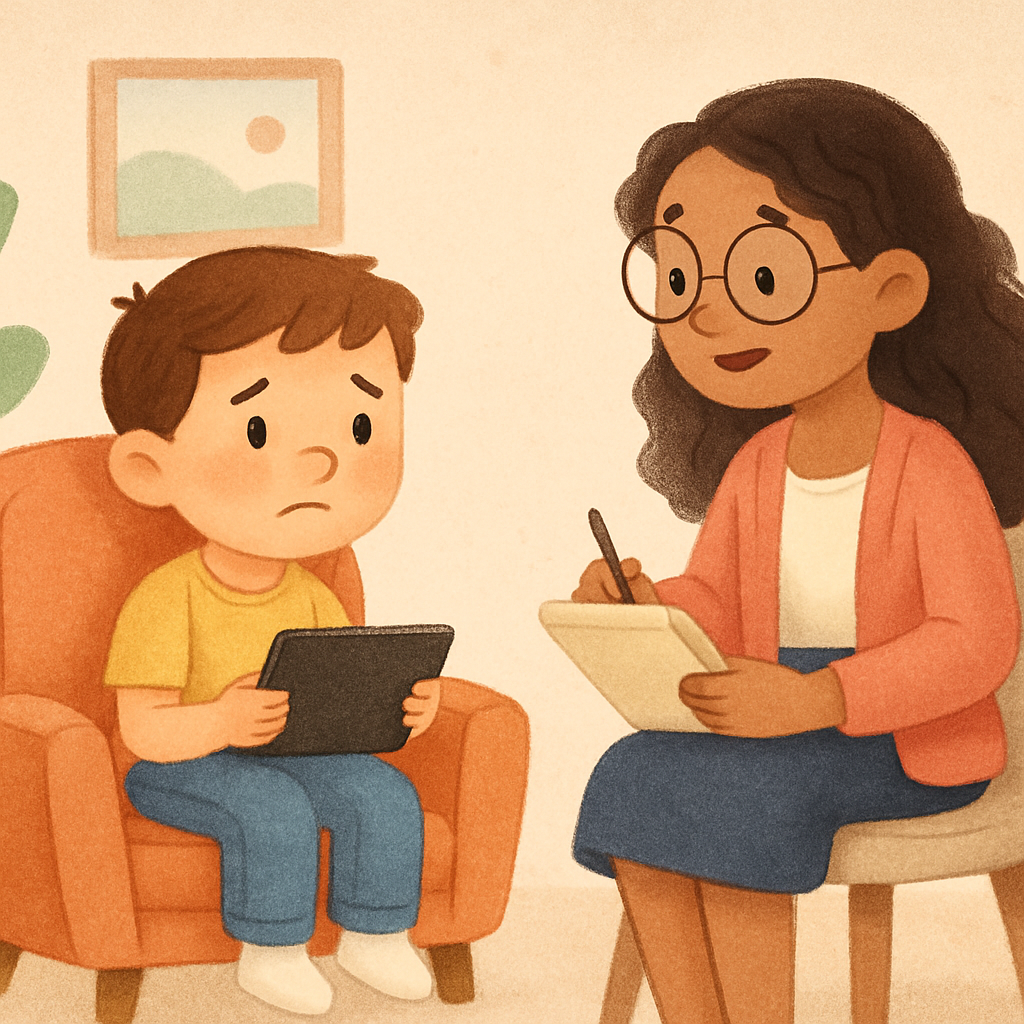
Frequent, severe device withdrawal tantrums can be a sign of problematic use or early dependency. It indicates the child has lost control over their ability to stop. While not every tantrum equals addiction, it is a red flag that requires intervention.
.svg)




.svg)