
.png?width=48&height=48&name=Group%201%20(3).png)























11 September, 2026

Exploring: Is Online Therapy Effective for Kids?
Key Highlights
- Parents frequently ask, is online therapy effective for kids? Research and clinical outcomes show that when tailored to the child, virtual care often surpasses traditional clinic results.
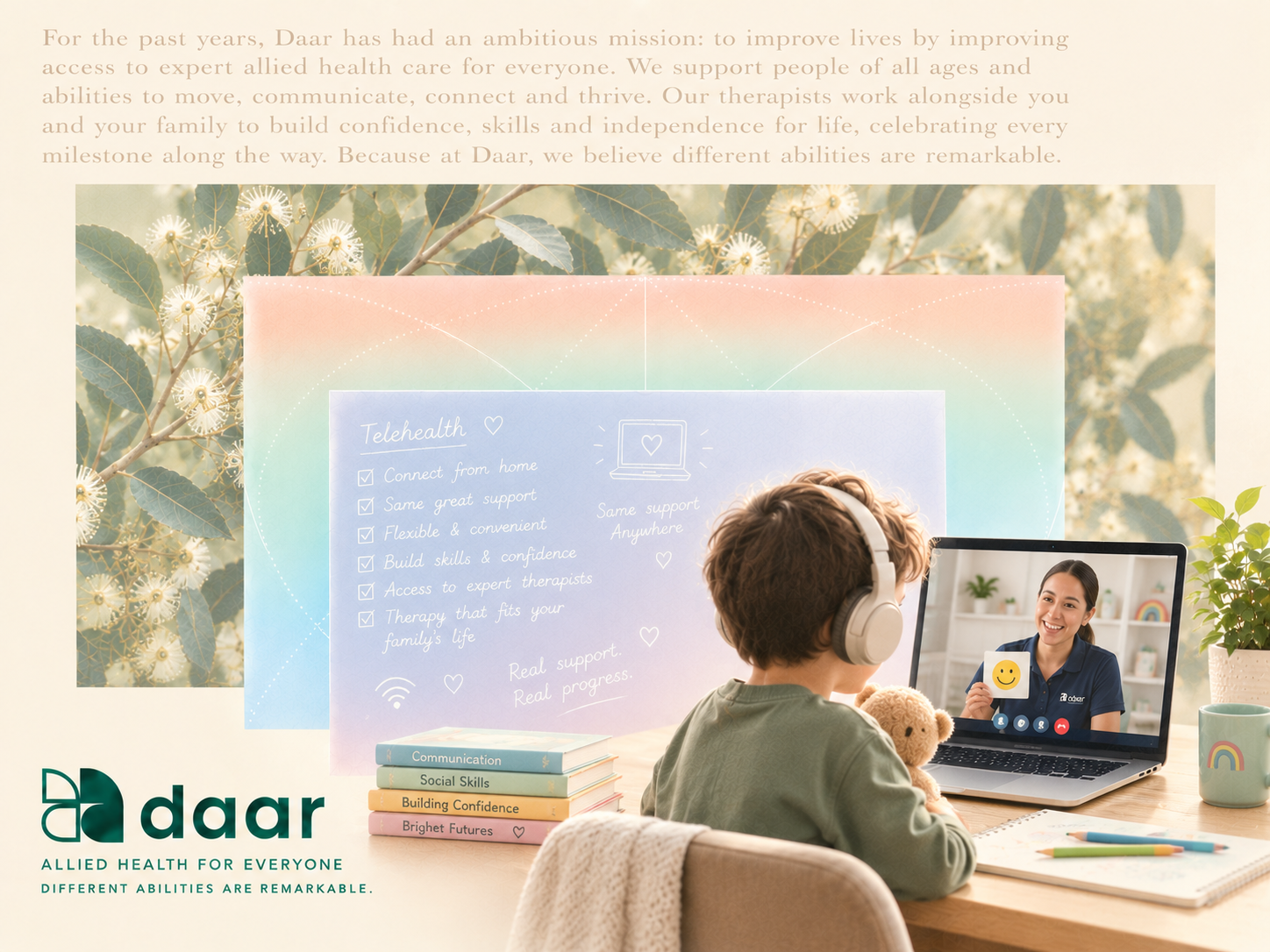
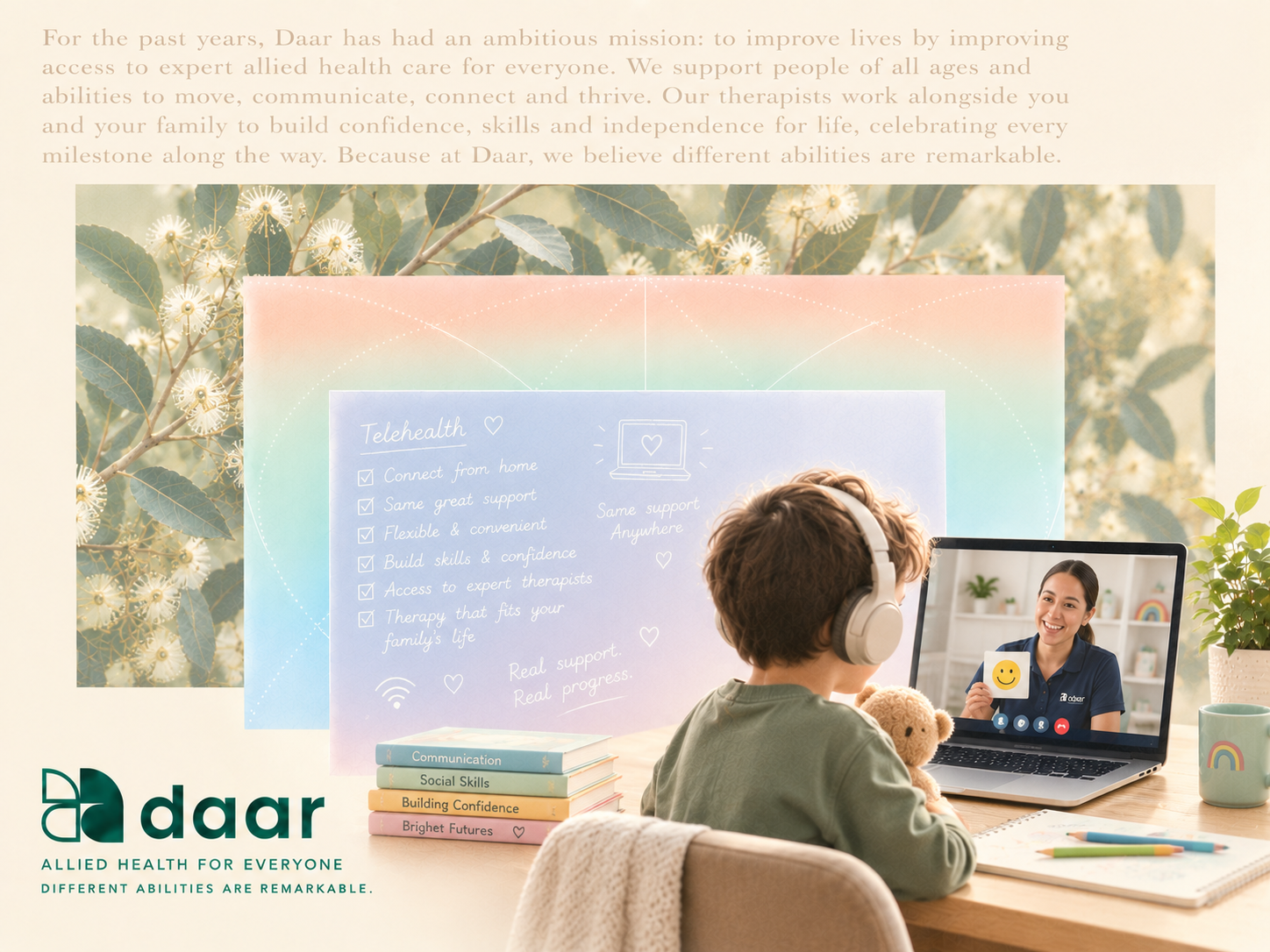
- Telehealth for children with autism eliminates the extreme stress of commuting, waiting rooms, and harsh sensory environments, allowing the child to engage from their safe space.
- Telehealth for children with ADHD embraces movement; kids aren't forced to sit perfectly still in a chair, which actually improves their focus and participation.
- Digital therapy utilises high-interest tools like interactive whiteboards, screen-shared educational games, and visual scheduling to keep neurodivergent children engaged.
- At daar, our Australian allied health professionals use a "mediator model," empowering parents to guide the therapy organically through everyday play.
Introduction
The shift towards digital healthcare has been a game-changer for busy Australian families. But when parents are first introduced to the idea of virtual allied health for their little ones, a common and very valid question arises: “Is online therapy effective for kids and young people, or will they just get distracted and walk away from the screen?” Research and clinical experience suggest that online therapy, often facilitated by an online therapist, can be just as effective for kids and young people as traditional in-person therapy, especially when sessions are tailored to a child's age and needs. Many families find that kids engage well in a familiar home environment, and therapists can adapt activities to keep children interested and focused.
It is easy to picture a child being forced to sit quietly and stare at a video call for 45 minutes—a scenario that would be a disaster for almost any toddler or neurodivergent child. However, high-quality virtual therapy looks nothing like a corporate team meeting. At daar, we design our online sessions on digital platforms to be dynamic, play-based, and highly interactive, allowing therapists to observe children in various everyday situations. With enough research, let’s explore exactly how telehealth is uniquely suited to support kids, particularly those navigating autism and ADHD. Online therapy can help address a variety of issues in children, including challenges related to autism, ADHD, anxiety, behavioural concerns, social skills development, and emotional regulation. The flexible and engaging nature of telehealth makes it effective for supporting children with a broad range of needs.
Beyond the Screen: Is Online Therapy Effective for Kids?
To answer the question of whether online therapy is an effective treatment for kids, we have to look at how it is delivered. For older children and teens, therapists use the screen as a highly engaging interactive tool, similar to face-to-face therapy. We utilise digital whiteboards, therapeutic video games, and shared activities to capture their attention. Because today’s youth are digital natives, communicating via a screen often feels much less intimidating than sitting face-to-face with an adult in a formal room.
For younger children, the effectiveness of online therapy comes from the parent-coaching model, which includes methods like play therapy. The child is not expected to interact with the iPad directly. Instead, you position the camera so the clinician can see the child's play area and ensure a private space free from distractions. As your child plays with their own toys, the therapist provides live coaching to you—the parent. By teaching you how to facilitate speech, emotional regulation, and social skills in the moment, the therapy becomes integrated into your real, everyday life.
A Safe Haven: Telehealth for Children with Autism
For many autistic children, transitions are incredibly difficult. Packing up their current activity, getting into the car, driving across town, and entering a clinic with unfamiliar smells, bright fluorescent lights, and new people can trigger major sensory overload. By the time the online therapy sessions start, particularly considering their developmental age, the child is often too dysregulated to learn.
Telehealth for children with autism completely neutralises this hurdle. The therapy comes to them. They remain in their ultimate haven, surrounded by their preferred sensory tools, weighted blankets, and a comfortable space of familiar routines. This neuro-affirming approach respects the child’s sensory boundaries. When an autistic child feels genuinely safe and unregulated, their capacity for connection, communication, and skill-building expands dramatically. Various types of therapy can be adapted within this framework.
Harnessing Energy: Telehealth for Children with ADHD
If you have a child with ADHD, the idea of a traditional clinic room can be daunting. The societal expectation to 'sit still, keep your hands quiet, and listen' directly conflicts with how a hyperactive brain processes information, which is why exploring psychological interventions may be beneficial.
Telehealth for children with ADHD is incredibly effective because it removes the chair. If your child needs to bounce on a trampoline, pace around the living room, or hang upside down off the couch while talking to their psychologist or speech therapist, they absolutely can. Movement actually helps an ADHD brain regulate and stay focused on the conversation. Furthermore, our clinicians can use fast-paced digital screen sharing to provide the high-dopamine stimulation that the ADHD brain craves, turning therapeutic exercises into rewarding, game-like experiences, which are part of personalised treatment plans.
Conclusion
We can confidently say that not only is virtual therapy effective for children, but for many neurodivergent kids, including those with bipolar disorder, it is actually the clinically superior choice and the best choice. By removing restrictive physical environments and leveraging the comfort of your own home, allied health professionals can unlock your child's true potential.
If you are ready for a therapy model that embraces your child’s energy, respects their sensory boundaries, and fits effortlessly into your family's schedule, we are here to help create a safe place for your child. Our mental health services focus on setting up this safe space, which can make a big difference.
Reach out to explore a consultation or call daar directly at 02 9133 2500 to find your perfect match.
Frequently Asked Questions
Will my child build a connection with a therapist they only see online?
Absolutely. Children today form very strong parasocial and digital relationships. Our clinicians at daar are specifically trained to build a trusting relationship and rapport through a screen, using high-energy interactions, shared digital interests (like talking about their favourite video game or movie), and a stable internet connection to ensure consistent, real-time warm communication.
Can we use our NDIS funding for both telehealth for children with autism and ADHD, including family therapy for anxiety disorders?
Yes. If your child has an active NDIS plan, it can be seamlessly used for our virtual allied health services. This covers psychology, speech therapy, and positive behaviour support, regardless of whether your child's primary diagnosis is autism, a developmental delay, or a related neurodivergent profile, where understanding facial expressions can enhance communication.
Are there any disadvantages or challenges with online therapy for kids, including family therapy?
While online therapy offers convenience and accessibility, some children may find it challenging to engage with therapists through a screen, especially if they have trouble focusing or communicating in a virtual setting. There can also be difficulties with technology, privacy, or creating a comfortable therapeutic environment at home. It's important for families to work closely with therapists to address these possible challenges and find solutions that best support their child's needs, particularly in reading facial expressions during sessions.
.svg)




.svg)