
.png?width=48&height=48&name=Group%201%20(3).png)























11 September, 2026

Unlocking Flexible Care: A Guide to NDIS Telehealth Services
Key Highlights
- NDIS Telehealth Services offer participants ultimate choice and control, allowing you to access premium speech therapy, psychology, and behaviour support without geographical limits.
- Understanding how telehealth behaviour support works demystifies the process—it relies on live digital observation and empowering caregivers through real-time coaching.
- Virtual sessions bypass the sensory overload of physical waiting rooms, making them incredibly effective for neurodivergent individuals and those with social anxiety.
- From mobility-impaired individuals to digital-native teenagers, learning who can benefit from telehealth reveals that online care is a versatile tool for almost any demographic.
- daar provides secure, NDIS-aligned virtual platforms that make connecting with your dedicated Australian allied health professional as easy as clicking a link.
Introduction
The core philosophy of the National Disability Insurance Scheme (NDIS) is to provide participants with genuine choice and control over their behaviour support services, including gp telehealth services. In recent years, one of the most empowering choices families have made is the transition to virtual care.
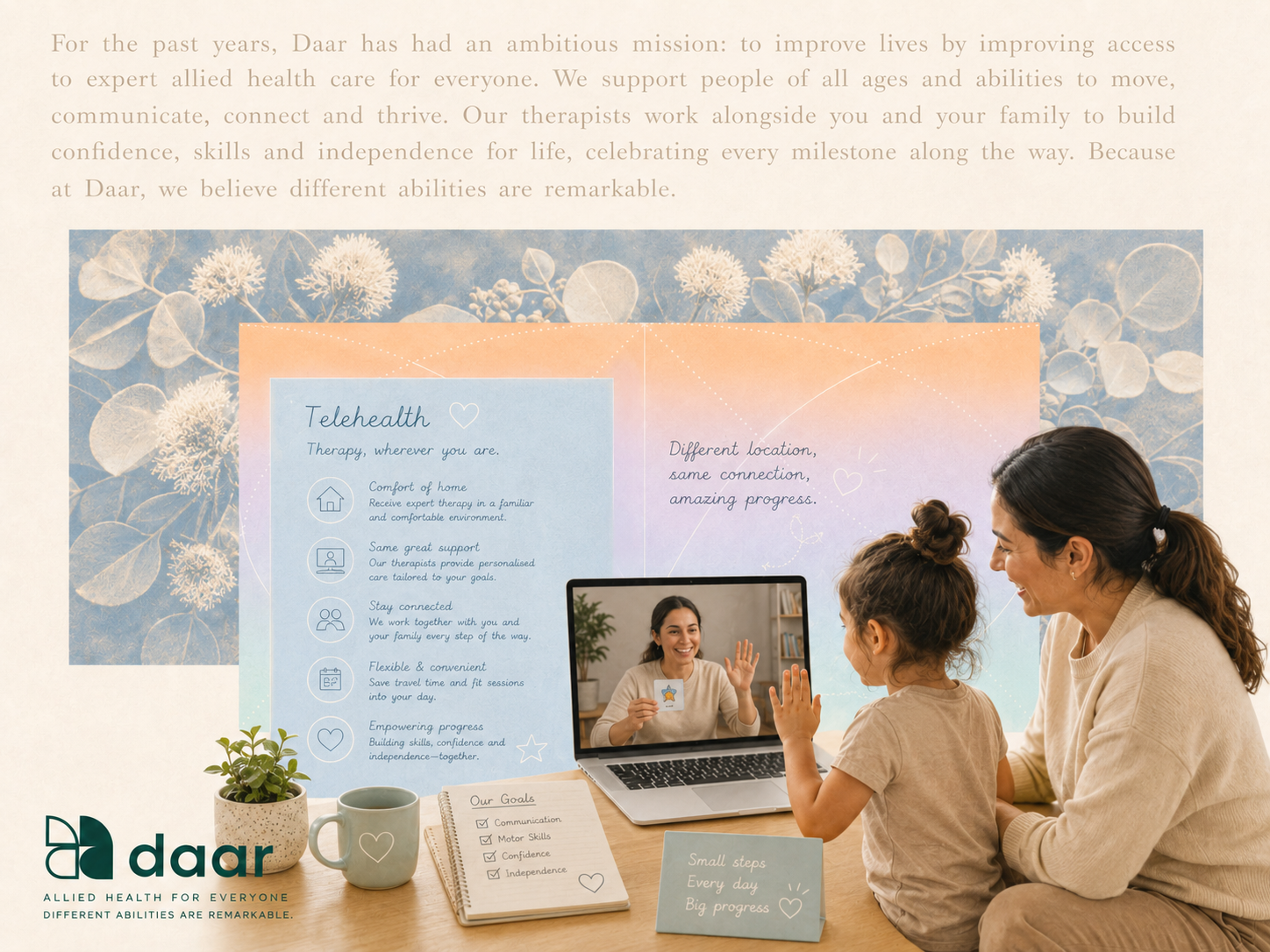
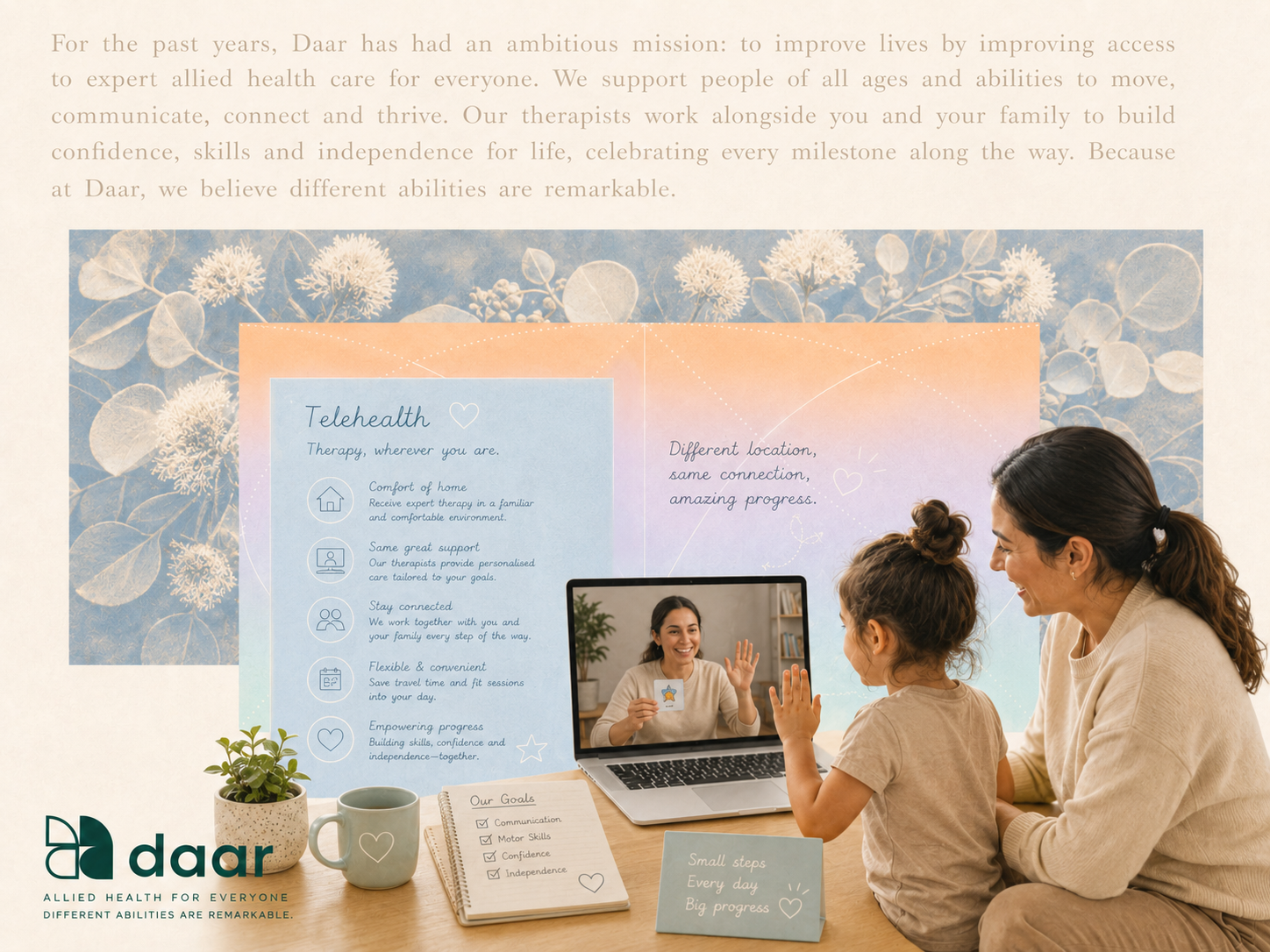
While initially viewed as a temporary alternative, NDIS Telehealth Services have evolved into a primary, highly preferred delivery method for thousands of Australians across the country. It removes the stress of commuting, fits seamlessly into chaotic household routines, and brings a range of healthcare providers in a multidisciplinary clinic straight to your living room, offering comprehensive healthcare services. Let’s explore the mechanics of how this digital approach operates and identify exactly who stands to gain the most from taking their therapy online with daar.
Elevating Your Plan with NDIS Telehealth Services
One of the greatest advantages of the NDIS is the flexibility of its Capacity Building budgets. The NDIA fully recognises telehealth as a highly effective mode of therapy delivery that provides timely services. This means your funding for Improved Daily Living or Improved Relationships can be used seamlessly for online sessions.
At daar, our NDIS Telehealth Services encompass a wide range of allied health disciplines. Whether you need ongoing telehealth sessions for speech therapy to build communication skills, regular psychology sessions for emotional regulation, or early intervention for autism, these can all be delivered robustly through our secure virtual clinic. By keeping the therapy within your home, the skills learned are immediately applicable to your daily life.
How Telehealth Behaviour Support Works
A common hurdle for families is visualising the mechanics of online interventions. If a child is having a meltdown, what does a therapist on a screen actually do?
Understanding how telehealth behaviour support works involves a shift in perspective. Instead of the practitioner being the primary "hands-on" person, they become the strategic coach. Here is the typical workflow:
- Digital Environmental Assessment: Using your smartphone or laptop camera, the practitioner takes a guided tour of your home to identify potential sensory triggers or safety hazards.
- "Fly-on-the-Wall" Observation: You can set up your device in the corner of the room during typical high-stress times (like the morning routine). The practitioner silently observes the natural family dynamic without their physical presence altering the child's behaviour.
- Live Coaching: Through a wireless earpiece or standard audio, the clinician guides parents and support workers in real-time. We prompt you on exactly how to respond, helping you successfully de-escalate situations and reinforce positive behaviours yourself.
Who Can Benefit From Telehealth?
While rural families clearly benefit from skipping the commute, they are far from the only demographic embracing virtual care. So, who can benefit from telehealth?
- Individuals with Mobility Constraints or Compromised Immunity: For those who find physical travel exhausting or painful, or for individuals who are immunocompromised, telehealth provides premium healthcare without the physical toll or health risks of visiting a public clinic.
- Neurodivergent Children and Adults: Clinics can be loud, brightly lit, and highly unpredictable. Telehealth allows individuals with autism or ADHD to engage in therapy from their own sensory-safe "bubble," leading to much higher engagement levels.
- Teenagers and Digital Natives: Adolescents often find traditional face-to-face therapy intimidating. Engaging through a screen feels native and comfortable to them, often breaking down communication barriers much faster than sitting in a formal office.
- Time-Poor Parents and Carers: If coordinating siblings, school drop-offs, and your own workload make attending a physical appointment impossible, telehealth allows you to squeeze a vital consultation into a lunch break or while the baby naps.
Conclusion
Embracing digital healthcare and the use of telehealth doesn't mean compromising on quality. In fact, for many families, the shift to a virtual model has unlocked faster progress, greater parental confidence, and a much calmer weekly routine.
Whether you are seeking psychology, speech pathology, or complex behaviour intervention, allied health services technology has made building capacity easier than ever.
Ready to take control of your NDIS journey from the comfort of your own home? Reach out to explore a consultation or call daar directly at 02 9133 2500 to find your perfect match today.
Frequently Asked Questions
Do I need to ask the NDIS for special permission to use MBS telehealth services?
No, you do not need special permission. Assuming you have had a face consultation and the correct Capacity Building funding in your NDIS plan (such as Improved Daily Living or Improved Relationships), you and your provider have the choice to decide how those supports are delivered. Telehealth is a fully approved delivery method by the NDIA.
What platform does daar use, and is it secure and private?
Client privacy is our absolute priority. daar uses dedicated, industry-standard encrypted telehealth software that complies with Australian privacy laws and healthcare regulations as outlined by the Australian Digital Health Agency. We never record your sessions without explicit, documented consent, ensuring your virtual room is a completely safe space.
We share custody across two households. Can telehealth accommodate this?
This is actually one of the greatest strengths of telehealth! We can bring multiple caregivers from different physical locations into the same virtual session. This ensures that separated parents, grandparents, and even school teachers all receive the same coaching and can maintain consistency across every environment, supporting the child's public health during transitions.
.svg)




.svg)