
.png?width=48&height=48&name=Group%201%20(3).png)























20 August, 2026

Effective Social Skills Interventions for Autism: A Guide
Key Highlights
- Social skills challenges on the autism spectrum often involve reading social cues and handling social interaction.
- Social skills training can target specific steps, from greetings to conversations and peer interactions.
- Research suggests the most useful social skills interventions are structured, relevant, and practiced in natural settings.
- ABA, social stories, video modeling, and group activities are common tools for social development.
- Family involvement, peer support, and school teamwork help new skills carry over into daily life.
- Effective support should match age, strengths, and individual needs.
Introduction
For many people on the autism spectrum, social skills do not come automatically. That does not mean interest in connection is missing. In fact, many autistic people want friendships, belonging, and easier everyday interactions. Social skills interventions are designed to help by making hidden rules more visible and giving structured practice. Still, not every approach works the same way for every person. This guide explains common challenges, useful strategies, and what current research says about building social skills in practical, respectful ways.
Understanding Social Skills Challenges in Autism
Social skills challenges in autism spectrum conditions can show up in many ways. A person may find it hard to notice social cues, understand what someone else is thinking, or choose a response quickly in the moment. These differences affect social communication and can make everyday interactions feel confusing.
At the same time, social development is not one simple skill. It includes many smaller abilities that build over time. To understand what support helps, it is useful to look at common communication difficulties, reasons skill gaps happen, and how these challenges affect daily life.
Common social communication difficulties in autistic individuals
Many autistic individuals have trouble with social communication because so much of it is unspoken. Social cues often happen fast. A glance, a pause, a joke, or a shift in tone can change what a message means. If those signals are hard to read, conversations can feel unpredictable.
You may also see differences in eye contact, reading facial expressions, or understanding body language. Some people interpret language very literally, so sarcasm, teasing, or figures of speech may be confusing. Even a simple greeting can change depending on the place, the person, and the timing.
This is why social situations that look easy to others can be complex in real life. The challenge is not just learning one rule. It is noticing which rule fits now, then using it at the right moment with the right person.
Why do autistic children and adults experience social skill gaps?
Social skill gaps happen for several reasons. On the autism spectrum, early social learning may not unfold in the usual way. If a child pays less attention to faces, voices, or shared gaze, later social skills development may have fewer building blocks to grow from.
Another reason is that social behaviour is more layered than it looks. A social situation often requires noticing feelings, guessing intent, picking words, and adjusting behaviour at the same time. For people with developmental disabilities, that rapid mix can be hard to manage without direct teaching.
Age matters too. Young children may need help with sharing or turn-taking. Older children, teens, and adults may need support with fitting in, keeping friends, dating, or workplace communication. As life gets more demanding, the gap can become easier to notice.
The impact of social challenges on daily life
Social challenges affect far more than conversation. They shape school experiences, workplace success, and comfort in the community. When social rules are unclear, a person may feel left out, misunderstood, or unsure of what others expect.
That strain can also touch mental health. Many autistic children and teens want connection, yet repeated confusion or rejection can lead to loneliness. Daily life becomes harder when each social interaction feels like solving a puzzle without enough clues.
Common effects include:
- Trouble joining conversations or group activities
- Misunderstanding hidden social rules in class or public spaces
- Difficulty keeping friends or repairing social mistakes
- Feeling isolated, stressed, or unsure in new situations
Importance of Social Skills for Autistic Individuals
Social skills matter because they affect more than manners. They support learning, friendships, community involvement, and emotional well-being. For autistic children, growing social competence can make school and play feel more manageable and rewarding.
A helpful approach should respect individual differences while teaching useful tools for real situations. In that sense, social development is not about forcing sameness. It is about helping each person understand others better, express themselves clearly, and take part in daily life with less confusion. The next sections show what that can look like.
Building relationships and friendships
Friendships usually depend on many small skills working together. A child may need to notice interest, take turns, stay on topic, and recover after awkward moments. That is why building relationships often takes direct teaching and lots of practice over time.
For young children, this may begin with sharing toys, greeting peers, or joining simple games. Later, the focus may shift to keeping friends, handling differences, or understanding what makes someone a close friend instead of just a classmate.
A social skills group can help because it creates repeated chances to practice with others. These groups can include autistic peers, typical peers, or both. The most useful ones make social rules clear, keep the setting supportive, and give children a chance to use what they learn outside the group too.
Enhancing participation in school, work, and the community
Participation increases when social expectations are clear. In school, this means knowing how to ask for help, join activities, or follow routines. At work and in the community, it involves greeting others, taking turns, and responding appropriately.
These practical skills reduce uncertainty and make social settings less stressful and more predictable. Structured teaching helps individuals understand rules without guessing.
Useful goals include:
- Joining group activities smoothly
- Recognising role differences among peers, teachers, and coworkers
- Practicing social skills in real settings, not just therapy
Promoting independence and confidence
Confidence grows when social expectations are clear. Understanding social situations reduces stress and supports independence at any age.
Direct teaching helps people learn appropriate responses for common scenarios, like greetings or starting conversations. Tools such as scripts, stories, and visuals make abstract rules easier to grasp.
Progress shows when these skills transfer to daily life. Managing a conversation, asking questions in public, or recovering from small mistakes builds confidence and encourages independence and resilience.
Evidence-Based Social Skills Interventions
There are many social skills interventions, but research has not shown one simple answer for everyone. Studies suggest that some programs are only minimally effective when viewed as a whole, especially if they are brief, poorly defined, or taught outside natural settings.
Still, the picture is not negative. An effective intervention tends to be structured, relevant, and practiced often with other people. Research-backed elements include modeling, role-play, peer involvement, parent support, and teaching that helps skills transfer beyond one room. That leads into the main approaches families often consider.
Overview of research-backed approaches
Research on an evidence-based social skills program points to a few recurring themes. Stronger approaches usually break social tasks into teachable parts, make hidden rules visible, and provide repeated practice. They also aim to build motivation, self-awareness, and confidence, not just outward behaviour.
Behaviour analysis is one path, especially in early intervention, but it is not the only tool. Reviews also highlight modeling, role-playing, social stories, scripts, and peer-supported practice. Technology-based teaching, including videos and interactive programs, may help some learners recognise emotions or rehearse responses.
Promising features include:
- Clear structure and predictable routines
- Practice in natural settings with peers or family
- Planned generalization so skills are used outside sessions
Individualised vs. group-based interventions
No single format fits every learner. An individualised treatment plan can target very specific skills, such as greeting, turn-taking, or asking a question. This works well when a person needs focused teaching, extra support, or help at a pace that matches their language and learning profile.
On the other hand, a social skills group gives something individual work cannot fully provide: live practice with other people. Group activities create chances to test timing, cooperation, and flexibility in real interactions. That makes groups useful for older children and adolescents working on friendships or conversation.
Here is a simple comparison:
|
Format |
Best Use |
Strengths |
Limits |
|---|---|---|---|
|
Individualized support |
Specific skills and high support needs |
Tailored goals, clear pacing, direct feedback |
Fewer live peer interactions |
|
Social skills group |
Conversation, peer play, friendship practice |
Real social exchange, turn-taking, cooperation |
May move too fast for some learners |
How to identify interventions suited for different ages
Age changes the target. Young children may need early intervention that builds attention to people, shared enjoyment, and simple social rules. As children grow, social development becomes more complex, so teaching must match those new demands.
A useful program asks practical questions. What skill is missing right now? Is the person struggling with basic interaction, classroom rules, or more advanced peer relationships? In special education and clinic settings, the best fit is usually the one tied to real-life needs rather than a generic checklist.
When choosing by age, look for:
- Early goals like joint attention, turn-taking, and simple play for young children
- School-age goals linked to classroom behaviour and peer contact
- Adolescent or adult goals tied to friendships, community, and work
Applied Behaviour Analysis (ABA) in Social Skills Development
ABA therapy is often used as an early approach to support social skills development. The idea is straightforward: break a skill into small steps, teach those steps clearly, and strengthen progress through positive reinforcement. For some children, this can help build interest in people, eye gaze, and shared attention.
In behaviour analysis, the goal is measurable learning rather than guesswork. When done well, ABA can create a foundation for later social skills training by helping a child notice, value, and respond to social experiences more often.
Core strategies ABA uses to teach social interaction
Applied behaviour analysis teaches social interaction by making complex behaviour easier to learn. Instead of expecting a child to manage an entire exchange at once, ABA breaks it down into steps. A provider can then teach, prompt, and reinforce each part until the skill becomes more consistent.
This may include noticing another person, looking toward them, responding to a greeting, or taking a conversational turn. Supports such as modeling and cue cards can reduce confusion and give the learner a clearer path to success.
Common ABA teaching tools include:
- Reinforcement for desired social responses
- Modeling of the target behaviour before practice
- Cue cards or reminders that are faded over time
Used early, these strategies may help a child find social contact more rewarding, which can support later growth in joint attention and communication.
Measuring progress and outcomes with ABA
One reason ABA therapy is widely used is that it focuses on measurable outcomes. Instead of asking whether a child seems better socially in a vague way, providers can track clear behaviours. That might include number of initiations, responses to greetings, or successful conversational turns.
This kind of progress tracking matters because social growth is often uneven. A person may improve in one setting but not another. Looking at specific data helps families and therapists see what is working and what still needs support.
Research on social interventions also points to the importance of maintenance effects. In simple terms, do new skills last? Do they show up outside therapy? While pnd scores and other measures may be used in research reviews, daily success still depends on whether the skill carries into real life.
Choosing an ABA provider in Australia
If you are looking for an ABA therapy provider in Australia, the same research-based questions still apply. Ask how the provider defines goals, teaches skills, and measures outcomes. A strong social skills program should not rely on vague promises. It should show exactly what is being taught and why.
You also want to know whether behaviour analysis is connected to daily life. Research suggests social teaching works better when it happens in natural settings and when skills are practiced beyond one therapy room. Parent involvement and coordination with school can make that more likely.
It also helps to ask how the provider supports generalization and long-term use. Can the child use the skill with different people and in different places? That is often what separates short-term performance from meaningful social change.
Social Skills Training (SST): Methods and Approaches
Social skills training usually means direct teaching for specific social situations. A structured program may focus on greeting others, taking turns, starting conversations, understanding emotions, or responding to problems that come up with peers.
Many approaches fit under this heading. Some use social stories or scripts. Others use role-play, peer practice, or video modeling. The strongest programs make the lesson clear, give repeated rehearsal, and help the learner use the skill outside the session. Here are the core methods that often appear in practice.
Components of structured social skills training
A structured program usually starts by choosing very specific social skills. Instead of teaching “be social,” it targets concrete actions in a social situation, such as how to greet, how to ask to join a game, or how to wait for a turn in conversation.
Tools like social stories help because they explain what is happening, what others may be thinking, and what choices are available. This can reduce stress and make abstract rules easier to understand. Social scripts can also support initiation until the learner no longer needs the prompt.
Common components include:
- Direct teaching of one skill at a time
- Guided practice linked to real-life situations
The key is not just understanding the rule once. It is being able to use it again with different people and settings.
Role-play, modeling, and rehearsal techniques
Role-play gives learners a safe way to practice before using a skill in daily life. A therapist, teacher, or peer can act out a social problem, then guide the child through possible responses. That makes the learning active instead of purely verbal.
Modeling works in a similar way. The adult or peer shows the target behaviour first, and the learner copies it with support. Video modeling can be especially helpful because facial expressions, body movement, and timing can be watched more than once.
These rehearsal methods often include:
- Role-play for common social challenges
- Modeling of the desired response
- Positive reinforcement after successful practice
Repeated rehearsal helps turn a taught skill into a usable one. Without practice, even a well-explained lesson may not show up when it matters.
Group-based SST benefits for children and adolescents
A social skills group gives children and adolescents something very valuable: real peer interactions. Instead of practicing only with adults, they get to test conversation, cooperation, and problem-solving with others their own age. That can make learning feel more natural and relevant.
Groups also create a safe space for mistakes. If a child interrupts, misreads a joke, or misses a cue, the moment can become part of the lesson. With guidance, those small problems turn into useful practice rather than social failure.
Group-based benefits often include:
- More chances for peer interactions
- Practice with turn-taking during group activities
- Support for skills linked to friendship and belonging
Still, groups work best when goals are clear and the child receives enough teaching and repetition.
Play-Based and Peer-Mediated Interventions
Play can be one of the most natural ways to build early social understanding. Through play activities, children practice sharing attention, taking turns, and noticing what another person is doing or feeling. These early exchanges support joint attention and later communication.
Peer-mediated interventions build on that by involving other children in the learning process. With guidance, peers can model social behaviour, invite participation, and create more chances for meaningful interaction. Visual aids may help keep these experiences clear and predictable.
How play can foster natural social learning
Play offers a natural setting for early social development because it asks children to share focus with another person. In a game, a child may look at a toy, then at a partner, then back again. That back-and-forth supports joint attention, which is a key early social skill.
Play also gives many chances to notice facial expressions, excitement, frustration, and turn-taking. These moments are easier to teach when they happen in a real activity instead of as abstract instruction. A child can learn by doing, not just by listening.
Play-based work may support:
- Shared attention during games and routines
- Early noticing of emotions and reactions in others
When play is enjoyable and repeated, social learning can feel less forced and more meaningful.
Setting up successful peer-mediated programs
Peer-mediated interventions work best when they are planned, not left to chance. Neurotypical peers can help model language, invite turn-taking, and respond in ways that keep interaction going. Yet they also need guidance so the experience stays positive for everyone involved.
Clear structure makes a big difference. Group activities should have simple goals, predictable steps, and adult support when needed. Visual supports can show what happens first, next, and last, which reduces uncertainty and helps children join in with more confidence.
Useful features include:
- Trained peers who understand how to include and respond supportively
- Visual supports that make the activity easier to follow
The aim is not to force interaction. It is to create real opportunities for connection and practice.
Examples from Australian schools and clinics
In Australian schools and clinics, families often look for approaches that resemble the research-backed methods described here. The strongest examples usually connect teaching to daily routines, peer contact, and practical goals rather than isolated drills. That fits what the broader literature says about natural learning.
In special education and community settings, useful examples may include small peer groups, story-based teaching, and guided practice during regular school or clinic activities. Personal stories and visual supports can make the lesson easier to understand and remember.
Helpful features to look for include:
- Practice built into real school or clinic routines
- Opportunities for peer interaction in community settings
- Staff and family teamwork to support carryover
Family and Community Involvement
Family involvement matters because social skills do not grow in one weekly session alone. A child needs repeated chances to practice across home, school, and the wider community. That is where parent training and teamwork become valuable.
A strong social skills program often works best when adults use the same language, prompts, and goals in everyday situations. Community programs can add even more practice with new people and routines. The following sections show how parents, professionals, and local opportunities can support progress together.
How parents can support social skills at home
Parents of children on the spectrum can help most by making practice part of home life. Social learning often improves when the same skill is taught more than once and used in everyday moments, not just in therapy. Short, clear practice is usually more useful than long lectures.
Tools from therapy can also work at home. Social stories can prepare a child for a visit, party, or classroom event. Cue cards can remind them what to say or do during a common interaction, then be faded as the skill becomes easier.
At home, parents can:
- Practice one social step during real routines, like greetings or turn-taking
- Use social stories or cue cards before stressful events
This kind of support helps new skills move from practice into daily use.
Collaborating with therapists, teachers, and peers
Therapists play an important role because they help define the target, choose a method, and track whether it is working. Still, progress is stronger when therapists, teachers, and families work in collaboration instead of separately. Social growth depends on consistency.
A good partnership means everyone understands the same goal. If the child is learning to join a conversation, the therapist may teach it, the teacher may prompt it in class, and the family may practice it at home. That shared plan increases the chance of success.
This matters even more in special education, where children may move through several settings in one day. When adults communicate well, the child gets repeated, connected practice rather than mixed messages or missed opportunities.
Making connections through community programs
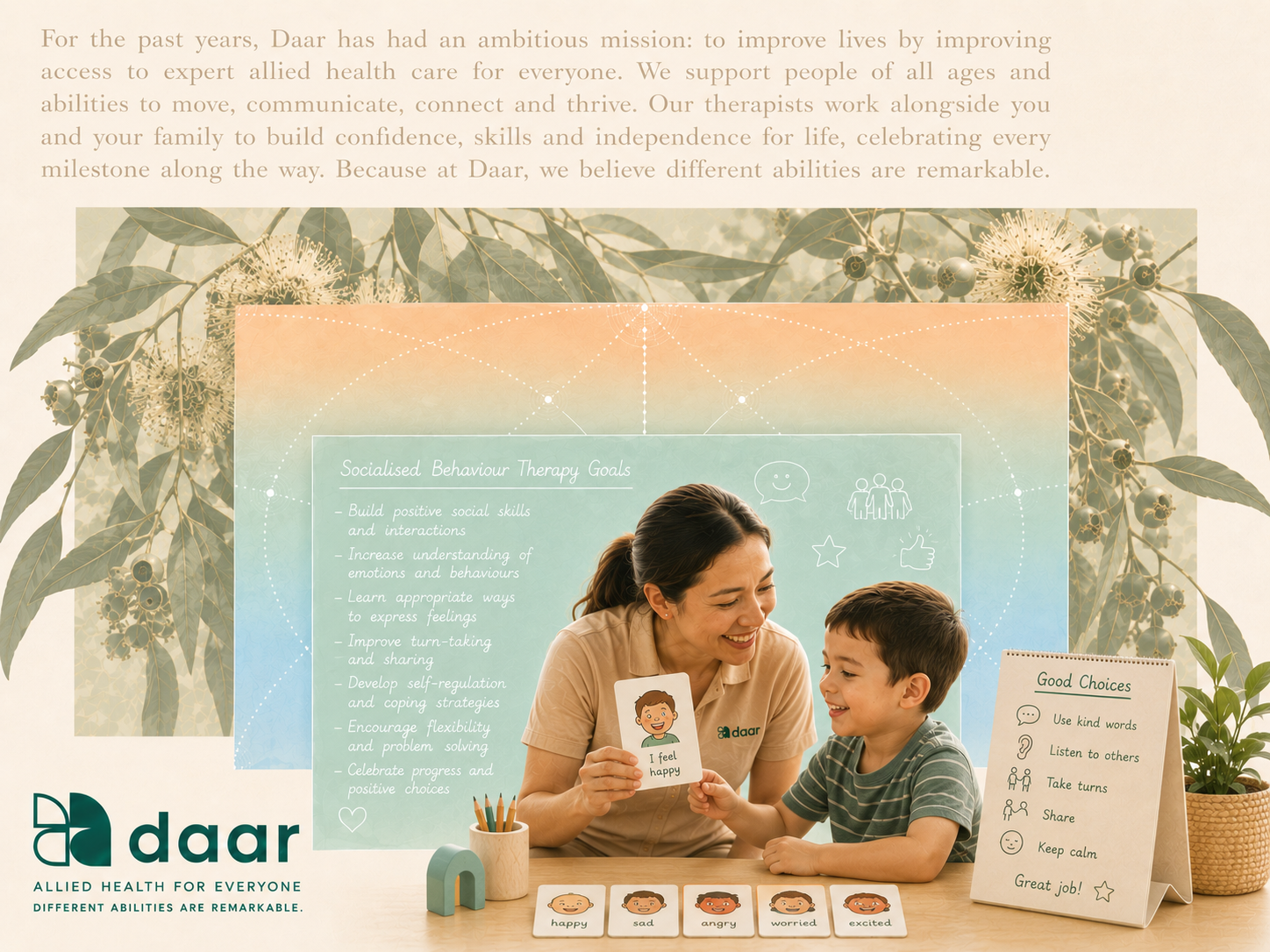
Community programs can help because they bring social learning into real life. A child or teen may understand a skill in therapy but still need practice using it with unfamiliar people, changing routines, and everyday expectations. Community settings make that possible.
These spaces also create more reasons for social interaction. Instead of practicing for practice’s sake, the person joins something meaningful. That can make motivation stronger and the learning more natural. Group activities are especially useful when adults guide, prompt, and then step back.
Good community options often provide:
- Structured group activities with clear roles and routines
- Repeated chances to use the same skill with different people
The more settings a person can practice in, the more likely the skill will stick.
Conclusion
In conclusion, implementing effective social skills interventions can significantly enhance the quality of life for individuals with autism. By understanding the unique challenges they face and utilizing evidence-based strategies, we can help them build meaningful relationships, gain confidence, and thrive in their communities. Whether through structured training, play-based approaches, or active family involvement, the journey toward improved social skills is a collaborative effort that yields rewarding results. Remember, every small step counts, and with the right support, autistic individuals can develop the skills necessary to navigate social interactions successfully.
If you’re ready to explore tailored interventions, don’t hesitate to reach out for consultation or call daar at 02 9133 2500!
Frequently Asked Questions
What are the most effective social skills programs for autism in Australia?
In Australia, the most effective social skills program is usually one that matches the person’s needs, teaches clear goals, and practices skills in real settings. Social skills interventions that use behaviour analysis, modeling, peer practice, and family support are more likely to become an effective intervention than vague, one-size-fits-all programs.
How can parents help children with autism make friends?
Parents of children can help by practicing social communication at home, preparing for events with simple scripts, and giving regular chances for group activities. Video modeling and social stories may also help children understand what friendship behaviours look like before they try them with peers.
Do social skills interventions differ for autistic adults and children?
Yes. Social skills interventions should change with age and daily demands. Young children may need help with play, sharing, and joint attention, while autistic adults may focus on workplace communication or relationships. An individualized treatment plan is important because social skills development does not look the same across life stages.
.svg)




.svg)