
.png?width=48&height=48&name=Group%201%20(3).png)
























17 April, 2026

Fun and Engaging Healthy Exercises for Kids

Parenting often feels like an unpredictable balancing act, with each day bringing new challenges, surprises, and packed schedules. In the midst of this busy modern lifestyle, children can easily become overwhelmed, leading to behavioural meltdowns, poor sleep, and poor eating habits. However, there is a powerful, proven antidote to daily childhood chaos: establishing healthy, predictable routines, just like designing an engaging obstacle course that includes activities like mountain climbers for them to navigate through their day. Outdoor exercise activities such as obstacle courses, tag, relay races, biking, and scavenger hunts are not only healthy but also provide a fun way for kids to stay active, develop coordination, and enjoy time with friends.
Healthy routines for kids play an absolutely vital role in shaping their physical health, emotional stability, and long-term cognitive development, including foundational skills. While adults often view routines as restrictive or boring, children view them as an important predecessor to a profound source of safety. Consistent daily habits around sleep, meals, active play, and structured learning help children feel deeply secure, sharply focused, and emotionally balanced as they grow. When a child knows exactly what to expect and when to expect it, their internal stress levels plummet, clearing the way for brilliant learning and joyful development.
In this comprehensive, parent-friendly guide, we will explore why daily structure is a great way to support a child’s developing brain and their external senses, outline the six essential daily habits every child needs, and provide you with highly actionable, tantrum-free strategies to build these routines in your home today.
The Psychology of Predictability: Why Children Crave Routine
Before diving into the specific habits, it is important to understand the deep psychological need children have for structure and the proper body position, including a body short position. The world is a massive, noisy, and highly unpredictable place for a child. They have very little control over their lives—adults tell them when to wake up, where to go, what to eat, and when to sleep.
When a daily schedule is erratic, a child's brain perceives this lack of predictability as a low-level threat. This triggers the release of cortisol, the body's stress hormone, which can inhibit the development of a confident athlete in the most efficient way possible, leading directly to anxiety, hyperactivity, and intense behavioural pushback.
Conversely, a predictable daily routine acts as an anchor. It provides a comforting rhythm to their day. When children internalize a healthy routine, their nervous system relaxes. Furthermore, routines eliminate the need for constant decision-making and power struggles. If a child knows that "we always brush our teeth right after breakfast," it ceases to be a negotiation and simply becomes the undeniable rule of the house. This predictable routine can offer a lot of experience advantage as over time, these externally enforced routines transform into internalized habits, setting your child up for a lifetime of independent success.
6 Key Healthy Routines for Kids
To raise a resilient, healthy, and happy child, focus your energy on establishing these six foundational pillars of daily wellness.
1. A Rock-Solid, Consistent Sleep Schedule
Sleep is the undisputed cornerstone of childhood development. It is the time when the brain consolidates memories, clears out neurotoxins, and releases the vital growth hormones responsible for physical maturation and body awareness, much like how Simon Says helps kids recognize their body's capabilities. Going to bed and waking up at the same time every single day—even on weekends—radically supports brain development, mood regulation, and overall daytime energy levels.
How to build this routine:
- Determine sleep needs: Toddlers need 11–14 hours, preschoolers need 10–13 hours, and school-aged kids need 9–12 hours. Work backward from their required wake-up time to set a strict bedtime.
- Create a wind-down sequence: Establish a 45-minute calming routine that happens in the same order every night (e.g., bath, pajamas, brush teeth, read two books, lights out).
- Protect the circadian rhythm: Open the blinds immediately in the morning to let natural sunlight in, which halts melatonin production and helps them wake up refreshed.
2. A Balanced, Predictable Meal Routine
Children have incredibly high metabolic needs and small stomachs, meaning their blood sugar can crash rapidly, resulting in the infamous "hangry" meltdown. The most important thing is to provide regular, predictable meals stacked with nutrient-dense foods (fruits, vegetables, lean proteins, and complex whole grains), which help children grow strong, sustain focus in school, and maintain healthy habits to stay active throughout the day.
How to build this routine:
- Eat at the same times: Schedule three main meals and one to two healthy snacks at roughly the same times each day to stabilize their metabolism, following the physical activity guidelines to ensure a wide variety of physical activities in a well-rounded routine.
- Prioritize family dinners: Eating together without digital distractions has been heavily linked by researchers to better academic performance, expanded vocabulary, and lower rates of anxiety in children.
- Avoid grazing: Close the kitchen between scheduled meal and snack times to ensure they are actually hungry for the nutritious foods served at dinner.
3. Physical Activity Every Single Day
In an era dominated by screens and sedentary indoor activities, prioritizing physical movement, including activities like loud feet exercises, is a great game-changer and more important than ever. Children should engage in at least 60 minutes of vigorous physical activity daily. Daily movement helps significantly improve cardiovascular strength, fine and gross motor coordination, and mental health by releasing powerful, mood-boosting endorphins.
How to build this routine:
- Make it an afternoon staple: Immediately after school or daycare is a perfect time for kids to engage in a coordination challenge to burn off the pent-up energy and adrenaline from sitting at a desk all day, helping to elevate their heart rate.
- Encourage outdoor play: Time spent outside in natural light not only encourages running, jumping, and climbing but also protects against nearsightedness and regulates the sleep cycle.
- Join in the fun: Go for a family bike ride, play a game of tag in the backyard, or have a 10-minute living room dance party to make exercise feel like play rather than a chore.
4. Structured Learning and Reading Time
While children learn a massive amount at school, creating a structured daily habit for intellectual growth at home is essential for long-term academic success, and understanding the benefits of exercise in everyday activities. A consistent daily study or reading routine dramatically improves a child's focus, self-discipline, and deep reading comprehension.
How to build this routine:
- The 20-minute reading rule: Dedicate a minimum of 20 minutes every evening strictly to reading while also encouraging them to use their entire field of vision. For younger kids, read aloud to them. For older kids, have them read independently.
- Create a homework sanctuary: Set up a specific, quiet, well-lit desk or table strictly reserved for homework and creative projects, completely free from television or loud distractions.
- Encourage curiosity: If they don't have homework, use this time for puzzles, educational board games, or building complex Lego structures that challenge their spatial reasoning.
5. Non-Negotiable Hygiene Habits
Personal hygiene is not just about staying clean; it is about teaching children body autonomy, personal responsibility, and healthy boundaries. A daily routine guided by an international motivational speaker can enhance habits like brushing teeth properly, thorough handwashing, and regular bathing, which contribute to creating a culture of wellness and are the first line of defense in preventing common childhood illnesses from spreading through your home.
How to build this routine:
- The "Two-Minute" teeth rule: Make brushing teeth twice a day a non-negotiable anchor. Use a visual sand timer, an electric toothbrush with a built-in timer, or play a two-minute song to ensure they brush for the dentist-recommended duration.
- Automate handwashing: Teach them the trigger events for handwashing: instantly upon returning home from school or the Playground, immediately after using the bathroom, and always before sitting down at the dinner table.
6. Limited and Purposeful Screen Time
Unrestricted digital access is the fastest way to derail a child's attention span, sleep quality, and behaviour. Controlled, highly intentional screen usage is an important aspect of agility, incorporating effective coaching cues as a required modern routine. Setting firm digital boundaries helps improve sleep architecture, prevents dopamine-driven behavioural issues, and forces kids to engage in imaginative, independent play.
How to build this routine:
- Set daily limits: Use parental control apps to establish firm time limits (e.g., 1 hour of recreational screen time per day on weekdays) so the device turns itself off, removing the parent from the role of the "bad guy." Integrate engaging activities like running or playing red light/green light to make exercise fun for kids and keep them active instead of screen-dependent.
- Set daily limits: Use parental control apps to establish firm time limits (e.g., 1 hour of recreational screen time per day on weekdays) so the device turns itself off, removing the parent from the role of the "bad guy."
- Create tech-free zones: Keep all bedrooms, dining tables, and family cars completely screen-free to encourage human connection.
Tips to Build Healthy Routines in Kids
Knowing the routines you want to implement is easy; getting your kids to actually follow them without a daily battle requires strategy. For example, incorporating activities like lateral shuffle can make these routines more engaging. Use these proven tips to seamlessly integrate health habits into your whole family's life.
Create a Predictable Daily Schedule
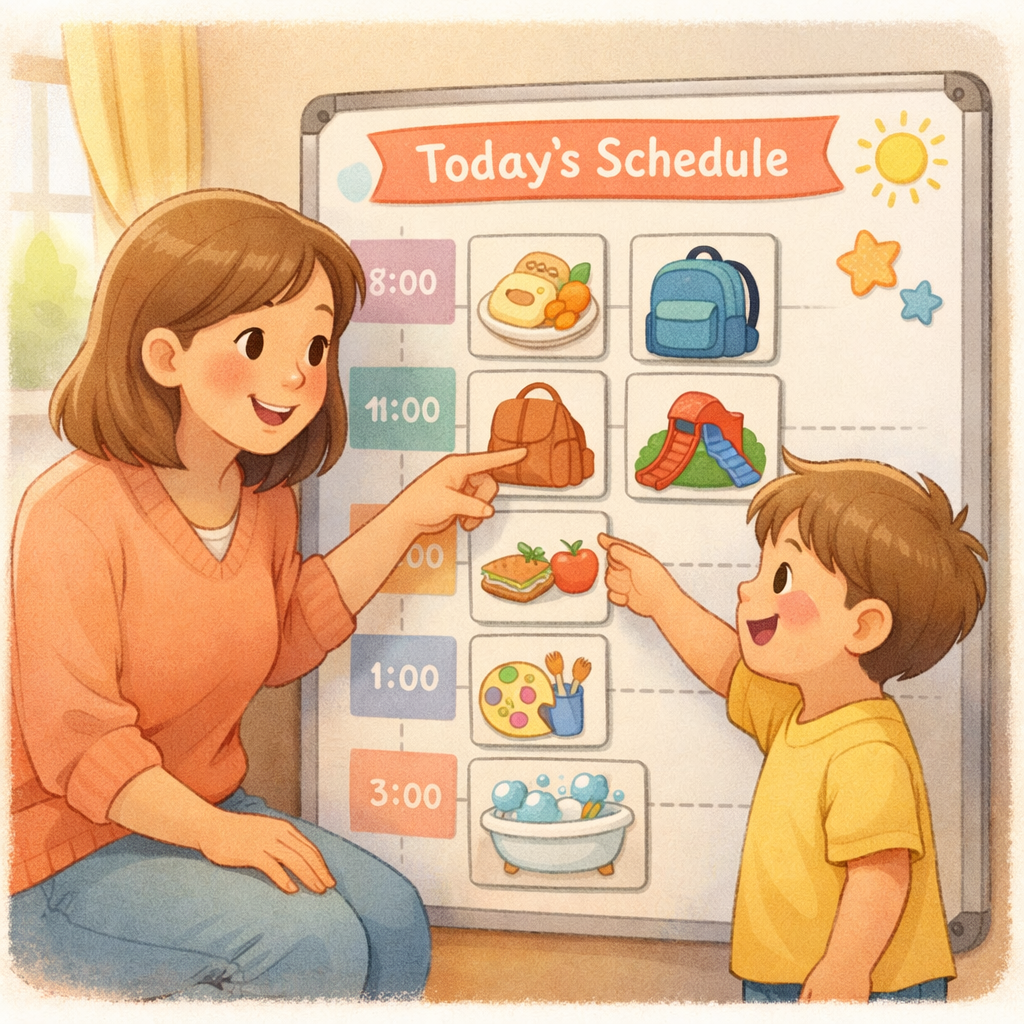
Verbal instructions are easily forgotten by easily distracted children. Make the routine highly visual with big arm swings. For toddlers and preschoolers, create a picture chart showing a picture of a bed, a toothbrush, clothes, breakfast, and ball toss activities. For school-aged kids, an easy-to-read checklist on the refrigerator works wonders. When a child asks, "What are we doing now?" you can simply point to the chart and say, "Check your schedule!"
Make Routines Fun and Engaging
Children naturally resist anything that feels like a strict military chore. Incorporate playfulness into daily habits, like playing red light/green light. Race to see who can get their pajamas on the fastest. Sing a silly song while picking up toys. Additionally, incorporate some fun exercises that engage their imagination, like cutting their healthy sandwiches into fun shapes. If the routine brings joy, compliance will skyrocket.
Use Positive Reinforcement and Praise
Focus heavily on what they are doing right, rather than what they are doing wrong. When your child automatically goes to the sink to wash their hands without being asked, shower them with specific, enthusiastic praise: "I love how responsible you are by responding to a coach’s prompts to wash your hands before dinner! Here’s an example of a letter of praise you can use to encourage them." Positive reinforcement wires their brain to repeat the good behaviour.
Be Consistent and Immensely Patient
It takes an average of 21 to 66 days to turn a new behaviour into an automatic habit. Do not try to overhaul your entire life in one day. Start by fixing the bedtime routine, providing just enough instruction to ensure it is clear what needs to be done to help you live the best version of your life. Once that is running smoothly after a few weeks, introduce the daily reading time. Expect pushback initially—that is normal. Hold your boundaries calmly and patiently.
Lead by Example as Parents
Routines cannot be a rule just for the kids; they must be a family culture that also focuses on activities that strengthen the lower body. If you dictate that screens are not allowed at the dinner table, you must leave your smartphone in the other room. If you want your child to eat vegetables from a young age, they need to see you enthusiastically eating a salad. Children are brilliant mimics; they will copy your actual habits far more than they will follow your verbal instructions.
Start powerfully transforming your family's dynamic today
Prioritizing these core healthy routines for your child's core strength, especially beneficial for young athletes. By replacing daily chaos with predictable, calming structure, you will drastically lower behavioural struggles while fostering incredible physical, and emotional growth. Small, consistent daily habits inevitably lead to massive lifelong benefits in health, learning, and overall happiness.
Take the first step toward a calmer, healthier home. Reach out for a consultation or call daar at 02 9133 2500.
Frequently Asked Questions (FAQs)
1. Why exactly are healthy, predictable routines so important for kids?
Healthy routines act as a psychological safety net for children. They provide crucial structure in an otherwise unpredictable world, which drastically lowers a child's stress and anxiety levels. Regular physical activity and predictability improve their daytime behaviour, ensure they get the sleep required for physical growth, and create the ideal neurological environment for emotional well-being, disease control, and advanced academic learning.
2. How can an overwhelmed parent establish a daily routine for a resistant child?
The secret is to start incredibly small. Do not change everything at once. Begin by locking in just one consistent anchor habit, such as a fixed bedtime and a calming 30-minute pre-sleep routine. Once that is running smoothly, gradually add in fixed meal times, then daily study blocks, and hygiene steps, using an added variable such as visual picture charts so the child can see the expectations, including concepts like hard feet and soft feet during active play. Additionally, offer plenty of positive praise when they successfully follow the new schedule.
3. If I can only focus on one thing, what is the most important routine for my child?
While all routines support development, biological routines are the non-negotiables. Sleep, balanced nutrition, and daily physical activity that promote various components of athleticism, including motor skills, are the absolute most essential routines. If a child's fundamental biological needs are not met through a consistent sleep schedule and regular meals, no amount of behavioural coaching, tutoring, or discipline will effectively improve their mood or cognitive development. Prioritize the body first, and the mind will follow.
.svg)




.svg)