
.png?width=48&height=48&name=Group%201%20(3).png)























27 August, 2026

Cortisol and Emotional Regulation: Your Guide to Balance

Key Highlights
- Cortisol is a stress hormone made by the adrenal glands.
- It supports the body’s stress response and keeps your nervous system ready for action.
- In stressful situations, cortisol can make emotional regulation harder.
- High cortisol may leave you feeling reactive, tense, or on high alert.
- Ongoing stress can affect sleep, mood, and clear thinking.
- Simple habits like sleep, movement, and steady routines can support better balance.
Introduction
Cortisol often gets blamed for stress, but it is an essential hormone your body needs. It helps run your stress response system, supports energy use, and helps manage your sleep-wake cycle. The challenge starts when stress stays high for too long. Then cortisol can affect thinking, mood, and emotional regulation. If you have ever felt unable to stay calm under pressure, cortisol may be part of the picture. Understanding that link can help you respond with more care and less frustration.
The Connection Between Cortisol and Emotional Regulation
Cortisol is a stress hormone released by your adrenal glands when your body senses pressure or threat. In the right amount, it helps you stay alert, access quick energy, and respond to challenges.
Problems can show up when cortisol stays elevated. During stressful situations, emotional regulation gets harder because the brain shifts toward survival mode. That can make it tougher to think clearly, choose words, or stay even-tempered. To understand why this happens, it helps to look at how stress triggers cortisol in the first place.
Why does stress trigger increased cortisol and affect emotions?
When a stressor appears, your brain reacts quickly. The hypothalamus signals the pituitary gland, activating the HPA axis and prompting the adrenal glands to release cortisol. This response is meant to help you handle pressure.
Meanwhile, the amygdala becomes more active, increasing alertness and shifting focus toward survival as cortisol rises. While useful in real danger, this can impact emotional control.
The main issue: prolonged stress weakens thinking areas of the brain, making language, planning, and calm decision-making harder, so emotions feel stronger and harder to manage.
Common emotional symptoms linked to cortisol imbalance
Cortisol imbalance often appears emotionally and mentally before physical symptoms. When your stress response stays activated, you may feel less steady, patient, and more reactive, impacting relationships, work, and confidence.
Common signs include:
- Feeling anxious or on edge
- Easily upset or frustrated
- Difficulty concentrating or remembering
- Poor sleep despite feeling tired
- Feeling jumpy or constantly alert
Chronic stress can also affect blood pressure, sleep quality, and brain function. If these patterns persist, your body likely needs more recovery—not added pressure.
Managing Cortisol for Better Emotional Balance
The good news is that there are practical ways to support healthy cortisol levels. Small steps can help your nervous system move out of survival mode and make emotional balance easier. You do not need a perfect routine to start feeling the difference.
Helpful strategies from the available guidance include regular physical activity, better sleep, controlled breathing, fun activities, and healthier relationships. These habits may help lower cortisol levels and improve your ability to stay calm and think clearly. Next, let’s look at lifestyle habits and the role of digital technologies.
Lifestyle habits to support healthy cortisol levels in Australia
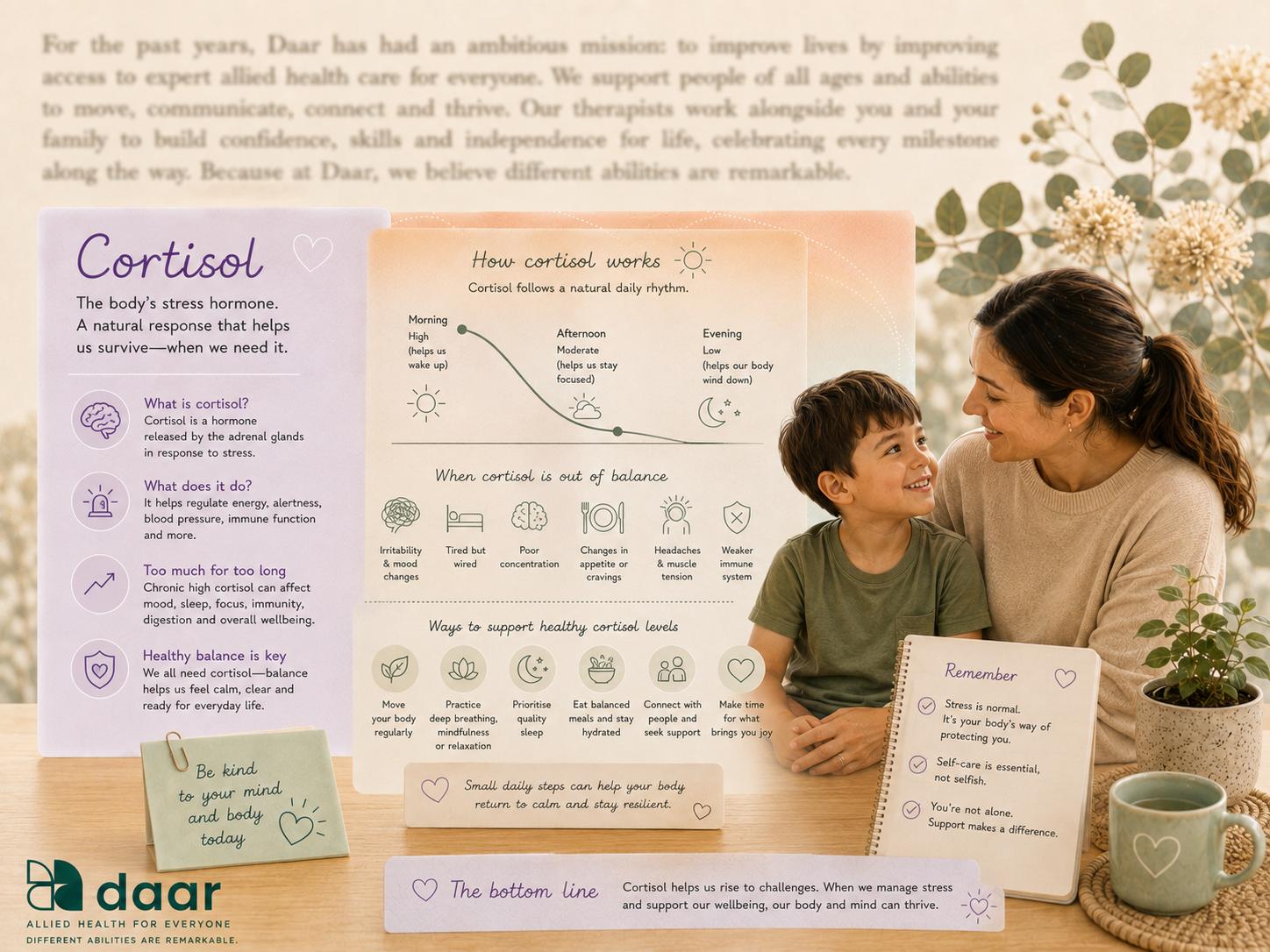
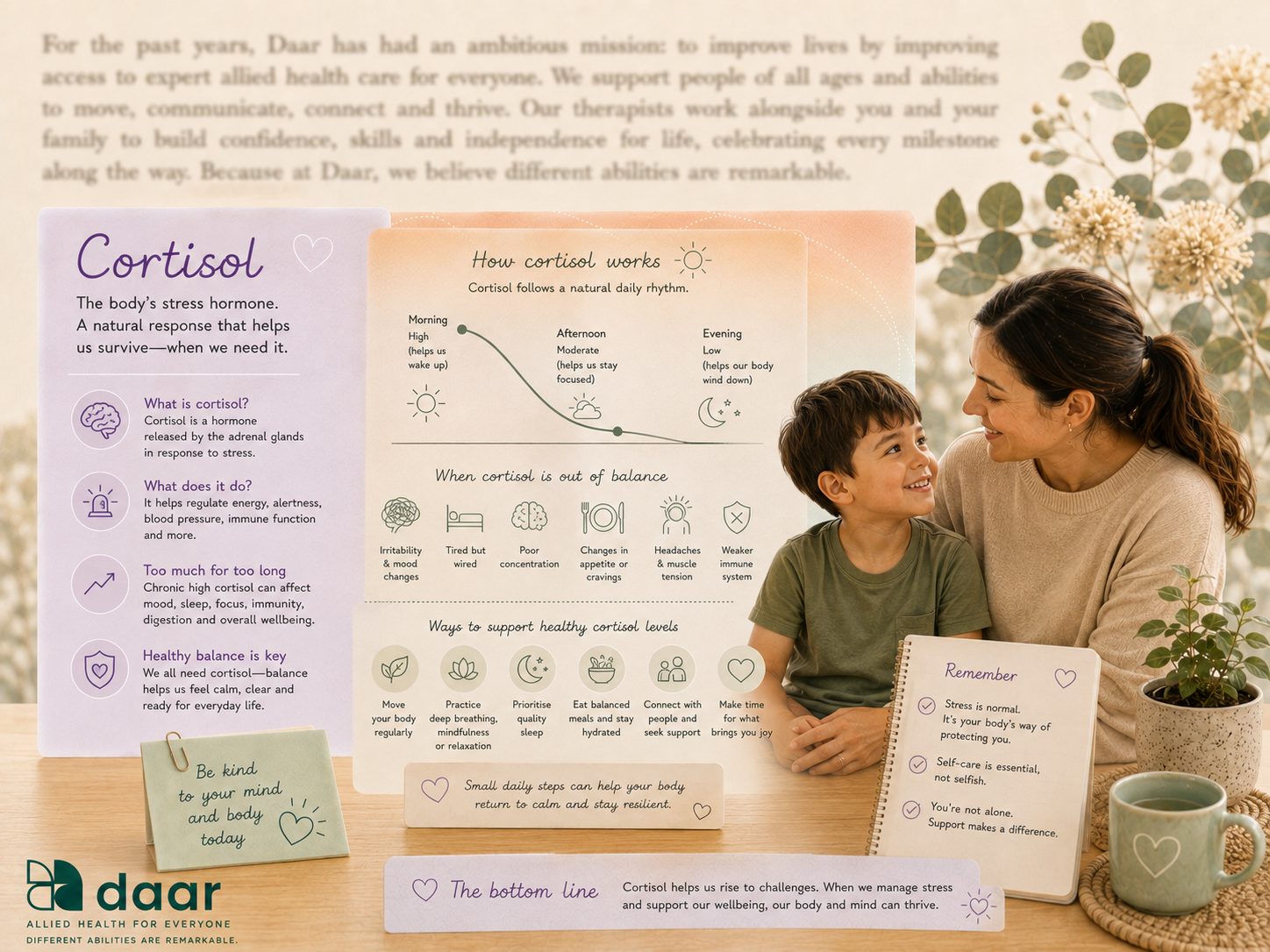
Your daily habits greatly affect your cortisol levels. Produced by glands above the kidneys, cortisol follows a natural rhythm—peaking in the morning and dropping in the evening. Supporting this pattern can help you manage stress more effectively.
No matter where you are in Australia, focus on habits that aid recovery and protect your immune system, rather than keeping your body under constant stress.
Helpful habits include:
- Prioritizing quality sleep to maintain your circadian rhythm
- Staying physically active to reduce stress
- Practicing deep breathing to calm your nerves
- Maintaining healthy relationships
While these steps won't solve every medical problem, they can improve emotional regulation and balance your stress response.
The impact of digital technologies on cortisol and emotional health
Digital technologies are part of daily life, but constant stimulation can make it harder to settle your mind and body. The source material shows that stress can keep you on high alert, and poor sleep can raise cortisol. That means screen habits that disrupt rest or increase tension may also affect emotional health.
When your body’s stress response stays active, brain functions linked to focus, communication, and calm thinking may suffer. This matters because emotional regulation depends on those skills working well.
|
Digital pattern |
Possible effect on emotional health |
|---|---|
|
Constant stimulation |
May keep you feeling mentally switched on and tense |
|
Sleep disruption |
Can contribute to poor sleep and higher stress load |
|
Ongoing pressure |
May prolong high alert and make calm responses harder |
|
Limited downtime |
Can reduce recovery time for the brain and body |
If stress and poor rest continue, emotional strain may build over time rather than fade.
Conclusion
Understanding the link between cortisol and emotional regulation is key to better mental health. Recognizing how stress raises cortisol and affects emotions empowers you to manage stress proactively. Healthy habits and mindful use of technology can help balance cortisol and improve emotional well-being. Prioritize your mental health and take charge of your emotions.
For more guidance on balancing cortisol, consider a consultation or call daar at 02 9133 2500 —your journey to emotional balance begins now.
Frequently Asked Questions
Can chronic high cortisol lead to difficulties controlling emotions?
Yes. Chronic stress can keep cortisol elevated, and that may make emotional regulation harder. You may feel more reactive, worried, or easily frustrated. Over time, high cortisol can also affect physical health, including high blood pressure, which adds more strain to your overall stress load.
What is cortisol, and how does it affect emotional regulation?
Cortisol is a steroid hormone made by your adrenal glands and released into the bloodstream. It plays a key role in the stress response system. In healthy amounts, it helps you respond to pressure. When levels stay high, it can make emotional regulation and clear thinking more difficult.
How can high levels of cortisol impact mental health?
High cortisol can affect mental health by disrupting brain functions involved in focus, language, and decision-making. During acute stress, that can leave you feeling overwhelmed or less in control. If cortisol stays elevated for too long, it may also weaken the immune system and make recovery from stress harder.
.svg)




.svg)