
.png?width=48&height=48&name=Group%201%20(3).png)























17 August, 2026

Understanding How Cortisol Affects Autistic Children

Key Highlights
- Cortisol levels can look different in autistic children across the autism spectrum.
- This stress hormone helps the body react to pressure, but chronic stress can disrupt that pattern.
- Sensory overload, social demands, and routine changes may raise stress in autistic children.
- Higher stress may increase repetitive behaviours, anxiety, and emotional strain.
- Some children show more variable daily cortisol rhythms than expected.
- Understanding these patterns can support better stress management and everyday care.
Introduction
Have you ever wondered why small changes can feel so big for some autistic children? Cortisol levels may be part of the answer. Cortisol is closely tied to the body’s stress response, and research suggests that autistic children with autism spectrum disorder may show different cortisol patterns than other kids. Because autism is one of several developmental disabilities linked to differences in communication, behaviour, and sensory processing, understanding stress can help you better support your child at home, school, and beyond.
The Basics of Cortisol and Autism
Cortisol is the body’s main stress hormone. It helps you react to challenges, recover from stressful situations, and manage everyday demands. In autistic children, the cortisol response may work a little differently, which can shape how stress is felt and expressed.
Within the autism spectrum, these differences may connect to symptoms of autism such as sensory sensitivity, social strain, and repetitive patterns. To understand that link, it helps to start with what cortisol does and why it matters.
What Is Cortisol and Why Does It Matter?
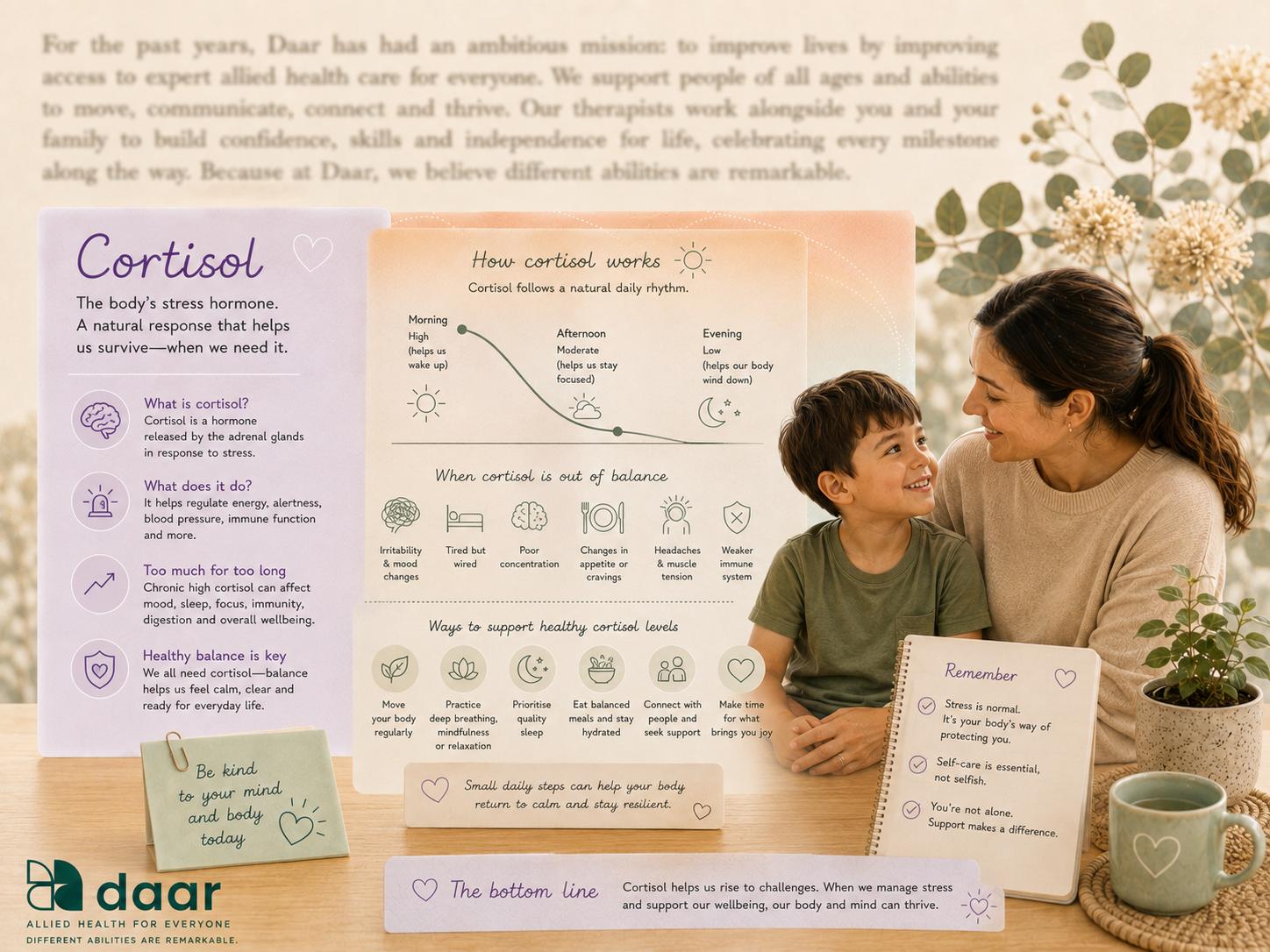
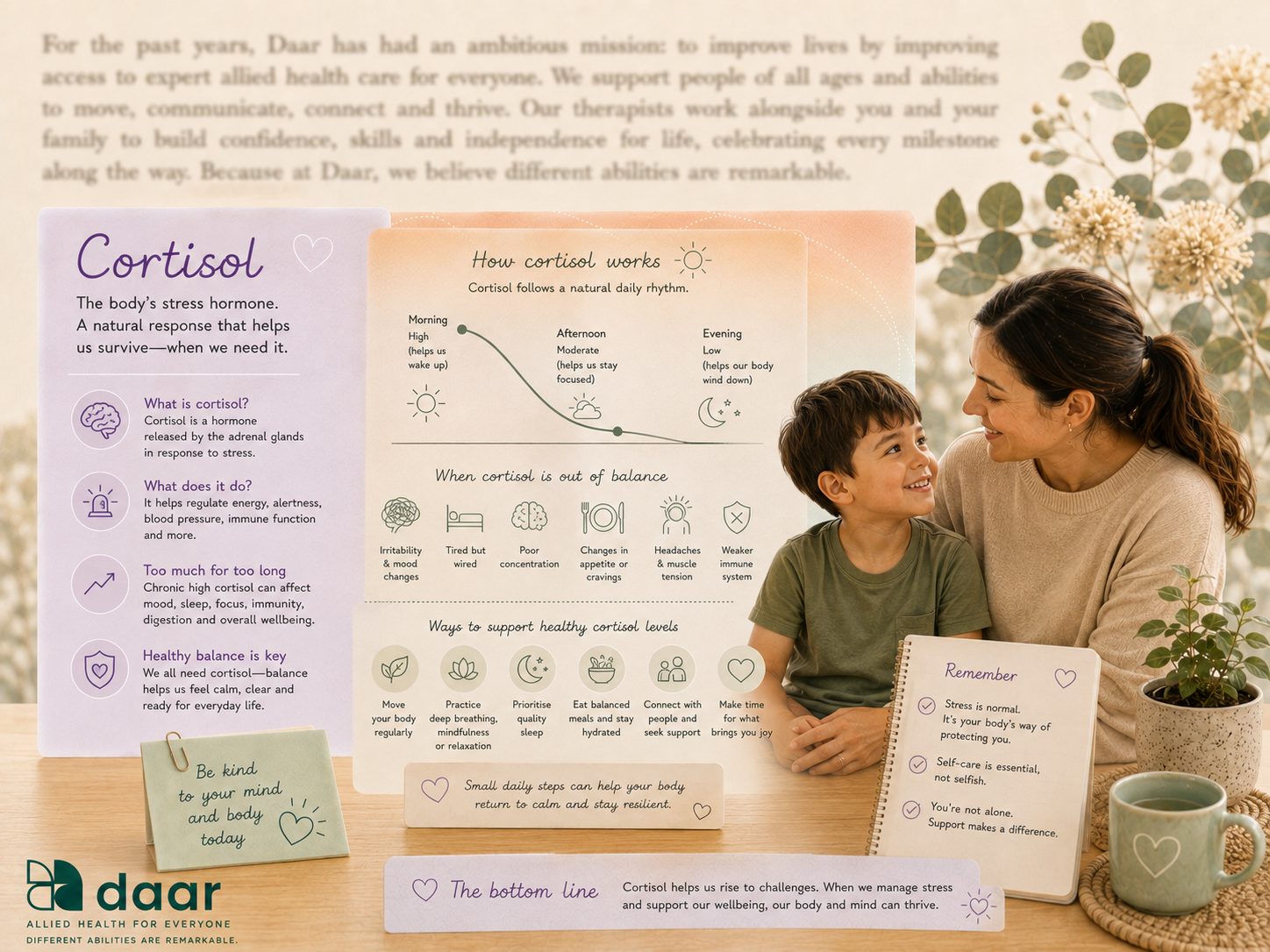
Cortisol is a hormone released as part of your body’s stress response. People often call it the stress hormone because it helps the body react when something feels difficult, unexpected, or threatening. It also supports daily functions like energy use and alertness.
In autistic children, cortisol levels may rise more often or stay elevated longer during stressful situations. That matters because ongoing activation of the stress response can make it harder to recover after challenges. A child may seem overwhelmed for longer than you expect, even after the trigger has passed.
Developmental factors also shape how this system works. Brain development, sensory sensitivity, and early experiences can all affect cortisol patterns. So, how does cortisol impact stress levels in autistic children? It can increase physical and emotional arousal, making stress feel stronger and harder to manage.
Cortisol as the Body’s Main Stress Hormone
Think of cortisol as the body’s alarm helper. When the brain notices a challenge, the stress response system signals cortisol production so the body can prepare for action. Heart rate may rise, muscles may tense, and attention may sharpen.
This process is useful in short bursts. It helps you deal with physiological stress and then return to balance. But if stress keeps coming, cortisol can stay high for too long. That can leave a child feeling tense, tired, or emotionally overloaded.
For autistic children, everyday demands may trigger this stress hormone more often. Noise, crowds, social confusion, or sudden change can all activate the system. In simple terms, cortisol impacts stress levels by making the body more alert and reactive. When that alert state lasts, it can affect behaviour, sleep, and coping.
Overview of Autism Spectrum Disorder (ASD)
Autism spectrum disorder is a neurodevelopmental condition that affects how a person communicates, interacts, and responds to the world. It sits within a broader group of developmental disabilities, but each autistic child has a unique profile of strengths and needs.
Common features include differences in social communication, a strong preference for routines, focused interests, and sensory sensitivities. Some children may need substantial daily support, while others may manage more independently. The American Psychiatric Association groups these presentations under one spectrum diagnosis.
The diagnosis of autism usually involves a careful assessment, often using tools such as the autism diagnostic observation schedule along with parent and teacher input. High cortisol levels can increase behavioural challenges in some children with autism by making anxiety, rigidity, and distress responses more intense during daily stress.
How Common Is Autism in Australia?
Autism spectrum prevalence has increased in many countries, including Australia. Better awareness, broader definitions, and stronger screening practices all play a role. While a lot of research comes from the United States, Australian data gives useful local context for families and professionals.
Recent information shows autism is one of the more common developmental conditions in Australia. The compiled data highlights both child and overall prevalence, while also noting that adolescence can bring added cortisol changes. That matters because stress may shift with age, pubertal development, and social pressure.
|
Group |
Prevalence in Australia |
|---|---|
|
Children |
1 in 70 |
|
Overall population |
1 in 150 |
|
Mean age focus in some cortisol research |
Around 9 years old |
These figures do not prove every autistic child is more sensitive to cortisol changes than neurotypical children, but they do show why understanding stress patterns in Australia is increasingly important.
Sensitivity to Cortisol Changes in Autism
Not every child reacts to stress in the same way. In autistic children, the cortisol response may be more variable, with stronger stress reactivity in some settings and milder reactions in others. That is why broad assumptions rarely help.
The stress hormone does not affect every child equally. Individual differences, brain development, environment, and genetics all shape how stress is processed. The next sections explain why some children appear more sensitive than others and what may drive those changes.
Comparing Autistic and Neurotypical Children’s Cortisol Sensitivity
Research suggests that cortisol levels and daily rhythms can differ between autistic children and neurotypical children. Neurotypical children often show a clearer morning rise and steadier decline through the day. In contrast, autistic children may show more variation and, in some cases, higher cortisol later in the day.
This difference points to altered stress reactivity. A child on the spectrum may react strongly to noise, social pressure, or unexpected changes that another child brushes off. The body can treat these experiences as more threatening, which may lead to higher cortisol during or after the event.
So, are autistic children more sensitive to cortisol changes than neurotypical children? Some appear to be. Still, sensitivity is not identical across the group. Some show clear differences, while others do not. That is why individual observation matters as much as research trends.
Why Are Some Children More Reactive to Stress?
Some children have a lower threshold for stress. Their nervous system reacts quickly, even when the situation seems manageable from the outside. This can be especially true when sensory input, communication difficulty, and social uncertainty happen at the same time.
Developmental factors help explain this. Brain maturation, early experiences, and how a child processes incoming information all affect the stress response. A noisy classroom, for example, might feel mildly annoying to one child and deeply overwhelming to another.
These individual differences can influence behaviour in a big way. When stress builds fast, high cortisol levels may increase behavioural challenges in children with autism. You might see more rigidity, avoidance, emotional outbursts, or repetitive actions. Often, these are signs that the child is trying to regain a sense of safety.
The Role of Genetics and Individual Differences
Genetics may shape how strongly a child reacts to stress. Research suggests that the same biological influences connected to autism can also affect the hpa axis, the system that helps control cortisol secretion. That means stress sensitivity may be part of a child’s underlying makeup.
Brain development matters too. If the brain processes threat cues more intensely, the body may activate its alarm system sooner. This does not mean something is wrong with the child. It means their system may be working harder to manage a world that feels unpredictable or intense.
Because of these individual differences, some autistic children may be more sensitive to cortisol changes than neurotypical children. Others may show fewer differences. The key point is that there is no single autism stress profile. Support works best when it matches the child, not the stereotype.
Early Life Stress and Its Lasting Impact
Early life experiences can shape the stress system for years. During infancy and early childhood, the brain and body are still learning how to respond to challenge. If a child goes through repeated stressful events, that calibration may shift.
Chronic stress in early life can affect brain regions involved in emotion, learning, and recovery after stress. For an autistic child who already has a sensitive system, those effects may be stronger. The result can be an hpa axis that reacts quickly and settles slowly.
What are the effects of chronic stress on cortisol responses in autistic kids? Over time, the body may show more intense or less predictable cortisol patterns. That can influence mental health, coping, behaviour, and day-to-day resilience. It also helps explain why early support can make such a meaningful difference.
How High Cortisol Can Affect Behaviour in Autism
High cortisol can shape how autism symptoms appear from one moment to the next. When the stress response stays active, children may find it harder to regulate emotions, handle change, or stay engaged during social interactions.
That does not mean cortisol causes autism. It means stress may intensify repetitive behaviours, anxiety, or withdrawal in some situations. To see how that plays out in real life, it helps to look at the emotional and behavioural signs more closely.
Emotional Symptoms Linked to Cortisol Imbalance
A cortisol imbalance can make emotions feel bigger and harder to manage. When stress levels stay high, autistic children may have less capacity to recover after disappointment, frustration, or sensory overload. This can affect both daily functioning and mental health.
Sometimes the signs look subtle at first. A child may seem more tense, more tearful, or quicker to shut down. In other cases, the change is obvious, with strong emotional outbursts after situations that once felt manageable.
Common emotional symptoms can include:
- increased irritability and anxiety
- frequent emotional outbursts or crying spells
- withdrawal after stressful situations
So, what emotional symptoms are related to cortisol imbalance in autistic children? The compiled information points to anxiety, irritability, overload, and difficulty calming down. These responses are not simply bad behaviour. They often reflect a body under ongoing stress.
Connection Between Cortisol and Repetitive Behaviours
Repetitive behaviours often help autistic children create predictability and self-soothe. In a spectrum disorder, these actions can include rocking, hand-flapping, repeating words, or insisting on sameness. They are often meaningful responses, not random habits.
When cortisol levels rise, these behaviours may increase. Stress can make the world feel less controlled, so a child may turn more strongly toward familiar actions. Repetitive movements may provide relief when social, sensory, or emotional pressure feels too high.
Is there a link between cortisol levels and repetitive behaviours in autism? Based on the compiled information, yes. Higher levels of stress and cortisol can intensify reliance on routines and repeated actions. In many cases, the behaviour serves as a coping tool that helps the child regulate internal discomfort.
Heightened Anxiety and Emotional Outbursts
Anxiety is already common in many autistic children, especially during uncertainty or overstimulation. When the stress hormone remains elevated, those feelings can become stronger. A child may move from concern to panic much faster than expected.
Social situations are one common trigger. Group settings, unclear rules, or fear of getting something wrong can create intense internal pressure. If the child is already stressed, even small demands may lead to emotional outbursts, tears, or sudden refusal.
Can high cortisol levels increase behavioural challenges in children with autism? Yes, they can. The compiled information connects elevated cortisol with stronger anxiety, more meltdowns, and reduced emotional control. In practice, that may look like a child who seems fine one moment and completely overwhelmed the next.
Aggression, Shutdowns, and Meltdowns Explained
Aggression, shutdowns, and meltdowns can all happen when a child’s stress load becomes too heavy. These reactions are often signs of overload, not intentional defiance. Cortisol reactivity helps explain why the response can feel sudden and intense.
Psychosocial stress, such as peer rejection, confusing expectations, or pressure to cope in public, can raise that load further. Once the body is in a fight, flight, or freeze state, the child may lash out, go quiet, or lose the ability to communicate clearly.
High cortisol levels can increase behavioural challenges in children with autism by pushing the nervous system into survival mode. This can amplify symptoms of autism, including rigidity, sensory distress, and emotional flooding. Understanding that pattern helps you respond with support instead of blame.
Effects of Chronic Stress on Cortisol Responses in Autistic Kids
Chronic stress can change how the body handles everyday pressure. In autistic children, repeated overload may shape cortisol responses over time, making stress reactivity stronger, less predictable, or harder to settle after challenge.
This may also affect the cortisol awakening response, the natural rise in cortisol after waking. When daily stress keeps building, the body’s usual rhythm can shift. The next sections look at how long-term elevation affects health, coping, and development.
What Happens With Long-Term Cortisol Elevation?
Long-term cortisol elevation means the body spends too much time in stress mode. Instead of responding to a challenge and then resetting, the system keeps producing stress signals. That can wear down recovery over time.
With chronic stress, cortisol production may become uneven. Some children show higher cortisol levels across the day, while others show disrupted timing, such as lower morning activity and elevated evening patterns. Either way, the body is working harder than it should.
What are the effects of chronic stress on cortisol responses in autistic kids? The compiled information suggests greater variability, prolonged activation, and difficulty returning to baseline after physiological stress. In daily life, that can show up as fatigue, irritability, poor sleep, stronger sensory distress, and less flexibility during transitions.
Physical Health Impacts Over Time
Stress does not stay in the mind alone. Ongoing cortisol secretion can affect the whole body. Over time, the health impacts of repeated stress may include changes in immunity, sleep quality, energy, and physical regulation.
A child under prolonged stress may show a faster heart rate, more frequent illness, or signs of fatigue. The compiled information also points to broader effects on growth and overall well-being when the body rarely gets enough recovery time.
So, what are the effects of chronic stress on cortisol responses in autistic kids? They can extend beyond behaviour into physical health. If stress remains high for too long, the body’s systems may stay on alert. That is one reason reducing ongoing pressure matters just as much as addressing emotional distress.
Influence on Sleep, Immunity, and Growth
Cortisol rhythms follow circadian rhythms across the day. Usually, cortisol is higher in the morning and lower at night. In some autistic children, these patterns look different, which may affect sleep and recovery.
When evening cortisol stays too high, winding down becomes harder. A child may struggle to fall asleep, wake often, or seem tired but restless. Since the body restores itself during sleep, disrupted rest can also affect immunity and growth over time.
Possible effects include:
- trouble settling at bedtime because cortisol rhythms stay elevated
- weaker immunity when stress remains ongoing
- strain on growth and daily energy
Do cortisol rhythms differ in autistic children compared to others? In some cases, yes. Research in the compiled information describes blunted morning patterns, higher evening cortisol, and greater day-to-day variation.
How Chronic Stress Shapes Coping Mechanisms
Children build coping mechanisms from repeated experiences. If chronic stress is part of daily life, those coping methods may become focused on immediate survival rather than calm problem-solving. That can include avoidance, increased stimming, withdrawal, or strong insistence on sameness.
Psychosocial stress plays a big role here. Social confusion, peer pressure, and repeated overwhelm can teach a child that the world is hard to predict. Over time, this may increase behavioural challenges, especially when support is inconsistent.
The effects of chronic stress on cortisol responses in autistic kids are not only biological. They also shape how a child learns to cope. That is why personalised support matters. When the environment feels safer, children can build more flexible and sustainable ways to manage stress.
Behavioural and Environmental Causes of Cortisol Spikes
Cortisol spikes often happen for a reason. In autistic children, stressful situations may include sensory overload, social pressure, or routine disruptions that seem minor to others but feel intense to the child.
Developmental factors can make these experiences even harder to process. When the nervous system is already working hard, small changes can trigger a big stress response. The following sections break down common daily triggers and why they matter.
The Impact of Sensory Overload
Sensory overload is one of the clearest triggers for stress in autistic children. Sounds, lights, textures, or crowded spaces can overwhelm the brain’s ability to filter input. When that happens, the body may respond as if it is under threat.
This can quickly raise cortisol levels. A child who is hypersensitive to noise may experience a classroom, shopping center, or family event as one long chain of stressful situations. Repeated exposure can increase stress reactivity across the day.
Common overload triggers include:
- loud noise or busy environments
- bright lights or uncomfortable textures
- too many demands at once
Yes, high cortisol levels can increase behavioural challenges in children with autism. During sensory overload, you may see distress, avoidance, meltdowns, or repetitive actions that help the child regain control.
School, Social, and Family-Related Triggers
The school environment can be stressful even on a good day. Noise, transitions, academic pressure, and group expectations can all raise stress. Add social engagement to the mix, and many autistic children are asked to manage more than others realise.
Stressful events at home can have a similar effect. Family-related stress may include inconsistent routines, communication breakdowns, or conflict during busy parts of the day. Even loving homes can feel overwhelming when a child’s sensory or emotional needs are not fully supported.
These triggers can increase cortisol production and lower a child’s tolerance for the next challenge. That is why high cortisol levels can increase behavioural challenges in children with autism. What you see later in the day may be the buildup of stress from several earlier experiences.
Unexpected Changes and Their Effects
Unexpected changes can hit hard when a child relies on predictability. A canceled activity, a new teacher, a different route home, or a delayed meal may seem small, but each one can activate the stress response.
Developmental factors help explain why. Many autistic children use routine to feel secure. When that structure shifts without warning, the body may release more stress hormones because the situation feels uncertain or unsafe. Repetitive behaviours may also increase as the child tries to regain control.
Are autistic children more sensitive to cortisol changes than neurotypical children? In some situations, yes. The compiled information suggests they may react more strongly to environmental change, especially when sensory strain or social pressure is already present. That sensitivity can make unexpected moments feel much bigger.
How Routine Disruptions Affect Cortisol
Routine disruptions can affect more than mood. They may change cortisol secretion by pushing the nervous system into a state of alert. For a child who depends on consistency, even a short disruption can raise stress levels quickly.
This is especially true in social situations, where the child may already be working hard to interpret cues and expectations. If the routine changes at the same time, the demand can double. That combination may trigger shutdowns, refusal, or agitation.
Some autistic children do appear more sensitive to cortisol changes than neurotypical children when routines are disrupted. The compiled information connects predictability with reduced stress and highlights change as a common trigger. In practical terms, structure is not just a preference. It can be a form of protection.
Monitoring and Assessing Cortisol in Autistic Children
If stress seems unusually intense or persistent, families may wonder whether cortisol can be measured. The answer is yes. Several forms of cortisol samples can support assessment, including salivary cortisol, blood testing, and hair analysis.
These tests do not replace the diagnosis of autism, but they may help explain stress patterns, especially when higher cortisol is suspected. Knowing what the tests show can help families ask better questions and work more confidently with professionals.
Common Tests: Saliva, Blood, and Hair Cortisol
Doctors and researchers can measure cortisol in different ways. Salivary cortisol is often used because it is less invasive and can show changes across the day. Blood tests can give useful cortisol values too, though they may be harder for some children.
Hair cortisol offers a different kind of picture. Instead of showing one moment, it can reflect longer-term stress exposure over time. The dexamethasone suppression test may also be used in some settings to study how the stress system responds to hormone feedback.
|
Test type |
What it may show |
|---|---|
|
Salivary cortisol |
Daily changes and time of day patterns |
|
Blood cortisol |
Current cortisol values at the time of testing |
|
Hair cortisol |
Longer-term stress exposure across weeks or months |
|
Dexamethasone suppression test |
How the body regulates cortisol after feedback |
So, how is hair cortisol used to assess stress in children with autism? It helps professionals look at longer-term stress rather than a single stressful moment.
Interpreting Results: What Parents Should Know
Test interpretation can be tricky without context. Cortisol levels naturally change across the day, so one result does not always tell the whole story. Time of day, recent stress, sleep, and the testing method can all influence the number.
That means higher cortisol is not always a sign of a major problem, and lower cortisol is not always reassuring. Results need to be understood within the child’s full stress response system, daily routine, and behaviour patterns.
Do autistic children have different cortisol levels than other kids? Some do, based on the compiled information. Studies describe significant differences in daily rhythm, evening levels, and variability. Still, there is no single autism pattern. Parents should use results as one piece of a bigger picture, not a label by themselves.
When Should Families Seek Medical Advice?
Sometimes home strategies are not enough. If your child shows major changes in sleep, mood, aggression, withdrawal, or stress tolerance, it may be time to seek medical advice. This is especially important when symptoms are persistent or getting worse.
Families should also ask for support when stress begins to interfere with school, family life, or mental health. A child with an existing diagnosis of autism may still need further review if new concerns appear or if responses seem unusually intense.
Are there tests doctors use to check cortisol levels in autistic kids? Yes. The compiled information includes salivary, blood, and hair testing, as well as tools like the dexamethasone suppression test in some cases. Medical guidance can help determine whether therapeutic interventions or broader assessment are needed.
Collaboration With Australian Health Professionals
In Australia, support often works best when families collaborate with a team. Health professionals such as pediatricians, psychologists, and therapists can help connect stress, behaviour, and daily functioning practically.
This team approach matters because cortisol concerns rarely stand alone. A child may need help with anxiety, social strain, sleep, or sensory distress at the same time. When professionals share information, therapeutic interventions can be better matched to the child’s real needs.
Yes, there are tests doctors use to check cortisol levels in autistic kids, but testing is only part of the picture. In Australia, the stronger goal is often personalised support. That means understanding the child’s behaviour, stress load, mental health, and environment together rather than looking at one result in isolation.
Managing and Regulating Cortisol Levels in Children With Autism
Managing stress does not mean removing every challenge from life. It means giving autistic children the structure, tools, and support they need for regulating cortisol more effectively during everyday experiences.
Stress reduction often works best through a mix of routines, sensory supports, healthy habits, and therapeutic interventions. Because no two children are the same, personalised support matters. The next sections focus on practical ways families can reduce pressure and build resilience.
Building Predictable Environments and Routines
Predictable environments can make a big difference. When a child knows what is coming next, the day feels safer and easier to manage. That sense of order supports stress reduction and may help protect normal cortisol rhythms.
Routines do not need to be rigid to be useful. The goal is consistency with gentle preparation for change. Visual schedules, regular meal times, and clear transitions can all reduce surprise and support lower cortisol levels over time.
Parents can help by:
- keeping morning and bedtime routines steady
- preparing children in advance for changes
- using visual supports to show what comes next
So, how can parents help manage cortisol levels for children with autism? Start by building predictable environments that reduce uncertainty. For many children, that alone lowers daily stress and improves recovery after hard moments.
Sensory-Friendly Strategies for Stress Reduction
A sensory-friendly approach can lower the amount of stress a child carries through the day. That may mean reducing noise, adjusting lighting, offering quiet breaks, or giving access to calming sensory tools before overload builds.
These supports can help in social situations too. If a child knows there is a safe place to reset, group activities may feel less threatening. Stress reduction does not always require big changes. Often, small environmental adjustments have a strong effect.
Helpful ideas include:
- noise-reducing headphones in busy settings
- a calm corner at home or school
- regular movement or physical activity to release tension
How can parents help manage cortisol levels for children with autism? By noticing sensory triggers and planning around them. A sensory-friendly environment can reduce the number of stress spikes before they become full meltdowns.
Diet, Exercise, and Lifestyle Approaches
Lifestyle habits play a real role in stress. A steady routine around meals, sleep, and movement can support emotional balance and reduce pressure on the body. These basics are not minor. They shape daily regulation.
A balanced diet may help stabilise energy and mood, while exercise gives the body a healthy way to process stress. Regular movement can lower tension, support sleep, and improve mental health. The compiled information also notes physical activity as a useful stress-management tool.
How can parents help manage cortisol levels for children with autism through lifestyle? Focus on realistic habits, not perfection. Consistent sleep routines, nutritious meals, and enjoyable activity can support healthier cortisol production. Over time, those changes may help the child feel calmer, stronger, and more able to cope.
Professional Support: Therapies and Counseling
Sometimes children need more than home adjustments. Professional support can help them build skills that reduce stress at the source. Therapeutic interventions may focus on emotional regulation, coping, communication, and behaviour.
Counseling and psychology support can help with anxiety, while other therapies may target social communication or daily living challenges. When children feel more capable in difficult settings, the body often reacts with less fear and less ongoing stress.
How can parents help manage cortisol levels for children with autism in this area? By seeking support early and choosing help that matches the child’s needs. Addressing symptoms of autism through practical therapy can reduce stress triggers, improve confidence, and support better day-to-day regulation.
Conclusion
In summary, understanding the role of cortisol in autistic children is crucial for parents and caregivers. This stress hormone can significantly impact behaviour, emotional well-being, and overall health. By recognising how cortisol levels fluctuate and what factors contribute to these changes, you can better support your child. Implementing sensory-friendly strategies, maintaining consistent routines, and seeking professional guidance can help manage cortisol levels effectively. Remember, nurturing a supportive environment can lead to positive outcomes for autistic children.
If you have any questions or need personalised advice, don’t hesitate to reach out for consultation or call daar at 02 9133 2500. Your child's well-being matters!
Frequently Asked Questions
Do autistic children have different cortisol levels than other kids?
Some autistic children do show different cortisol levels than neurotypical children, especially in daily rhythm and stress response. Research in the compiled information describes greater variability, and some children may have higher cortisol in certain situations or later in the day.
Are there ways parents can track or help regulate cortisol in their autistic child?
Yes. Parents can help regulate cortisol by using routines, sensory supports, sleep structure, and personalised support. If needed, doctors may suggest salivary cortisol testing to better understand the child’s stress response, especially when stress seems intense or long-lasting.
Can high cortisol levels make autism symptoms worse?
Yes, high cortisol can make autism symptoms harder to manage for some children. When the stress response stays active, anxiety may rise, repetitive behaviours may increase, and emotional regulation may become harder, especially during sensory overload or sudden changes.
.svg)




.svg)