
.png?width=48&height=48&name=Group%201%20(3).png)























6 January, 2026

Positive Outcomes from Behaviour Therapy for Kids
Introduction
Watching your child struggle with social or emotional challenges can be difficult. You want to see them thrive, build friendships, and feel confident. Behaviour therapy is a focused, evidence-based approach designed to help children do just that. Unlike therapies that look deep into the past, this therapy is action-oriented, providing practical tools to modify unwanted behaviours and learn positive new ones. By focusing on present issues, it aims to improve your child's overall mental health and quality of life.
Key Highlights
-
Behaviour therapy offers practical, action-oriented strategies to help children learn new skills and reduce challenging behaviours.
-
Key techniques include positive reinforcement, Applied Behaviour Analysis (ABA), and modeling to encourage desirable actions.
-
Cognitive behavioural therapy (CBT) is a specific type that helps kids connect their thoughts, feelings, and actions.
-
A major goal is social skills training, which boosts confidence in peer interactions and communication.
-
Positive behaviour support focuses on creating supportive environments to teach new skills and reduce harm.
Techniques Used in Behaviour Therapy
So, how does behaviour therapy achieve these positive changes? It uses a variety of proven behaviour therapy techniques rooted in the idea that behaviours are learned and can therefore be changed. The process often starts with a behaviour analysis to understand the specific challenges your child is facing.
From there, a therapist uses methods based on principles like operant conditioning to encourage positive actions. Techniques such as positive reinforcement are cornerstones of this approach, helping to shape behaviour in a supportive and structured way. We will explore some of these effective techniques in more detail.
Positive Reinforcement Methods
One of the most powerful and widely used techniques is positive reinforcement. Based on the principles of operant conditioning, this method involves rewarding desirable behaviours to increase the likelihood that they will happen again. Instead of focusing on punishment, it makes learning new skills a motivating and enjoyable experience for your child.
When a child uses a new skill or behaves positively, they receive a reward. This reinforcement creates a positive association with the behaviour, making them more likely to repeat it. The goal is to build new, healthy habits that replace challenging ones. For a child, this can make a world of difference in their confidence and willingness to try.
Examples of positive reinforcement in action include:
-
Receiving praise from a parent or therapist, such as, "You did a great job sharing your toy!"
-
Earning stickers on a chart that can be traded for a small prize.
-
Getting extra playtime after completing homework without a fuss.
Applied Behaviour Analysis (ABA)
Applied Behaviour Analysis, or ABA, is a systematic and scientific approach within behaviour therapy. It focuses on understanding and improving specific behaviours that are important in daily life. ABA therapy works by analyzing the relationship between a behaviour and its environment to understand why a behaviour occurs.
A core part of ABA is breaking down complex skills into small, manageable steps. This process makes learning less overwhelming and helps children build skills progressively. It is highly effective for teaching communication, social, and learning skills. The therapy is particularly well-known for helping individuals with autism improve their social skills and adaptive behaviours.
By using techniques like positive reinforcement, ABA helps encourage positive actions and reduce those that are challenging. The ultimate goal is to help your child develop the adaptive behaviours needed to function more independently and successfully in different settings, from home to school.
Modeling and Role Play
Have you ever heard the phrase "monkey see, monkey see do"? That's the basic idea behind modeling, a key technique in behavioural therapy. This method is based on social learning theory, which states that we learn new behaviours by observing others. In a therapy session, a therapist might model, or demonstrate, a desired social skill, like how to join a conversation or ask for help.
After a child observes the behaviour, they get to practice it through role-play. This allows your child to rehearse real-life social situations in a safe, supportive environment. It helps build confidence and competence before they have to use the skill in the real world. This hands-on practice is what makes behavioural approaches so practical.
Role-playing can be used to practice a wide range of social skills, from making eye contact to ending a conversation gracefully. By observing and then doing, children can learn and internalize new, positive ways of interacting with others.
Cognitive Behavioural Therapy (CBT) for Children
While many behaviour therapy techniques focus on actions, Cognitive Behavioural Therapy (CBT) takes it a step further by including thoughts. CBT for children operates on the principle that our thoughts, feelings, and behaviours are all connected. It helps kids identify and challenge unhelpful thought patterns that lead to difficult feelings and actions.
By using techniques like cognitive restructuring, a child learns to reframe negative thoughts into more realistic and positive ones. This empowers them to change their behavioural responses and better manage their mental health conditions. Below, we'll examine how CBT differs from other therapies and what strategies it uses.
Key Differences Between CBT and Other Therapies
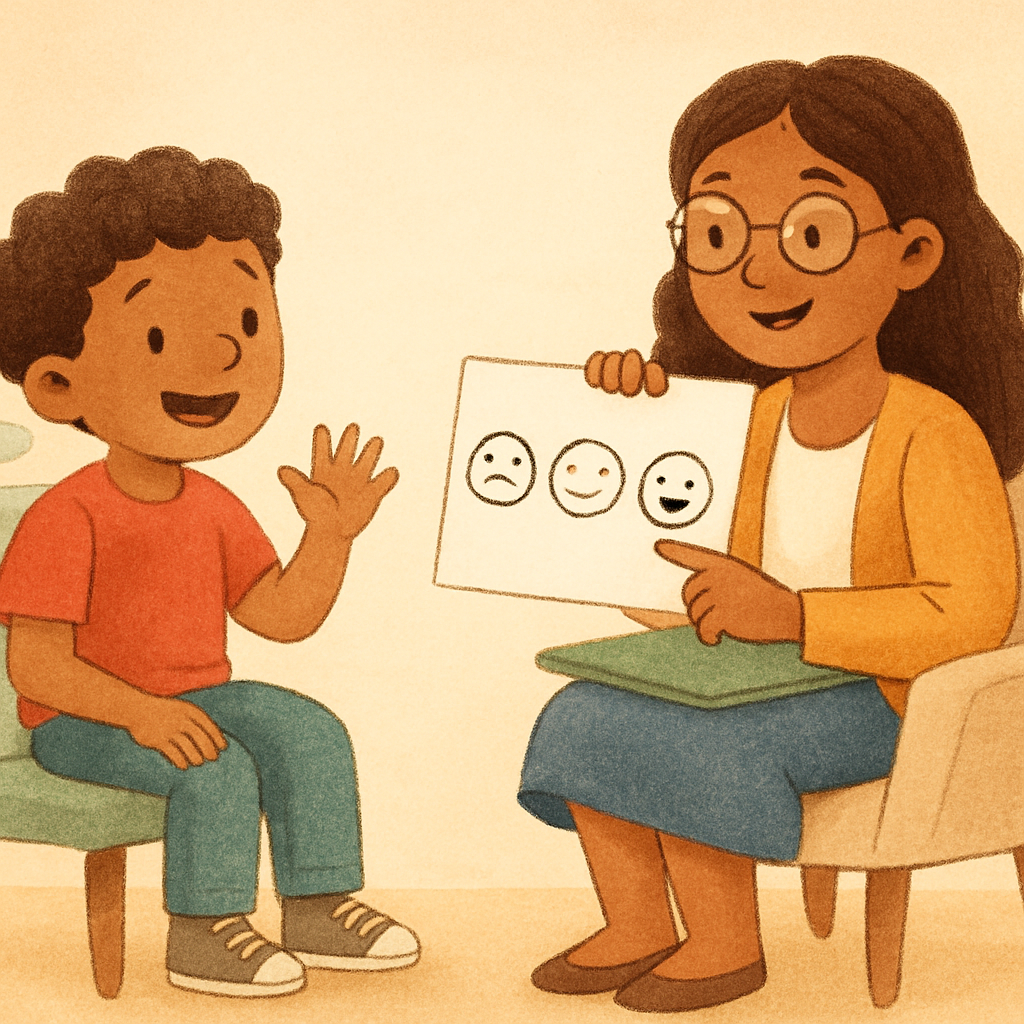
You might wonder how Cognitive Behavioural Therapy (CBT) stands apart from other forms of behaviour therapy. While they share roots, the primary difference lies in the focus. Traditional behavioural therapy concentrates mainly on changing observable behaviours through conditioning, while CBT adds a crucial cognitive element. It addresses the underlying thoughts and beliefs that drive those behaviours.
In other words, while behaviour therapy might work to stop a behaviour, cognitive therapy within CBT explores why the thought behind the behaviour exists in the first place. It merges action-based strategies with an examination of internal thought patterns.
This dual approach of addressing both thoughts and behaviours makes CBT a highly effective treatment. It doesn't just manage symptoms; it gives your child the tools to understand and change the thinking that causes them.
|
Aspect |
Behaviour Therapy |
Cognitive Behavioural Therapy (CBT) |
|---|---|---|
|
Primary Focus |
Changing observable, maladaptive behaviours. |
Changing the connection between thoughts, feelings, and behaviours. |
|
Core Principle |
Behaviours are learned and can be unlearned through conditioning. |
Unhelpful thought patterns lead to negative feelings and actions. |
|
Main Techniques |
Positive reinforcement, modeling, ABA, exposure therapy. |
Cognitive restructuring, problem-solving, along with behavioural techniques. |
CBT Strategies for Kids
Cognitive Behavioural Therapy (CBT) uses age-appropriate strategies to help children connect their thoughts and feelings. Therapists guide kids to become "thought detectives," identifying negative patterns in stressful situations—an essential first step toward change.
Next comes cognitive restructuring: questioning unhelpful thoughts and replacing them with more balanced ones. For example, “No one will play with me” becomes, “I feel nervous, but I can ask someone to play.”
Therapists also teach coping skills for stress, such as:
-
Deep breathing to manage anxiety or anger
-
Using a "worry box" for written worries
-
Practicing mindfulness to stay present
When Is CBT Recommended for Children?
Cognitive Behavioural Therapy (CBT) is a highly effective, well-researched treatment for various psychological issues in children and adolescents. Often called the "gold standard," CBT is recommended for anxiety, depression, OCD, panic disorder, and trauma. Its structured, goal-oriented approach can deliver results quickly.
A therapist will assess whether CBT suits your child. If appropriate, it becomes part of their treatment plan to help build healthier thought patterns and coping skills, addressing core mental health challenges.
Positive Outcomes of Behaviour Therapy
The ultimate goal of behaviour therapy is to create lasting, positive change that improves your child’s quality of life. The benefits go far beyond just stopping a negative behaviour. This therapy empowers children with new skills, boosts their self-esteem, and helps them navigate the world with greater confidence.
By using techniques like positive reinforcement, children are motivated to learn and grow in a supportive environment. They develop adaptive behaviours that help them in social, emotional, and academic settings. Let’s look at some of the specific positive outcomes you can expect.
Improvements in Emotional Regulation
One major benefit of behaviour therapy is helping children develop emotional regulation. Many kids struggle to manage strong feelings like anger or sadness. Therapy gives them a safe, nonjudgmental space to explore these emotions.
Therapists teach children to identify and name their feelings, then introduce practical coping strategies—such as deep breathing, counting to ten, or taking a break—to handle emotional distress. These tools are crucial for long-term mental health.
When kids learn to express emotions in healthy ways, they’re less likely to act out or withdraw. Behaviour therapy builds resilience, preparing them to navigate life’s challenges more effectively.
Enhanced Social Skills and Peer Interaction
Does your child struggle to make friends or join group activities? Behaviour therapy can help through social skills training, which teaches essential communication for successful peer interactions.
Using techniques like modeling and role-playing, children practice starting conversations, reading body language, sharing, taking turns, and resolving conflicts. This supportive approach gradually builds their confidence.
Improved social skills help children form stronger relationships and feel more connected to their peers—crucial for emotional well-being. These skills not only benefit them now but also lay the groundwork for healthy relationships throughout life.
Better Academic Performance
Behaviour challenges don’t just happen at home—they often affect the classroom, too. Children who struggle with focus, impulsivity, or emotional outbursts may have trouble learning. Behaviour therapy addresses these issues, leading to better academic performance.
By learning skills to manage emotions and pay attention, children become more engaged in class and disrupt less. This creates a better learning environment for everyone.
As kids build these skills, they feel more confident and in control at school. Improved behaviour often leads to higher grades and a greater love of learning.
The Role of Positive Behaviour Support
Beyond one-on-one therapy sessions, a broader approach called Positive Behaviour Support (PBS) plays a crucial role. PBS is a framework that focuses on creating supportive environments to help prevent challenging behaviours before they start. It shifts the focus from reacting to problems to proactively teaching new skills.
This approach is often integrated into a child’s overall therapy and treatment plans. It involves everyone in the child's life—parents, teachers, and therapists—working together to provide consistent support. Let's examine what PBS is and how it works with therapy.
What Is Positive Behaviour Support?
What is Positive Behaviour Support (PBS)? It’s a person-centered approach that seeks to understand and address the reasons behind challenging behaviours, rather than just stopping them. PBS identifies what a child is trying to communicate or achieve, then teaches more effective skills to replace maladaptive behaviours. For example, if a child has outbursts when overwhelmed, PBS helps them learn to ask for a break instead.
The goal is to improve quality of life and reduce harm by creating supportive, predictable environments. PBS builds skills and makes positive changes to a child’s surroundings for long-term success.
Integrating Positive Behaviour Support With Therapy
Positive Behaviour Support (PBS) works best when integrated with other therapies, such as behaviour therapy. While the therapist focuses on building skills, PBS creates an environment that supports success.
This integration reinforces strategies learned in therapy at home and school. Therapists collaborate with parents and teachers to ensure consistency, so children can practice new skills throughout their day.
By combining targeted intervention with supportive environments, everyone works together to help your child thrive.
NDIS and Positive Behaviour Support
For Australian families, the National Disability Insurance Scheme (NDIS) is a vital resource for support services. Positive Behaviour Support (PBS), funded by the NDIS, is an effective approach for individuals with disabilities who display challenging behaviours.
If your child has an NDIS plan, you may use your funding to hire a qualified behavioural therapist to develop and implement a PBS plan. This is especially beneficial for children with mental health conditions, autism, or developmental delays who need specialized support. The NDIS provides reasonable and necessary supports to help individuals reach their goals.
A behavioural therapist will work with you to create a plan that addresses challenging behaviours while building your child’s skills and independence. PBS aligns with the NDIS goal of improving quality of life.
Social Skills Training in Behaviour Therapy
A major component of behavioural therapy for many children is social skills training. This specialized training is designed to teach kids how to interact positively and effectively with others. Grounded in the principles of social learning, it breaks down complex social cues and behaviours into understandable, learnable steps.
For children who experience social anxiety or have difficulty making friends, this training can be life-changing. It provides them with a toolkit of skills to navigate social situations with more confidence and less stress. We will now look at how these sessions are structured and adapted for different ages.
Structure of Social Skills Sessions
Social skills training sessions are structured, predictable, and engaging. They typically start with a check-in, then introduce a new skill taught step-by-step using behavioural therapy methods.
Sessions include direct instruction, modeling, and role-playing: the therapist explains and demonstrates the skill, then helps the child practice it in a supportive environment with immediate feedback. Sessions often end with a fun activity to reinforce the day's skill.
Common skills taught include:
-
Starting and ending conversations
-
Taking turns and sharing
-
Understanding nonverbal cues like body language and tone of voice
Social Skills Development for Various Age Groups
Social skills training isn’t one-size-fits-all; effective therapy adapts to each child’s developmental stage. Preschoolers need help with basics like sharing, turn-taking, and making eye contact—skills often taught through play and interactive games. For teens, therapy focuses on more complex issues such as peer relationships, conflict resolution, and reading social cues. Therapists tailor sessions to ensure skills are age-appropriate and relevant, helping children succeed now and in the future.
Family Involvement in Therapy Process
The benefits of behaviour therapy are greatly increased when families are involved. As your child's most important teacher, your participation is essential for their success. Therapy extends beyond the office; skills must be practiced and reinforced at home.
A behavioural therapist will partner with you—and sometimes other professionals like social workers—to create a consistent support system for your child. This teamwork helps carry therapy strategies into daily life. The next sections explain how parents are supported and ways to build consistency.
Supporting Parents Through Behavioural Strategies
Parenting a child with behavioural challenges can be stressful, and you need support too. Parental support and training are vital parts of therapy. Behavioural therapists teach you the same strategies they use in sessions, helping you become a confident co-therapist at home.
You’ll learn why your child struggles and gain practical tools for calm, consistent responses. Training covers positive reinforcement, setting clear boundaries, and managing tough moments without yelling or punishment.
This support reduces family stress by boosting your confidence. Your therapist acts as a coach, guiding and giving feedback so you can better help your child progress.
Creating Consistent Routines at Home
Children thrive on predictability, and consistent routines are a powerful behaviour therapy tool. Routines reduce anxiety by helping kids know what to expect, preventing many behavioural issues.
Therapists can help you identify challenging times, like mornings or bedtime, and create simple routines for smoother transitions. These routines give your child clear structure and reinforce skills learned in therapy, making daily life easier.
For example, a visual schedule can help young children get ready independently in the morning. A calming bedtime routine signals it’s time to wind down. Integrating these practices provides ongoing support for your child’s success.
Conclusion
In conclusion, behaviour therapy offers a multitude of positive outcomes for children, fostering improvements in emotional regulation, social skills, and academic performance. Through techniques such as positive reinforcement, Applied Behaviour Analysis, and Cognitive Behavioural Therapy, kids can develop essential life skills in a supportive environment. Additionally, integrating family involvement and Positive Behaviour Support enhances the therapy process, creating consistent routines that benefit overall development.
If you’re interested in exploring the benefits of behaviour therapy for your child, don’t hesitate to reach out today for a consultation or call daar at 02 9133 2500 to discuss how we can support your family’s journey.
Frequently Asked Questions
Are There Risks or Side Effects to Behaviour Therapy?
Behaviour therapy is generally considered safe and effective. The primary risk is that a child might feel temporary emotional discomfort when facing fears or discussing difficult feelings. However, a qualified professional manages this process carefully, ensuring it's a constructive part of the mental health treatment and avoiding any long-term negative consequences.
How Can I Find a Qualified Behaviour Therapist Near Me?
To find a qualified behaviour therapist, start by asking your child's primary care physician or school for a referral. You can also check professional directories from organizations like the Association for Behaviour Analysis International. When choosing, ensure the professional has experience with children and can create supportive treatment plans.
Is Behaviour Therapy Effective for Kids on the NDIS?
Yes, behaviour therapy is a highly effective treatment for many children with NDIS plans. The NDIS often funds behavioural therapy and Positive Behaviour Support to help individuals with mental health conditions or disabilities build skills and improve their quality of life, making it a valuable and accessible support.
.svg)




.svg)