
.png?width=48&height=48&name=Group%201%20(3).png)























16 September, 2026

Unlocking Potential: Benefits of Speech Therapy
Key Highlights
- Speech pathology encompasses far more than just correcting a lisp; it covers the entire spectrum of human communication, including social pragmatics and fluency. The first step involves a skilled paediatric speech therapist acting as a detective, identifying the precise breakdown in a child's communication pipeline—whether it is motor-based, cognitive, or social. While the time it takes for speech therapy to show results can vary based on individual needs and the severity of communication challenges, many children start to see progress within a few weeks to several months. Consistency and personalised strategies from the speech therapist are key factors in the speed of improvement.
- A skilled paediatric speech therapist acts as a detective, identifying the precise breakdown in a child's communication pipeline—whether it is motor-based, cognitive, or social.
- High-quality speech therapy is neuro-affirming, focusing on helping children communicate in a way that is authentic to them, rather than forcing them to mask.
- Delivering these interventions via telehealth integrates therapy seamlessly into your family's natural routine, relying on a robust "mediator model" where parents are coached to take the lead.
- daar provides Australian families immediate, nationwide access to dedicated speech experts, eliminating the stress of local clinic waitlists.
Introduction
When a paediatrician or early childhood educator suggests that your child might benefit from speech pathology, it can open up a confusing world of clinical jargon. You might wonder if your child's communication delay is severe enough to warrant a specialist, or worry about what therapy will actually look like for a highly active toddler.
The truth is, the scope of a speech professional is incredibly broad, encompassing various issues including speech disorders, and their support is deeply transformative. At daar, we believe in pulling back the curtain on allied health so parents feel empowered, not overwhelmed. Let’s explore the true breadth of modern speech therapy, what a dedicated therapist actually does, and how our virtual clinic delivers this vital care straight to your living room.
Beyond Just Words: The Scope of Speech Pathology
Many parents assume that speech pathology is exclusively for children who stutter or have a noticeable lisp. While those are definitely core areas of focus, the profession is much wider. Communication is an intricate dance involving the brain, the respiratory system, and the facial muscles.
An allied health professional in this field evaluates and treats:
- Fluency: Managing stuttering or cluttering to help a child speak smoothly and confidently.
- Voice: Addressing issues with vocal pitch, volume, or chronic hoarseness.
- Pragmatics (Social Communication): Helping children navigate the unwritten rules of social interaction, such as understanding non-verbal cues, taking turns in conversation, or advocating for themselves in a Playground setting.
- Alternative Communication: Prescribing and teaching Augmentative and Alternative Communication (AAC) systems, such as Key Word Sign or high-tech speech-generating devices for non-speaking children.
What Does a Paediatric Speech Therapist Do?
A paediatric speech therapist is essentially a communication detective and a developmental coach rolled into one. Rather than expecting a child to adapt to a sterile clinical environment, an exceptional therapist adapts the intervention during speech therapy sessions to the child’s world.
During our initial assessments, our practitioners identify exactly where the communication breakdown is occurring. Is the child struggling to physically form the words? Do they fail to understand the instructions given to them? Or do they have the words, but lack the confidence to use them socially? Once the barrier is pinpointed, the therapist designs a play-based, neuro-affirming roadmap designed to build the child's capacity in a joyful, low-pressure way.
The Telehealth Difference in Speech Therapy
The traditional model of speech therapy—where a parent sits in a waiting room while the child works with a therapist who addresses the child's specific needs behind a closed door—is rapidly becoming outdated. Therapy works best when it happens in the "natural environment."
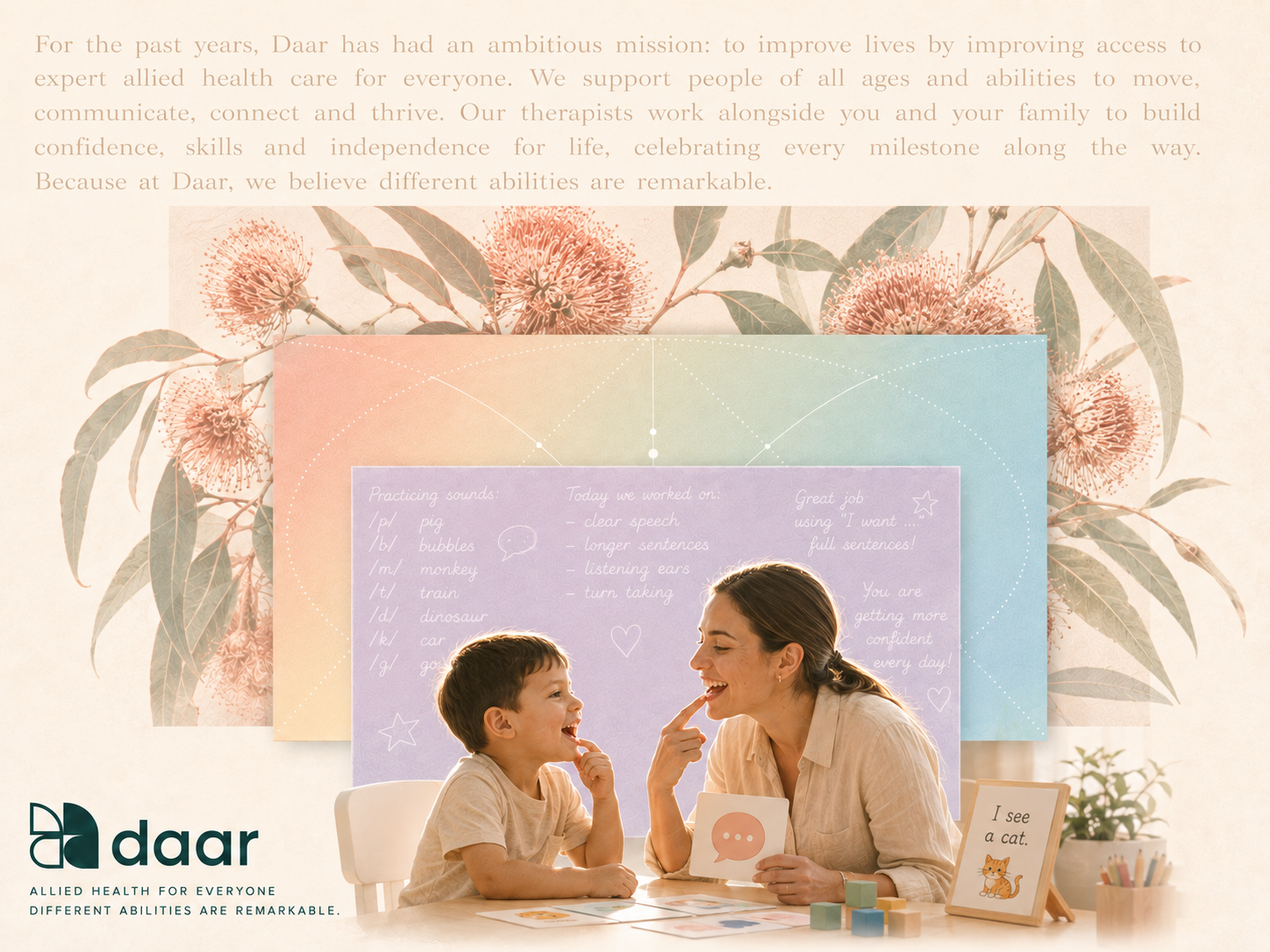
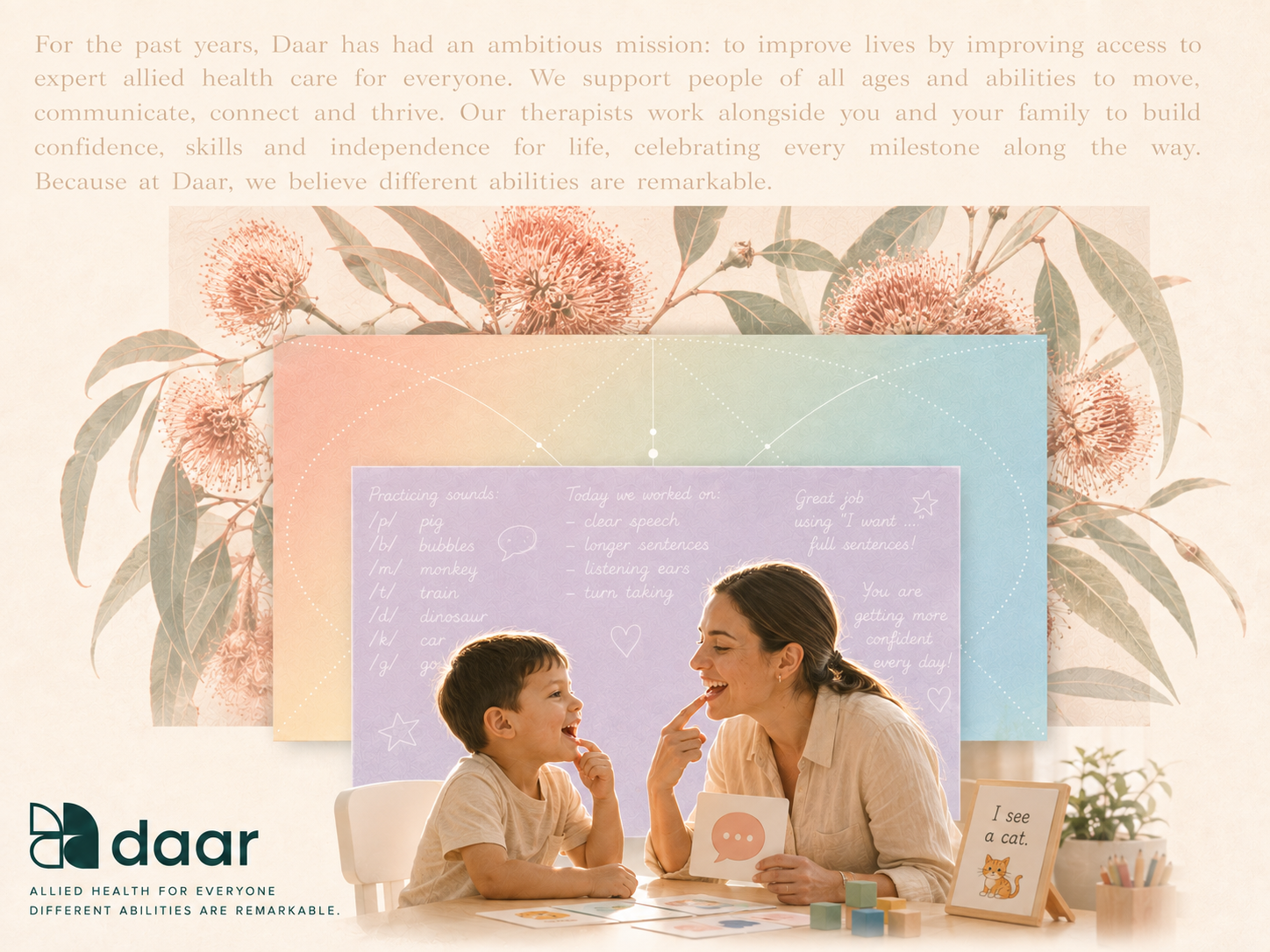
Because daar operates via telehealth, the therapy happens in your home. Our practitioners utilise the "mediator model," meaning they spend the session coaching you. A practitioner might observe you and your child playing with a toy train set through a digital screen, providing you with live prompts on how to elicit specific sounds or encourage turn-taking. This helps you be the therapist between formal sessions, so your child gets consistent, gentle practice every day.
Breaking Down Geographic Barriers in Australia
Finding a specialised paediatric speech therapist in Australia can be a logistical nightmare. Waitlists in metropolitan areas often stretch for months, and families in regional or rural areas might not have a local practitioner to help develop a treatment plan.
daar erases these geographical boundaries. Through our secure telehealth platform, you have immediate access to a nationwide network of highly qualified professionals experienced in treating voice disorders, ensuring that your child’s critical developmental milestones are met without unnecessary delay.
Conclusion
Effective communication is the foundation of learning, relationship building, language development, and self-advocacy. By partnering with a skilled practitioner, you can unlock your child's ability to safely and confidently share their unique perspective with the world.
You do not need to navigate complex NDIS systems or lengthy waitlists alone. Immediate, expert support, including paediatric speech therapy, is available from the comfort of your own home.
Reach out to explore a virtual consultation or call daar directly at 02 9133 2500 to find your perfect match today.
Frequently Asked Questions
Is there a difference between a speech pathologist and a paediatric speech therapist who provides speech pathology services?
In Australia, the terms "speech pathologist" and "speech therapist" are used interchangeably to describe the exact same university-qualified allied health profession. The official professional title used by the governing body (Speech Pathology Australia) is Speech Pathologist, but many families and doctors refer to them as speech therapists.
Can online speech therapy effectively treat stuttering in children?
Absolutely. Telehealth is highly effective for stuttering (fluency disorders) therapy. Many evidence-based stuttering interventions, such as the Lidcombe Program (which is widely used in Australia for early childhood fluency disorders), are fundamentally built on parent coaching and daily home practice. Our telehealth clinicians can guide you through these programs seamlessly via video link.
How does speech pathology fit into an NDIS plan?
For NDIS participants (including those under the Early Childhood Approach), speech pathology is claimed under the "Capacity Building" budget, specifically the "Improved Daily Living" category. It is an approved, widely utilised support aimed at building a participant's functional independence and integrating communication strategies into their daily life and community participation.
.svg)




.svg)