
.png?width=48&height=48&name=Group%201%20(3).png)























10 March, 2026

The Connection Between ADHD and Autism Explained
Key Highlights
- ADHD and Autism Spectrum Disorder are distinct neurodevelopmental disorders, but they often share overlapping symptoms.
- The primary differences lie in social communication and executive functioning, with ADHD affecting attention and impulsivity, while autism impacts social interaction and repetitive behaviors.
- Comorbidity is common, meaning an individual can have both ADHD and autism, a condition sometimes referred to as AuDHD.
- Distinguishing between the two can be challenging, making an accurate diagnosis from a qualified professional essential for proper support.
- Treatment approaches are individualized, focusing on behavioral therapies, medication, and support systems tailored to each person's unique needs.
Introduction
Have you ever wondered about the relationship between Attention Deficit Hyperactivity Disorder (ADHD) and Autism Spectrum Disorder (ASD)? These two neurodevelopmental disorders are often discussed together, and it's easy to see why. They share some similar traits, which can sometimes lead to confusion. While both conditions begin early in life and affect how the brain develops, they are distinct. Understanding their unique characteristics, as well as their overlaps, is the first step toward providing the right support for yourself or a loved one.
Autism vs ADHD: Key Differences
ADHD and autism share overlapping symptoms, such as difficulties with social communication and impulse control, but they are distinct conditions. ADHD mainly involves attention deficits, hyperactivity, and impulsivity, affecting executive function. Autism is characterized by challenges in social interaction and repetitive behaviors.
Accurate diagnosis requires understanding these differences. Clinicians use specific criteria to distinguish the two. ADHD-related social struggles often result from distraction, while autism challenges stem from difficulty interpreting social cues. Examining patterns in attention and social behavior clarifies each condition.
Social Communication and Interaction Patterns
One of the most significant differences between ADHD and autism lies in social communication and interaction. For individuals with ADHD, social difficulties often arise from impulsivity or inattention. For instance, they might interrupt conversations not out of rudeness, but because they are afraid of forgetting their thought. They may also lose track of a discussion because their mind wanders.
Autistic individuals, on the other hand, typically face challenges related to understanding the unspoken rules of social interaction. They may have a hard time interpreting nonverbal cues like body language, tone of voice, or sarcasm. Making direct eye contact can also feel uncomfortable or distracting for many autistic people.
These differing internal experiences lead to distinct social behaviors:
- ADHD: May talk excessively or have trouble waiting their turn in a conversation.
- Autism: Might struggle to initiate or maintain conversations and may have a limited interest in social interactions.
- Both: Can find it difficult to form and maintain relationships, though for different underlying reasons.
Differences in Focus, Attention, and Impulse Control
Attention and focus differ significantly between ADHD and autism. People with ADHD often struggle to maintain attention on uninteresting tasks but may "hyperfocus" on activities they enjoy, with interests that shift frequently due to a need for stimulation.
In contrast, autistic individuals typically have an intense, long-term focus on specific subjects, known as special interests, allowing them to develop deep expertise. While both conditions can involve executive dysfunction, their attention patterns are distinct.
|
Symptom |
ADHD |
Autism |
|---|---|---|
|
Attention and Focus |
Easily distracted; struggles with focus unless highly interested. Interests change often. Can hyperfocus. |
Intense, sustained focus on specific long-term interests (special interests). |
|
Routine and Predictability |
Prefers novelty; routines may feel boring or restrictive. |
Favors routine and predictability; unexpected changes can be distressing. |
|
Impulse Control |
Prone to hyperactivity and impulsivity—fidgeting, restlessness, risk-taking. |
Engages in repetitive behaviors (stimming) like hand-flapping or rocking for self-soothing. |
Autism ADHD Comorbidity: When Conditions Occur Together
Someone can have both ADHD and autism—a dual diagnosis called comorbidity. Before 2013, this was not officially recognized by the DSM, but it’s now known that these conditions often co-occur.
Overlapping symptoms can make diagnosis challenging. People with both, sometimes called “AuDHD,” face unique challenges as traits from each condition interact. Recognizing how common this is, and understanding the specific difficulties involved, is essential for effective support.
How Common is Co-occurrence of ADHD and Autism?
ADHD and autism often co-occur, with research showing significant overlap. Studies suggest up to 70% of individuals on the autism spectrum display ADHD symptoms, while about 21% of children with ADHD are also autistic. Around 28% of autistic children meet criteria for ADHD.
Previously, clinicians couldn’t diagnose both conditions together until the DSM-5 update. This change has improved understanding of their prevalence and highlighted a strong genetic link. Given this high comorbidity, a thorough evaluation is important if both sets of traits are suspected.
Unique Challenges in Managing Both Conditions
People with both ADHD and autism face unique daily challenges. Traits of each condition can conflict—for example, ADHD’s need for novelty versus autism’s preference for routine—creating internal struggles and complicating daily tasks.
This dual diagnosis often intensifies shared difficulties, such as executive dysfunction, emotional regulation issues, and social challenges. Untreated ADHD symptoms can disrupt autism therapies by making it harder to focus and learn new skills.
Combined, these challenges can significantly affect mental health and quality of life. Common struggles include:
- Heightened sensory sensitivities and executive dysfunction
- Internal conflict between seeking novelty (ADHD) and needing consistency (autism)
- Greater difficulty with emotional regulation and managing responsibilities
Treatment Approaches for ADHD, Autism, and Comorbidity
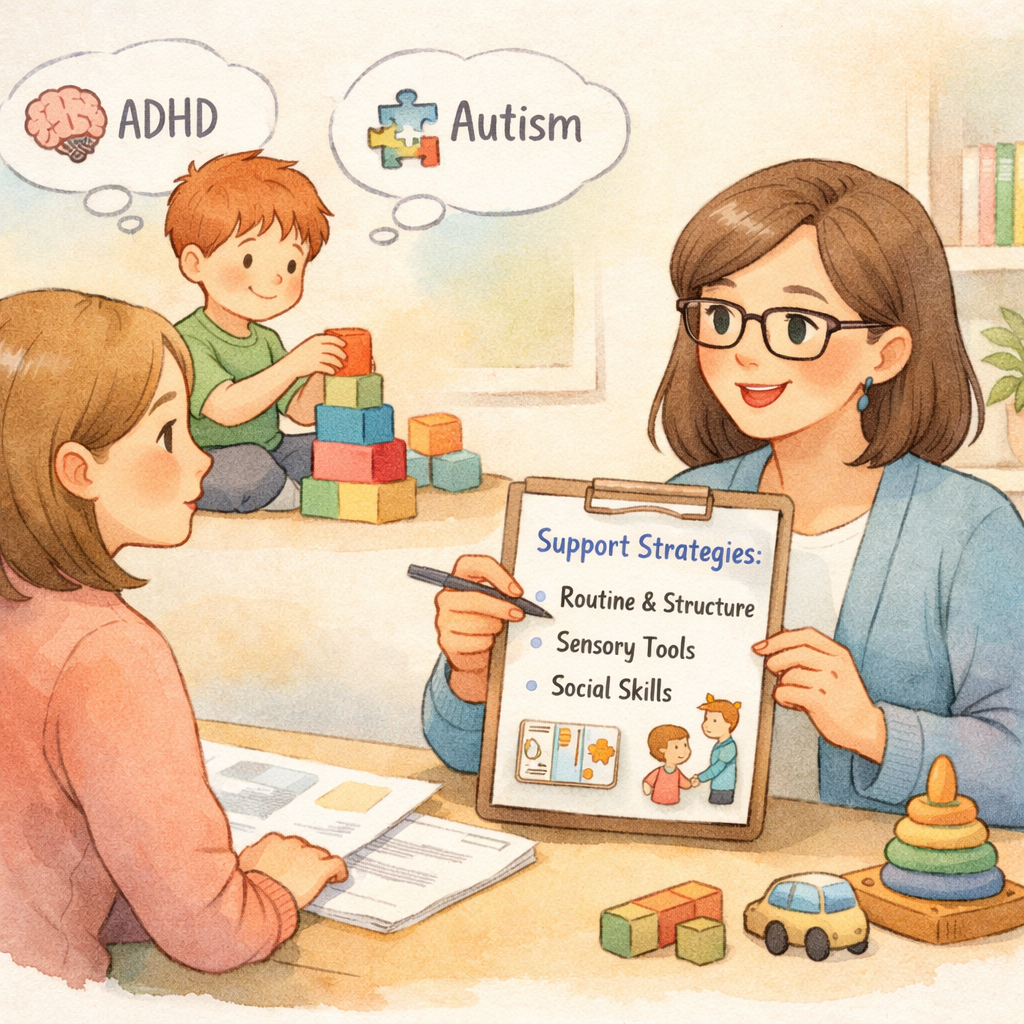
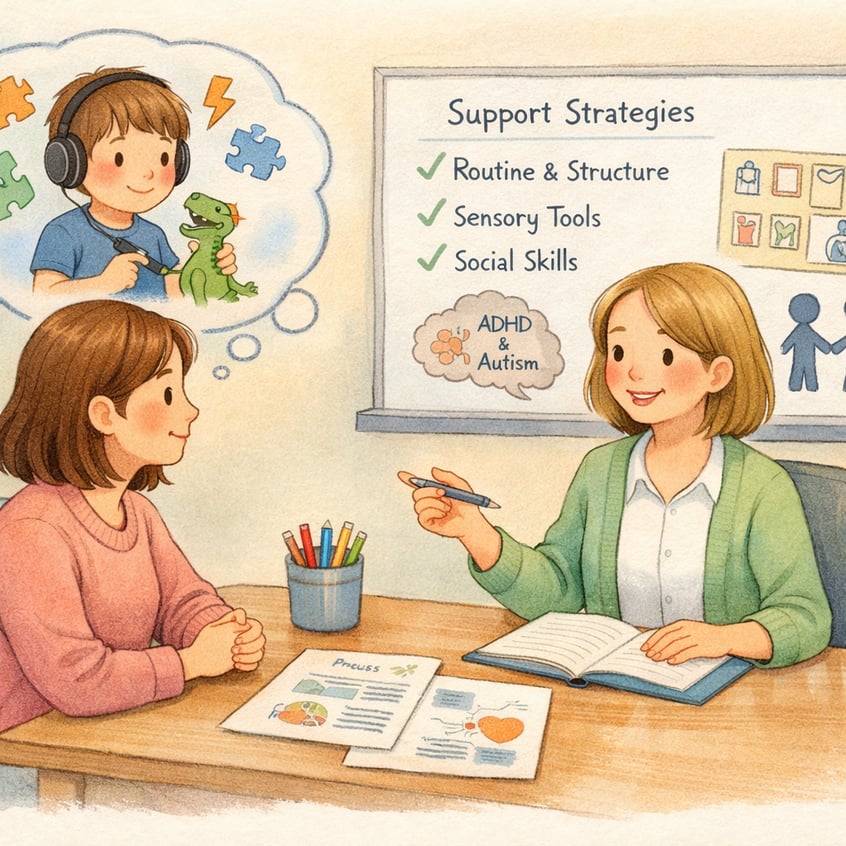
There’s no one-size-fits-all solution for managing ADHD, autism, or both (AuDHD). Effective treatment relies on individualized plans tailored to each person's needs. After a proper diagnosis, professionals may recommend a mix of behavioral therapies, medication, and support systems.
For those with AuDHD, treatment often addresses both ADHD-related executive function issues and the social or sensory challenges linked to autism. The aim is always an evidence-based plan that enhances daily functioning and quality of life.
Individualized Strategies for Each Condition and Combined Approaches
Effective treatment starts with understanding each individual's needs.
For ADHD, treatment often includes stimulant medication to improve focus and reduce impulsivity, along with behavioral therapy and coaching to enhance organization, time management, and daily functioning.
Autism interventions focus on behavioral, speech, and occupational therapies to build social communication skills, manage sensory issues, and reduce repetitive behaviors. Support intensity varies based on individual needs.
When both conditions are present, a combined approach is essential:
- Medication: Stimulants may help ADHD symptoms but can affect autistic individuals differently; careful medical oversight is needed.
- Behavioral Interventions: Therapies should address both attention deficits and social challenges.
- Psychosocial Support: Parent training and social skills groups offer vital support for managing dual diagnoses.
Supporting Children and Families
Supporting families navigating the world of ADHD and autism is crucial. For parents of autistic children or those with ADHD, the journey begins with understanding their child's unique needs. The first step is often observation during early childhood. Paying attention to behaviors related to emotional regulation, sensory sensitivities, and social interaction can provide valuable insights.
Getting the right diagnosis is essential for creating an effective support plan that can improve academic performance and overall well-being. With a clear understanding, families can begin exploring different avenues of support, both at home and in the community.
What Parents Should Observe and Discuss with Clinicians
If you suspect your child has ADHD, autism, or both, start by observing and recording specific behaviors. Detailed notes will help clinicians make a more accurate diagnosis than standardized tests alone.
When meeting with a professional, be ready to discuss your child’s developmental history—from early childhood to present. Share examples of their social behaviors, communication patterns, and any repetitive actions you’ve noticed. Clear examples help distinguish between ADHD and autism symptoms.
Focus on:
- Social Interaction: Does your child struggle with conversations or seem uninterested in peers?
- Attention and Focus: Are they easily distracted or intensely focused on certain topics?
- Routine and Change: How do they handle unexpected changes in their schedule?
School and Community Support Options

Once your child receives a diagnosis, various school and community supports become available. At school, they may qualify for an Individualized Education Program (IEP) or a 504 plan, which offer tailored accommodations to help your child succeed academically and socially.
Individual support can make a big difference. For instance, a child with ADHD might benefit from preferential seating and extra test time, while an autistic child may need social skills training or access to a quiet space. The goal is to create an environment where your child can thrive.
Explore these resources:
- School Support: Contact the special education department about assessments and services.
- Community Resources: Find local parent support groups, social skills programs, and specialists in neurodevelopmental disorders.
- Therapies: Occupational, speech, and behavioral therapies can address specific needs.
Conclusion
In conclusion, understanding the connection between ADHD and autism is crucial for parents, educators, and clinicians alike. Both conditions present unique challenges and can often coexist, leading to a more complex clinical picture. By recognizing the key differences and similarities, we can better support individuals coping with these diagnoses. Tailored treatment approaches and ongoing communication between families and healthcare providers can significantly enhance the well-being of affected children.
If you’re seeking guidance on navigating this journey, don’t hesitate to reach out for a consultation or call daar at 02 9133 2500 to discuss individualized strategies that can make a difference.
Frequently Asked Questions
What are the main differences between ADHD and autism symptoms?
The main differences lie in their core characteristics. ADHD symptoms primarily involve inattention, hyperactivity, and impulsivity, affecting executive function. In contrast, autism is a spectrum disorder defined by challenges in social communication and the presence of restricted, repetitive behaviors.
Can someone have both ADHD and autism at the same time?
Yes, a person can absolutely have both ADHD and autism. This is known as comorbidity or a dual diagnosis. These neurodevelopmental conditions frequently co-occur, and having both can present a unique set of challenges due to the overlapping symptoms.
How do treatments differ for ADHD, autism, or both conditions together?
Treatment approaches are highly personalized. ADHD is often managed with medication and behavioral therapy to improve focus. Autism support typically involves therapies like behavior analysis and speech therapy to aid social skills. For both, a combined approach using individualized strategies is essential for improving daily living.
.svg)




.svg)