
.png?width=48&height=48&name=Group%201%20(3).png)























3 April, 2026

Understanding Kids Screen Addiction: Tips for Parents

Key Highlights
Navigating the digital world can be tricky. Here are some key takeaways for managing your child's screen use and preventing screen addiction:
- Recognize the signs of screen addiction, like mood swings and loss of interest in other activities.
- Set clear limits on screen use and create media-free zones in your home.
- Encourage alternative family activities like board games and outdoor play.
- Use parental controls and checklists to help manage and monitor screen time.
- Open communication about screen habits is essential for your child's mental health.
Introduction
In today's digital age, it’s common to see kids captivated by digital devices. While technology offers amazing opportunities for learning and fun, it's easy for parents to worry about screen addiction. Excessive screen use is a growing concern, as it can interfere with a child's development, sleep, and overall well-being. Understanding the signs of dependency and knowing how to respond is the first step toward helping your child build a healthy relationship with technology.
Practical Strategies for Parents to Manage Screen Addiction
Set clear boundaries to manage your child’s screen time. Establish specific limits for when and where devices can be used—such as no screens during dinner or before bed—to encourage family interaction and better sleep.
Use built-in parental controls or apps to monitor usage and restrict content. Combining these strategies creates a structured environment that supports healthy screen habits. Next, explore ways to encourage other activities and use helpful tools.
Encouraging Alternative Activities and Hobbies
A great way to reduce your child’s screen time is to spark interest in other activities. Engaging hobbies keep kids from turning to screens out of boredom and build new skills, lowering their reliance on digital entertainment and preventing behavioral issues.
Doing these activities together as a family motivates kids, helps them enjoy offline fun, developssocial skills, and strengthens family bonds. Limiting daily screen time is also important. Experts such as the American Academy of Pediatrics recommend that children aged 2 to 5 have no more than one hour of high-quality screen time per day, while older children and teens should have consistent limits set to provide ample time for physical activity, social skills development, and sufficient sleep. Here are some ideas: Physical Activity: Spend time outdoors with sports, walks, or bike rides.
Here are some ideas:
- Physical Activity: Spend time outdoors with sports, walks, or bike rides.
- Board Games: Host a game night for creativity and interaction.
- Imaginative Play: Try building with blocks, drawing, or putting on a play.
Using Checklists and Tools to Promote Healthy Screen Habits
To make screen management easier, consider using checklists and digital tools. These can help you and your child track screen usage and stick to agreed-upon time limits. Many devices come with built-in parental controls that let you set daily limits, filter content, and see how much time is spent on different apps.
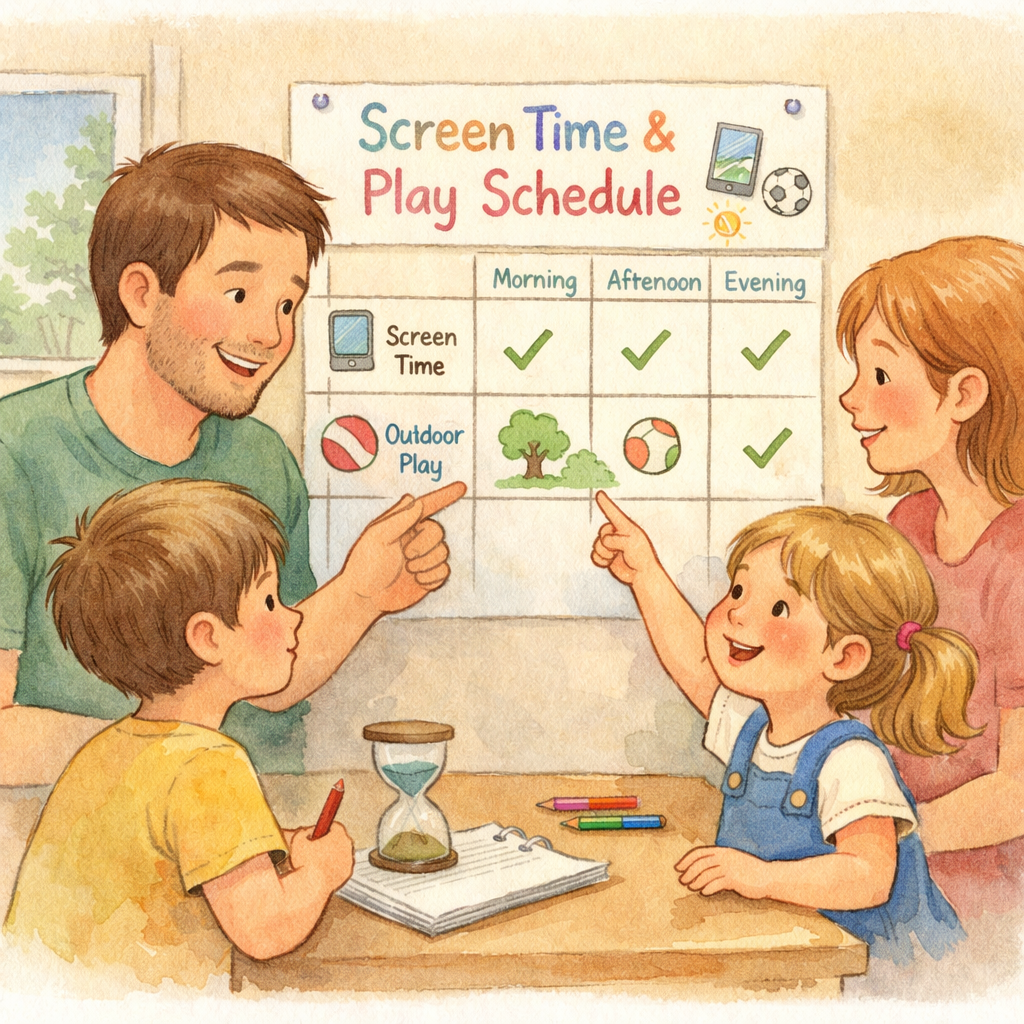
Creating a simple checklist can empower your child to manage their own digital habits. It turns screen time into a reward for completing other tasks, like homework or chores, rather than a default activity. This approach helps reduce overall screen exposure and fosters a sense of responsibility.
Here is an example of a daily checklist you could use: | Task to Complete | Screen Time Earned | | Finish homework | 30 minutes | | Do your chores | 15 minutes | | Read for 20 minutes | 15 minutes |
Talking to Kids About Their Screen Use
Open and supportive communication is key when discussing your child's screen use. Instead of making accusations, approach the conversation with curiosity and concern. You can start by explaining the negative effects of too much digital media, like mood swings or trouble sleeping, and express your desire for them to have a balanced and healthy life.
Involving your child in creating a plan to reduce screen time can make them feel empowered and part of the solution. When kids understand the "why" behind the rules, they are more likely to cooperate. Let's explore how to have these conversations supportively and build trust in the process.
Approaches for Supportive Communication
When discussing screen use with your teen, be supportive, not confrontational. Recognize that screens and social media are a major part of their life. Aim for a conversation, not a lecture. Irritability when asked to stop may signal an issue.
Address how screen habits impact them, such as seeming tired or spending less time with friends. This encourages self-reflection and emotional regulation, shifting the focus from conflict to well-being.
Use “I” statements to share your feelings without blame:
- “I’ve noticed you seem tired lately, and I’m worried about your sleep.”
- “I miss our family time and would love to spend more time together without screens.”
Addressing Resistance and Building Trust

It's normal for kids to resist new screen time rules. Signs of screen dependency—like constant device use, withdrawal, or lying about usage—should be met with empathy and consistency. These behaviors often stem from underdeveloped impulse control, making self-regulation hard.
Build trust by explaining that limits are for their well-being. If your child loses interest in other activities or can't stop using screens despite negative effects, your support is essential.
Present the rules as a family effort to build healthier habits, so your child feels supported—not singled out. Enforcing rules calmly and consistently shows reliability and builds trust over time.
Conclusion
In conclusion, understanding and addressing kids' screen addiction is essential for their overall well-being. As parents, you have the power to guide your children towards healthier digital habits by encouraging alternative activities, engaging in open conversations, and employing practical strategies to monitor their screen use. It's important to remember that this journey is not just about limiting screen time but fostering a balanced lifestyle that promotes creativity, social interaction, and mental health. The more informed and proactive you are, the better equipped your child will be to navigate the digital world responsibly.
If you would like personalized tips and support, don’t hesitate to reach out for a consultation or call daar at 02 9133 2500!
Frequently Asked Questions
What are the signs of screen addiction in kids? Look for behavioral issues like mood swings, loss of interest in activities, and increased irritability when screen time is restricted. How does excessive screen use impact mental health? It can lead to social anxiety and poor emotional regulation, affecting a child's social skills and academic performance. Setting screen time limits is essential for maintaining healthy screen habits. Encouraging physical activity and family interaction can help counter the adverse effects of too much screen exposure.
Is children’s screen addiction similar to other types of addiction?
Yes, screen addiction can show similarities to other addictions, like alcohol addiction. While no chemical substance is involved, excessive use of digital media can lead to comparable behavioral issues. Children may experience withdrawal symptoms like irritability and anxiety when they can't access their devices.
What tools can parents use to monitor phone addiction in kids?
Parents can use several tools to monitor media use. Most digital devices have built-in parental controls that allow you to track screen usage and set screen time limits. There are also third-party apps available that provide more detailed reports and controls to help manage your child’s time on screens.
How do I support my child if they show symptoms of screen dependency disorder?
If your child shows signs of screen dependency, offer support through open and supportive communication. Help them with emotional regulation by creating consistent routines and encouraging more family time. Gently but firmly reduce their excessive screen use while introducing healthier alternative activities to help them reconnect with the world offline.
.svg)




.svg)