
.png?width=48&height=48&name=Group%201%20(3).png)























15 April, 2026

The Magic of Rest: Unlocking the Connection Between Sleep and Child Growth
Every parent has experienced that moment of awe when their child wakes up and suddenly seems an inch taller. Your toddler's pajamas are instantly too short, and your preschooler's shoes are suddenly entirely too snug. You might catch yourself wondering, " Does sleep help kids grow?
The answer is a resounding yes! Sleep is not just a pause button for your child's busy day; it is a highly active and essential biological process. The connection between sleep and child growth is profound, impacting everything from their physical height to their emotional resilience. Understanding this nighttime magic can help you prioritize bedtime with confidence. Let's dive into the science of sleep, explore how much sleep do kids need, and share practical tips for a peaceful night's rest.
The Night Shift: How Physical Growth Happens in Deep Sleep
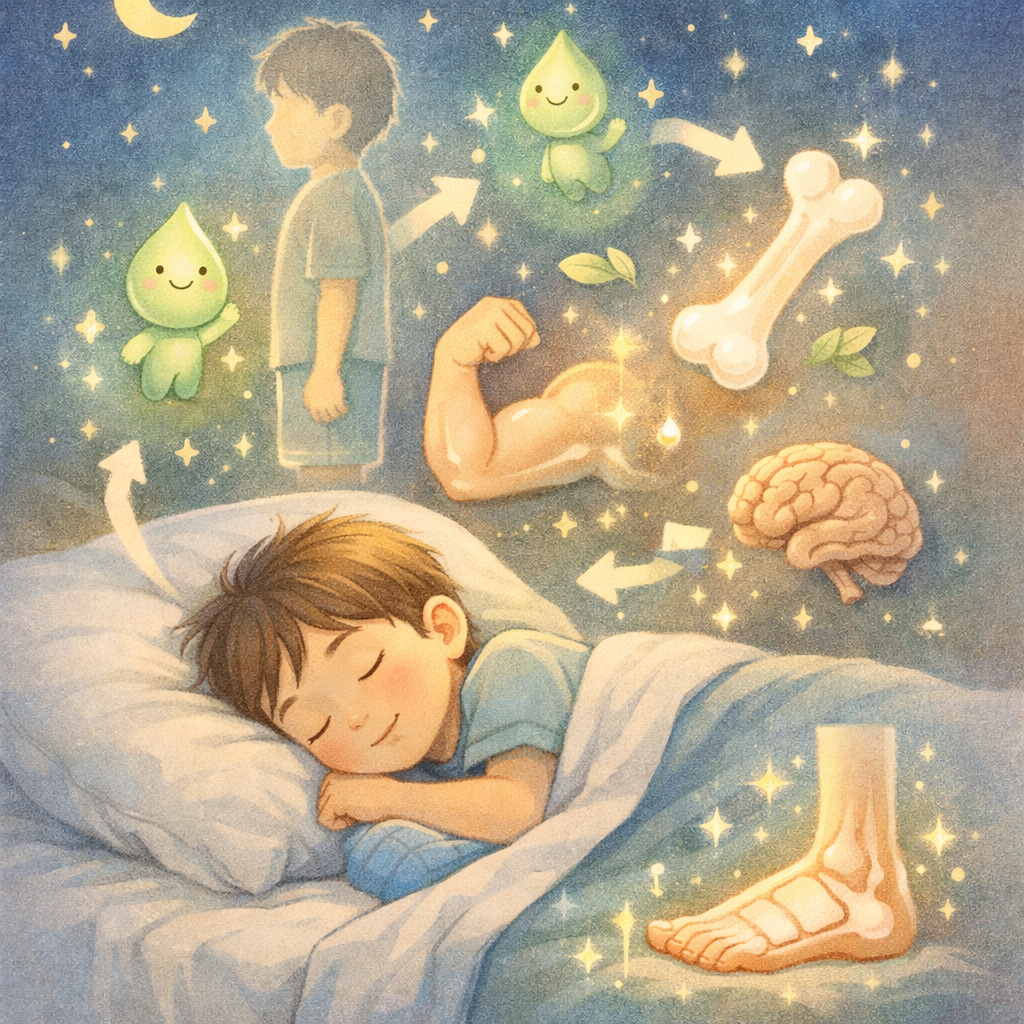
When the lights go out, your child's body goes to work. The secret to physical growth lies in a tiny but mighty part of the brain called the pituitary gland. Throughout the day, this gland releases small amounts of growth hormone, but the real magic happens at night.
A massive surge of growth hormone in children's sleep occurs during the deepest stages of restorative slumber, also known as slow-wave sleep. This hormone dictates bone lengthening, muscle development, and cellular repair. If a child's sleep is frequently interrupted or cut short, their body spends less time in these deep sleep cycles, which can subsequently lower the amount of growth hormone released. Simply put, protecting their deeply unbothered sleep is one of the best ways to support their physical development.
Brain Power and Overall Health: The Benefits of Sleep for Kids' Development
The benefits of sleep for kids' development go far beyond physical height and physical milestones. A well-rested child is healthier, happier, and more equipped to handle the world.
- Brain Development: While their bodies rest, children's brains are incredibly busy. Sleep is when the brain consolidates learning, processes new information, and builds neural pathways. A well-rested brain means better attention spans, improved memory, and a sharper ability to learn at daycare or school.
- Emotional Well-being: We are all familiar with the epic meltdowns of an overtired child! Sleep helps regulate the amygdala, the emotional center of the brain. When children get adequate rest, they are far less prone to tantrums, irritability, and anxiety.
- Immunity Boost: Sleep strengthens the immune system. During rest, the body produces infection-fighting proteins called cytokines. Kids who get enough sleep are naturally better equipped to fight off the common colds and Playground sniffles.
The Age-by-Age Guide: How Much Sleep Do Kids Need?
To reap these incredible developmental benefits, children need the right amount of rest. But how much sleep do kids need, exactly? The following guidelines based on 24 hours (including daytime naps):
Infants (4 to 12 Months)
- Recommended Sleep: 12 to 16 hours
- The Details: Babies are growing at an astonishing rate, often tripling their birth weight in the first year. This fundamental stage of development requires massive amounts of energy recovery through frequent naps and nighttime sleep.
Toddlers (1 to 2 Years)
- Recommended Sleep: 11 to 14 hours
- The Details: As toddlers learn to walk, run, and speak, their bodies and brains are working overtime. Most toddlers will take one solid afternoon nap to help them bridge the gap between morning and night.
Preschoolers (3 to 5 Years)
- Recommended Sleep: 10 to 13 hours
- The Details: Preschoolers are soaking up complex social and emotional skills. While many will drop their daily nap during this phase, replacing that lost daytime sleep with a slightly earlier bedtime is crucial for their growing bodies.
School-Aged Children (6 to 12 Years)
- Recommended Sleep: 9 to 12 hours
- The Details: Between school testing, sports, and rapid growth spurts, school-aged kids need long stretches of uninterrupted sleep to lock in new academic knowledge and repair-tired muscles.
Expert Tips for Improving Your Child's Sleep Quality
Knowing the numbers is only half the battle. Actually, usually getting your energetic child to wind down and sleep peacefully is where the real parenting challenge begins!
Establish a Predictable Bedtime Routine
Children thrive on consistency, and a predictable routine acts as a signal to their brain that it is time to shift gears.
- Keep the routine to about 30 to 40 minutes so they don't catch a "second wind."
- Use calming activities like a warm bath, putting on pajamas, brushing teeth, and reading a favorite book.
- Incorporate soothing connection time, like asking them to name one good thing about their day.
Curate a Sleep-Friendly Environment
The physical space your child sleeps in heavily influences their ability to reach those deep, growth-hormone-producing sleep cycles.
- Keep it Dark: Use blackout curtains to stop early morning sunlight or neighborhood streetlamps from disrupting their rest. Darkness triggers the brain's natural melatonin production.
- Keep it Cool: A slightly cooler room (around 65°F to 68°F) mimics the body's natural temperature drop that occurs during sleep, making it easier to drift off.
- Keep it Quiet: A white noise machine is incredibly effective at masking disruptive household noises like creaking floors or barking dogs.
Manage Evening Screen Time
The blue light emitted by tablets, televisions, and smartphones tricks the brain into thinking the sun is still up, which completely halts the release of melatonin.
- Implement a strict "no screens" rule at least one to two hours before your desired bedtime.
- Swap out digital games for puzzles, drawing, or family conversation to help their nervous systems settle.
When Sleep Goes Awry: Common Sleep Problems in Children

Sometimes, underlying issues can disrupt the crucial link between sleep and child growth. If your child’s sleep is suffering, their overall development can take a hit.
- Pediatric Sleep Apnea: If your child snores loudly, breathes through their mouth, or pauses their breathing during the night, they may have sleep apnea (often caused by enlarged tonsils). Because sleep apnea constantly pulls children out of deep sleep to gasp for air, it aggressively disrupts the release of growth hormones.
- Bedtime Resistance & Insomnia: Constant stalling, crying, or inability to fall asleep cuts into their total sleep time, leading to chronic overtiredness. This sleep debt limits the restorative cycles their brain desperately needs.
- Night Terrors: Often triggered by sleep deprivation, night terrors happen in deep sleep. Keeping a strict, earlier bedtime can often eliminate these scary episodes by preventing the child from becoming overtired in the first place.
Prioritizing your child's sleep is one of the most powerful ways you can support their health, happiness, and growth. By understanding the profound connection between resting and developing, you can transform bedtime from a nightly struggle into a non-negotiable family priority.
Reach out for a consultation or call daar at 02 9133 2500 for expert guidance tailored to your child’s needs.
Frequently Asked Questions (FAQ)
1. Do kids really go through "growth spurts" that make them sleep more?
Absolutely. Because growth relies heavily on the energy conservation and hormone release that happens during sleep, a child's body will naturally demand more rest during a physical growth spurt. If your child suddenly wants to nap longer or sleep in, let them! Their bodies are doing important developmental work.
2. Is it okay for my child to catch up on sleep during the weekends?
While letting them sleep in on Saturday sounds great, it can actually do more harm than good. Drastically changing sleep schedules on the weekends disrupts your child's internal circadian rhythm, making it much harder for them to fall asleep on Sunday night. For steady, healthy growth, maintaining a consistent bedtime and wake time seven days a week is vastly superior.
3. What should I do if my child frequently wakes up in the middle of the night?
First, evaluate their sleep environment to ensure it is dark, cool, and quiet. Next, look at their bedtime routine to make sure they are learning to fall asleep independently; if they need you to fall asleep at the start of the night, they will need you every time they wake up in the middle of the night. If frequent night wakings persist and you are concerned about their growth, consult your pediatrician to rule out issues like sleep apnea or restless leg syndrome.
.svg)




.svg)