
.png?width=48&height=48&name=Group%201%20(3).png)























17 August, 2026

Screen Time for Kids: Balancing Fun and Health
Key Highlights
- Experts recommend age-based screen time limits to protect children’s health and daily routines.
- Too much screen use can affect quality sleep, learning, behaviour, and physical activity levels.
- Digital devices can also increase sedentary habits, which may raise childhood obesity risk over time.
- Younger children need more real-world play and less passive media use during early development.
- A family media plan helps you set clear rules for screens, meals, bedtime, and free time.
- Small changes at home can make screen habits healthier and easier to manage.
Introduction
Screens are part of everyday life, so managing them can feel hard. You may use a phone, TV, tablet, or computer all day, and your child notices that. That is why screen time recommendations matter. They give families a simple way to guide media use without panic or guilt. When limits fit your child’s age and routine, they can support children’s health, sleep, play, and learning while still leaving room for fun and connection.
How Screen Time Impacts Child Development and Health
During early childhood, screen use can shape daily habits in powerful ways. The World Health Organization and other pediatric experts stress that each age group needs different limits because early years are a period of rapid development. Excessive screen time can replace sleep, movement, and face-to-face interaction.
Kids are often drawn to digital media because it is easy, stimulating, and always available. Yet too much of it may affect a child’s health, learning, behaviour, and mental health. To understand the risks better, it helps to look at sleep, schoolwork, and warning signs more closely.
Effects of Excessive Screen Time on Sleep, Behaviour, and Learning
In the early years, children are in a period of rapid development, so daily habits matter a lot. When kids get much screen time, digital media can push out sleep, active play, and real-world interaction. That matters because the recommended amount of sleep and regular movement support learning, mood, and healthy growth.
Screen use in the evening is especially disruptive. Devices in the bedroom can reduce quality sleep, and poor rest can then affect schoolwork, attention, and emotional control. Some children also show behavioural issues when screens become their main source of comfort or entertainment, which is why concerns about screen dependency disorder come up.
|
Area |
Possible effect of excessive screen time |
|---|---|
|
Sleep |
Shorter sleep and poorer quality sleep, especially with bedtime screen use |
|
Behaviour |
More frustration, attention problems, and other behavioural issues |
|
Learning |
Less focus, weaker engagement, and less time for school work or play-based learning |
Recognising Signs of Kids Screen Addiction
Not every child who enjoys screens is addicted, but some signs warrant attention. If your child struggles with screen limits or screens interfere with sleep, meals, or family time, balance may be slipping. Parents often refer to this as screen dependency disorder when screen habits affect health and daily life.
Look for persistent changes rather than isolated incidents. You know your child best—focus on shifts over time.
Warning signs include:
- Strong distress when asked to stop using devices
- Less time on play, family activities, or outdoor movement
- Ongoing sleep issues tied to evening screen use
- Behaviour changes disrupting routines or learning
Early intervention helps. Gentle structure, clear rules, and consistent routines are more effective than sudden bans.
Practical Strategies for Parents to Promote Healthy Screen Habits
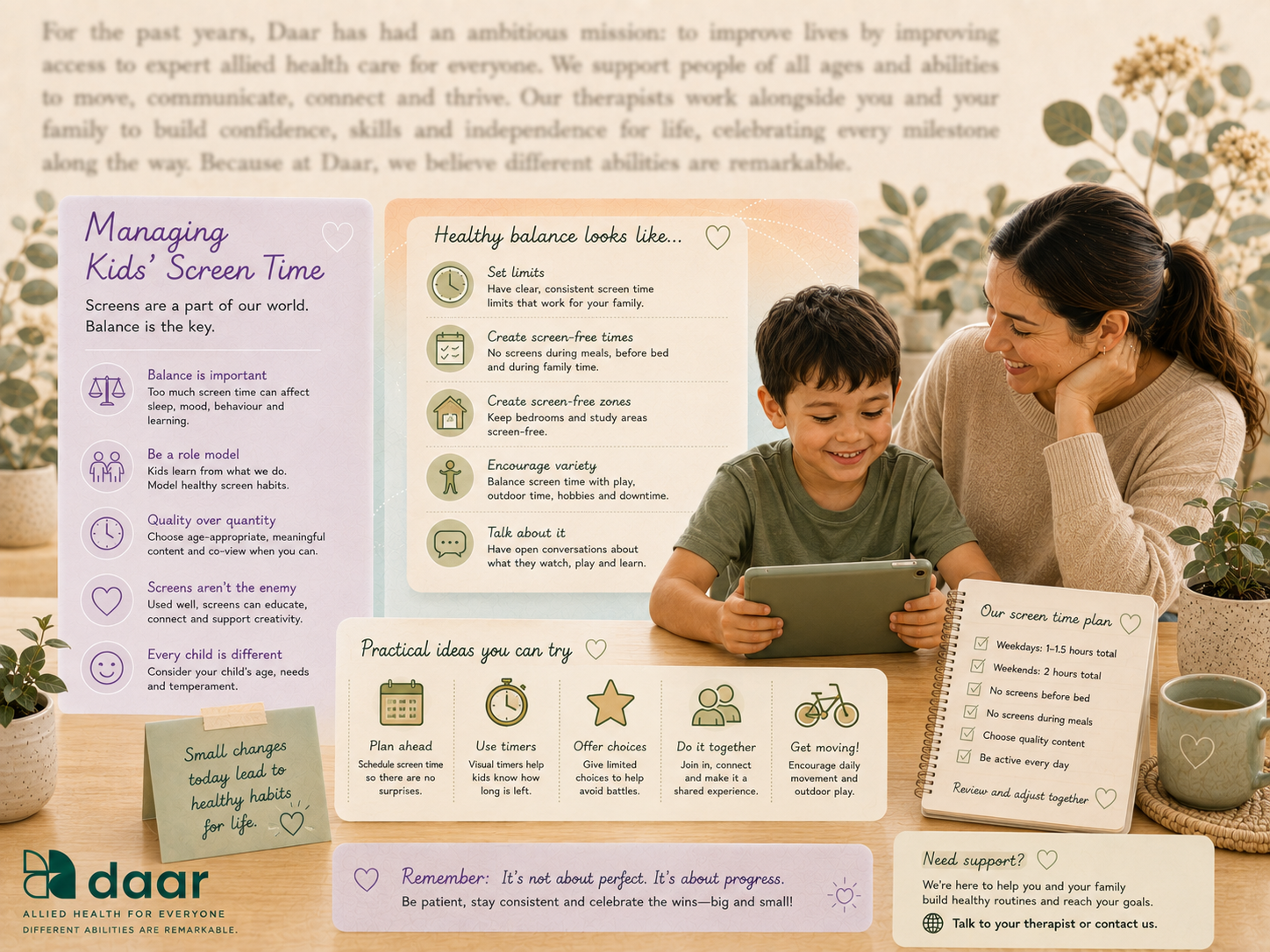
A simple plan usually works better than guessing day by day. Screen time guidelines from pediatric experts encourage parents to set age-based screen time limits, protect sleep, and leave room for movement, play, and family routines. That is where a family media plan can help.
You can also guide habits by choosing content carefully, watching with younger children, and using parental controls when needed. These steps support screen time recommendations in a way that feels realistic. Next, let’s look at boundaries you can set and screen-free activities you can build into everyday life.
Setting Boundaries and Using Parental Controls
Clear rules make daily decisions easier. The American Academy of Pediatrics recommends setting screen time limits by age and monitoring content, sleep, and routines. A family media plan provides clear guidelines on when, where, and how devices can be used.
Set a few firm, consistent boundaries. Younger children need adult involvement during media use; older kids still require structure—even for schoolwork or socialising.
- Keep bedrooms screen-free at night
- Set device curfews before bed
- Make meals and family time screen-free
- Use parental controls to limit content
These simple steps reduce arguments and build predictable habits for your child.
Incorporating Screen-Free Activities for Balance
Balancing screen time is easier when you offer activities your child enjoys. Screen-free options give kids healthier ways to spend free time, especially after school or before bed. They reduce sitting, encourage creativity and conversation, and promote movement.
For younger children, unstructured play builds real-world skills that screens can’t. For older kids, family activities break up long sitting periods and help everyone reconnect—without feeling like a punishment.
- Schedule daily walks, bike rides, or active play
- Try game nights, drawing, or reading together
- Keep simple toys and hands-on options within reach
Small changes add up over time. When fun alternatives are available, screen limits feel easier and more natural.
Conclusion
In conclusion, striking the right balance between screen time and healthy activities is essential for your child's development. By understanding the impacts of excessive screen use, recognising signs of screen addiction, and implementing practical strategies, you can help foster a healthier relationship with technology. Encourage your kids to engage in screen-free activities that stimulate creativity and physical well-being. Remember, it’s all about moderation and making informed choices.
If you're looking for more guidance on managing screen time for your children, reach out for a consultation or call daar at 02 9133 2500!
Frequently Asked Questions
How can I tell if my child is spending too much time on screens?
If your child’s screen use is cutting into sleep, play, schoolwork, or family time, it may be too much screen time. Watch for mood changes, bedtime struggles, or less interest in other activities. Screen time limits should match your child’s age group and daily needs around digital media.
What are the warning signs of kids screen addiction?
Warning signs of screen addiction can include intense upset when screens are removed, ongoing excessive screen time, sleep problems, and behavioural issues that affect routines. If screen habits start interfering with your child’s health, learning, or relationships, parents often describe that pattern as screen dependency disorder.
What resources in Australia can help families manage children and screen time?
Families can look for support from pediatric experts, age-based screen time recommendations, and tools that help build a family media plan. Common Sense Media can help with content choices. You can also ask local doctors about guidance linked to the Australian Academy of Pediatrics and healthy screen routines.
.svg)




.svg)