
.png?width=48&height=48&name=Group%201%20(3).png)
























6 March, 2026

How Screen Time Affects Autistic Children: Managing Screen Use
Key Highlights
- Studies suggest a link between high screen use and more autism-like symptoms, highlighting the need for mindful management.
- Early screen exposure, especially before age two, may present a higher risk for developmental impacts on the autism spectrum.
- Excessive screen time can displace crucial activities like face-to-face interactions, which are vital for developing social skills.
- While screens can offer benefits like social connection and learning, they also have potential negative effects, such as sleep issues and addiction.
- Creating a balanced routine with clear limits and encouraging offline activities is key to managing screen time effectively for autistic children.
Introduction
Navigating the digital world is a common challenge for parents, and it can feel even more complex when your child is on the autism spectrum. Many parents wonder how screen use impacts autistic children. While technology can be a wonderful tool for learning and connection, it's also important to understand its potential effects on development. This guide will explore the relationship between screen time and autism spectrum disorder, offering insights and practical strategies to help you find a healthy, supportive balance for your child.
Understanding Screen Time in the Context of Autism Spectrum Disorder
When discussing screen time for children with autism spectrum disorder, it's about more than just counting minutes. The use of electronic devices can be a double-edged sword. For some, screens offer a predictable and calming space in a world that can feel overwhelming, providing unique opportunities for learning and connection.
However, it's crucial to consider what media use might displace. Too much time with screens can limit a child's interaction with the real world, which is essential for developing critical social and developmental skills. Understanding this balance is the first step toward creating a healthy media plan.
Defining Screen Time and Its Prevalence Among Australian Children
Screen time is any time spent using devices like smartphones, tablets, TVs, or computers. Studies show that most children use screens far more than recommended—often five to seven hours daily. This excessive use concerns parents and experts worldwide, including in Australia.
The American Academy of Pediatrics (AAP) offers these guidelines for screen time:
|
Age Group |
Recommended Screen Time |
|---|---|
|
Birth to 18 months |
Avoid screens except for video calls. |
|
18 to 24 months |
Only high-quality content, watched with a parent. |
|
2 to 5 years |
Up to 1 hour per weekday; up to 3 hours on weekends. |
|
6 years and older |
Consistent limits on both time and media types. |
Why Screen Use Requires Special Consideration for Autistic Kids
For autistic children, screens are more than entertainment—they can help with regulation, learning, and social connection. The predictability of digital media often feels reassuring in an otherwise overwhelming world, offering a safe way to explore interests and connect with others without face-to-face stress.
However, autistic children may also be more vulnerable to negative effects like screen addiction or delayed social skill development. Their literal thinking style can make online interactions and issues like cyberbullying harder to navigate.
Parents should keep in mind:
- Screens can help manage anxiety.
- There’s a higher risk of screen overuse and related challenges.
- Screen time plans should balance individual needs, benefits, and risks.
Developmental Impacts of Screen Use on Autistic Children
The conversation around screen use and its developmental impacts is particularly important during early childhood. Research suggests that high levels of screen time can interfere with key developmental tasks that depend on real-world interaction. The concern isn't that screens are inherently bad, but rather what they might be displacing in a child's day.
Excessive screen use can have negative impacts on a child's brain development, potentially affecting white matter integrity, which is crucial for cognitive function and language. These risks highlight why it's so important to explore how screens can affect specific areas of growth.
How Screen Time Can Affect Cognitive and Social Growth
Excessive screen time can hinder cognitive development and social skills in young children, who need face-to-face interactions for healthy growth. When screens dominate, opportunities for active learning, outdoor play, and peer problem-solving decrease.
This may lead to poorer language skills and trouble with social communication. Without real-world practice, children can struggle with non-verbal cues like body language and eye contact, which are essential for connecting with others.
However, the quality of screen time matters. While passive viewing is less beneficial, certain technology—like collaborative video games—can help neurodivergent kids build teamwork and conflict resolution skills. The key is balancing screen use so it doesn't replace valuable in-person interaction.
Links Between Early Screen Exposure and Developmental Challenges
Research increasingly links early screen exposure to developmental challenges. Studies show that more screen time—especially starting young—increases the risk of ASD-like symptoms, though screen time does not cause autism.
Evidence shows an association: one study linked screen time at age one to a higher risk of ASD diagnosis by age three; another found preschoolers with more screen time had more behavioral issues. Early and prolonged exposure may worsen symptoms related to developmental disorders.
This risk may result from screens disrupting cognitive development during critical periods. Early childhood is when the brain forms connections through real-world experiences, and excessive screen use can delay language, social skills, and other milestones.
Guidelines for Healthy Screen Time for Autistic Children in Australia
When setting guidelines for screen time for autistic children, it's best to move beyond a one-size-fits-all approach. While general Australian recommendations offer a good starting point, individualized planning is essential. The goal is to create a media plan that fits your child's unique needs, strengths, and challenges.
This means looking at the "5 Cs": the child, content, context, calming, and connection. By considering these factors, you can build a plan that supports your child’s well-being instead of just imposing rigid limits. The focus should be on balance and quality over quantity.
Official Australian Recommendations and Individualized Planning
Although Australia has its own health guidelines, the American Academy of Pediatrics (AAP) recommendations are widely referenced. The AAP now emphasizes individualized media plans over strict screen time limits.
This approach recognizes each family and child’s unique needs. Parents are encouraged to develop a Family Media Plan based on their child’s age, health, and developmental stage. For autistic children, plans should address specific sensitivities and support overall well-being.
A good plan should:
- Choose high-quality, educational content instead of passive entertainment.
- Ensure screens don’t replace sleep, physical activity, or family time.
- Involve the child in setting rules to build self-monitoring skills.
Setting Realistic and Flexible Limits That Respect Sensory Needs
For many autistic children, screens help manage sensory needs and regulate emotions. A favorite show or game offers predictability and calm in an overwhelming world. Recognizing this is key to setting realistic, respectful limits. Instead of banning screens, set flexible boundaries.
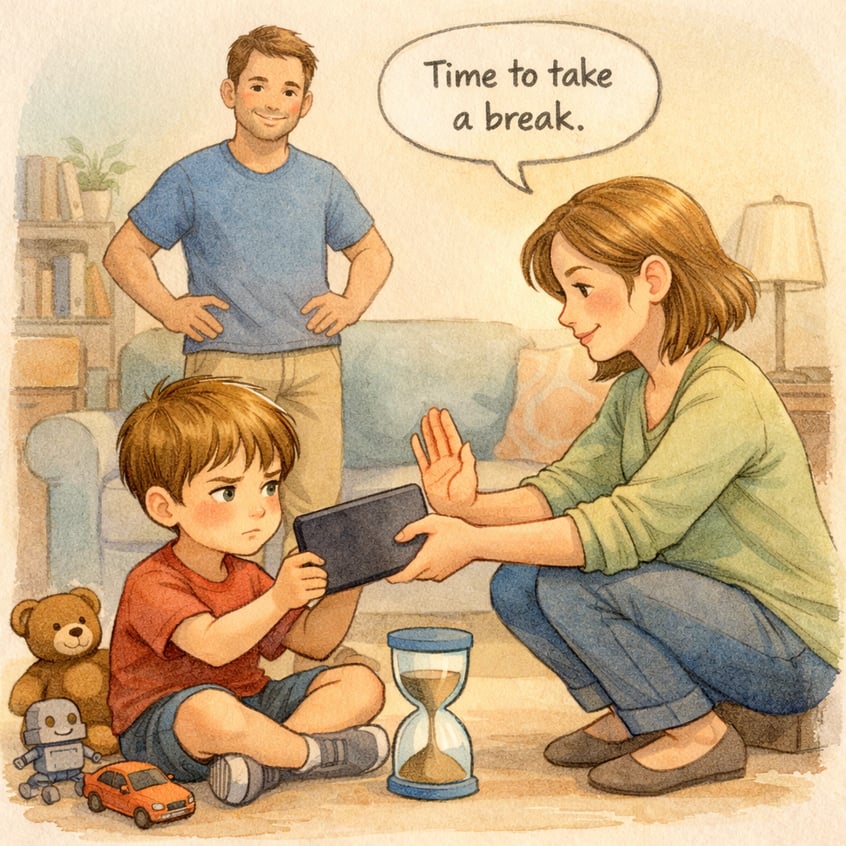
Work with your child to agree on stopping points, giving them control and easing transitions. Clear warnings before screen time ends—like “Finish this level, then we’re done”—are more effective than abrupt cutoffs.
Stay flexible. If your child had a tough day, extra screen time may help with emotional regulation. The goal is to encourage healthy habits and self-monitoring, not create power struggles. Balance screen use with other calming activities to build diverse coping skills.
Practical Strategies for Managing and Reducing Screen Time
Managing screen time effectively involves more than just setting limits; it requires a proactive and supportive approach. Open communication is key. Talk to your child about why balance is important and involve them in creating the rules. This helps them understand the reasoning behind the limits and feel more invested in following them.
To avoid screen addiction, it’s helpful to build a routine that includes plenty of non-screen activities. By encouraging physical activity and other engaging hobbies, you can naturally reduce the reliance on screens for entertainment.
Encouraging Offline Activities and Social Connections
Striking a healthy balance between the digital world and real-world experiences is vital. The best way to reduce screen time is to make offline activities more appealing. Focus on your child's interests and find non-screen ways for them to engage with their passions. This could mean anything from joining a club to visiting a museum.
Encouraging social connections is also crucial. While screens can facilitate friendships, face-to-face interaction builds different skills. Arrange playdates, join community groups, or simply spend quality time together as a family. Activities that promote physical activity, like outdoor play or sports, are particularly beneficial for both physical and mental health.
Here are a few ideas to get started:
- Schedule regular family game nights with board games.
- Explore local parks and encourage outdoor play.
- Enroll your child in an art class, sports team, or another interest-based group.
- Recycle old toys or introduce new creative projects to spark interest.
Spotting Warning Signs of Problematic Screen Use and Seeking Help

Parents should recognize when screen use shifts from a helpful tool to a problem. Problematic screen use interferes with daily life, leading to behavioral issues, poor hygiene, or withdrawal from family and friends.
Monitor your child’s behavior during and after screen time. Signs like irritability when screens are taken away or disrupted sleep may indicate screen addiction or an unhealthy balance.
Seek help if you notice these warning signs:
- Interference: Screen time impacts schoolwork, hygiene, or relationships.
- Emotional distress: Increased anxiety, irritability, or meltdowns tied to screen use.
- Loss of interest: Disinterest in offline activities once enjoyed.
If concerned, consult your child's pediatrician, therapist, or psychologist for guidance and support in creating a healthier media plan.
Conclusion
Understanding screen time’s impact on autistic children is vital for their cognitive and social development. By recognizing their unique challenges, parents can set realistic limits, follow sensory-friendly guidelines, and encourage offline activities. Monitoring screen use and watching for warning signs support better outcomes. For personalized advice, seek professional support.
Reach out for a consultation or call daar at 02 9133 2500 for expert guidance tailored to your child’s needs.
Frequently Asked Questions
Are autistic children more sensitive to negative effects from screen time?
Yes, autistic children may be more sensitive to the negative effects of screen exposure. Studies suggest that neurodivergent children can be at a higher risk for issues like screen addiction. Their unique sensory needs and thinking styles mean that problematic screen use can sometimes have a more significant impact on their behavior and emotional regulation.
What are some early indicators that screen time is impacting my autistic child’s development?
Early indicators that screen time is negatively impacting your child’s development may include increased irritability, developmental delays in speech or language, difficulty with social cues, or a decreased interest in non-screen activities. If screen use consistently leads to emotional dysregulation or displaces important real-world interactions, it's a sign to re-evaluate.
How can families strike a healthy balance between on-screen and off-screen time?
Families can strike a healthy balance by co-creating a media plan that prioritizes offline activities. Schedule daily time for physical activity, outdoor play, and social interaction. Designate screen-free times, like during meals, and ensure that screen use consists of high-quality, engaging content rather than just passive viewing.
.svg)




.svg)