
.png?width=48&height=48&name=Group%201%20(3).png)























17 September, 2026

NDIS Telehealth Services: Access Care Anywhere, Anytime
Key Highlights
- NDIS telehealth services are no longer just a backup option; they are a highly strategic, evidence-based mode of delivery that often yields better results than traditional in-clinic therapy.
- Utilising telehealth for children eliminates the stress of travel, crowded waiting rooms, and the sensory overload of unfamiliar clinical environments.
- Effective NDIS telehealth behaviour support in pediatrics operates on the "mediator model," focusing heavily on coaching parents to become the primary agents of change in the home.
- Virtual care completely removes geographic barriers, bringing elite allied health professionals directly to families in regional and rural Australia.
- daar provides a seamless, secure online platform that perfectly aligns with NDIS Capacity Building budgets, ensuring your family gets immediate support without the postcode lottery.
Introduction
For many Australian families navigating the NDIS, simply getting to an allied health appointment is a monumental task. You juggle school pick-ups, navigate traffic, and try to keep a dysregulated child calm in a sterile, brightly lit waiting room. By the time you actually sit down with the clinician, your child is often too overwhelmed or exhausted to engage meaningfully, impacting their overall quality of life during the session.
What if the best therapy didn't require leaving your living room? At daar, we have built our entire clinical model around the belief that true growth happens where life happens—at home. Let’s explore why NDIS telehealth services and social services are revolutionising allied health, why remote delivery is uniquely suited for kids, and how our virtual mental health professionals can guide your family toward lasting positive change. If your child needs urgent care through telehealth, start by contacting your provider immediately via their designated platform or helpline. For urgent medical concerns, seek advice through telehealth while being prepared to call emergency services if your child’s condition worsens or requires immediate attention.
Redefining Care: The Shift to NDIS Telehealth Services
There was once a misconception that virtual therapy was a compromise—a temporary fix when in-person care wasn't available. Today, clinical data tells a very different story.
For neurodivergent individuals, the environment dictates their capacity to learn. NDIS telehealth services allow practitioners to observe a participant in their safest, most regulated environment. When a child is surrounded by their own toys, their preferred sensory items, and their safe people, their nervous system is calm. A calm brain is a learning brain. By stripping away the anxiety of a clinical setting, we achieve faster, more authentic therapeutic progress.
Why Telehealth for Children Works Better
Parents often wonder: "How can a therapist engage my active toddler through a screen?"
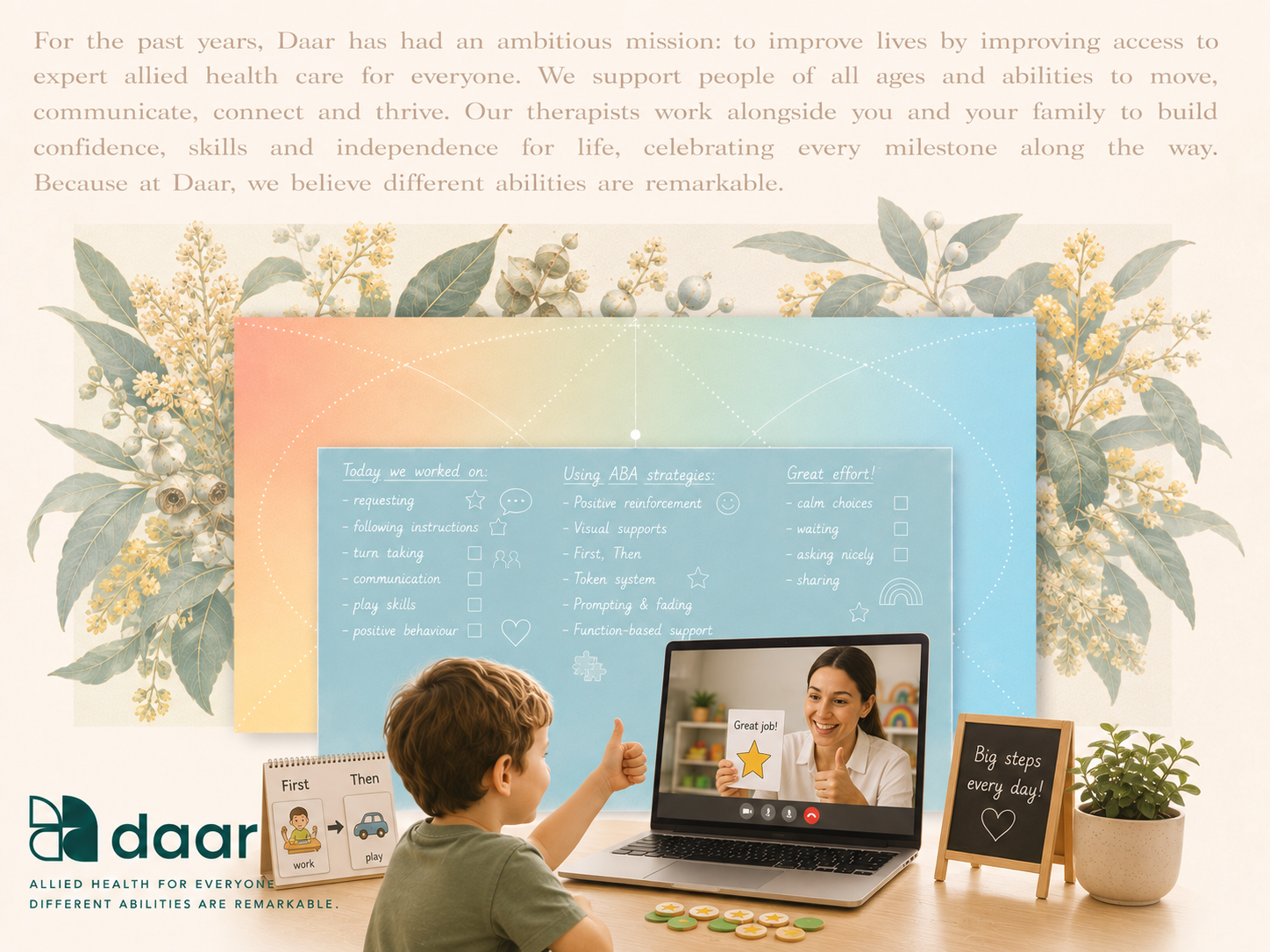
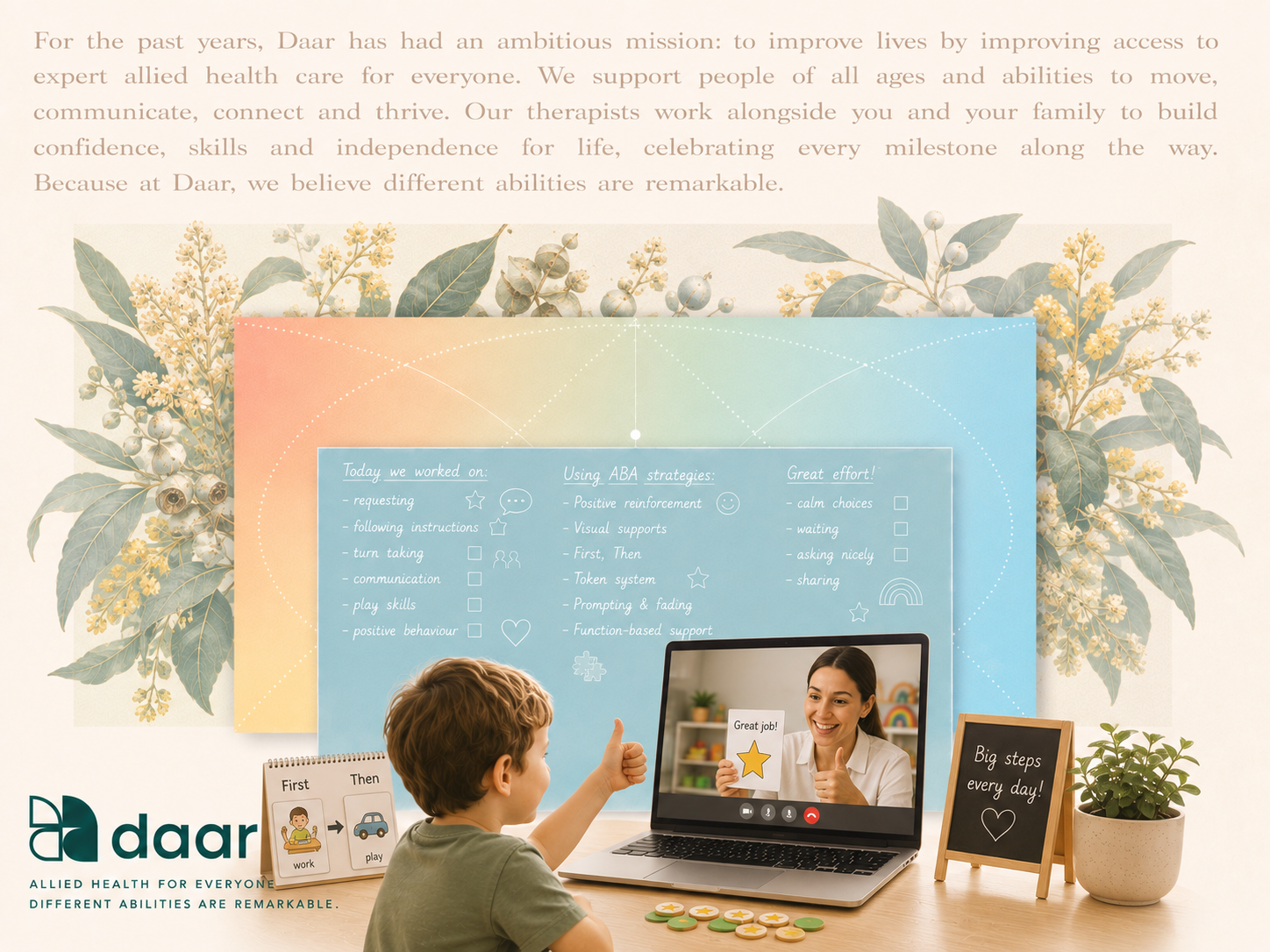
The secret to successful telehealth for children is that we don't expect your child to sit and stare at a webcam. Our approach completely bypasses the artificial environment of a clinic desk. Instead, you might set your laptop on the kitchen counter while you and your child engage in a natural activity, like baking or building a fort.
This eliminates the "visitor effect"—where a child either masks their struggles or acts out unusually because a stranger is in the room. Our clinicians get a fly-on-the-wall perspective of your actual daily dynamics, allowing us to provide highly accurate, actionable advice tailored exactly to the layout and flow of your home.
The Engine of Change: NDIS Telehealth Behaviour Support
When it comes to managing complex meltdowns, aggression, or daily distress, a one-hour clinic visit is rarely enough to shift the needle.
This is where NDIS telehealth behaviour support truly shines. Rather than trying to "fix" the child during a brief video call, our positive behaviour support practitioners use the session to empower you. We utilise the mediator model. We coach you live, in the moment, on how to de-escalate a crisis, how to implement visual schedules, and how to apply positive reinforcement perfectly. Because you are the one successfully managing the behaviour day in and day out, the therapy becomes a continuous, supportive thread running through your entire week.
Bridging the Gap for Regional Australia
Australia is a massive country, and for years, families living outside of major metropolitan cities have been heavily disadvantaged by allied health shortages, particularly affecting the caregiver's ability to access services. The use of telehealth can alleviate some of these burdens, ensuring families do not have to spend hours on the highway or sit on a two-year waitlist just to access quality care.
daar’s platform dissolves these borders. Whether you are in regional NSW, outback Queensland, or a bustling suburb in Victoria, you have immediate access to a nationwide network of qualified behaviour support practitioners and specialists. We match you with the clinician whose expertise best fits your child's specific needs, including the ability to address any restrictive practices, not just whoever happens to have an office down the road.
Conclusion
You do not have to disrupt your entire family's routine just to access premium clinical support. By embracing the flexibility and natural integration of virtual care, you can turn your home into the ultimate therapeutic environment, accommodating those with mobility challenges and receiving updates via email on your sessions.
Experience the future of allied health with a team that truly understands modern, neuro-affirming care and values accessibility. Before scheduling a telehealth appointment for your child, parents should ensure their child is comfortable with the virtual setting, confirm that privacy and security standards are met, and prepare any necessary medical information or questions in advance, including having a family member for support if needed.
Reach out to explore a consultation or call daar directly at 02 9133 2500 to find your perfect match today.
Frequently Asked Questions
What technology do I need for telehealth and telemedicine for children with complex health needs?
You don't need a complex setup. A standard smartphone, tablet, or laptop with a working microphone, camera, and a stable internet connection is all that is required. Our secure video platform is designed to be incredibly user-friendly, allowing you to easily move the device around the room to show the clinician different activities.
Does NDIS telehealth behaviour support work for severe or aggressive behaviours?
Yes, and it is often the safest and most effective method. For children who exhibit severe distress or aggression, a functional behaviour assessment is essential before getting started. Bringing them into a new clinic—or bringing an unfamiliar therapist into their safe space—can trigger significant challenges leading to massive dysregulation. Telehealth allows our specialists to safely observe the family dynamics and coach the parents on de-escalation strategies without escalating the child’s anxiety.
How do you choose the right NDIS provider?
Choosing the right NDIS provider involves assessing their experience, services offered, and client reviews. Ensure they align with your specific needs and preferences. Additionally, consider their communication style and availability to ensure you receive the best support through NDIS therapy services and telehealth services that cater to your unique circumstances.
.svg)




.svg)