
.png?width=48&height=48&name=Group%201%20(3).png)
























5 January, 2026

Understanding the NDIS: A Guide for Participants

Introduction
Navigating the world of disability support can feel overwhelming, but you're not alone. The National Disability Insurance Scheme (NDIS) is a transformative program designed to give Australians with disabilities more choice and control over their support needs and lives. This disability insurance scheme provides funding for services and supports that help you achieve your goals and participate more fully in the community. This guide will walk you through the essentials of the NDIS, from understanding your eligibility to making the most of your plan.
Key Highlights
-
The National Disability Insurance Scheme (NDIS) provides funding for people with permanent and significant disabilities. Eligibility depends on age, specifically individuals under 65 years of age, residency, and the functional impact of your disability. Your NDIS plan is tailored to your individual goals and needs. The NDIS Quality and Safeguards Commission plays a vital role in overseeing the national disability insurance scheme by regulating service providers, promoting safety, and protecting the rights of participants to ensure high standards of support within the disability insurance scheme.
-
Eligibility depends on age, residency, and the functional impact of your disability.
-
Your NDIS plan is tailored to your individual goals and needs.
-
NDIS participants can access various support services, including early intervention programs.
-
The NDIS may fund behaviour therapy to help you build skills and improve your quality of life.
-
Applying for the NDIS involves completing an access request form and providing supporting documents.
What is the NDIS? An Overview for Australians
The National Disability Insurance Scheme, often called the NDIS, is Australia's way of supporting people with a permanent and significant disability. This disability insurance scheme isn't a one-size-fits-all solution. Instead, it provides the right support through personalized funding directly to eligible individuals.
With this funding, you can access the supports and services you need to live a more independent and fulfilling life. The goal is to help you achieve your personal aspirations, whether that involves learning new skills, engaging with your community, or improving your daily living, including social skills training. An NDIS plan is created just for you to outline these goals and the funding you'll receive.
Purpose and Core Principles of the NDIS
The National Disability Insurance Scheme (NDIS) is designed to empower you by giving you choice and control over your support. It ensures people with disabilities have the same opportunities as everyone else. Instead of being told what support you’ll get, you work with the National Disability Insurance Agency (NDIA) to create a plan tailored to your needs and goals.
This personalized approach means your funding matches your aspirations—whether in education, employment, social activities, or daily living. The NDIS provides the resources you need to live independently and participate in your community, supporting you on your unique journey, including access to daar’s programs.
Key Terms and Definitions Every Participant Should Know
Familiarizing yourself with National Disability Insurance Scheme (NDIS) terms, including cognitive behaviour therapy (CBT), makes the process easier. Knowing key words builds your confidence as you navigate your plan.
Your NDIS plan is a personal document outlining your goals, needed supports, and funding. It serves as a roadmap for your NDIS journey, with funding divided into categories for different needs.
Essential terms:
-
Core Supports: Funding for daily activities, consumables, and community participation.
-
Capacity Building Supports: Funding to build skills and independence, like therapy or training.
-
Capital Supports: Funding for high-cost items such as assistive technology or home modifications.
-
Plan Manager: A professional who manages your NDIS funds, pays invoices, and tracks your budget.
Who is Eligible for NDIS Support?
The NDIS is designed to provide crucial support, but it’s important to know who qualifies for aged care services. The eligibility criteria are in place to ensure the scheme reaches those who need it most. The main requirements focus on your age, residency status, and the nature of your disability.
To receive NDIS support, you must have a permanent disability that significantly affects your ability to participate in everyday activities, including anxiety disorders that hinder social interactions. Understanding these requirements is the first step in determining if the NDIS is the right path for you or your loved one. Let’s look at the specific criteria in more detail.
Age and Residency Criteria
To qualify for the NDIS, you must be under 65 when applying. Children under 9 usually receive support through the early childhood approach.
You also need to be an Australian citizen, permanent resident, or Protected Special Category Visa holder (for certain New Zealand citizens), and living in Australia.
Here’s a quick summary:
|
Criteria |
Requirement |
|---|---|
|
Age |
Under 65 at time of application |
|
Residency |
Australian citizen, permanent resident, or Protected Special Category Visa holder |
Types of Disabilities That Qualify
The NDIS supports people with permanent disabilities that significantly impact daily functioning. Eligible disabilities include intellectual, physical, sensory, cognitive, and psychosocial conditions.
The scheme assesses how your disability affects mobility, communication, social interaction, learning, and self-care. Examples of qualifying conditions include autism spectrum disorder, certain developmental disabilities, and long-term mental health issues that substantially limit daily activities.
To qualify, your disability must be lifelong. Examples include:
-
Intellectual disabilities
-
Physical disabilities affecting mobility or self-care
-
Sensory disabilities like blindness or deafness
-
Psychosocial disabilities from mental health conditions
Early Intervention and Special Cases
The NDIS isn’t just for those with permanent disabilities—it also offers early intervention support for individuals experiencing psychological problems. This pathway helps individuals, especially children, whose conditions could worsen without timely assistance. The goal is to lessen the long-term impact of disability.
Early intervention is vital for children with developmental delays. By providing support early, the NDIS helps them build key skills and reduces future needs. Daar’s workshops focus on delivering the right help at the right time to improve development and long-term outcomes.
People with degenerative conditions may also qualify if early support can help maintain their abilities or delay intensive care. The aim is proactive support to enhance quality of life.
Understanding Your NDIS Plan
Once approved for the NDIS, you'll receive a personalized plan outlining your goals and allocated funding for each therapy session. This flexible document is tailored to your needs, giving you control over how funds are used. You can also choose a plan manager for financial assistance. Understanding your plan and using it effectively helps you get the most from the NDIS. Let’s look at how plans are developed and the roles you, your family, and carers play.
How NDIS Plans Are Developed
Your NDIS plan is created in a meeting with an NDIA representative or Local Area Coordinator. You’ll discuss your goals, current situation, and needed supports to improve your life. The NDIA then decides which supports are “reasonable and necessary”—related to your disability, goal-oriented, and cost-effective, potentially including strategies from applied behaviour analysis. Funding is divided into categories like Core, Capacity Building, and Capital supports.
You control how your plan is managed: self-manage the funds, let the NDIA manage them, or use a plan manager. A plan manager handles payments and budgets so you can focus on your goals.
Role of Participants, Families, and Carers
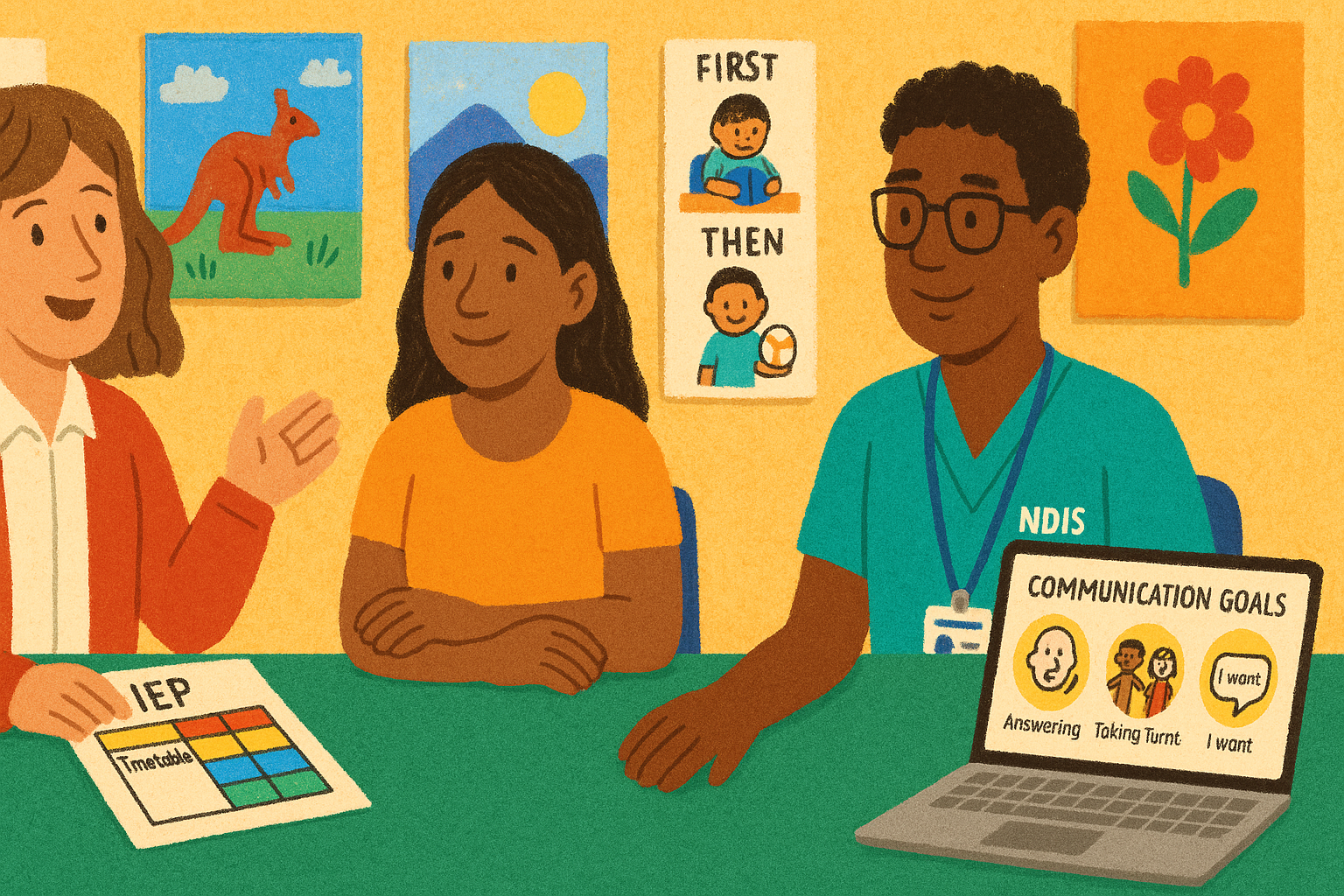
As NDIS participants, you are central to the decision-making process. Your voice, goals, and preferences shape your plan. Actively participate in planning meetings and clearly express what you want to achieve with your disability support, while also considering any unhelpful thought patterns that may arise.
Families and carers also play a key role. They provide essential support and understand your needs well. The NDIS values their involvement in planning if you choose, as their insights can lead to a more effective plan, especially in approaches like a type of behaviour therapy.
The NDIS may also fund supports that strengthen these relationships in social settings, such as respite services for carers or training for family members. By supporting your entire network, the NDIS helps you build a strong foundation to reach your goals.
Stages of Plan Review and Updates
Your NDIS plan isn’t fixed. As your life and goals change, your plan can be reviewed and updated—typically every 12 months. At your review meeting, you’ll discuss what worked, what didn’t, and update your goals or support services as needed. If you have a plan manager, they can provide financial reports to help guide the discussion.
You don’t need to wait for the scheduled review if your needs change significantly. You can request an unscheduled review anytime—especially after major life events or changes in your disability—to make sure your plan still meets your needs.
Behaviour Therapy Funded by the NDIS
The NDIS is not just about physical support; it also recognizes the importance of building skills and improving well-being for young people. That's why NDIS funding can be used for various therapy services, including behaviour therapy. This type of support is aimed at helping you develop positive behaviours, manage challenging ones, and build your capacity for social interaction.
If developing new skills and strategies to navigate social situations in a controlled way is one of your goals, behaviour therapy might be a valuable part of your NDIS plan. Let's look closer at what this therapy involves and how it's funded under the scheme.
What is Behaviour Therapy?
Behavioural therapy includes various approaches focused on identifying and changing unhealthy behaviours, based on the idea that all behaviours are learned and can be modified. This practical, goal-oriented therapy, including cognitive therapy techniques, is effective for improving mental health and daily functioning.
A common type, Applied Behaviour Analysis (ABA), uses techniques like positive reinforcement to encourage desired behaviours. Therapists help you recognize triggers and develop healthier coping strategies in a structured way.
Behavioural therapy isn’t just about stopping negative actions—it also builds positive skills such as communication, social interaction, and emotional regulation, which can be particularly helpful for those dealing with social phobia. Working with a behavioural therapist provides tools to manage challenges and improve your quality of life.
Positive Behaviour Support Under the NDIS
Positive Behaviour Support (PBS) is an NDIS-funded approach that goes beyond managing challenging behaviour—it aims to understand why behaviours occur. A behaviour therapist can help implement PBS by focusing on improving quality of life and reducing the need for restrictive practices by considering both the individual and their environment.
Grounded in social learning principles, PBS uses strategies like positive reinforcement to teach new skills and improve interpersonal relationships. A PBS plan provides tailored NDIS support that addresses your specific needs, fosters a positive environment, and teaches alternative ways to communicate—making challenging behaviours less likely.
Key components of PBS include:
-
Identifying the reasons behind behaviours
-
Teaching new communication and social skills
-
Adjusting the environment to reduce triggers
-
Using positive reinforcement to encourage helpful behaviours
Cognitive Behavioural Therapy: Funding and Access
CBT can be funded by the NDIS if it's considered a reasonable and necessary support for your disability. It's an effective treatment for mental health issues like anxiety and depression, which may involve cognitive restructuring as part of a psychosocial disability.
To receive NDIS funding for CBT, you must show how it supports your goals in your NDIS plan—such as using CBT to manage social anxiety and increase community participation.
CBT is usually funded through the "Capacity Building" category. You’ll work with a qualified therapist to change unhelpful thoughts and behaviours, building skills and independence in line with NDIS principles.
How to Apply for the NDIS
Ready to apply for NDIS support? The application process involves a few key steps, starting with gathering your information and completing an Access Request Form. While it might seem like a lot of paperwork, preparing properly can make the process much smoother and increase your chances of a successful application.
The journey begins with proving your eligibility and demonstrating your need for support. To help you get started, let’s break down the application process, from preparing your documents to understanding what happens after you submit your form.
Preparing Your Supporting Documents
Gathering the right supporting documents is one of the most important steps in your NDIS application. These documents provide the evidence needed to show that you meet the eligibility criteria. You'll need proof of your age and residency, as well as detailed information about your disability.
Your documents should clearly explain how your disability affects your daily life, especially regarding any mental health problems. This includes reports or letters from doctors, specialists, or other health services professionals. The more detailed this information is, the better the NDIA can understand your need for disability support.
Key documents to prepare include:
-
Proof of identity (e.g., birth certificate or passport).
-
Evidence of residency status (e.g., citizenship certificate or visa).
-
Recent reports from medical professionals detailing your disability and its impact.
-
Assessments of your functional capacity from allied health therapists.
Step-by-Step Application Process
The formal application process begins once you have your supporting documents ready. The central part of your application is the NDIS Access Request Form. You can get this form from the NDIS website or by contacting a Local Area Coordinator (LAC).
The form will ask for personal details and information about your disability. You'll need to attach all the supporting evidence you have collected. It’s crucial to be as thorough as possible to give a clear picture of your situation, reflecting an understanding similar to the social learning theory. An LAC can often help you complete the form if you need assistance.
Here’s a simple step-by-step guide to the application process:
-
Confirm you meet the age, residency, and disability requirements.
-
Gather all necessary medical reports and supporting documents.
-
Complete the NDIS Access Request Form.
-
Attach your documents and submit the form to the NDIA.
-
Wait for the NDIA to review your application and make a decision.
What to Expect After Submitting Your Application
After you submit your Access Request Form, the National Disability Insurance Agency (NDIA) will begin reviewing your application. The NDIA will assess the information and evidence you provided to determine if you meet the eligibility requirements for NDIS support. This part of the application process can take some time, and you will be notified of the outcome in writing.
If your application is successful, you will be welcomed to the scheme as a participant. The next step is to schedule a planning meeting with an NDIA representative or a Local Area Coordinator. This meeting is where you will discuss your goals and create your first NDIS plan.
If your application is not approved, the NDIA will provide reasons for the decision. You have the right to request an internal review of this decision. Understanding the reason for the denial can help you gather more specific evidence if you choose to re-apply or appeal.
Conclusion
Understanding the NDIS is crucial for participants and their families as it opens up a world of support and resources tailored to individual needs, especially for those facing issues like social anxiety disorder. By familiarizing yourself with the eligibility criteria, the intricacies of NDIS plans, and the application process, you take significant steps toward empowering yourself and effectively accessing the assistance available. Remember that you are not alone on this journey; the NDIS is designed to support people with disabilities, including those dealing with challenges like social anxiety disorder, in navigating their unique challenges. If you have questions or need further assistance, reach out for guidance and resources to make the most of your NDIS experience.
Reach out today for a consultation or call daar at 02 9133 2500!
Frequently Asked Questions
Can NDIS participants access therapy for challenging behaviours?
Yes, NDIS participants can access behavioural therapy if it's considered reasonable and necessary to help them achieve their goals. This NDIS support helps with mental health, skill-building, and managing behaviours, facilitating positive changes. The National Disability Insurance Agency can fund therapies such as Positive Behaviour Support to improve your quality of life.
How does the NDIS help families manage disability-related needs?
The National Disability Insurance Scheme helps families by providing NDIS funding for a wide range of support services, including those offered by professionals in clinical psychology. This can include respite care to give carers a break, training for families to better provide disability support, and therapeutic services for the participant that reduce strain on the family unit.
Where can I find easy-to-read guides about the NDIS?
You can find easy-to-read guides about the National Disability Insurance Scheme on the official NDIS website. They offer resources in various formats to help NDIS participants and their families understand the disability insurance scheme, how to create an NDIS plan, and how to access different support services.
.svg)




.svg)