
.png?width=48&height=48&name=Group%201%20(3).png)























16 September, 2026

How Effective Is Telehealth? Exploring Its Benefits
Key Highlights
- When parents ask, "How effective is telehealth?", clinical studies consistently show that virtual delivery yields outcomes equal to—and sometimes better than—traditional in-person care.
- Is telehealth therapy effective? Yes, primarily because it occurs in the "natural environment," meaning skills are learned and applied in the home where they are needed most.
- When evaluating how effective telehealth behaviour support is, the success heavily relies on the "mediator model," where the therapist's primary goal is to actively upskill parents and caregivers.
- Virtual therapy removes the massive anxiety and sensory overload associated with traveling to a sterile, unfamiliar clinic, keeping the individual in an optimal state for learning.
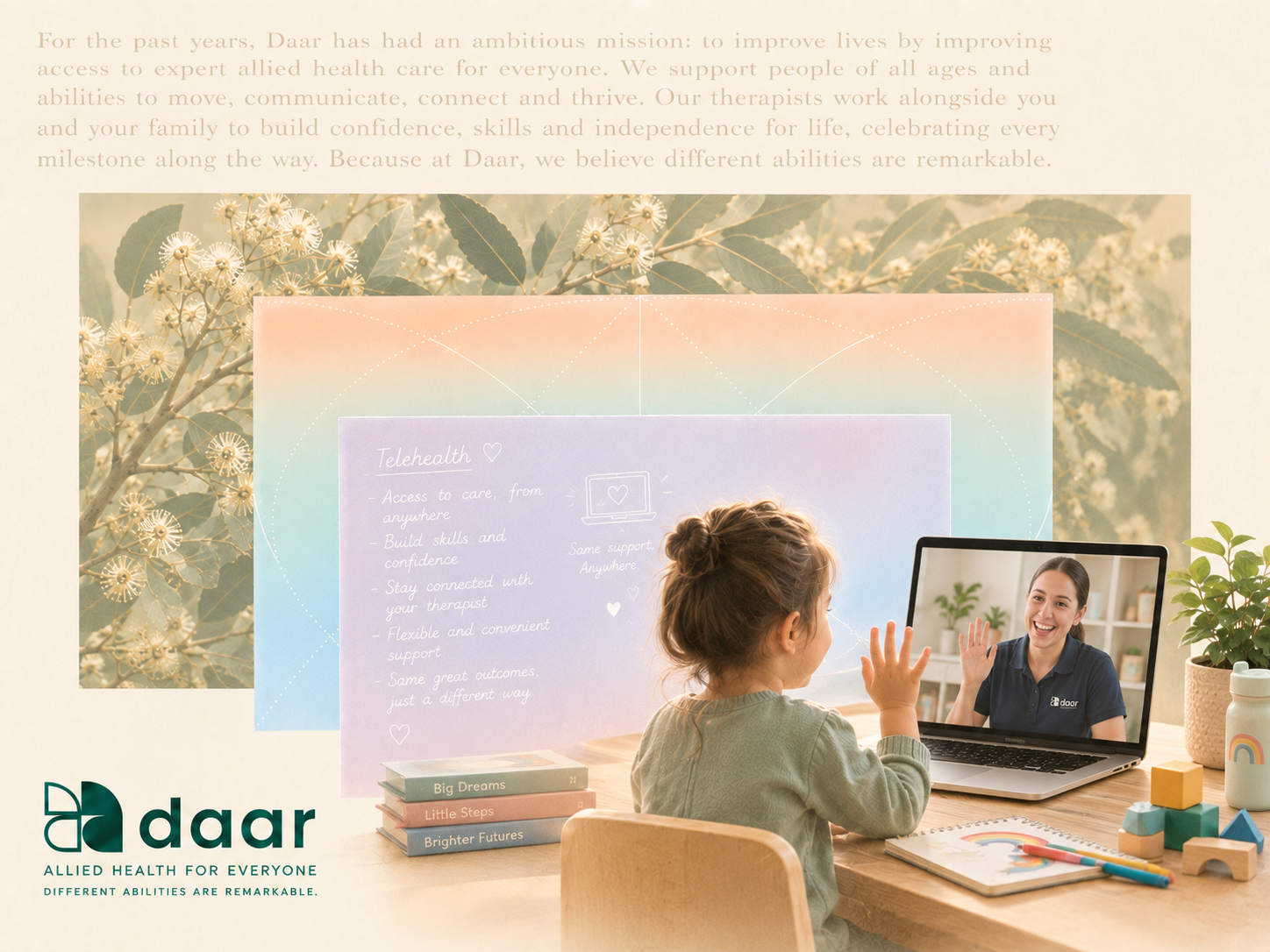
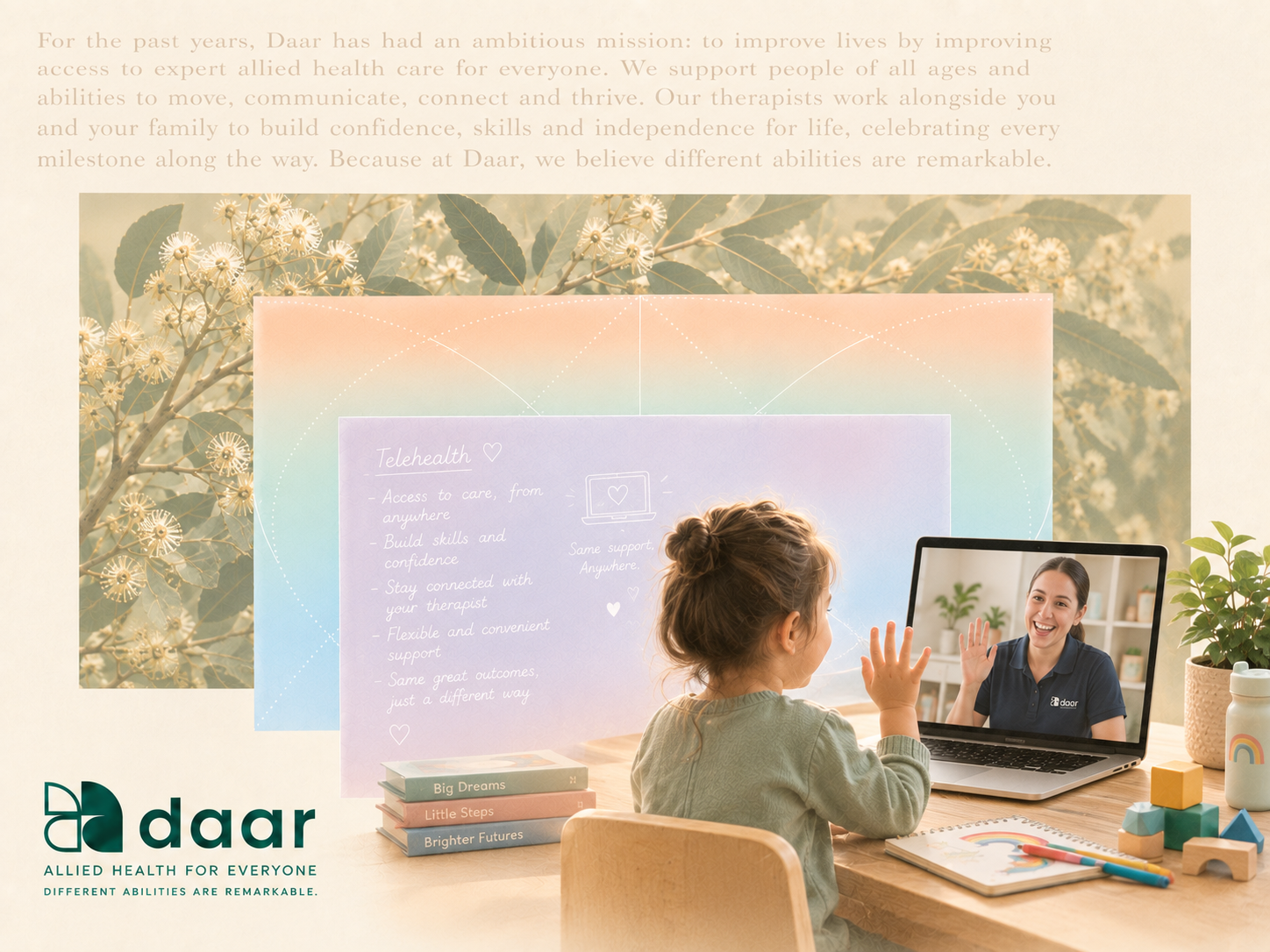
- daar utilises secure, user-friendly digital platforms to deliver premium Australian allied health services directly to your living room, no matter your postcode.
Introduction
The shift toward virtual healthcare over the last few years has been rapid and transformative. While we comfortably use telehealth for a quick GP script renewal, many parents hesitate when it comes to allied health. Leaping into virtual psychology, speech pathology, or behavioural intervention naturally raises a critical question: Will an online therapist actually be able to help my family?
It is a valid concern. If you are dealing with complex emotional dysregulation or challenging meltdowns, sitting in front of a screen might sound counterintuitive. However, the data paints an incredibly positive picture. At daar, we have built our clinic on evidence-based virtual models. Let’s dive into the science, explore exactly "how effective is telehealth behaviour support," and uncover why bringing the clinic into your living room is often the superior choice.
The Clinical Consensus: How Effective is Telehealth?
If you are wondering, "how effective is telehealth?", the clinical consensus is robust. Numerous studies within the allied health sector have compared the outcomes of telehealth interventions against traditional face-to-face sessions. The results consistently demonstrate that virtual care is just as effective for achieving clinical milestones.
In fact, for certain cohorts—such as neurodivergent individuals experiencing demand avoidance or high social anxiety—telehealth frequently outperforms in-person therapy. The screen acts as a comfortable buffer, allowing the individual to engage at their own pace without the intense, immediate pressure of a physical presence in the room.
Overcoming the "Generalisation" Gap
So, why exactly is telehealth therapy effective? It comes down to a concept called "skill generalisation."
The biggest flaw of a traditional clinic model is that a child might learn a fantastic emotional regulation technique in a quiet, distraction-free office, but completely forget how to use it when their sibling steals a toy in their chaotic living room. The skill doesn't "generalise" to the real world.
Telehealth eliminates this gap. The therapy happens in the exact environment where the behaviour occurs. If we are working on table manners or reducing mealtime distress, our practitioners can observe you remotely during your actual dinner hour. You get real-time coaching in your natural habitat, which profoundly accelerates the learning process.
The Power of the Parent: How Effective is Telehealth Behaviour Support?
When evaluating specifically "how effective is telehealth behaviour support", the success rate is tied entirely to the "mediator model."
Behavioural support is rarely about "fixing" the child in isolation; it is about altering the environment around them. Because our practitioners cannot physically intervene through the screen, 100% of our focus is directed toward coaching you, the parent or caregiver. We empower the "mediator" with the scripts, the visual scaffolds, and the confidence to manage a crisis. By upskilling you, the therapy effect multiplies. Instead of your child receiving support for just one hour a week, they receive consistent, therapeutic parenting 24/7.
Reduced Stress, Increased Engagement
Finally, telehealth is effective because it mitigates exhaustion. Packing a dysregulated or anxious child into a car, battling traffic, and sitting in a waiting room often spikes their cortisol (stress hormone) levels before the session even begins. A stressed brain cannot learn. Telehealth allows your child to stay in their safe zone, keeping their nervous system regulated and ready to absorb new skills.
Conclusion
Virtual care is not a compromise; it is an evolution in how we deliver modern healthcare. By embracing the digital space, you unlock a highly practical, deeply effective method for building your family's capacity and resilience.
You don't have to wait months on a local clinic waitlist to start seeing real changes in your household. Premium, NDIS-aligned support is accessible from the comfort of your couch.
Reach out to explore a consultation or call daar directly at 02 9133 2500 to find your perfect match today.
Frequently Asked Questions
Is telehealth therapy effective if the child refuses to look at the screen?
Yes! This is a very common misconception. Telehealth behaviour support does not require the child to sit still and stare at a screen for an hour. Our sessions are heavily parent-centric. Your child can be playing on the floor, eating a snack, or even in another room. The clinician's job is to talk with you, strategise, and observe the environment dynamically.
How does daar ensure that telehealth behaviour support remains private and secure?
At daar, your digital privacy is our top priority. Our virtual clinic uses end-to-end encrypted, HIPAA and Australian privacy law-compliant software designed specifically for medical consultations. We never record sessions without your explicit, written consent, ensuring your family's data and conversations remain completely confidential.
Will the NDIS continue to fund telehealth therapy going forward?
Absolutely. The NDIS explicitly supports and encourages the use of telehealth to deliver Capacity Building supports (such as Improved Daily Living and Improved Relationships). The NDIA recognises that telehealth breaks down geographic barriers and is a highly cost-effective way to deliver vital clinical services to participants across Australia.
.svg)




.svg)