
.png?width=48&height=48&name=Group%201%20(3).png)























14 September, 2026

How Effective Is Telehealth? A Parent's Guide
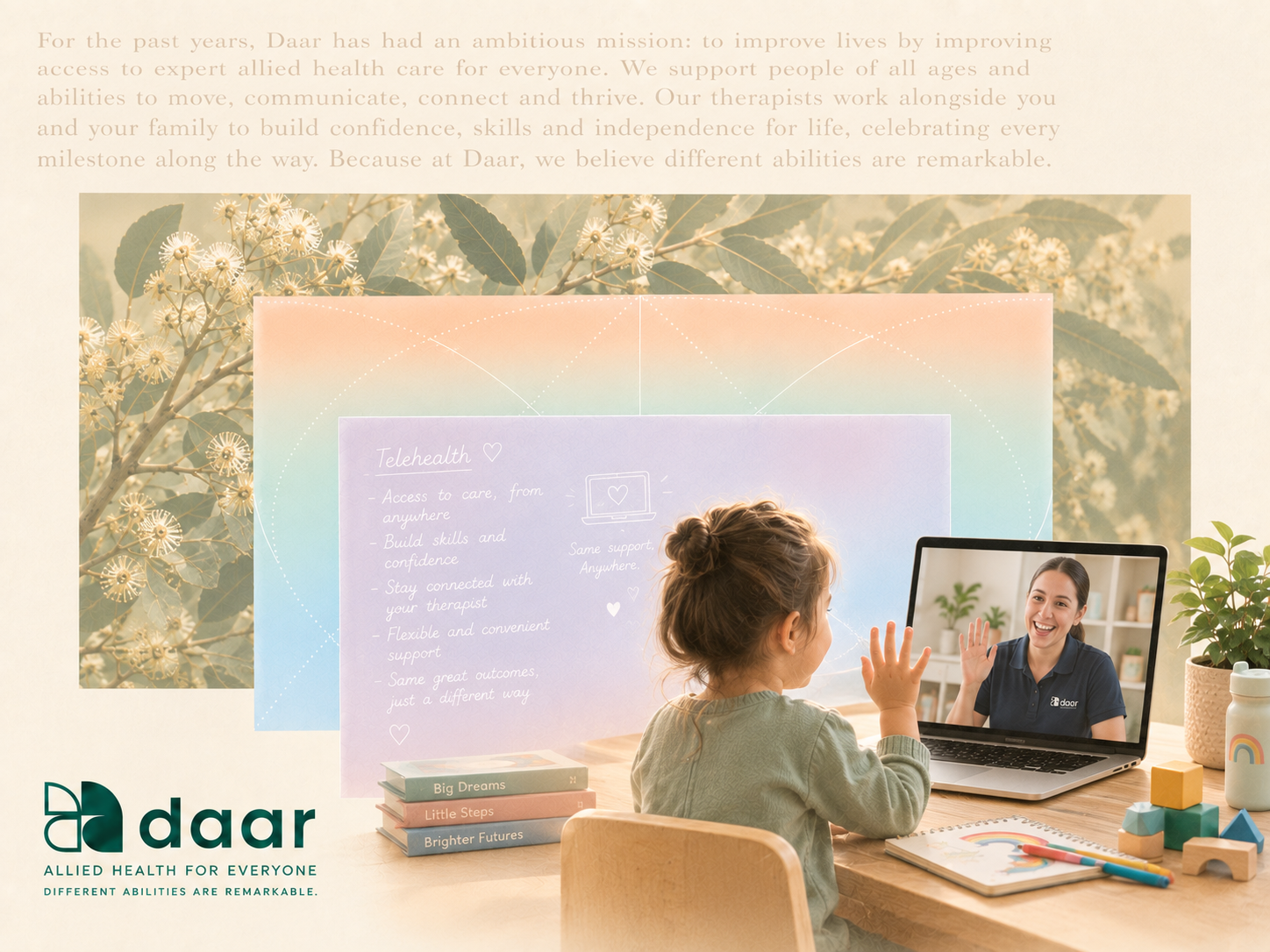
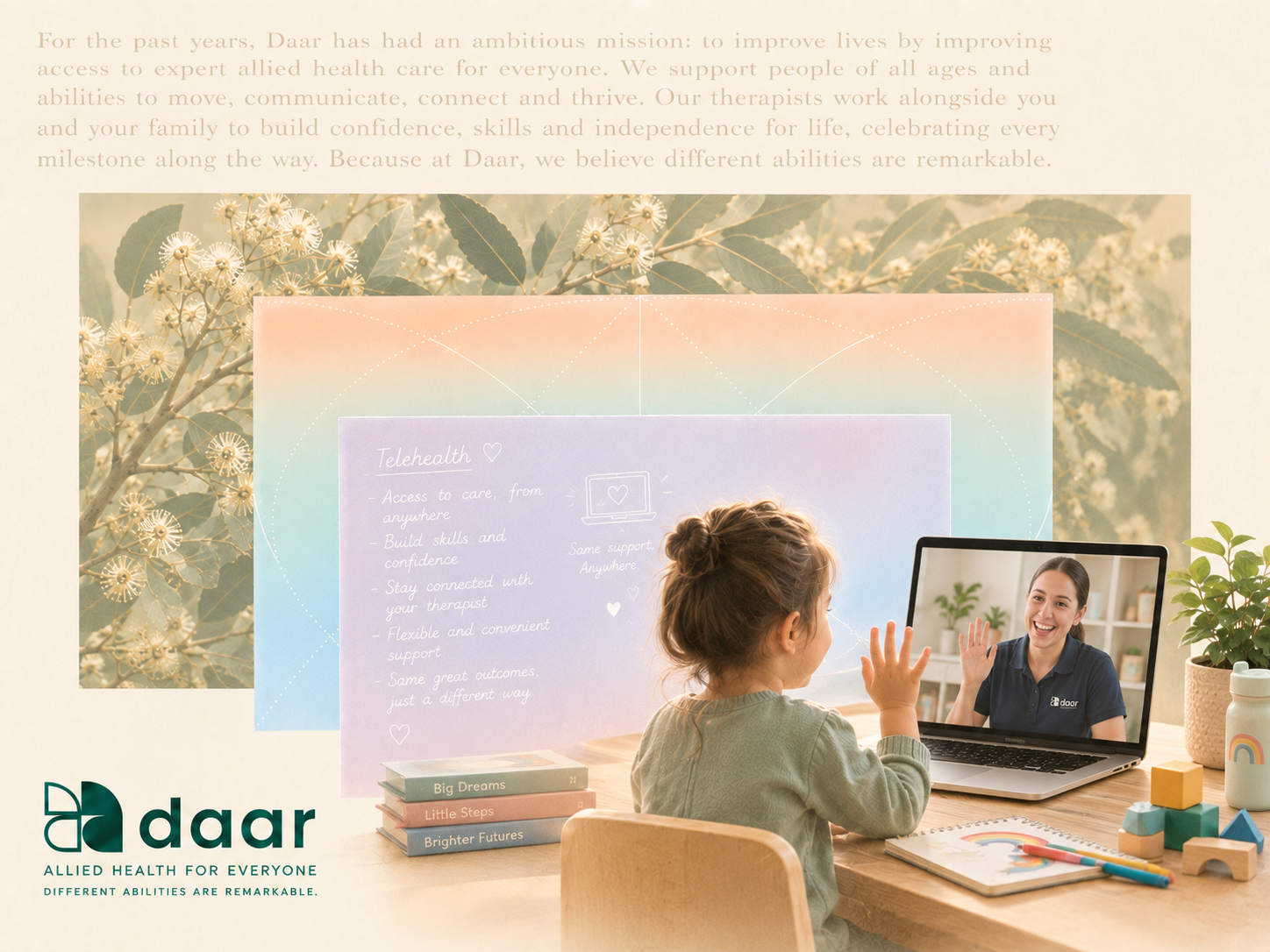
In recent years, the landscape of allied health and developmental support has evolved dramatically. For many families across Australia, logging onto a video call has replaced the traditional waiting room. However, when it comes to early intervention and developmental care, parents naturally want to ensure they are making the right choices. To use NDIS telehealth behaviour support services, you will typically need a device such as a computer, tablet, or smartphone with a reliable internet connection. Most services use common video conferencing platforms, so having a camera, microphone, and speakers or headphones is essential. This technology enables convenient access to early intervention and behaviour support professionals from the comfort of your home.
At daar, an Australian-based clinic dedicated to holistic child development, we often hear families ask: how effective is telehealth, really?
If you are considering virtual sessions for your child, here is everything you need to know about navigating telehealth therapy for children and how it can be seamlessly integrated into your NDIS plan.
How Effective is Telehealth?
It is completely normal to feel hesitant about transitioning your child’s therapy to an online platform. You might wonder if a practitioner can build a genuine connection through a screen.
The encouraging news is that extensive research and our own clinical experience at daar show overwhelmingly positive results. So, how effective is telehealth? For many families, it is not just a backup option; it is a highly effective primary mode of delivery.
Telehealth is particularly successful because it shifts the focus toward capacity building. Rather than a clinician working directly with a child in an unfamiliar clinic room, telehealth empowers parents and caregivers. Therapists observe family dynamics in their natural environment and provide real-time coaching. This means strategies are implemented where they matter most—in your living room, during meal times, or during the morning routine.
The Advantages of Telehealth Therapy for Children
Engaging in telehealth therapy for children offers unique advantages that traditional in-clinic visits sometimes cannot match:
- The Comfort of Home: Clinics can sometimes be overwhelming, especially for neurodivergent children or those with sensory processing differences. Telehealth allows your child to engage in therapy from their safe space, leading to more authentic interactions and reduced anxiety.
- Real-Life Application: Skills learned in a clinical setting do not always easily translate to the home environment. Virtual sessions allow our clinicians at daar to see exactly what you are working with (from your child's favorite toys to the layout of your play area) and tailor interventions accordingly.
- Accessibility and Convenience: For families living in regional or remote areas of Australia, or those juggling busy schedules and multiple children, eliminating travel time significantly reduces caregiver burnout and ensures consistent therapy attendance.
Navigating NDIS Telehealth Behaviour Support
If your child has an NDIS plan, you may be looking for ways to use their funding effectively. NDIS telehealth behaviour support operates under the same rigorous frameworks and quality standards as face-to-face delivery.
Positive Behaviour Support (PBS) is highly suited to the telehealth model. Because PBS focuses on understanding why a behaviour is happening and modifying the environment to support the child, the clinician doesn't necessarily need to be physically in the room. Through secure video links, our Behaviour Support Practitioners at daar can conduct observations, collaborate with parents on functional assessments, and develop comprehensive, NDIS-compliant Behaviour Support Plans.
Tailored Telehealth Behaviour Support for Children at daar
When it comes to telehealth behaviour support for children, success heavily relies on the clinician's ability to engage both the child and the family unit.
At daar, our approach is highly individualised. We don't expect a toddler to sit perfectly still in front of a webcam for an hour. Instead, our sessions might involve:
- Parent coaching and collaborative problem-solving.
- Observing a play session between you and your child to provide gentle, in-the-moment feedback.
- Using interactive screen-sharing, digital visual schedules, or engaging digital rewards for older children.
- Liaising via telehealth with your child's wider support network, such as teachers or speech pathologists, to ensure a unified approach.
We believe that geographical barriers should never stand in the way of high-quality early intervention. Through intentional, evidence-based virtual care, we help families across Australia build confidence and foster positive developmental outcomes.
Conclusion
We can confidently say that not only is telehealth therapy effective for children, but for many neurodivergent kids, it is actually the clinically superior choice. By removing restrictive physical environments and leveraging the comfort of your own home, allied health professionals can unlock your child's true potential.
If you are ready for a therapy model that embraces your child’s energy, respects their sensory boundaries, and fits effortlessly into your family's schedule, we are here to help. Reach out to explore a consultation or call daar directly at 02 9133 2500 to find your perfect match.
Frequently Asked Questions (FAQ)
How effective is telehealth compared to in-person clinic visits?
Research indicates that telehealth can be just as effective as face-to-face therapy, particularly for parent-coaching models and behaviour support. Because interventions are practiced in the child's natural home environment, skills are often retained and applied more easily in daily life.
Can I use my NDIS funding for NDIS telehealth behaviour support?
Yes. The NDIS recognises telehealth as a standard and valid method of service delivery. Support categories such as Improved Relationships (Capacity Building) can be utilised to fund telehealth behaviour support sessions with registered practitioners, just as they would for in-person appointments.
How does a practitioner keep my child engaged during telehealth therapy for children?
Telehealth therapy isn't always about the child staring at the screen. Depending on their age and needs, the therapist may spend more time coaching you (the parent) as you interact with your child. For older children, practitioners use interactive digital tools, specific movement breaks, and tailored special interests to maintain engagement.
.svg)




.svg)