
.png?width=48&height=48&name=Group%201%20(3).png)























2 April, 2026

Combatting Excessive Use of Gadgets: A Parent's Guide

Key Highlights
- Excessive screen time is a growing concern with negative effects on children's mental health and development.
- Extended gadget use can harm physical health, causing issues with vision, sleep, and posture.
- Too much screen time may lead to social isolation and hinder the development of crucial social skills.
- Parents play a key role in modeling healthy habits and setting boundaries around gadget use.
- Therapy can help children and families address the negative impacts of excessive screen time and build healthier routines.
- Encouraging physical activity and alternative hobbies is essential for reducing dependency on digital devices.
Introduction
In today's digital world, gadgets are a common part of everyday life for young people. While technology offers many benefits, excessive gadget use is a growing concern. As children spend more and more time on screens, it's important for parents to understand the potential impact on their development. This guide will help you recognize the signs of too much screen time, understand its effects, and find helpful strategies, including therapy, to create a healthier balance for your family.
Effects of Excessive Gadget Use on Child Health
The effects of screen time on young children can be significant, touching everything from their mental well-being to their physical health. When electronic devices are used too much, it can have a negative impact on their overall development. Studies show a connection between extended screen use and issues like poor sleep, vision problems, and even lower academic performance.
Understanding these risks is the first step toward creating a healthier environment. The following sections explore the specific ways excessive gadget use can affect your child’s mental, physical, and cognitive health, helping you spot potential issues early.
Impact on Mental Wellbeing and Emotional Health
Excessive screen use can significantly impact a child's mental and psychological health. Early warning signs include changes in mood or behavior, such as irritability, anxiety, or withdrawal, especially when asked to stop using devices. These may indicate struggles with emotional regulation.
Prolonged screen time is linked to more serious issues like depressive symptoms in adolescents. Children who spend hours on video games are more likely to show signs of depression, as screens often become an escape from real-life challenges and hinder healthy coping skills.
Constant digital stimulation can also interfere with emotional management. If your child consistently turns to screens when sad, stressed, or bored, it could signal dependency and limit their ability to build resilience and handle life's challenges effectively.
Physical Health Concerns – Vision, Sleep, and Posture
Excessive gadget use puts your child’s physical health at risk. Common issues include eye strain, dry eyes, irritation, and blurred vision—often caused by reduced blinking and blue light exposure from screens.
Screen time, especially before bed, can disrupt sleep by interfering with melatonin production. This leads to poor sleep, fatigue, and reduced school performance.
Poor posture while using devices can cause neck and back pain, leading to long-term discomfort. Encourage good posture and regular breaks to help prevent these problems.
How Gadgets Affect Learning and Brain Development
Excessive screen time can hinder brain development and learning in children. Face-to-face interaction is essential for language growth, but screens often replace valuable conversations and play, slowing language acquisition.
Constant digital stimulation can also reduce a child’s ability to focus, negatively affecting academic performance. Kids accustomed to fast-paced games and apps may struggle with schoolwork and other less stimulating activities. Studies link higher screen time to poorer academic results.
However, not all screen use is harmful. Educational content can support learning when used wisely. The key is balance: ensure screen time doesn’t replace real-world experiences. Supervise your child’s usage and select high-quality educational apps and shows for the best outcomes.
Why Kids Develop Gadget Dependency
It’s common to wonder why some children become dependent on gadgets while others don't. Technology addiction is more than just a lot of screen time; it's a compulsive need to use devices despite negative consequences. Kids are especially vulnerable from a young age because their brains are still developing, making them more susceptible to the instant gratification that gadgets provide.
Several risk factors can contribute to gadget dependency, including a child's environment and family dynamics. The following sections will look at these factors more closely, exploring how home life, routines, and parenting styles can influence a child's relationship with technology.
Risk Factors Including Environment and Family Habits
A child’s media use is strongly shaped by their environment and family habits. One major risk for unhealthy screen time is the absence of clear rules and supervision. Without boundaries, children struggle to self-regulate device use. Weak family support can also push kids online to cope with negative emotions.
Parents’ own screen habits set the tone—children often imitate what they see. Modeling balanced tech use teaches healthy digital behavior. The aim is to make technology a tool, not the center of home life.
Key risk factors include:
- Unrestricted access to devices
- Poor parental support or communication
- Mental health issues such as anxiety or depression
- Early exposure to gadgets before self-control develops
The Role of Routine, Supervision, and Parenting Styles
Your parenting style and home structure are crucial for managing your child's screen time. A consistent routine with non-screen activities teaches kids that devices are just one part of their day, making transitions easier and reducing arguments. Supervision is especially important for younger children.
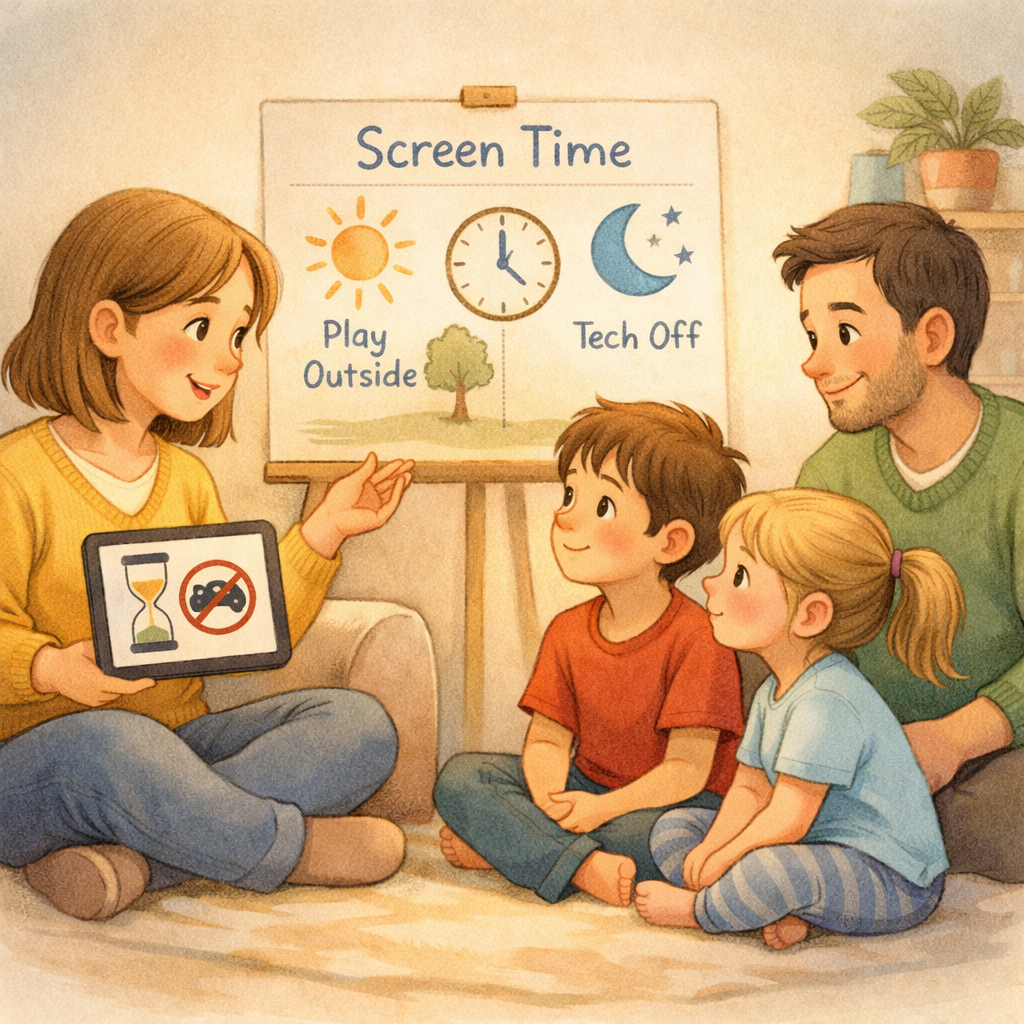
Set clear, specific boundaries on screen time; vague rules are harder to enforce. Establish “tech-free” zones like the dinner table or bedrooms, and designate certain times for device use to build self-regulation skills.
Different parenting approaches have different results. An authoritative style—firm but warm and reasonable—is usually most effective. Involving children in creating a family media plan encourages teamwork and responsibility. Building healthy tech habits requires a family effort.
Dangers and Risks Associated with Gadget Overuse
While gadgets can be useful tools, the danger of overuse is real and can lead to serious negative effects. Beyond the physical health issues already discussed, excessive screen time can have profound negative consequences for a child's social and academic life. When digital interactions replace face-to-face connections, children may struggle to develop essential life skills.
The following sections will examine some of these risks in more detail, including social isolation and developmental setbacks. Understanding these potential dangers can help you recognize the main signs of excessive gadget use and take steps to protect your child.
Social Isolation and Relationship Challenges
Excessive screen time can lead to social isolation in children. Spending more time online than with friends and family may weaken social skills, making face-to-face interactions and reading social cues difficult. This can cause loneliness and withdrawal from real-life activities.
Screen time disputes also strain parent-child relationships. Conflicts over device use often create tension, harming emotional well-being and disrupting a positive home environment.
Balanced development requires both online and offline connections. While online friendships have value, they shouldn’t replace in-person interactions. Encourage group activities, playdates, and family outings to help your child build strong social skills.
Potential Academic and Developmental Setbacks
Excessive gadget use can lead to notable setbacks in academic performance and overall development. Children who spend too much time on screens may struggle with attention and focus, making it difficult to keep up with schoolwork. This can result in lower grades and a lack of interest in learning. The constant distraction from devices can interfere with the development of important cognitive skills like critical thinking and problem-solving.
While some educational content can be beneficial, it's the total amount of screen time that often causes problems. When digital entertainment takes precedence over homework, reading, and other learning activities, it can create developmental delays. For example, a child who spends hours on a tablet may have fewer opportunities to develop fine motor skills through hands-on play.
Here is a look at how different types of device use can affect learning:
|
Device-Related Activity |
Potential Setback |
|---|---|
|
Excessive social media use |
Reduced focus, sleep deprivation affecting school performance. |
|
Constant online gaming |
Neglect of homework, social withdrawal from peers. |
|
Passive video watching |
Slower language development, lack of critical engagement. |
Creating Positive Digital Habits for Families
Building healthy habits around digital devices is a family affair. It's not just about limiting screen time but about creating a balanced lifestyle where technology has its proper place. By establishing a clear routine that includes plenty of physical activity and other non-screen activities, you can help your child develop a healthier relationship with their gadgets.
The key is to be proactive and consistent. The following sections offer practical strategies for encouraging tech-free fun and modeling the behavior you want to see. These tips will help you set healthy boundaries and guide your family toward more positive digital habits.
Encouraging Tech-Free Activities and Social Skills
A crucial part of managing screen time is filling your child's free time with engaging alternative activities. Simply telling a child to get off their device isn't enough; you need to provide appealing options. Think about what your child enjoys and plan activities that promote physical activity, creativity, and social skills. This makes the transition away from screens feel less like a punishment and more like an opportunity for fun.
Participating in these activities as a family is a great way to strengthen your bond and create lasting memories. When children see you enjoying screen-free time, they are more likely to embrace it themselves. This shared time helps them develop important social skills in a natural and enjoyable way.
Here are some ideas for screen-free fun:
- Plan a family game night with board games or card games.
- Encourage outdoor physical activity like riding bikes, visiting a park, or playing sports.
- Get creative with arts and crafts, building with blocks, or cooking together.
- Schedule regular playdates to promote face-to-face social interactions.
Modeling Healthy Gadget Use as Adults
As a parent, you are your child's most important role model. Your own media use sets the standard for the entire family. If you want your child to develop healthy habits, you need to practice modeling behavior that reflects a balanced relationship with technology. This means being mindful of your own screen time and putting your phone away during family moments like meals and conversations.
Creating a family media plan can help everyone get on the same page. This plan can outline rules and expectations for all family members, not just the kids. When children see that the rules apply to everyone, they are more likely to respect them. This approach turns screen time management into a team effort.
It's also important to talk openly about your technology use. Explain why you're taking regular breaks from your screen or why you're choosing to do a non-digital activity. These conversations teach children self-awareness and help them understand the importance of balancing their online and offline lives.
When to Seek Professional Help for Your Child
Even with the best at-home strategies, there are times when a child's excessive screen time may require professional support. If you've set boundaries and encouraged other activities but still see a significant negative impact on your child's daily life, it might be time to seek help. This is not a sign of failure but a proactive step toward protecting your child's mental health and well-being. Healthcare professionals specializing in kids therapy can provide a formal assessment and create a tailored plan to address the underlying issues.
Recognizing when to seek help can be challenging, but certain signs indicate that intervention is needed. The next sections will detail what to look for when considering professional help and what you can expect from the therapy process. Knowing the right time to consult a specialist and understanding the first steps can make the journey smoother for both you and your child.
Knowing the Right Time to Consult a Specialist
It can be hard to tell when your child’s screen use goes from a normal habit to a serious problem. Major warning signs include negative impacts on schoolwork, withdrawal from friends and family, or loss of interest in other activities.
Another red flag is extreme anger, anxiety, or sadness when screen time is limited—this may signal dependency. Such intense reactions suggest screens have become a coping mechanism.
If you feel you’ve lost control or your child’s mental health and behavior are getting worse, it’s time to seek professional help. A specialist can offer guidance and support for your family.
What to Expect in Kids' Therapy Sessions

When starting kids therapy, the first step is a thorough assessment to understand your child's screen time habits and their impact. The therapist meets with both you and your child to build rapport and identify the root causes of excessive device use.
Therapy is then tailored to your child’s needs. Cognitive Behavioral Therapy (CBT) is often used to help children recognize and change unhealthy patterns around screen time. The goal is to teach healthier coping skills, improve emotional regulation, set realistic goals for reducing screen use, and find enjoyable alternatives.
Family involvement is key. Sessions may include:
- Creating a family media plan with clear rules.
- Teaching parents effective communication and problem-solving.
- Strengthening family relationships for a more supportive home environment.
Conclusion
In conclusion, managing gadget use is essential for nurturing the overall well-being of children. By understanding the potential impacts on mental, physical, and emotional health, parents can take proactive steps to create a balanced digital environment. Encouraging tech-free activities, modeling healthy behaviors, and fostering open communication about screen time can help children develop positive habits. If you notice signs of excessive gadget use in your child, don't hesitate to seek professional help. Together, we can guide our kids toward a healthier relationship with technology.
For personalized advice and strategies, reach out for a consultation or call daar at 02 9133 2500 today!
Frequently Asked Questions
What are the main signs of excessive gadget use in children?
The main signs of excessive gadget use include mood swings when devices are taken away, a loss of interest in other activities, declining school performance, and social withdrawal. These negative effects on mental health and daily functioning indicate that screen time has become a problem.
Are there recommended limits for kids’ screen time in Australia?
While Australia has its own guidelines, many experts refer to recommendations from groups like the American Academy of Pediatrics and the World Health Organization. These often suggest no screen time for children under 2 (except for video-chatting) and limiting the amount of time to 1-2 hours per day for older children.
What therapies help reduce gadget dependency in children?
Therapies like Cognitive Behavioral Therapy (CBT) are effective in reducing gadget dependency. Kids therapy often involves family participation to change routines and encourage alternative activities. Healthcare professionals work to address the underlying reasons for excessive screen use and build healthier habits for the entire family.
.svg)




.svg)