
.png?width=48&height=48&name=Group%201%20(3).png)























18 September, 2026

Is Telehealth Behaviour Support Effective? Key Insights
Key Highlights
- It is the most common question parents ask: is telehealth behaviour support a good fit for effective support? Extensive clinical research and NDIS outcomes show that virtual care is not just a backup option; it is often the superior method for sustainable change.
- A major misconception about telehealth for children is that the child must sit perfectly still and talk to a screen. In reality, modern virtual therapy involves the clinician observing natural play and coaching the parents, breaking away from traditional face-to-face interactions. Additionally, privacy and security concerns are important considerations in telehealth behaviour support. Providers typically use secure, encrypted platforms to protect confidential information and maintain HIPAA compliance, ensuring families' sessions are kept private and safe.
- By conducting sessions virtually, clinicians eliminate the "visitor effect"—where a child acts completely out of character because a stranger is in their home or they are in an unfamiliar, sterile clinic, helping to maintain a strong therapeutic relationship.
- Navigating long waitlists is a nationwide crisis. High-quality telehealth behaviour support Australia connects families instantly with specialised allied health professionals, regardless of their postcode.
- Operating via a secure online platform, daar utilises the "mediator model," ensuring that clinical strategies are embedded directly into your family's authentic daily routines.
Introduction
When families are first introduced to the idea of virtual therapy, a common wave of skepticism arises. Parents look at their highly dysregulated, energetic child and think: "My child cannot sit still for a five-minute cartoon, how on earth are they going to sit through an hour-long Zoom therapy session?" Each family must decide what the best option is based on their child's unique needs.
This hesitation makes perfect sense if you view virtual care through the lens of a traditional adult telehealth appointment. However, paediatric interventions work entirely differently. At daar, our allied health professionals have mastered the digital delivery of care, emphasizing positive behaviour support in their approach. Let’s break down the myths, answer the vital question—is telehealth behaviour support effective—and explore why thousands of families are turning to telehealth behaviour support Australia for better, faster outcomes.
The Big Question: Is Telehealth Behaviour Support Effective?
The short answer is a resounding yes. The clinical data supporting virtual behaviour intervention across state lines is robust. But to understand why it works, we have to look at the ultimate goal of the therapy itself.
The goal of behaviour support is not to teach a child how to behave well in a clinician’s office or in a familiar environment. The goal is to help them regulate their emotions, handle transitions, and communicate their needs in their actual life—at the breakfast table, during bath time, and while playing with siblings.
When therapy is delivered in a clinic, the practitioner has to artificially recreate these scenarios. When therapy is delivered via telehealth, the practitioner is virtually transported directly into the "firing line." They see the genuine triggers as they happen in your home. Because the strategies are taught and applied in the exact environment where the child lives, the effectiveness and retention of the new skills skyrocket. Telehealth allows for scheduling sessions during a lunch break and other convenient times.
Busting the Screen-Time Myth: Telehealth for Children
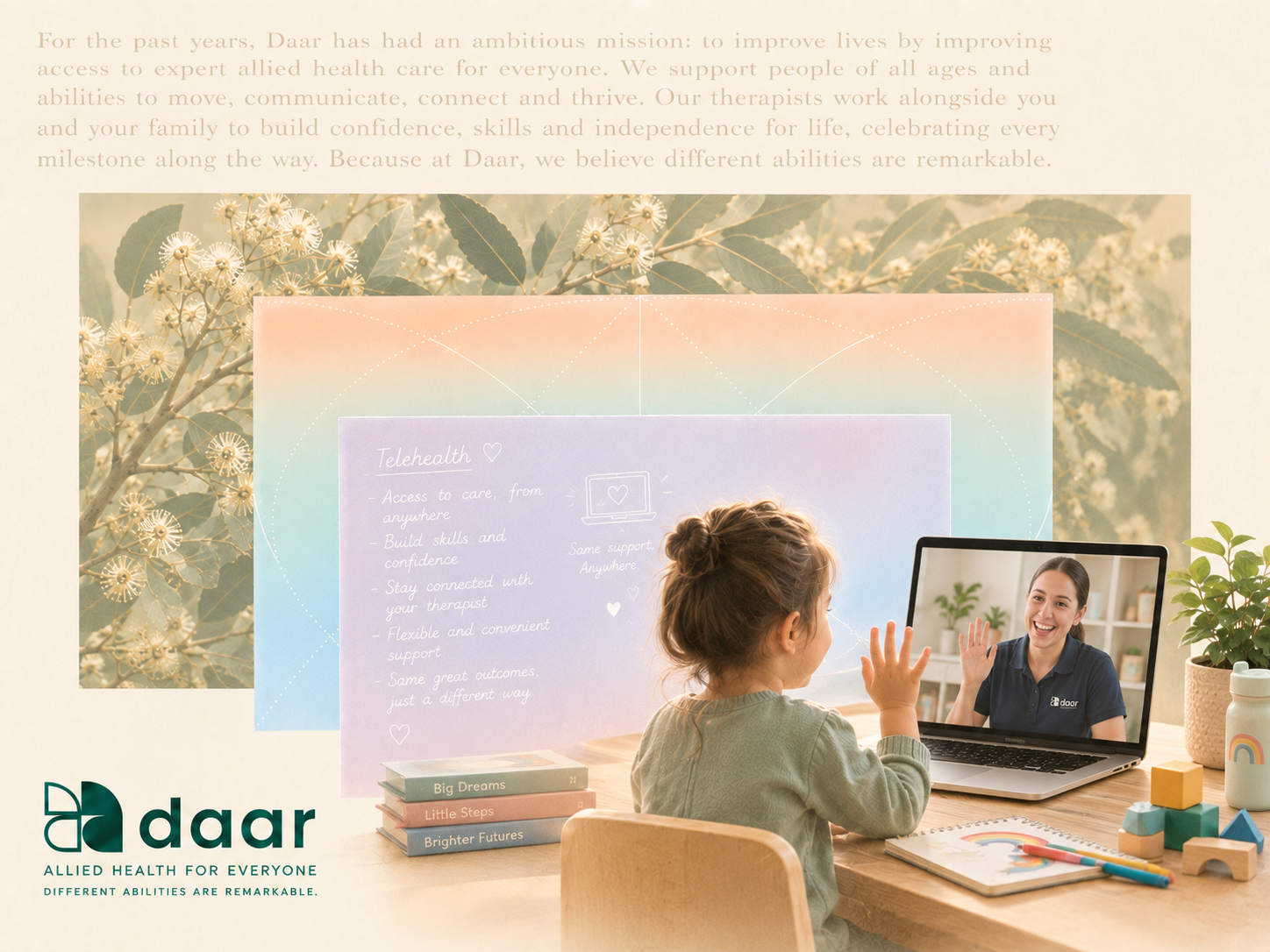
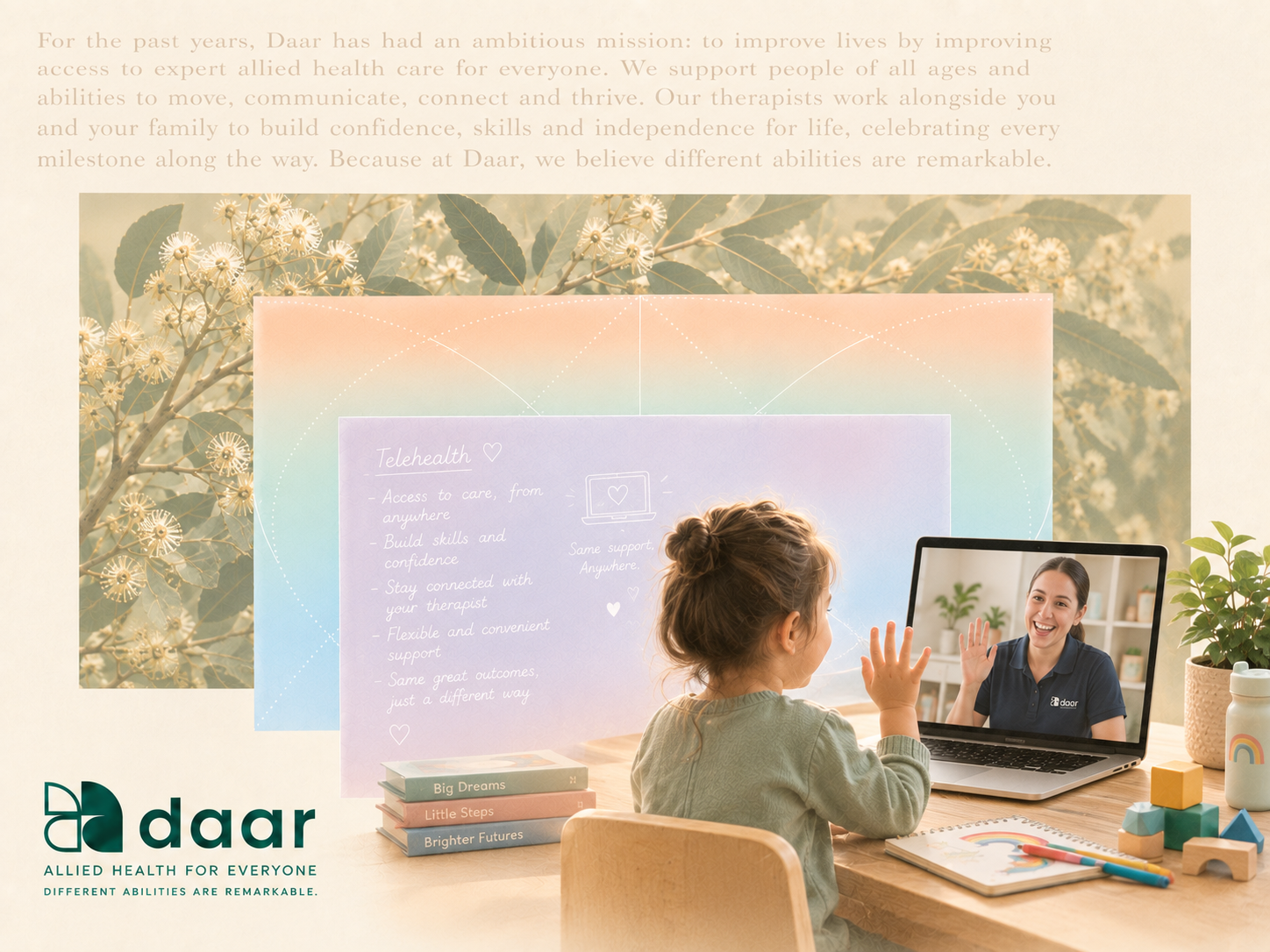
The secret to successful telehealth for children is that the child rarely interacts with the screen at all.
We use what is known as the "mediator model." Instead of treating the child in isolation, we treat the child’s ecosystem. During a session, you might set your laptop on the kitchen counter while you and your child play on the floor. Our practitioner observes the dynamics quietly. If your child becomes frustrated, the practitioner provides live, in-the-ear coaching exclusively to you, guiding you on how to confidently de-escalate the situation. The child simply experiences a regulated, supportive interaction with their parent, completely unaware that a therapy session is even occurring.
Eliminating the Practitioner "Visitor Effect"
One of the greatest barriers to effective behavioural assessment is the "visitor effect." If a therapist drives to your house for an in-person observation, their physical presence changes the dynamic. This can be particularly challenging for neurodivergent children who are experiencing this situation for the first time, as they will either become highly anxious and hide, or they will "mask" and act on their absolute best behaviour because a guest is present.
Neither scenario gives the clinician an accurate baseline of the daily challenges you face. A virtual connection allows the practitioner to be a discreet "fly on the wall." This unobtrusive observation is a major reason why telehealth behaviour support Australia yields incredibly accurate functional behaviour assessments (FBAs), especially for clients in rural and remote areas.
Bridging the Gap Across Australia
Finding a specialist whose clinical niche perfectly aligns with your child's neurotype is difficult, and if you live outside of a major metropolitan hub, it can feel impossible.
Virtual care shatters geographic borders. Whether you are in coastal Queensland, regional Victoria, or suburban Melbourne, you have equal access to the nation's brightest clinical minds. We actively pair you with a practitioner who truly understands your family’s unique presentation. To learn how we facilitate this vital connection without the endless waitlists, discover telehealth therapy and find your perfect match with us today.
Conclusion
The narrative that virtual therapy is a "second best" alternative to in-person care is fundamentally outdated. By observing your child in their natural habitat, especially in rural areas, and empowering you as their primary mediator, modern telehealth delivers deeply effective, sustainable behavioural outcomes.
You do not have to disrupt your child's routine to access premium care. Evidence-based, NDIS-aligned guidance is available directly in your quiet space, your living room.
Reach out to explore a virtual consultation or call daar directly at 02 9133 2500 to find your perfect match today.
Frequently Asked Questions
Is telehealth behaviour support effective for children with highly aggressive behaviours?
Yes. In fact, for children who exhibit severe physical aggression or self-injury, telehealth is often the safest and most effective option for psychiatric care. Traveling to a clinic frequently triggers intense dysregulation, and an in-home practitioner can inadvertently escalate a crisis. Telehealth allows the clinician to observe the escalation safely from a distance and immediately coach the parents through crisis management protocols without adding to the child's sensory overload.
What kind of technology do I need to participate in telehealth for children?
The technological requirements are incredibly simple. You do not need a high-tech setup. A standard smartphone, tablet, or laptop with a working camera, microphone, and a stable internet connection is all that is required. Many parents find using wireless earbuds (like AirPods) helpful so they can hear the clinician's coaching privately while interacting naturally with their child in this hybrid model of care.
Does NDIS funding cover telehealth behaviour support Australia?
Absolutely. The NDIS Quality and Safeguards Commission fully recognises telehealth, including telepsychiatry services, as a high-quality, valid method of service delivery. Families can comfortably use their Capacity Building: Improved Relationships or Improved Daily Living funding to access daar’s virtual practitioners for comprehensive assessments, plan authoring, and ongoing parent coaching.
.svg)




.svg)