
.png?width=48&height=48&name=Group%201%20(3).png)























9 April, 2026

How the Effects of Sugar on Children Impact Learning

Key Highlights
- Excessive sugar consumption can lead to various health problems for your child, including weight gain and a higher risk of chronic diseases.
- Understanding the effects of too much sugar is crucial for protecting your child’s health and helping with learning.
- High sugar intake can affect a child's mood and attention span, even if it doesn't directly cause hyperactivity.
- Reading food labels is a key first step to managing your child's sugar intake from sugary foods.
Introduction
It is a joy to see a child’s face light up at the taste of a sweet treat. But have you ever wondered how much sugar is too much? Balancing treats in your child’s diet is a common concern for many parents, as excessive sugar can impact a child's overall health. Understanding the effects of sugar consumption on child development is vital for raising healthy kids. This guide will explore sugar's impact on children's health, from physical growth to mental well-being, and provide practical tips for making informed choices.
Kids' Sugar Intake Limits and Health Guidelines
Knowing your child's sugar limits is essential for their health, especially during special occasions. World Health Organization recommends strict guidelines to protect children from excess sugar, which can lead to obesity, weight gain, and high blood pressure.
Recommended intake of sugary treats varies by age, with tighter restrictions for younger kids. Guidelines focus on limiting "free sugars," found in added sugars, honey, and fruit juice. Understanding these limits and reading food labels are key steps to managing your child's sugar intake. The next sections will outline these recommendations and show how to calculate your child's daily allowance.
Australian Recommendations for Childhood Sugar Consumption
Australian dietary guidelines advise limiting the amount of sugar and added sugar to reduce health risks. Many Australians exceed the recommended intake, often by eating processed foods high in added sugars that don’t promote fullness. The World Health Organization (WHO) recommends that free sugars make up less than 10% of daily energy intake, and ideally less than 5% for extra health benefits. For adults, this means about 6 teaspoons (24 grams) per day; for children, even less is advised, with a focus on avoiding sugary drinks and snacks.
WHO Recommendations:
|
Guideline |
Daily Limit |
|---|---|
|
Standard Recommendation |
Less than 10% of total energy |
|
Additional Health Benefits |
Less than 5% of total energy |
|
Average Adult |
6–10 teaspoons (24–50 grams) |
Calculating Daily Sugar Allowance for Children
Calculating your child's daily sugar intake is easy. Check the "Added Sugars" on nutrition labels—every 4 grams of sugar equals one teaspoon. The recommends less than 25 grams of sugar (6 teaspoons) per day for ages 2–18, and zero added sugar for children under two.
Sugar adds up fast: one cup of typical kids’ cereal contains 12 grams; a 20-ounce sports drink has over 35 grams—more than the daily limit, which can lead to various dental problems.
To reduce sugar:
- Limit sugary drinks like soda, sports drinks, and juice; offer water or plain milk instead.
- Make snacks at home to control sugar content.
- Read labels for hidden sugars such as high-fructose corn syrup, dextrose, or fructose.
Immediate Effects of Sugar on Children’s Behaviour and Mood
Many parents notice that their child’s mood and behaviour seem to change after sugar consumption. A diet high in sugary foods and sugary drinks can cause rapid spikes in blood sugar levels, leading to subsequent crashes. This fluctuation can affect the child’s mood, leading to energy drops, irritability, and mood swings, making it harder for children to regulate their emotions. These shifts can make them less attentive and more irritable.
While the "sugar rush" is a common idea, its direct link to hyperactivity and unhealthy weight gain is debated. However, the impact of sugar on a child's mood and focus is a real concern for parents. We will now look closer at the connection between sugar and hyperactivity, as well as its effects on classroom performance.
Does Sugar Consumption Cause Hyperactivity in Kids?
Many parents believe sugar makes kids hyperactive, especially after events like birthday parties. However, studies show no strong link between sugar intake, including dairy products, and hyperactivity. The "sugar rush" is mostly a myth.
There’s no clinical evidence connecting sugar to ADHD or hyperactive behaviour. While researchers continue to study how refined sugar and artificial sweeteners affect mood, current science does not support the idea that sugar causes hyperactivity.
Children’s excitement at special events—where sweets are common—likely explains their energetic behaviour. Rapid blood sugar changes from sugary treats, including soft drinks, can cause irritability or energy crashes, which may be mistaken for hyperactivity. So while sugar can influence mood, it isn’t the direct cause of hyperactivity that many believe it to be.
Impact on Attention, Focus, and Classroom Performance
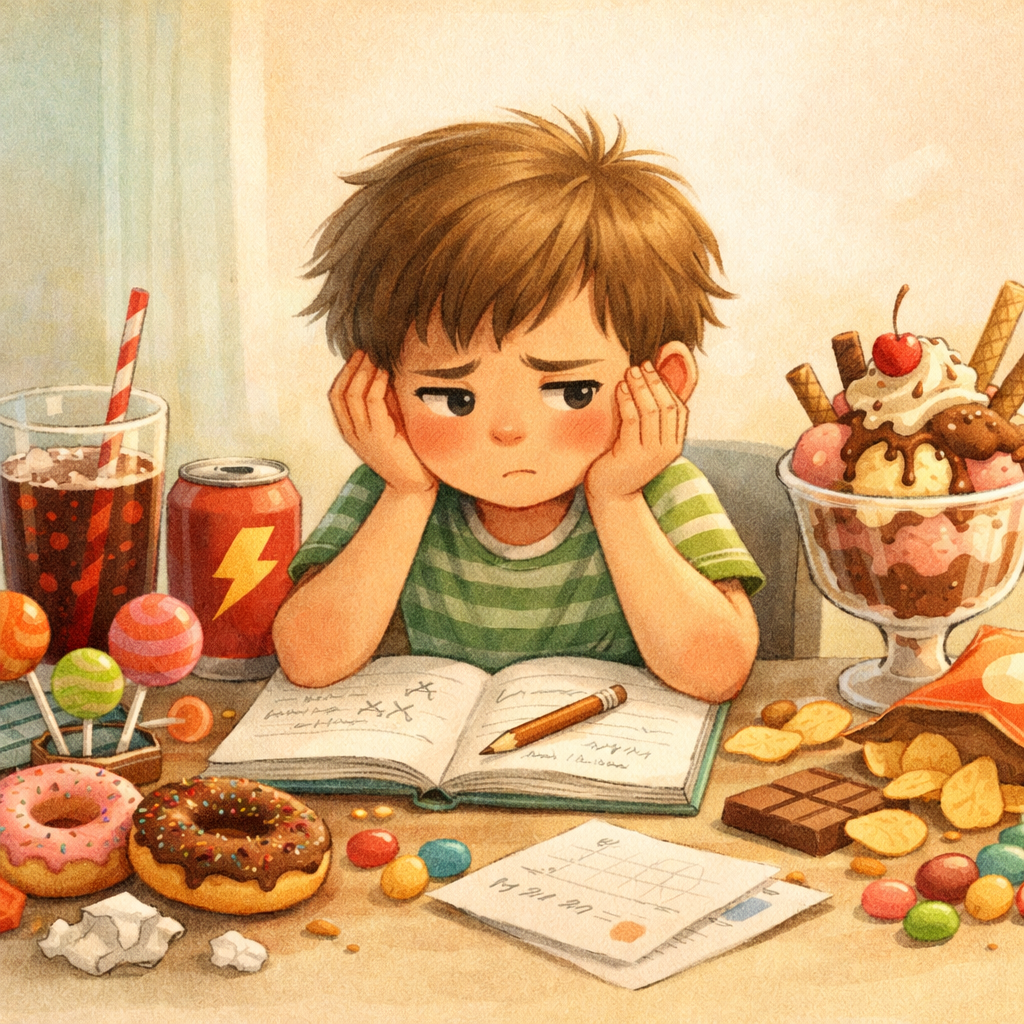
A diet high in added sugar can hinder a child's learning and lead to insulin resistance. Sugary snacks cause quick spikes and crashes in blood sugar, leaving kids tired, irritable, and mentally foggy. This affects their attention span and focus, making it harder to follow lessons or remember new information.
While sugar hasn’t been directly linked to hyperactivity, unstable blood sugar clearly impacts mood and energy. These swings make it difficult for children to stay engaged and manage their behaviour at school.
Limiting added sugar helps keep your child’s energy and mood stable, supporting better focus and learning. A balanced diet is essential for academic success and good health.
Practical Strategies for Parents to Reduce Sugar in Children’s Diets
Reducing your child’s excessive sugar intake starts with small, sustainable changes. Swap sugary drinks for water and choose healthier snacks to replace those high in hidden sugars. Focus on a balanced diet with whole foods like fresh fruit and whole grains to lower obesity risk.
Learn to read food labels and monitor sugar content for better choices towards better health. The next section offers practical tips and nutritious snack ideas to help manage your child’s sugar intake and reduce health risks.
Healthy Alternatives and Smart Snack Choices

Finding healthy alternatives to sugary snacks is easier than you think. Keeping fresh fruit with naturally occurring sugars on hand can satisfy cravings while providing vitamins and fiber. Whole grains, like crackers or toast, are better options than processed snack bars. Unsweetened dairy, nuts, and trail mix offer protein and healthy fats without causing a sugar crash.
Making homemade snacks lets you control sugar and build healthy habits, which can also enhance your child's social skills. Try oatmeal with berries instead of sugary cereal. Choosing healthier options means your child enjoys snacks that taste good and provide nutrition.
Simple swaps to reduce sugary snacks:
- Swap sugary cereal for oatmeal with fresh fruit.
- Replace candy or cookies with berries or an apple.
- Choose plain yogurt with a little honey instead of fruit-flavored yogurt, and consider enjoying ice cream as an occasional treat in moderation.
- Serve water or milk instead of soda or sports drinks.
Conclusion
In summary, understanding how much sugar affects children's learning is crucial for parents and educators alike. The immediate impacts, such as fluctuations in mood and attention span, can significantly hinder a child's academic performance. By being mindful of sugar intake and making healthier snack choices, you can create a more supportive environment for your child’s learning journey. Implementing practical strategies to reduce sugar consumption can lead to improved focus and better overall behaviour in the classroom. Remember, small changes can make a big difference.
For further support and personalized advice, don't hesitate to reach out and get a consultation or call daar at 02 9133 2500 with our experts.
Frequently Asked Questions
How can high sugar intake affect a child's attention span and concentration?
High sugar intake causes rapid spikes and crashes in blood sugar levels. These fluctuations can lead to irritability, fatigue, and mental fog, contributing to childhood obesity and making it difficult for a child to maintain their attention span and concentration. This instability directly impacts their ability to focus on learning in an academic setting.
What role does sugar play in children's mood and behaviour in an academic setting?
Sugar consumption can significantly affect a child's body, mood, and behaviour by causing unstable blood sugar levels. The resulting energy crashes can lead to irritability and moodiness in an academic setting. While not proven to cause hyperactivity, these fluctuations can make it harder for children to regulate their emotions and stay focused.
Are there healthier alternatives to sugary snacks that can support better learning outcomes for children?
Yes, there are many healthy alternatives to sugary snacks, including breakfast cereal, that promote better learning outcomes. Options like fresh fruit, whole grains, and nuts provide sustained energy without the sugar crash. These foods support stable blood sugar levels, helping children stay focused and engaged, which is essential for developing good healthy habits.
.svg)




.svg)