
.png?width=48&height=48&name=Group%201%20(3).png)























9 April, 2026

Early Signs: ADHD vs Autism Symptoms in Toddlers
Key Highlights
Here's a quick look at what we'll cover in this guide:
- Understanding the early signs of autism spectrum disorder (ASD) and attention deficit hyperactivity disorder (ADHD) is crucial for early intervention.
- Autism often involves challenges with social communication and repetitive behaviours, which can appear in the first year of life.
- ADHD is typically characterized by hyperactivity, impulsivity, and inattention, but a diagnosis is not usually made before age 4.
- While some symptoms can overlap, key differences exist in social engagement and focus.
- A professional assessment is essential for an accurate diagnosis and to create a supportive plan for your child’s development.
Introduction
As a parent, you pay close attention to your toddler’s growth and milestones. Sometimes, you might notice behaviours that make you wonder about neurodevelopmental disorders like autism or ADHD. Differentiating between typical toddler behaviour and early signs of these conditions can feel confusing. Understanding the specific symptoms of autism and ADHD is the first step toward getting clarity. This guide will help you recognize these signs, understand the differences, and see why early intervention is so important for your child’s future.
Overview of Neurodevelopmental Disorders in Toddlers
Neurodevelopmental disorders like autism spectrum disorder (ASD) and attention deficit hyperactivity disorder (ADHD) affect how a child’s brain develops. These conditions can influence communication, behaviour, and learning. While many behaviours are a normal part of being a toddler, persistent difficulties in certain areas may signal an underlying condition.
Recognizing how these disorders present in early childhood is key. Delays in reaching developmental milestones can be an early indicator. Let’s explore the distinct characteristics of ASD and ADHD to help you better understand what to look for in your toddler.
Understanding Autism Spectrum Disorder (ASD) in Early Childhood
Autism spectrum disorder is a developmental condition that affects how children interact, communicate, and experience the world. Early signs often appear in toddlers’ social skills and behaviour—for example, avoiding eye contact or not responding to their name.
These delays can be confusing for parents. You may wonder if your child is simply developing at their own pace or if there’s reason for concern. Children with autism may also struggle with sensory issues, reacting strongly or barely noticing sounds, textures, or lights. They often prefer routines and may get upset by small changes.
Recognizing these patterns is important. If your toddler has ongoing delays in social interaction or communication, consider talking to a healthcare professional. An evaluation can determine if these are signs of autism and connect you with helpful resources.
Introduction to Attention Deficit Hyperactivity Disorder (ADHD) in Toddlers
Attention deficit hyperactivity disorder (ADHD) is a neurodevelopmental condition that affects a child’s attention and impulse control. While active behaviour and short attention spans are normal in toddlers, ADHD symptoms are more persistent and can disrupt daily life. Core signs include inattention, hyperactivity, and impulsivity.
Toddlers with possible ADHD may be constantly moving, unable to sit still during quiet activities, act impulsively, interrupt others, or struggle to wait their turn. These behaviours can sometimes resemble autism symptoms.
ADHD is rarely diagnosed before age four since such behaviours are often part of typical development. However, noticing these patterns can help you discuss your child’s development with a paediatrician.
Early Signs of Autism in Toddlers
The early signs of autism often appear within the first few years of life and are centered around social communication and behaviour. You might notice that your toddler has developmental delays in how they interact with you and others. For example, a lack of pointing to show interest in something is a common red flag.
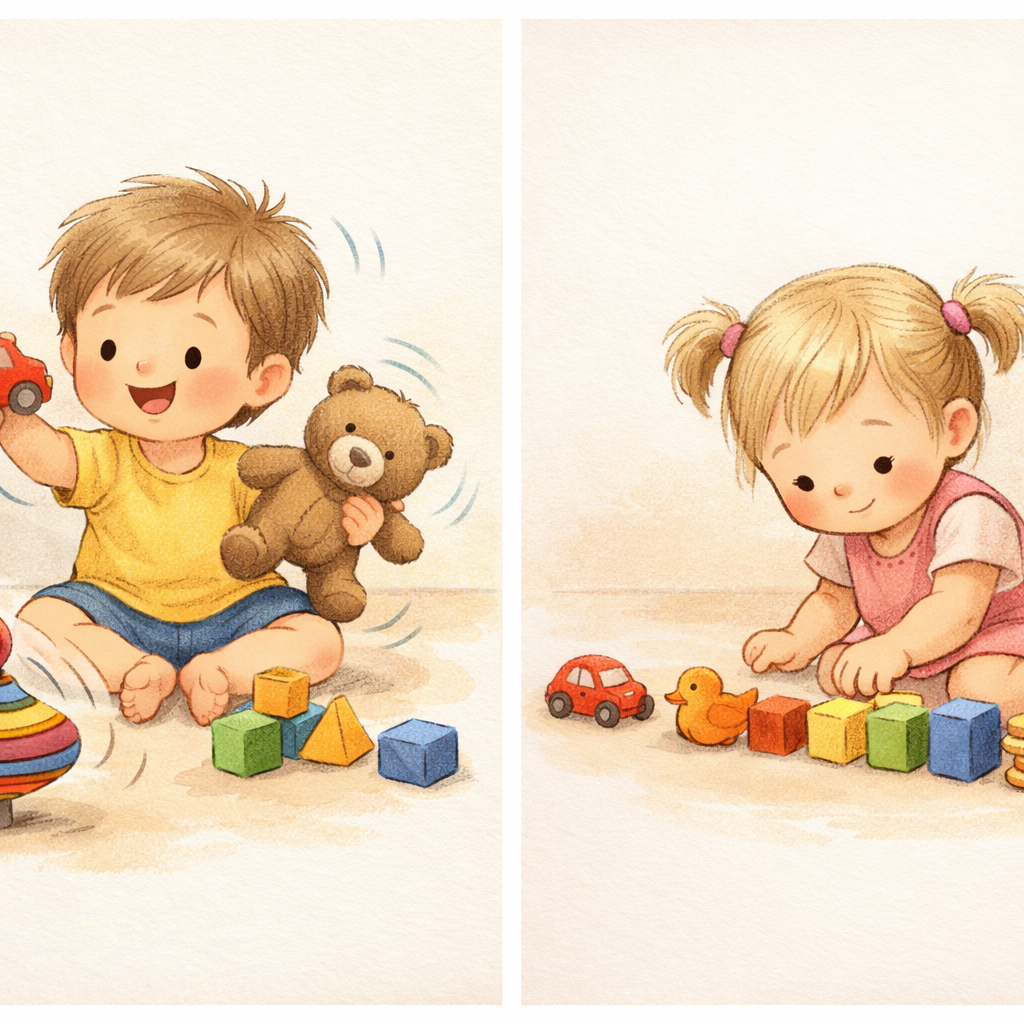
Repetitive behaviours are another key indicator. This could include lining up toys in a specific order or flapping their hands. Delayed speech is also a frequent concern for many parents. Understanding these social and behavioural signs can help you identify if your toddler needs further evaluation.
Social Communication Challenges
One of the earliest signs of autism is difficulty with social communication. Toddlers on the spectrum may struggle with back-and-forth interactions and often prefer being alone.
You might notice your toddler avoids or makes little eye contact and has trouble using or understanding facial expressions. These challenges with nonverbal cues can make it hard for them to connect with others.
Watch for these specific signs:
- Not responding to their name by 12 months
- Not pointing at objects to show interest
- Lack of interest in social games like peek-a-boo
- Not looking to you for a reaction when they see something new
Restricted or Repetitive Behaviours and Interests
Fascination with specific topics and patterns often emerges in young children as they navigate their world. Autistic children may exhibit restricted interests, immersing themselves in certain subjects or activities to an extent that can seem consuming. This intense focus sometimes manifests in repetitive behaviours, such as lining up toys or engaging in specific routines. These behavioural patterns serve not only as comfort but also as a means of processing sensory information, catering to their unique cognitive skills.
Conversely, children with attention deficit hyperactivity disorder may display impulsive tendencies and distractibility rather than the same level of restricted behaviour. While hyperactivity can result in varied interests, it rarely focuses with the same intensity seen in autism spectrum disorder. Understanding these differences is crucial for effective early identification and appropriate interventions.
Delays in Speech and Interactive Play
A significant speech delay is a common reason parents seek autism evaluations. While children develop at their own pace, missing key milestones—such as not babbling by 12 months or using single words by 16 months—can be early signs of autism. Some children may even lose language skills they previously had.
Difficulties with interactive play are another indicator. Neurotypical toddlers usually begin pretend play around age two, like feeding a doll or talking on a toy phone. Children with autism may show little interest in imaginative play and often prefer to play alone.
If you’re concerned about your toddler’s speech or lack of interactive play, consult a professional. When these delays occur alongside other social or behavioural signs, they may indicate autism. An evaluation can determine if your child is developing typically or needs additional support.
Early Signs of ADHD in Toddlers
While an official diagnosis of attention deficit hyperactivity disorder is rare in toddlers, certain early signs can point toward the condition. These behaviours are often related to hyperactivity, impulsivity, and inattention. It's important to remember that many of these actions are typical for toddlers, but in children who may develop ADHD, they are more extreme and persistent.
Observing these behaviours in relation to developmental milestones can be helpful. A toddler who is constantly in motion, has trouble with self-control, and struggles to focus during simple activities might be showing early signs of a hyperactivity disorder. Let’s look at these behaviours more closely.
Difficulty Sustaining Attention During Activities
A key sign of ADHD in toddlers is persistent difficulty sustaining attention. This may appear as an inability to focus on a single activity, quickly moving from one toy to another without engaging. While short attention spans are common in toddlers, this behaviour is more pronounced in those with ADHD.
Unlike autism, where intense focus on one interest is typical, toddlers with ADHD struggle to complete tasks or participate in quiet activities that require concentration. This can hinder cognitive development.
Signs of inattention include:
- Trouble listening and following simple directions
- Frequently losing items needed for activities
- Appearing not to listen when spoken to directly
- Avoiding tasks that require sustained attention
Impulsivity and Problems with Self-Control
Impulsivity is a key feature of hyperactivity disorders and can be especially challenging to manage in toddlers. It involves acting without thinking and struggling with self-control. Impulsive toddlers may show extreme impatience and have difficulty waiting their turn during play.
This poor behavioural regulation also impacts emotional control and social skills. They might interrupt conversations, blurt out answers, or act inappropriately for the situation. While all toddlers are developing self-control, these behaviours are more frequent and intense in those with early signs of ADHD.
Examples of impulsivity include:
- Interrupting others often
- Struggling to wait for their turn
- Answering questions before they are finished
- Showing extreme impatience in social situations
Hyperactive Movements and Restlessness
Hyperactivity in young children often goes beyond normal toddler energy. A child with hyperactive tendencies may be constantly moving—running, climbing at inappropriate times, and unable to sit still for activities like storytime or meals. They may squirm when seated and quickly jump from one activity to another without a clear goal. This restless behaviour is persistent and can disrupt home and social settings.
As children reach preschool age, these signs become more noticeable compared to their peers. While diagnosis may take time, recognizing ongoing hyperactivity early helps you understand your child’s needs and seek professional guidance.
Autism vs. ADHD: Key Differences in Symptoms
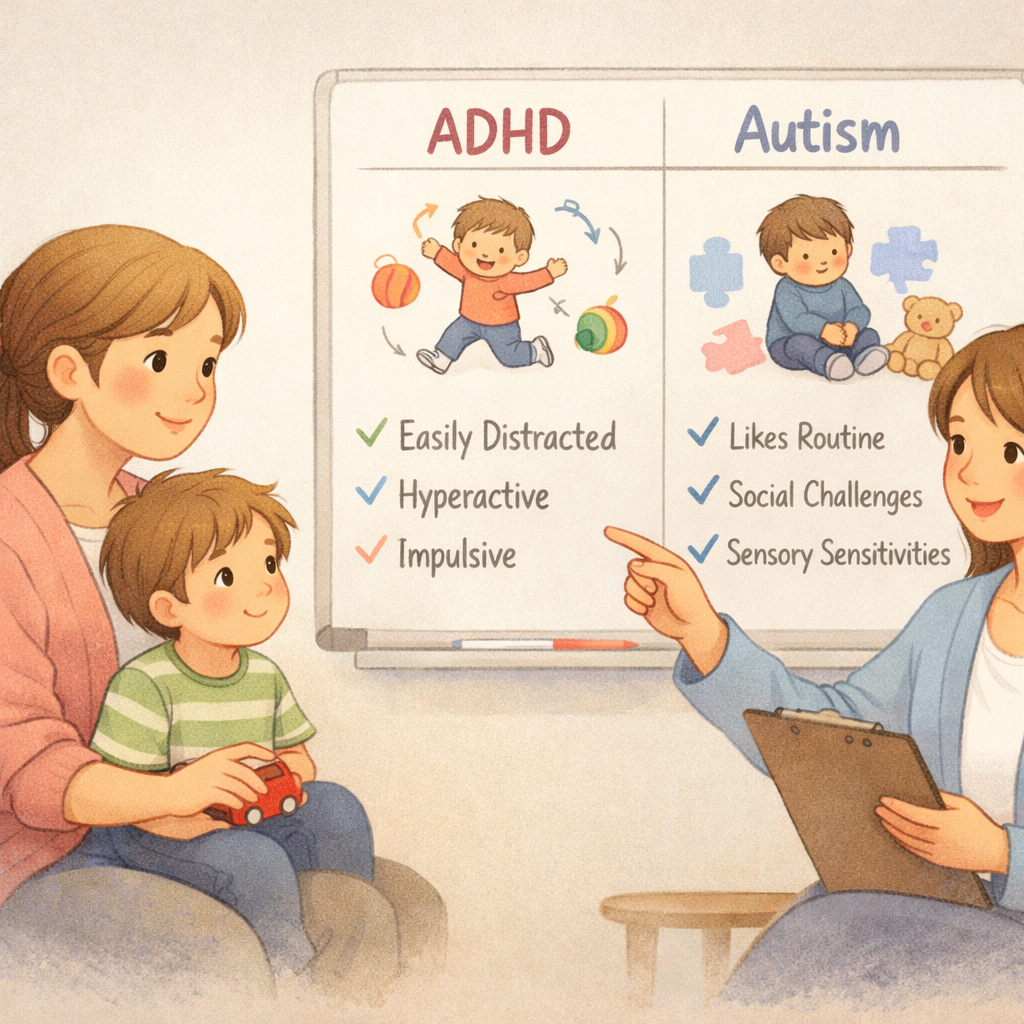
While autism spectrum disorder and attention deficit hyperactivity disorder share some overlapping signs, their core symptoms of autism and ADHD are quite different. The main distinction lies in the primary areas of difficulty. Autism is primarily defined by challenges in social communication and the presence of restricted, repetitive behaviours. ADHD, on the other hand, is defined by patterns of inattention, hyperactivity, and impulsivity.
Understanding these key differences can help you make sense of your toddler's behaviour. Below is a simple table highlighting the different ways these conditions typically present in early childhood.
|
Feature |
Autism Spectrum Disorder (ASD) |
Attention Deficit Hyperactivity Disorder (ADHD) |
|---|---|---|
|
Social Interaction |
Difficulty with social back-and-forth; may prefer to be alone. |
May interrupt or have trouble taking turns but desires social connection. |
|
Communication |
Delays in speech, may use unusual speech patterns (echolalia), struggles with non-verbal cues. |
Tends to talk excessively and may interrupt others. |
|
Attention |
Can have intense focus on specific interests but struggles to shift attention. |
Has difficulty sustaining attention across most activities unless highly stimulating. |
|
Behaviours |
Repetitive movements (e.g., hand-flapping), strong need for routine. |
Fidgety and restless behaviour, impulsivity, constant motion. |
Contrasting Social Interaction and Engagement
Toddlers with autism and ADHD differ in how they approach social interactions. Children with autism often have core difficulties with social communication and may show little interest in engaging with others, preferring solitary play and rarely seeking comfort or sharing experiences.
In contrast, toddlers with ADHD usually want to connect but struggle because of impulsivity and hyperactivity. They may interrupt, have trouble taking turns, or invade personal space, making socializing difficult. Their challenges come from poor self-regulation, not lack of interest.
Key differences:
- Autism: Avoids eye contact; may not respond to social cues.
- ADHD: Makes eye contact but struggles to maintain it due to distractibility.
- Autism: Limited interest in playing with peers.
- ADHD: Wants to play but has trouble following social rules.
How Attention and Focus Problems Differ
Attention and focus issues differ in autism and ADHD. Toddlers with ADHD struggle to sustain attention across many activities, are easily distracted, and quickly switch tasks. In contrast, toddlers with autism may intensely focus on a few specific interests for long periods but have trouble shifting attention to new or less preferred tasks.
This distinction helps differentiate the two: ADHD involves broad inattention, while autism is marked by inflexible attention. Recognizing these patterns can offer insights into your child’s cognitive development as they reach new milestones.
Behavioural and Emotional Regulation Comparison
When comparing behavioural and emotional regulation in toddlers, autism and ADHD show distinct patterns. In ADHD, difficulties often stem from impulsivity—toddlers may have frequent outbursts or frustration because they struggle to control immediate reactions and lack self-control.
In autism, emotional meltdowns are usually triggered by sensory overload or changes in routine. These children often feel overwhelmed by their environment and require predictability; unexpected changes can cause significant distress.
While both conditions involve challenges with emotional regulation, the causes differ: ADHD is rooted in impulsivity, while autism relates to sensitivity to sensory input and routine disruptions. Understanding these triggers helps you better support your child.
Recognising Overlapping and Co-occurring Signs
It is common for toddlers to show overlapping signs of both autism and ADHD, which can make early identification challenging. Behaviours like difficulty with social skills, inattention, and emotional outbursts can be present in both conditions. These social challenges might look similar on the surface, but often have different underlying causes.
Because of these overlapping signs, it is easy to misinterpret your child's behaviour. This is why early intervention guided by a professional is so critical. A thorough assessment can help untangle the symptoms and determine if a child has one condition, both, or something else entirely. Next, we will discuss these similarities in more detail.
Similarities Between Autism and ADHD in Toddlers
Autism and ADHD are distinct neurodevelopmental disorders, but they often share early signs that can confuse parents. Both can cause developmental delays and attention difficulties, especially around social skills and behaviour.
For example, a toddler with autism may not respond when called due to intense focus, while a toddler with ADHD may not respond because they’re distracted—both appear inattentive. Emotional outbursts also occur in both, though for different reasons.
Common overlapping signs include:
- Trouble with social skills and peer interactions
- Difficulty focusing or paying attention
- Challenges with emotional and behavioural regulation
- Fidgeting or restlessness
Can a Toddler Show Both Autism and ADHD Symptoms?
Yes, a toddler can have both autism spectrum disorder and attention deficit hyperactivity disorder. These conditions often co-occur, and many children with autism also show ADHD symptoms, making early identification more challenging.
When both are present, a child may have social and communication difficulties and repetitive behaviours from autism, along with ADHD traits like hyperactivity and impulsivity. This combination can create unique challenges for the child and family.
Accurate diagnosis is crucial for effective support. If you notice these signs in your toddler, seek a professional assessment to clarify symptoms and determine the best care plan.
Importance of Accurate Diagnosis and Professional Assessment
Getting an accurate diagnosis is crucial for your child’s development. An early and correct diagnosis opens the door to specialized early support and interventions that can make a significant difference.
A professional assessment is the only way to get a clear and accurate diagnosis. This process is typically conducted by a team of specialists who can observe your child’s behaviour, assess their developmental milestones, and rule out other conditions. This comprehensive evaluation is necessary because of the overlapping symptoms between autism and ADHD.
The benefits of a professional assessment include:
- Clarity on your child's specific needs.
- Access to appropriate therapies and early intervention services.
- Guidance for parents on how to best support their child.
- The creation of a personalized plan to help your child thrive.
Conclusion
In summary, recognizing the early signs of ADHD and autism in toddlers is essential for timely support and intervention. Understanding the nuances between these neurodevelopmental disorders can empower parents and caregivers to seek professional assessments that are critical for an accurate diagnosis. By being aware of overlapping symptoms and distinctive characteristics, you can better navigate your toddler's developmental journey. As always, early recognition and proactive measures can significantly impact a child's growth and well-being.
If you have concerns about your toddler's behaviour, don’t hesitate to reach out for a consultation or call daar at 02 9133 2500. Your child's future is worth it!
Frequently Asked Questions
At what age do autism or ADHD symptoms begin to show in toddlers?
The early signs of autism can appear as early as 12 to 18 months of age, often related to missed developmental milestones in social communication. ADHD symptoms may also be present, but a diagnosis is rarely made before four years of age, as hyperactivity and inattention can be typical for toddlers.
Are speech and social delays always signs of autism?
No, not always. While speech and social delays are common early signs of autism, they can have other causes. Some toddlers simply develop at their own pace. However, when these developmental delays are persistent and combined with other signs like repetitive behaviours, an evaluation for autism is a good idea.
How can I tell if my toddler’s behaviour is related to ADHD, autism, or typical development?
Distinguishing between these can be tricky. Look for patterns. The signs of autism often involve social withdrawal and repetitive behaviours. Signs of attention deficit hyperactivity disorder center on hyperactivity and impulsivity. If you notice consistent red flags for either developmental condition, consult your paediatrician for a professional opinion.
.svg)




.svg)