
.png?width=48&height=48&name=Group%201%20(3).png)























11 March, 2026

Essential Educational Support for Autism in Schools

Key Highlights
- Schools can provide effective supports for autistic students by understanding their unique needs and making reasonable adjustments.
- Creating an inclusive learning environment involves both classroom accommodations and addressing sensory needs.
- Visual supports like schedules and social stories help create predictability and reduce anxiety for students.
- Addressing sensory sensitivities with quiet spaces and sensory breaks is crucial for student well-being and focus.
- Collaboration between the school community, parents, and specialists ensures a consistent support system.
- Policies in Australian education mandate reasonable adjustments to help autistic students succeed.
Introduction
Creating an inclusive school community where every student feels supported is essential for effective learning. For autistic students, navigating the school environment can present unique challenges. By implementing thoughtful supports and fostering an atmosphere of understanding, schools can make a significant difference. This article explores the various supports available for students with autism in Australian schools, from classroom adjustments to strategies for managing sensory needs. The goal of inclusive education is to ensure every student has the opportunity to thrive both academically and socially.
Understanding Autism in the Australian School Context
In the Australian education system, there is a strong focus on creating an inclusive environment for all students. Understanding autism is the first step for teachers and other members of the school community to provide meaningful support. Each autistic student has unique needs, and recognizing this diversity is key to their success.
Schools are equipped to offer various types of support, from individual learning plans to classroom-wide strategies. These supports aim to help students navigate academic and social challenges, ensuring they can participate fully in school life. By embracing inclusive practices, Australian schools help create a welcoming space for every learner.
Common strengths and challenges faced by autistic students
Autistic students often have notable strengths, such as strong visual processing, intense focus, and attention to detail—skills valuable in subjects requiring precision and pattern recognition. However, they may need specific support from educators.
Social and communication challenges can make group work and unstructured times like recess overwhelming. Many struggle with reading nonverbal cues or following unwritten social rules. Emotional regulation may also be hard, especially when faced with changes or sensory triggers.
Sensory sensitivities are common; bright lights, noise, and movement in classrooms can cause overload. To support these students, educators should address sensory needs and provide clear, structured instructions to create a calm learning environment.
Universal Supports for All Autistic Students
Certain supports can benefit all autistic students by creating a more predictable and understandable learning environment. Universal strategies like visual supports, including visual schedules and social stories, are incredibly effective. These tools help clarify expectations, outline daily routines, and explain social situations concretely, reducing anxiety and confusion.
Using positive reinforcement is another powerful technique that encourages desired behaviors and builds confidence. By focusing on what students are doing well, teachers can foster a more encouraging and motivating atmosphere. These universal supports form a strong foundation for a more inclusive classroom for everyone. The following sections will explore specific accommodations to enhance this environment.
Classroom accommodations to enhance participation
Thoughtful classroom adjustments can help autistic students participate more fully in their education. These accommodations don’t change what is taught, but how it’s delivered, making learning accessible. Simple tweaks can improve focus and engagement.
Examples include visual aids that break tasks into steps and assistive technology like text-to-speech for those with reading or writing challenges. It's important to tailor tools to each student's needs.
Effective classroom accommodations:
- Flexible seating: Options like bean bags or stability balls help students stay focused.
- Extra time: More time for assignments and tests reduces pressure and allows students to show their knowledge.
- Visual supports: Schedules, timers, and charts create routines and clarify expectations.
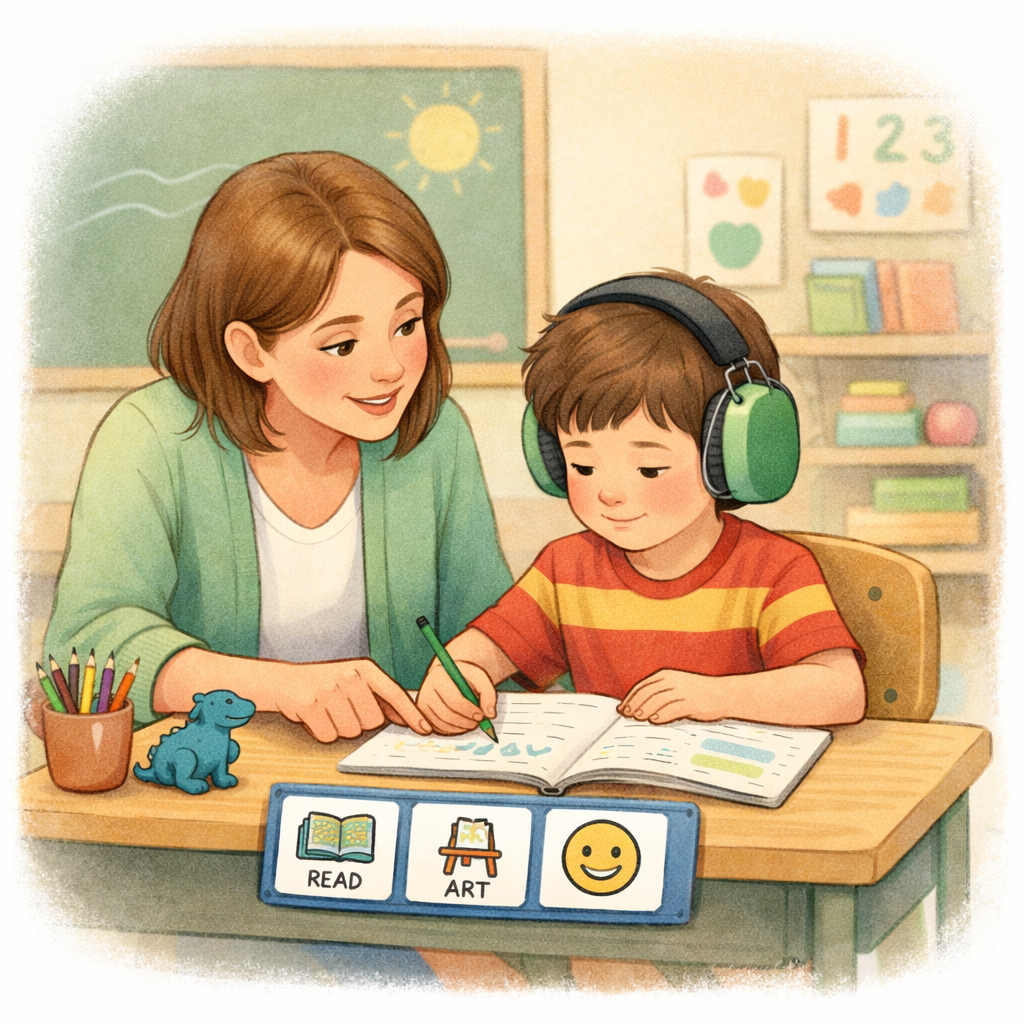
- Sensory tools: Noise-canceling headphones or fidget toys help manage sensory input.
Making schools more autism-friendly through environment and routines
Creating an autism-friendly school requires more than individual accommodations—it involves shaping the entire environment and daily structure. Predictable, organized settings reduce anxiety and help students feel secure. Clear routines are essential.
Predictability helps autistic students anticipate transitions, lowering stress. If changes are necessary, advance notice is key. The physical environment should also address sensory needs for inclusivity.
Ways to make schools more autism-friendly:
- Establish clear routines: Use visual schedules for smoother transitions.
- Create quiet zones: Provide calm spaces for decompression.
- Minimize sensory triggers: Use soft lighting and limit noise.
- Organize classrooms: Keep workspaces clutter-free and materials clearly labeled.
Addressing Sensory Sensitivities in School Settings
Many autistic students experience the world through heightened sensory sensitivities, where everyday sounds, lights, and textures can feel overwhelming. A busy classroom or a noisy hallway can easily lead to sensory overload, affecting a student's ability to learn and regulate their emotions. Understanding and addressing these sensory needs is crucial for creating a supportive school experience.
Providing tools and strategies to manage sensory input can make a world of difference. This might include access to quiet spaces for sensory breaks, noise-canceling headphones, or fidget toys. By being proactive, schools can help students manage their sensory environment, promoting focus and a sense of security.
Identifying sensory triggers and solutions
The first step in supporting a student with sensory sensitivities is to identify their specific triggers, which can vary greatly. Common triggers at school include fluorescent lights, loud announcements, crowded hallways, and certain textures.
After identifying triggers, implement solutions to reduce sensory overload. For noise sensitivity, offer noise-canceling headphones or seat the student away from busy areas. For visual sensitivity, dim the lights or use a study carrel. Movement breaks help students who need to release sensory energy.
Regularly observe the student and communicate with them and their parents for insights into effective strategies.
|
Sensory Trigger |
Potential Solution |
|---|---|
|
Loud noises (bells, chatter) |
Noise-canceling headphones; scheduled quiet time |
|
Bright or fluorescent lights |
Seat near natural light; use lamps instead of overhead lights |
|
Crowded spaces (hallways, cafeteria) |
Allow early/late class transitions to avoid crowds |
|
Strong smells (perfume, cleaners) |
Use unscented products; ensure good ventilation |
Strategies for supporting sensory needs in the classroom
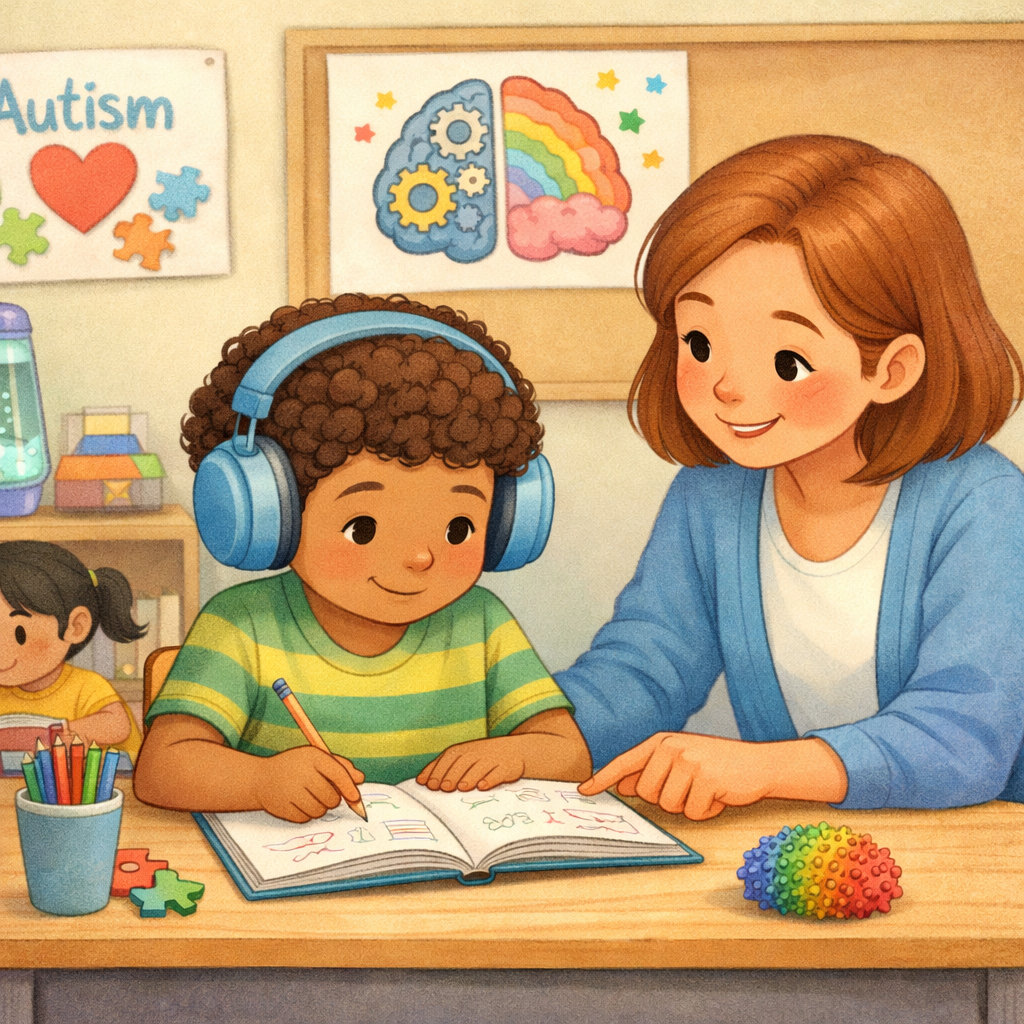
Once sensory needs are identified, teachers can use various strategies to create a more comfortable learning environment. These adjustments are essential for supporting autistic students and reducing sensory distress, allowing them to focus on learning.
Designated quiet zones in the classroom provide safe spaces with minimal stimulation for overwhelmed students. Sensory tools like fidget toys or weighted lap pads help with self-regulation and concentration. Positive reinforcement encourages appropriate use of these tools.
Practical strategies include:
- Flexible seating: Offer options like wobble stools or floor cushions for needed sensory input.
- Regular sensory breaks: Schedule short breaks for movement or quiet time.
- Sensory tools: Provide fidget toys, stress balls, and noise-canceling headphones.
- Visual timers: Help students anticipate transitions and prepare for breaks.
Conclusion
Supporting students with autism is key to their academic and personal growth. By recognizing their strengths and challenges, providing universal supports, and addressing sensory needs, schools foster inclusion and development. Collaboration among educators, families, and specialists ensures effective support. Creating an autism-friendly school benefits all students and enriches the learning community.
For tailored strategies, reach out for a consultation or call daar at 02 9133 2500.
Frequently Asked Questions
What are effective classroom accommodations for autistic students?
Effective accommodations create a supportive learning environment. These include visual supports like schedules and timers, flexible seating options, and the use of visual aids to clarify instructions. Providing extra time for assignments and tests and allowing sensory breaks are also crucial adjustments that help students manage their needs and focus on learning.
How do reasonable adjustments differ between primary and high school for autistic students?
In primary school, reasonable adjustments often focus on foundational social skills and creating a structured classroom environment. As students enter high school, the focus may shift to supporting executive functioning, independent learning, and navigating more complex social dynamics. The unique needs of the student always guide the specific adjustments in any educational environment.
What types of support services are available for autistic students in Australia?
In Australia, support services for an individual student often involve a collaborative school team that includes teachers, specialists, and aides. These services can range from in-class support and individual education plans (IEPs) to access to speech or occupational therapists, all aimed at fostering inclusive education within the school community.
.svg)




.svg)