
.png?width=48&height=48&name=Group%201%20(3).png)























3 December, 2025

Introduction
Having the ability to communicate your thoughts, needs, and feelings is essential to daily life. When communication disorders create challenges, it can affect your relationships and self-confidence. Speech pathology is a professional field focused on helping you overcome these obstacles. By working with a specialist, you can improve your communication skills, regain confidence, and connect more effectively with the world around you. This guide will explore the importance of speech pathology and how it can help you or a loved one.
Key Highlights
-
Speech pathology is a field dedicated to diagnosing and treating communication disorders and swallowing difficulties. A certified speech pathologist helps with speaking, listening, understanding language, and feeding issues. Speech therapy services address language disorders, articulation problems, and stuttering to improve communication. To become a speech pathologist in Australia, you typically need to complete an accredited undergraduate or master's degree in speech pathology, followed by membership with Speech Pathology Australia as a Certified Practicing Speech Pathologist (CPSP). This education prepares you to work in various settings, providing speech therapy and helping individuals overcome communication disorders.
-
A certified speech pathologist helps with speaking, listening, understanding language, and feeding issues.
-
Speech therapy services address language disorders, articulation problems, and stuttering to improve communication.
-
People of all ages, from young children to older adults, can benefit from these specialized services.
-
The primary goal is to enhance communication skills, which significantly improves an individual's quality of life.
What Is Speech Pathology?

Speech pathology is a healthcare profession that assesses, diagnoses, and treats a wide range of communication disorders. A speech pathologist is an allied health professional trained to address issues with speaking, listening, reading, writing, and even swallowing. They work with individuals to overcome communication problems and improve their language skills.
These professionals can help you understand the root of your communication challenges. Whether the problem is developmental, the result of an injury, or related to a medical condition, a speech pathologist provides expert support. We will look closer at the scope of this field, who can benefit, and how it differs from speech therapy.
Definition and Scope of Speech Pathology
Speech pathology is a broad field of clinical practice that focuses on human communication and its associated disorders. Professionals in this area help people whose ability to communicate is affected by developmental delays, illness, or injury. The scope extends beyond just speaking to include understanding language, social interaction, and even safe swallowing. They are experts in language development and work to find solutions for various communication problems.
The ultimate goal of speech pathology is to improve an individual's quality of life by enhancing their communication skills. A speech pathologist evaluates your specific needs and creates a personalized plan. This might involve exercises to strengthen muscles used for speech, strategies to improve clarity, or techniques to help with social communication.
By addressing these challenges, speech pathology helps you express yourself more effectively and participate more fully in your personal, social, and professional life. It empowers you to overcome communication barriers and build stronger connections with others.
Differences Between Speech Pathology and Speech Therapy
You might hear the terms speech pathology and speech therapy used interchangeably, but they have distinct meanings. Speech pathology is the broader field of study and practice that encompasses the assessment, diagnosis, and treatment of all communication and swallowing disorders. It is the science behind understanding why these issues occur.
Speech therapy, on the other hand, is the actual treatment provided by speech therapists or speech-language pathologists. It is the practical application of the principles of speech pathology. This is the hands-on work where a professional with clinical experience guides you through exercises and strategies to improve your communication skills.
Think of it this way:
-
Speech Pathology: The overall field that includes research, diagnosis, and the science of communication disorders.
-
Speech Therapy: The specific interventions and treatments used to help individuals.
-
Speech Pathologist/Therapist: The trained professional who practices in this field.
Who Can Benefit from Speech Pathology Services?
A wide range of individuals can find valuable support from a speech pathologist. Services are available for people of all ages, from toddlers who are late to talk to adults recovering from a stroke. If you or someone you know struggles with communication disorders, a speech pathologist can make a significant difference in daily life.
These professionals are trained to work with diverse populations and address a variety of needs. The focus is always on improving communication, which in turn enhances social communication and overall quality of life. You do not need to have a severe condition to seek help; even minor difficulties can be addressed.
Beneficiaries often include individuals with:
-
Developmental delays in children
-
Autism spectrum disorder
-
Hearing loss
-
Stroke or other brain injury
-
Dementia
-
Cerebral palsy
Conditions Addressed by Speech Pathologists
Speech pathologists are equipped to handle a variety of conditions that affect how we communicate and even how we eat. Their expertise covers communication disorders that impact speech, understanding, and social interaction. They are a vital part of the health care system, helping individuals regain or develop essential life skills.
Beyond spoken language, a speech pathologist also addresses language disorders related to reading and writing and difficulties with swallowing. The following sections will provide more detail on the specific conditions they treat, from speech impediments to feeding challenges.
Speech, Language, and Communication Disorders
Many different communication disorders fall under the expertise of a speech pathologist. A speech disorder affects the way a person creates or forms the sounds of speech. This can make it difficult for others to understand what is being said. Language disorders, on the other hand, involve trouble understanding others or sharing thoughts, ideas, and feelings.
These challenges can be developmental or acquired later in life. A speech pathologist can diagnose the specific type of disorder and create a targeted treatment plan. For example, they can help someone with an articulation disorder learn to produce sounds correctly or assist someone with expressive language difficulties in forming sentences.
Common disorders treated include:
-
Articulation disorders (difficulty producing sounds)
-
Fluency disorders (like stuttering)
-
Receptive disorders (trouble understanding language)
-
Expressive language disorders (difficulty conveying messages)
-
Phonological disorders (patterns of sound errors)
-
Voice disorders (issues with pitch, loudness, or quality)
Swallowing and Feeding Difficulties
Beyond communication, speech pathologists play a crucial role in managing swallowing and feeding difficulties, a condition known as dysphagia. Problems with swallowing can impact nutrition, health, and social enjoyment of meals. These professionals provide essential health care by ensuring individuals can eat and drink safely.
They assess the physical mechanics of swallowing to identify where the problem lies. This may involve observing you during meals or conducting specialized tests. Based on the assessment, they develop strategies and exercises to improve swallowing function and reduce the risk of choking or food entering the lungs.
Speech pathologists can help with feeding difficulties resulting from various conditions, such as:
-
Stroke and other brain injuries
-
Cerebral palsy
-
Cleft palate
-
Parkinson's disease
Supporting Positive Behaviour Through Speech Pathology
There is a strong link between communication difficulties and behavior. When a person cannot express their needs, wants, or frustrations effectively, they may resort to challenging behaviors. Speech pathology helps support positive behaviour by giving individuals the tools they need to communicate.
By improving communication skills, a speech pathologist can reduce the frustration that often leads to negative actions. This is particularly important for individuals on the autism spectrum, who may struggle with social skills and understanding social cues. Therapy focuses on teaching appropriate ways to initiate conversation, understand non-verbal signals, and express emotions.
This support can lead to:
-
Improved social interactions and relationships
-
Reduced frustration and anxiety
-
Greater independence and confidence
-
Better participation in school and community activities
The Importance of Early Intervention
When it comes to communication challenges, starting support as early as possible can make a world of difference. Early intervention in early childhood is key to helping children with language development issues reach their full potential. Addressing these problems early can prevent them from becoming more significant obstacles later in life.
Speech pathology provides the tools and strategies needed to improve communication skills from a young age, which has a lasting positive impact on a child's quality of life. The following sections explore how this early support improves outcomes, affects learning, and helps manage developmental conditions.
How Early Support Improves Outcomes
Getting help early for language disorders has proven benefits. Early intervention provides children with learning strategies at a critical stage of brain development, making it easier for them to acquire new communication skills. This proactive approach can reduce the long-term impact of a communication disorder and improve a child's overall quality of life.
For families in Australia, programs like the National Disability Insurance Scheme (NDIS) may offer funding to eligible individuals with a disability to help cover the costs of speech pathology services. This support makes it possible for more children to access the vital therapy they need without delay.
Starting therapy early helps build a strong foundation for future learning and social interaction.
|
Benefit of Early Intervention |
Impact on Development |
|---|---|
|
Improved Communication Skills |
Helps children express needs and ideas more effectively. |
|
Enhanced Social Skills |
Fosters better interaction with peers and adults. |
|
Better Academic Readiness |
Prepares children for reading, writing, and school learning. |
|
Increased Confidence |
Reduces frustration and builds self-esteem. |
Impact on Learning and Social Development
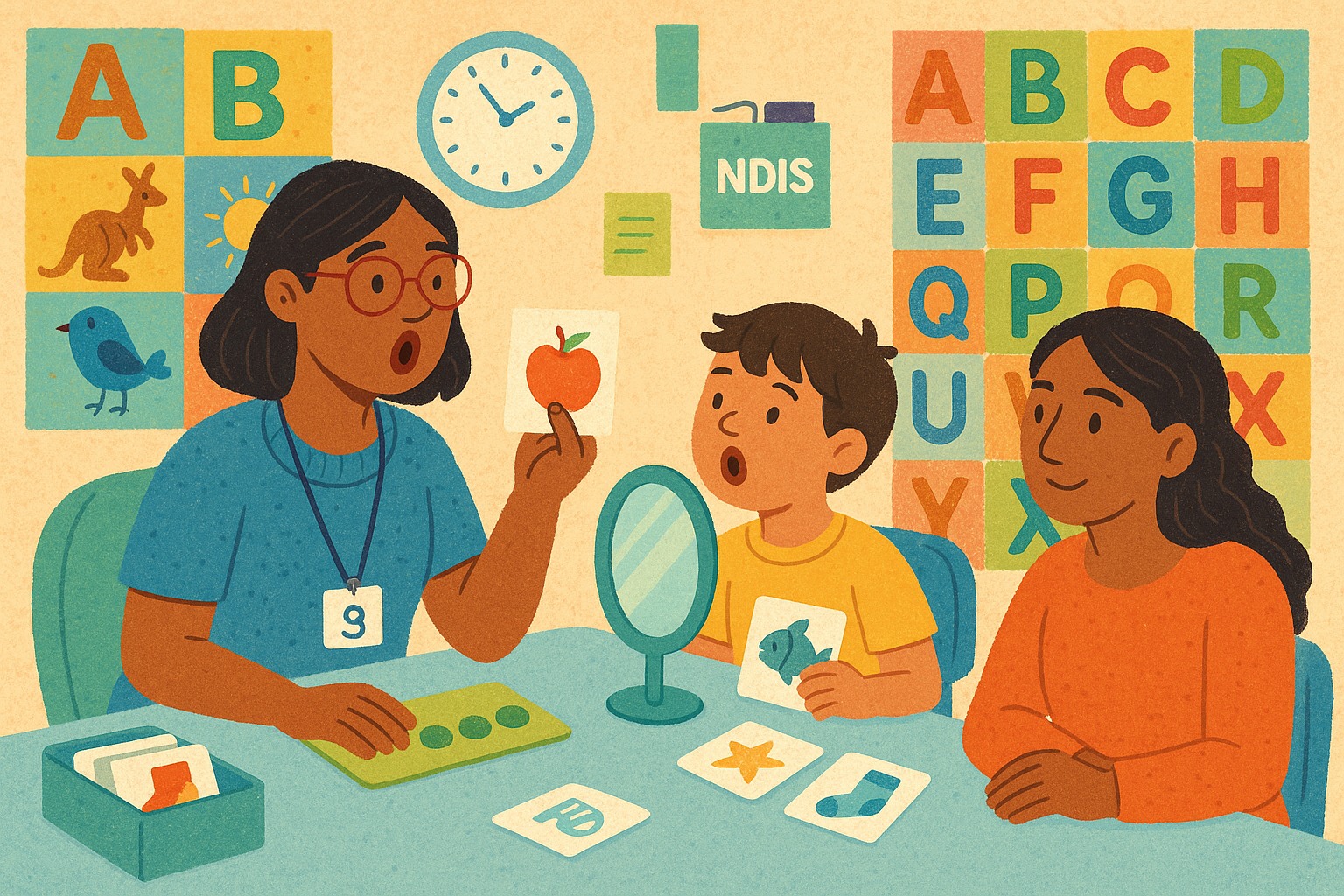
Communication problems can directly affect a child's ability to learn in a classroom setting. Strong language skills are the foundation for reading, writing, and understanding instructions. When a child struggles with these skills, their academic progress can be hindered. Early speech therapy can address these issues before they impact a child's education.
Social development is also closely tied to communication. Children with poor social communication may find it hard to make friends, participate in group activities, or understand social cues. A speech pathologist can teach essential social skills, helping children navigate their social world with more confidence.
Addressing communication problems early can lead to:
-
Better performance in school
-
Stronger friendships and peer relationships
-
Increased participation in social activities
-
A more positive learning experience
Role in Managing Cognitive and Developmental Conditions
Speech pathology is essential in managing a variety of cognitive and developmental conditions that affect communication. For individuals with these conditions, a speech pathologist is a key member of their health care team. They develop specialized plans to address the unique communication disorders associated with each condition.
For instance, after a traumatic brain injury, a person may need to relearn language skills. For children with autism spectrum disorder, therapy often focuses on social communication and understanding non-literal language. The support provided is tailored to promote cognitive development and functional communication.
Speech pathologists provide critical support for conditions such as:
-
Autism spectrum disorder
-
Cerebral palsy
-
Traumatic brain injury
-
Dementia and other neurological conditions
How Speech Pathologists Assess and Treat
The journey with a speech pathologist begins with a thorough assessment to understand your specific challenges. This initial step is crucial for developing an effective speech therapy plan. As allied health professionals, they use a structured approach in their clinical practice to identify the root cause of the issue.
From there, they use a variety of evidence-based techniques to treat the disorder. They also often work alongside other professionals to provide comprehensive care. The next sections will detail the assessment process, common treatments, and the importance of collaboration in this field.
The Assessment Process Explained
Your first appointment with a speech pathologist, whether in a hospital or at one of the many private practices, will involve a detailed assessment. This process is designed to give the therapist a complete picture of your communication disorders and general health. The speech pathologist will ask questions about the difficulties you are experiencing.
They may use a combination of formal tests and informal observations. For children, this might involve watching them play and interact in a familiar environment like a school or at home. This helps the professional understand how the communication challenges affect daily life.
The assessment typically includes:
-
A discussion about your health history and concerns.
-
Standardized tests to evaluate specific speech and language skills.
-
Observation of your communication in different situations.
-
An assessment of the physical structures used for speech.
-
For swallowing issues, observation during eating or drinking.
-
A clear explanation of the findings and recommended next steps for speech therapy services.
Common Treatment Approaches and Techniques
Once an assessment is complete, the speech pathologist will recommend a course of speech therapy. There is no one-size-fits-all solution; treatment techniques are tailored to your specific needs and goals. The aim is to improve your communication skills and address any underlying language disorders.
Therapy can take many forms. Sessions might be one-on-one for focused attention or in a group setting to practice the social aspects of communication with others. The therapist will guide you through exercises and provide strategies you can practice at home to reinforce what you learn in your sessions.
Common treatment approaches may involve:
-
Articulation therapy to practice correct sound production.
-
Language intervention activities to build vocabulary and grammar.
-
Exercises to strengthen the muscles for speech and swallowing.
-
Fluency therapy to manage stuttering.
-
Voice therapy to improve vocal quality.
-
Training with alternative communication devices if needed.
Collaboration with Exercise Physiology and Allied Health Professionals
Speech pathology rarely exists in a vacuum. To provide the best possible care, speech pathologists often collaborate with other allied health professionals. This interdisciplinary care ensures that all aspects of a person's health are considered. For example, working with occupational therapists can help a person with fine motor skills needed for using a communication device.
Collaboration with fields like exercise physiology can also be beneficial, especially for conditions that affect muscle control. This teamwork is common across all health services, from hospitals to community health centers. It opens up diverse career opportunities for speech pathology graduates who can work in various team-based settings.
A speech pathologist may work alongside:
-
Occupational therapists
-
Physical therapists and exercise physiologists
-
Doctors and nurses
-
Psychologists and social workers
Conclusion
In conclusion, understanding speech pathology is essential for recognizing its vital role in improving communication and quality of life for individuals facing various speech and language challenges. With early intervention and the right assessment and treatment strategies, speech pathologists can make a significant impact on personal development and social integration. Whether it's addressing speech disorders, supporting cognitive development, or enhancing feeding skills, the benefits of speech pathology are profound and far-reaching.
If you’re interested in taking the next step towards better communication, book a consultation today or call 02 9133 2500 to a qualified speech pathologist today to explore how their services can support you or your loved ones.
Frequently Asked Questions
Where can I find accredited speech pathology courses in Australia?
To find accredited courses, you can check with Speech Pathology Australia (SPA), the national body responsible for professional registration. Universities across the country offer higher education study in this field. A citizen of Australia can search the SPA website or university portals for a list of accredited Bachelor and Master programs.
What is involved in an assessment appointment with a speech pathologist?
An initial assessment in speech pathology involves discussing your concerns, a health history review, and some tests or observations. The pathologist will evaluate your practical skills in communication or swallowing. This first step is crucial for creating a personalized therapy plan within the health services framework.
What is speech pathology, and what types of disorders do speech pathologists treat?
Speech pathology is the health profession that diagnoses and treats communication disorders. Speech pathologists help with a variety of issues, including language skills, fluency, and swallowing. They specifically treat conditions like voice disorders, resonance disorders, articulation problems, and difficulties with understanding or using language.
.svg)




.svg)