
.png?width=48&height=48&name=Group%201%20(3).png)























14 September, 2026

Understanding Cortisol and Stress in Children: Key Insights
Key Highlights
- Cortisol is the primary stress hormone in children, designed to trigger a "fight, flight, or freeze" response during perceived danger.
- There is a direct, biological link between highly elevated cortisol and child behaviour, often manifesting as explosive meltdowns, aggression, or complete withdrawal.
- Prolonged cortisol and stress in children can impair executive functioning, making it neurologically impossible for a child to listen to reason or learn new skills during a state of dysregulation.
- Traditional clinic visits can inadvertently spike a child's stress levels; telehealth provides care in a neuro-affirming, familiar environment that naturally keeps cortisol lower.
- daar’s digital allied health team empowers Australian parents with the co-regulation strategies needed to soothe their child’s nervous system from the comfort of home.
Introduction
When a child experiences a massive meltdown over something seemingly minor—like the wrong coloured cup at breakfast or a change in weekend plans—it is easy for parents to feel immensely frustrated. It often looks like a conscious choice to be defiant. However, modern neuroscience tells us a very different story about the importance of practical skills and resources, including communication skills, and strategies to upskill caregivers in managing these situations.
Behind many challenging actions is a brain genuinely overwhelmed by a chemical stress response. Understanding the biological mechanics of stress changes how we approach parenting and therapy. At daar, our allied health professionals help families look beneath the surface of challenging actions and mental health concerns, including psychological health, which is crucial for child development. Let’s explore the powerful role that cortisol plays in your child’s emotional regulation, and how our telehealth services can help restore calm to your household nervous system.
What is the Stress Hormone in Children?
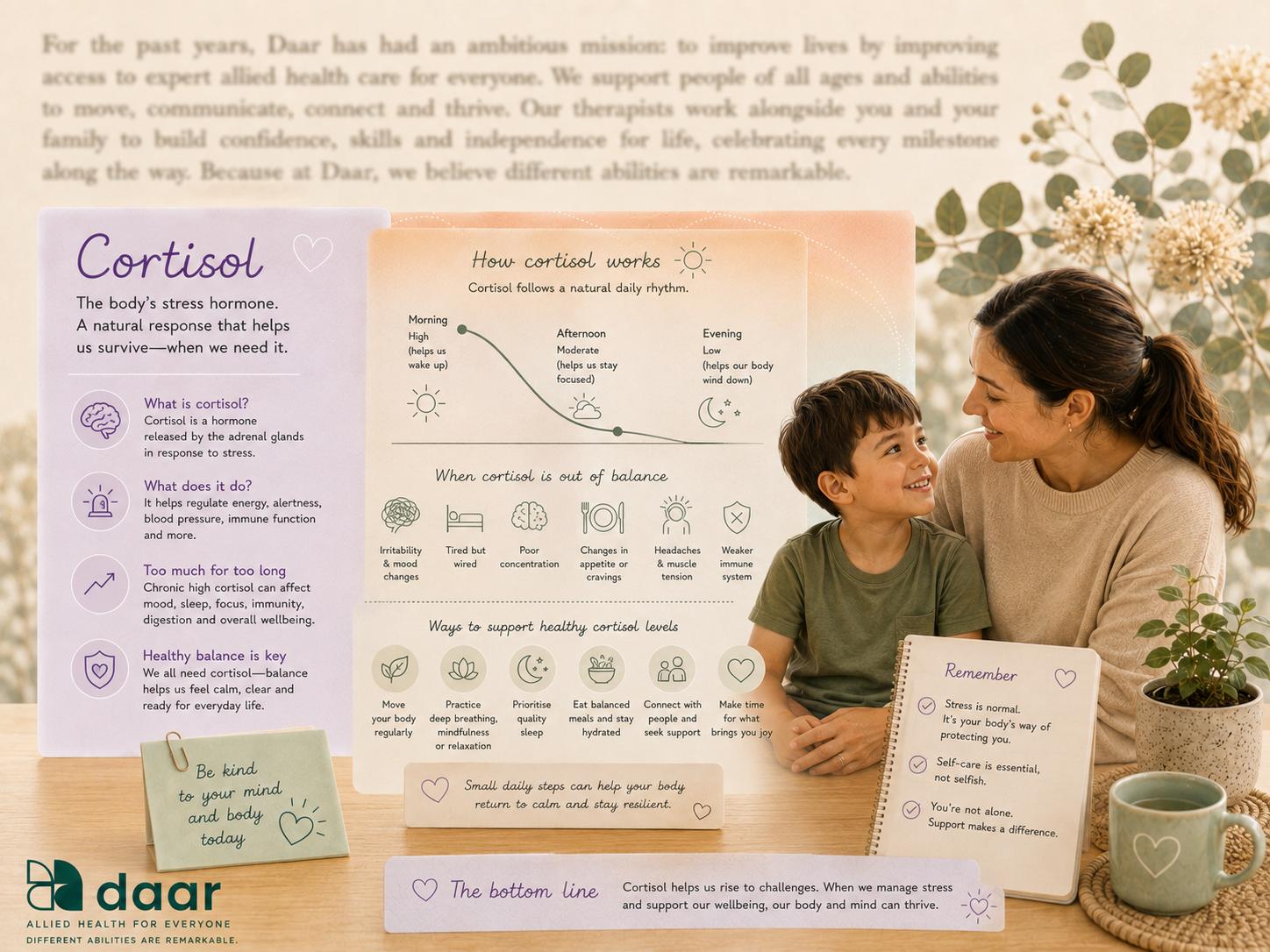
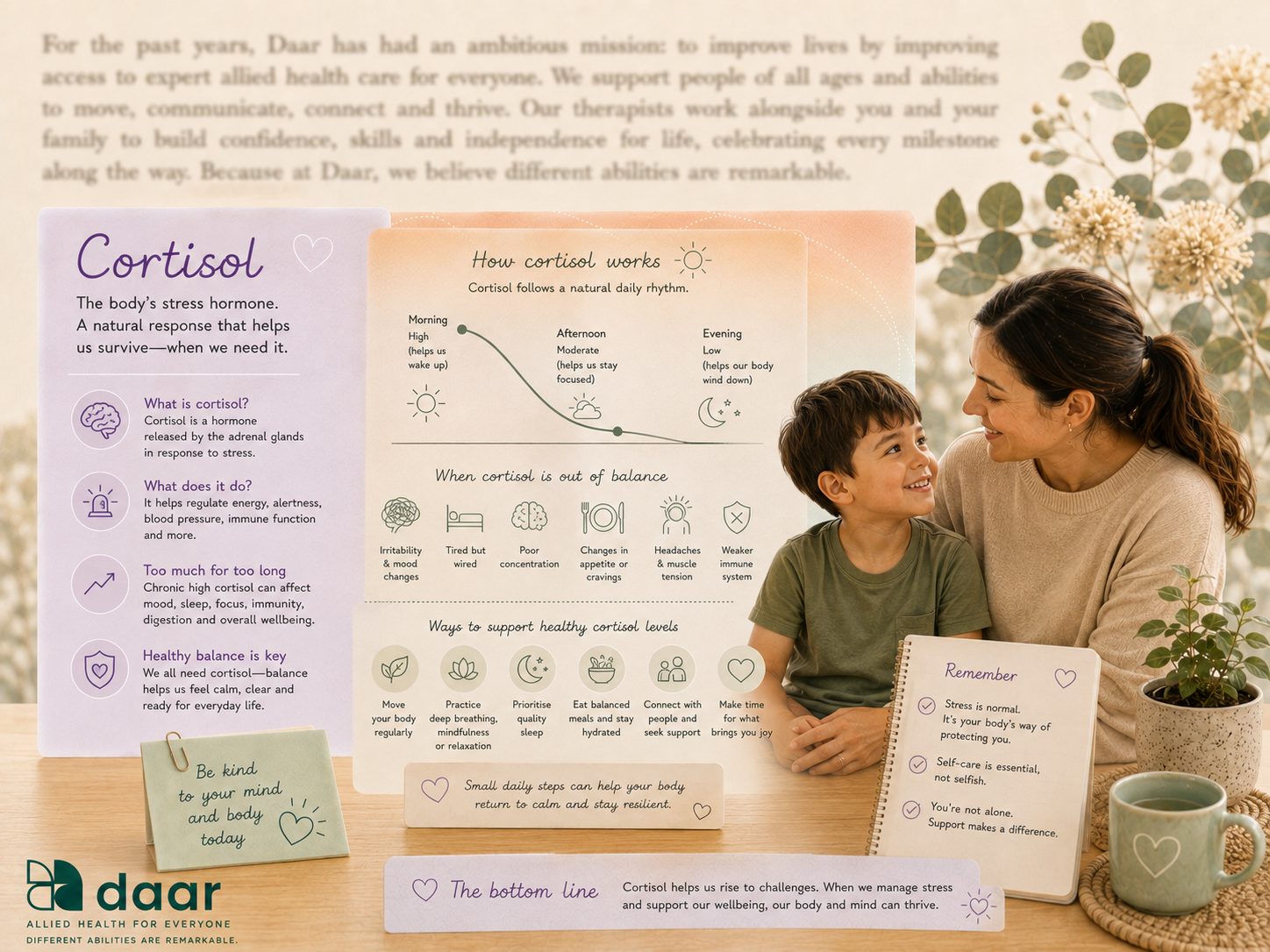
Cortisol, the hormone cortisol, is a naturally occurring steroid hormone produced by the adrenal glands that affects hormone levels in the body. It is commonly known as the 'stress hormone.' In healthy amounts, cortisol is essential—it helps us wake up in the morning, regulates metabolism, and gives us a quick burst of energy to respond to immediate danger (the classic 'fight or flight' response).
However, a child's nervous system is still developing and is highly sensitive, which is crucial for brain development. For many children, especially those who are neurodivergent or dealing with anxiety, everyday transitions can register in the brain as a "threat." A loud classroom, a sudden change in routine, or a difficult homework task can trigger a flood of much cortisol, the stress hormone in children. When this alarm bell rings constantly, the child's brain becomes bathed in cortisol, leaving them in a state of chronic hyper-vigilance.
The Link Between Cortisol and Child Behaviour
When a child is flooded with cortisol, their brain shifts control from the prefrontal cortex (the logical, reasoning part of the brain) to the amygdala (the emotional, survival centre).
This is the critical link between cortisol and child behaviour. Once the amygdala takes over, the child physically cannot process logical instructions. This chemical takeover results in "stress behaviours":
- Fight: Hitting, yelling, throwing objects, or intense defiance in young children.
- Flight: Running away, hiding under furniture, or refusing to go to school.
- Freeze: Shutting down entirely, becoming mute, or inability to make a choice.
By reframing these actions as a biological stress response rather than "bad behaviour," parents can shift away from ineffective punishments and move toward proactive nervous system regulation.
Managing Cortisol and Stress in Children at Home
Because a child in a high-stress state cannot regulate themselves, they rely on the adults around them for "co-regulation." If you meet a child's cortisol-fuelled anger with yelling and frustration, their toxic stress levels will only climb higher and potentially weaken their immune system and physical health. Conversely, your calm presence, a lowered tone of voice, and a highly predictable environment, coupled with an understanding of cortisol produced by the glands on top of the kidneys, act as a biological anchor that helps bring their cortisol levels back down.
Managing cortisol and stress in children involves creating an environment that feels deeply safe. This means building predictable visual routines, incorporating a calming bedtime routine, reducing sensory clutter (like loud background noise), and incorporating deep-pressure physical activities (like heavy lifting or using a weighted blanket), which help process and release built-up stress hormones, especially considering the effects of blue light exposure before bedtime.
Why Telehealth is the Perfect Tool for Stress Reduction
If your child already has a dysregulated nervous system, packing them into a car, rushing through traffic, and forcing them to sit in an unfamiliar clinic waiting room is a guaranteed way to spike their cortisol levels, which can lead to conditions like Cushing syndrome before therapy even begins, potentially resulting in aggressive emotional outbursts.
Telehealth flips this dynamic. By connecting with a psychologist or behaviour support practitioner via a screen, your healthy child stays in their most comfortable, safe environment. Their baseline stress is significantly lower, which means their prefrontal cortex is actually 'online' and ready to engage in behaviour therapy. Additionally, practicing deep breathing techniques can help maintain this low stress level. Furthermore, our practitioners can observe the triggers that cause stress in your actual home, providing you with real-time, highly practical coaching to soothe your child's nervous system exactly where it matters most.
Conclusion
A child experiencing chronic high cortisol and high blood pressure stress is not trying to give you a hard time; they are having a hard time for a long time. By understanding the profound impact that cortisol has on a developing brain, you can begin to meet meltdowns with empathy and targeted regulation strategies.
You don't have to navigate your child's big emotions alone. By utilising the safety and convenience of virtual care, we can help you build an environment of calm and connection through our therapy services.
Reach out to explore a telehealth consultation or call daar directly at 02 9133 2500 to find your perfect match.
Frequently Asked Questions
How can I tell if my child's behaviour is linked to high cortisol levels and stress or just typical boundary-testing?
While all children test boundaries, behaviours driven by high cortisol levels during a spike often look like a sudden, intense loss of control. The child may seem completely unreachable, unable to calm down even when offered a reward, and physical signs of stress (red face, rapid breathing, dilated pupils, tense muscles) will be highly visible. Encouraging them to take slow, deep breaths may help. Unlike boundary-testing, a 'fight or flight' meltdown is not meant to manipulate; it is a sign of total system overwhelm.
Does poor sleep affect the stress hormone in children?
Absolutely. Sleep, excessive screen time, and video games are deeply interconnected with cortisol levels. Cortisol levels should naturally drop at night to allow for restful sleep. If a child is chronically stressed, their elevated cortisol can lead to not enough cortisol for proper rest, causing severe insomnia or frequent waking. In turn, lack of sleep triggers the body to produce more cortisol the next day to keep them awake, creating a vicious cycle of cortisol and stress in children.
Can we use NDIS funding to get early intervention support with cortisol and child behaviour from a young age?
Yes. If your child is an NDIS participant, you can use Capacity Building funding to access our allied health professionals, including our qualified speech therapists. Our telehealth behaviour support practitioners and psychologists specialise in designing sensory-friendly, low-stress environments and teaching advanced co-regulation strategies and social skills to significantly reduce your child's daily distress.
.svg)




.svg)