
.png?width=48&height=48&name=Group%201%20(3).png)























9 March, 2026

ADHD vs Autism Similarities: Understanding the Overlap
Key Highlights
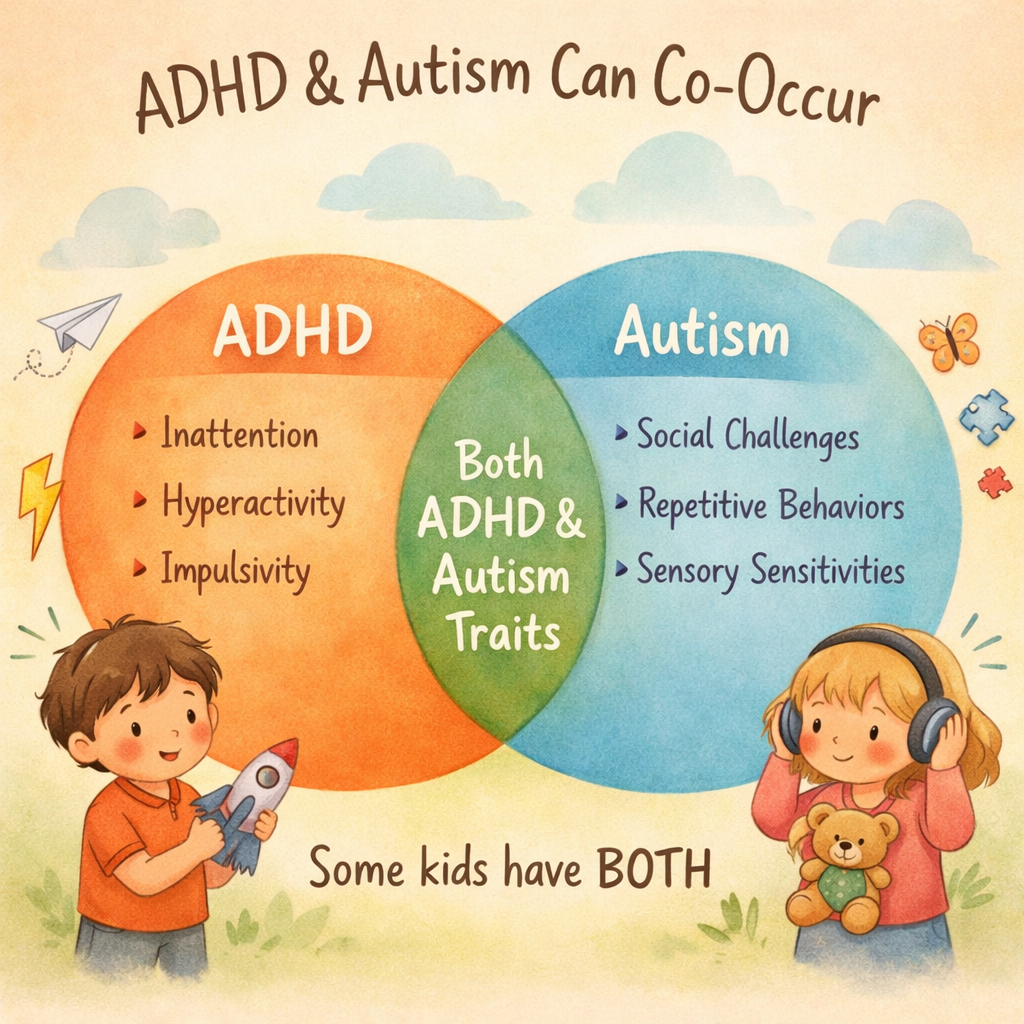
- ADHD and autism spectrum disorder are distinct neurodevelopmental disorders that often have overlapping symptoms.
- The co-occurrence of ADHD and autism can impact daily life, especially social interaction and executive function.
- Challenges with attention deficit and sensory sensitivities are common in both conditions, making an accurate diagnosis complex.
- Research suggests that 50% to 70% of individuals on the autism spectrum also show signs of ADHD.
- Understanding the overlap is crucial for developing effective support strategies that address the unique needs of individuals with both conditions.
Introduction
Navigating the worlds of Attention Deficit Hyperactivity Disorder (ADHD) and Autism Spectrum Disorder (ASD) can be confusing, especially since they share some similar traits. Both are neurodevelopmental conditions that affect how a person thinks, feels, and interacts with the world. While they are distinct, they often appear together, which can make diagnosis and daily life more complex. This guide will explore the similarities and differences between ADHD and autism, helping you understand the overlap and what it means for individuals who experience both.
Overview of ADHD and Autism as Neurodevelopmental Conditions
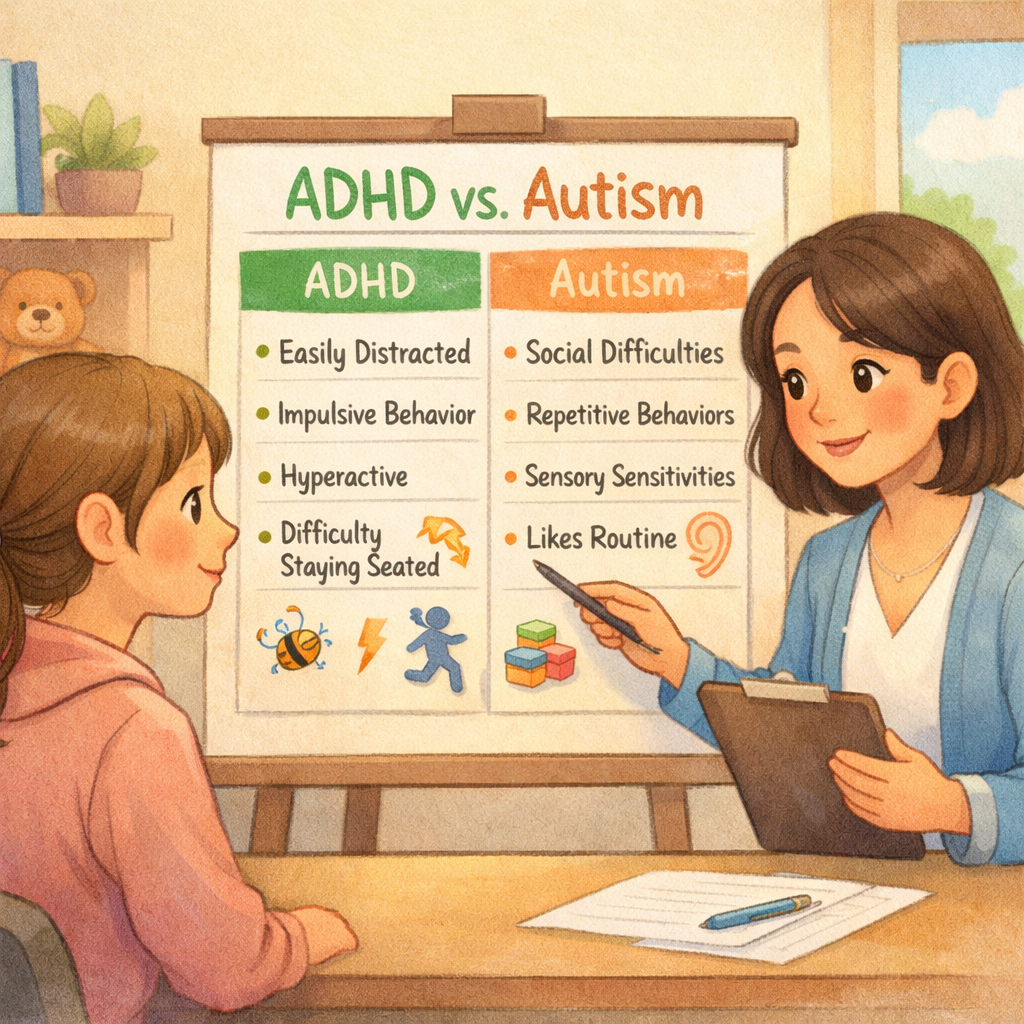
ADHD and autism are neurodevelopmental disorders that begin in childhood and affect brain development. Although their symptoms and diagnostic criteria differ, overlapping traits can make diagnosis difficult. ADHD is mainly characterized by inattention and impulsivity; autism involves social communication challenges and repetitive behaviors.
When both conditions occur together, one’s symptoms may mask the other’s. Both share difficulties with executive functions and social interactions, but for different reasons. Recognizing these distinctions is crucial for proper support. Below, we’ll examine the key traits of each condition.
Defining ADHD: Common Traits and Behaviors
Attention Deficit Hyperactivity Disorder (ADHD) is marked by persistent inattention, hyperactivity, and impulsivity. Individuals with ADHD often struggle to focus, lose items easily, and have difficulty organizing tasks.
Hyperactivity may appear as constant fidgeting or restlessness, while impulsivity leads to actions without considering consequences, frequent interruptions, or trouble waiting turns. These symptoms can disrupt executive functions like planning, focus, and self-control.
ADHD is usually diagnosed in childhood but can persist into adulthood. When combined with autism, ADHD symptoms may be more intense—for example, someone might display both hyperactivity and the repetitive behaviors seen in autism, resulting in a complex profile.
Defining Autism: Core Characteristics
Autism Spectrum Disorder (ASD) is characterized by difficulties with social communication and restricted, repetitive behaviors. These traits typically appear in early childhood, affecting interactions and perception. Social challenges may include trouble understanding nonverbal cues, maintaining conversations, and forming relationships.
Repetitive behaviors—such as hand-flapping, strict routines, or intense interests—are common. Many individuals also experience sensory sensitivities to sounds, textures, lights, or tastes. ASD symptoms vary from mild to severe.
When autism and ADHD occur together, autism’s social challenges can be intensified by ADHD’s impulsivity. The autistic need for routine may clash with ADHD’s craving for novelty, leading to unique behavioral patterns.
Prevalence of ADHD and Autism Together in the United States
It is quite common for someone to have both ADHD and autism. In the United States and globally, research indicates a significant overlap between these two neurodevelopmental conditions. Previously, the Diagnostic and Statistical Manual of Mental Disorders (DSM) did not allow for a dual diagnosis, but this has since changed, acknowledging the high rate of co-occurrence.
Studies suggest that between 50% and 70% of individuals diagnosed with autism also present with symptoms of ADHD. Conversely, about two-thirds of people with ADHD show features of autism. This high frequency of a dual diagnosis points to shared underlying genetic and neurological factors, which we'll explore later.
This overlap presents unique challenges for individuals and mental health professionals alike. The presence of both conditions can lead to more severe symptoms and a greater impact on daily functioning than either condition alone.
|
Condition |
Co-occurrence Rate with the Other |
Key Overlapping Area |
|---|---|---|
|
Autism (ASD) |
50-70% also have ADHD symptoms |
Executive function, social challenges |
|
ADHD |
~67% also have autistic traits |
Attention difficulties, sensory issues |
Exploring the Overlap: Why ADHD and Autism Frequently Co-Occur
The frequent co-occurrence of ADHD and autism has led researchers to investigate why these two neurodevelopmental disorders so often appear together. The answer seems to lie in shared biological roots, including genetic and neurological factors. The high rate of dual diagnosis is not just a coincidence but a reflection of how these conditions develop.
Because of the significant number of overlapping symptoms, such as executive dysfunction and social difficulties, diagnostic tools must be used carefully to distinguish between the two or identify both. Understanding the common ground between ADHD and autism is essential for providing accurate diagnoses and effective support. Let's examine the shared factors that contribute to this overlap.
Shared Genetic and Neurological Factors
Research shows that ADHD and autism often co-occur due to shared genetic factors, with a genetic overlap of 50–72%. These common genes influence brain development and neural pathways, leading to similar traits in both conditions.
Neurologically, both ADHD and autism involve differences in key brain regions, such as the prefrontal cortex, which controls planning and impulse regulation. Both also show altered communication between brain areas. These shared neurological features explain why people with autism often display ADHD-like symptoms.
Biologically, this suggests ADHD and autism may be different expressions of a common vulnerability. This perspective is shifting our view of these conditions from separate disorders to interconnected ones.
What It Means to Have ADHD and Autism Together
Having a dual diagnosis of ADHD and autism presents a unique set of challenges that can intensify the difficulties associated with each condition. The overlapping symptoms often create a complex picture. For instance, an individual might crave the structure and routine common in autism but find it hard to stick to plans due to the impulsivity and inattention of ADHD. This internal conflict can be a significant source of stress.
Daily functioning can be more severely impacted. Difficulties with executive functioning are present in both conditions but may be compounded when they co-occur, making tasks like time management, organization, and emotional regulation even harder. Social skills can also be a major challenge, as the social communication difficulties of autism are combined with the impulsivity and inattention of ADHD, potentially leading to misunderstandings in social situations.
Ultimately, individuals with both conditions have very specific needs. They often require more intensive and tailored support strategies that address the combined impact of their symptoms. Recognizing and understanding these unique challenges is the first step toward providing effective help that improves their quality of life.
Myths and Facts About Co-occurrence
Many misconceptions exist about ADHD and autism occurring together, making it harder for individuals to receive a proper diagnosis and adequate mental health care. For years, one widespread misunderstanding was that people could not have both conditions simultaneously—an idea that appeared in earlier versions of diagnostic manuals, but it’s now recognized as incorrect since ADHD and autism often present together.
A further myth suggests that attention difficulties experienced by autistic people are identical to those in ADHD, yet although both may have trouble focusing, the underlying causes aren't the same; for instance, autistic individuals often display “hyperfocus” on specific interests—a highly concentrated form of attention—whereas those with ADHD tend to find it challenging to sustain attention on uninteresting tasks. Distinguishing between these requires a careful behavioral assessment.
Accurate diagnosis relies on understanding the realities, as evaluating overlapping conditions is a more involved process that typically depends on input from a multidisciplinary team to examine symptoms closely and rule out other possible explanations.
- Fact: Dual diagnoses are prevalent, with up to 70% of autistic people also exhibiting symptoms of ADHD.
- Myth: It’s simply misbehavior; when in reality, both are neurodevelopmental disorders grounded in biology.
- Fact: Treatment approaches must be individualized, since strategies for one condition often need modification to properly address the other.
Key Similarities Between ADHD and Autism
While ADHD and autism are distinct, they share several key similarities that can make them appear related. Many of the core symptoms that define one condition can look like features of the other. The most significant overlaps are seen in challenges with executive function, social interaction, and sensory sensitivities. Problems with sustained attention can also be present in both, although for different reasons.
These similarities in their diagnostic criteria can lead to confusion for families and clinicians. Recognizing where the two conditions overlap is crucial for understanding an individual's complete profile. Let's take a closer look at some of these shared characteristics, including issues with attention, social skills, and emotional regulation.
Attention, Impulsivity, and Hyperactivity
Attention, impulsivity, and hyperactivity are common in both ADHD and autism. In ADHD, attention issues appear as distractibility and trouble focusing on tasks. In autism, they may involve difficulty shifting focus or intense absorption (hyperfocus).
Impulse control problems also overlap. Someone with ADHD might act without thinking; an autistic person may act impulsively due to sensory overload or emotional dysregulation.
Understanding these symptoms requires careful behavior analysis. Poor executive function is a challenge in both conditions. When ADHD and autism co-occur, individuals may show mixed behaviors—restlessness alongside very focused interests.
Challenges With Social Interaction
ADHD and autism both pose social challenges, but for different reasons. Autism often involves difficulty interpreting social cues, body language, and unwritten rules, making communication and eye contact hard. ADHD social issues usually stem from impulsivity—like interrupting conversations—and inattention, which makes it tough to follow discussions. When both conditions overlap, these difficulties intensify: someone may miss cues (autism) and then speak impulsively (ADHD), making relationships harder to form and maintain. This underscores the importance of considering both diagnoses for effective support.
Emotional Regulation and Sensory Sensitivities
Emotional regulation difficulties and sensory sensitivities are common in both ADHD and autism. Many autistic people experience heightened sensory awareness, making them over- or under-sensitive to sounds, lights, textures, and smells. This can lead to sensory overload and result in meltdowns or shutdowns.
People with ADHD also face sensory challenges and emotional dysregulation. Their executive functioning struggles make it hard to manage strong emotions, often leading to outbursts of frustration or excitement.
When both conditions coexist, these issues can intensify. A person may have the sensory sensitivities of autism combined with the emotional impulsivity of ADHD, resulting in more intense reactions and greater daily challenges. Managing life with both requires targeted strategies for each aspect.
Typical Symptoms When ADHD and Autism Overlap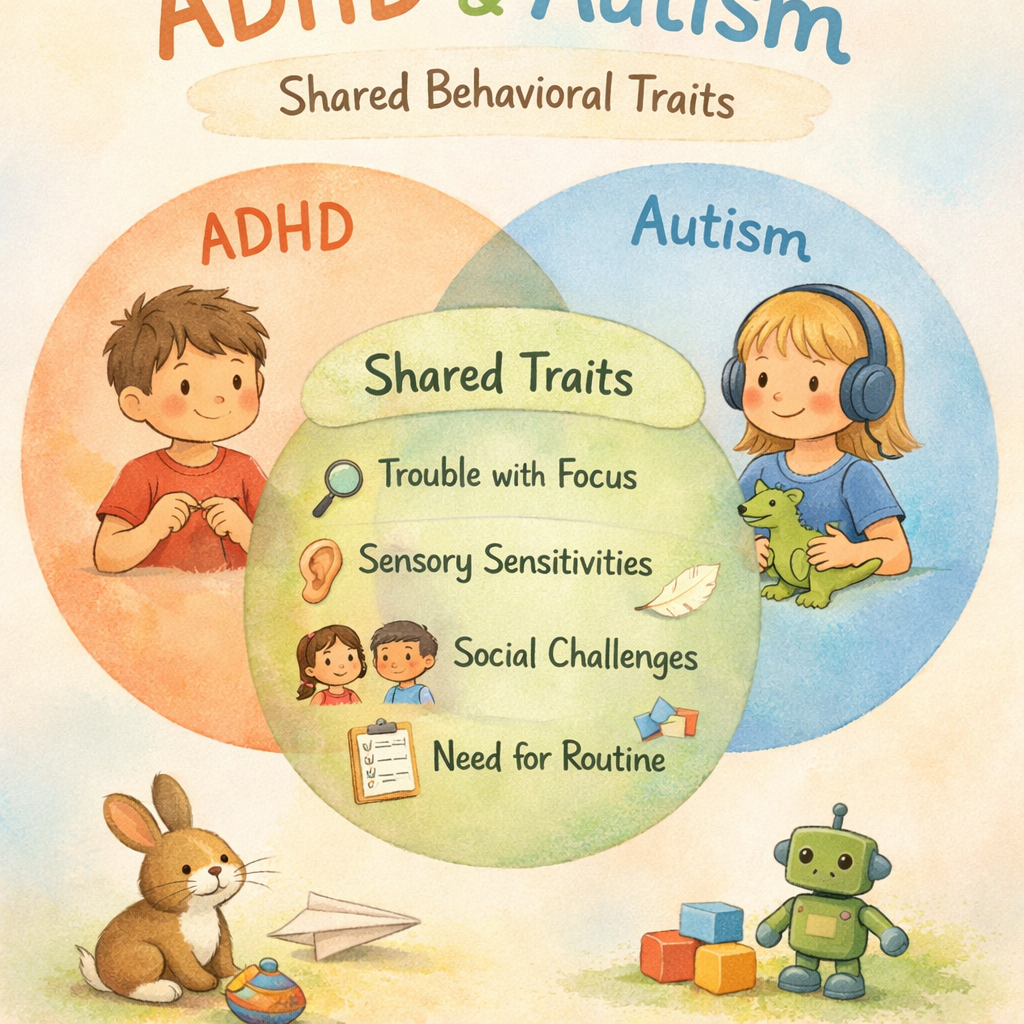
When ADHD and autism co-occur, their combined symptoms create a unique and complex clinical picture. ADHD traits like inattention and hyperactivity mix with autism symptoms such as social challenges and repetitive behaviors. This can lead to seemingly contradictory traits, like a strong need for routine but difficulty maintaining it due to poor executive functioning.
Overlapping symptoms may intensify—for example, attention issues and emotional regulation problems become more pronounced. Below, we’ll look at how these combined symptoms appear in children, teens, and adults, and how they impact learning styles.
Behavioral Manifestations in Children and Teens
In autistic children and teens who also have an ADHD diagnosis, behavioral manifestations can be particularly complex. They might display the classic hyperactivity and impulsivity of ADHD, such as constant fidgeting and difficulty waiting for their turn, alongside the core symptoms of autism, like challenges with social communication. This can make peer interactions especially difficult, as they may struggle to read social cues while also being prone to interrupting or acting impulsively.
Repetitive behaviors, a hallmark of autism, might also be present but could be influenced by ADHD. For example, a child might engage in repetitive movements to self-soothe (autism) but find it hard to stop due to poor impulse control (ADHD). Executive dysfunction is often more severe, impacting their ability to organize schoolwork, manage time, and control their emotions.
Getting a diagnosis of ADHD in autistic children can be tricky because some behaviors, like inattention, can be misinterpreted. A child might seem inattentive because they are lost in their own world (autism) or because they are easily distracted (ADHD). A careful evaluation is needed to untangle these overlapping symptoms.
Symptoms Specific to Adults With ADHD and Autism Together
Adults with both ADHD and autism face unique daily challenges. While hyperactivity may lessen with age, many still experience internal restlessness. Combined with autism-related social difficulties, this can make workplace interactions and relationships exhausting. They may miss subtle cues, struggle with office politics, and deal with inattention and disorganization.
Executive function deficits are common, making it hard to manage finances, meet deadlines, or keep spaces organized. ADHD’s disorganization and autism’s need for routine can lower quality of life without proper support.
Many adults use “masking” to fit in, which is mentally exhausting and can lead to burnout. Recognizing these challenges is essential for effective support and accommodations.
Cognitive and Learning Styles
The combination of ADHD and autism creates distinct cognitive profiles and learning styles, different from having either condition alone. Individuals with both may intensely focus on special interests (autism) but struggle to maintain that focus in academics due to ADHD distractibility.
Common challenges include difficulties with planning, organization, flexible thinking, and social cues—all of which can affect school performance. Managing impulsivity further complicates social interactions.
These students benefit from personalized educational strategies. They may excel in areas they’re passionate about but often need extra support with sustained effort, organization, or social situations. Recognizing their unique needs is crucial for academic and everyday success.
The Impact of ADHD and Autism Together on Daily Life
When ADHD and autism coexist, the impact on daily life can be profound, affecting everything from school and work to relationships and personal well-being. The combined challenges can lead to a lower quality of life and increased mental health concerns if not properly managed. Daily functioning is often hampered by difficulties with organization, emotional regulation, and navigating social situations.
These individuals have specific needs that must be addressed to help them thrive. The following sections will explore how this dual diagnosis influences academic and workplace performance, relationships and social skills, and the ability to cope with environmental and sensory challenges.
Academic and Workplace Functioning
ADHD and autism together can create major challenges in school and the workplace. Poor executive function makes time management, planning, and organization difficult. In school, this often leads to missed assignments, trouble following instructions, and lower grades, even for intelligent students.
At work, attention issues from ADHD make it hard to focus during meetings or on repetitive tasks. Social communication difficulties from autism can complicate teamwork and interactions with colleagues, affecting job performance and career growth.
Success often requires targeted support. In school, this might mean extended deadlines or a quiet testing space. At work, accommodations like flexible hours, clear written instructions, and a predictable routine can help individuals manage symptoms and reach their potential.
Relationships and Social Skills
Forming and maintaining relationships is especially challenging for individuals with both ADHD and autism. Their combined difficulties with social skills—such as trouble reading cues (autism) and interrupting or talking excessively (ADHD)—can make interactions confusing and stressful.
These communication challenges often lead to misunderstandings, with friends or partners misinterpreting their behavior as disinterest or rudeness. Emotional dysregulation, common in both conditions, can further strain relationships through intense reactions that others may not understand.
As a result, social struggles can impact quality of life, causing loneliness and isolation. Building strong relationships usually requires intentional effort and strategies like learning social rules explicitly and practicing conversation skills in supportive settings.
Coping With Environmental and Sensory Challenges
Individuals with both ADHD and autism often face daily environmental and sensory challenges. Sensory sensitivities, a core aspect of autism, can make ordinary settings—like bright lights or loud noises—overwhelming. ADHD adds impulsivity and poor executive function, making it harder to avoid distress or plan coping strategies, such as bringing noise-canceling headphones.
Support is crucial. Creating sensory-friendly spaces at home and work can lower stress. Proactive strategies include:
- Structured Routines: Predictable schedules reduce unexpected sensory input.
- Sensory Toolkits: Items like fidget toys, weighted pads, or sunglasses aid self-regulation.
- Quiet Spaces: Designated low-stimulus areas offer relief from sensory overload.
Treatment and Support Strategies for ADHD and Autism Together
Managing co-occurring ADHD and autism requires a comprehensive and individualized approach. There is no one-size-fits-all solution; instead, treatment often involves a combination of behavioral therapies, medication, and educational support. The goal of these support strategies is to improve daily functioning and overall mental health by addressing the unique challenges presented by the dual diagnosis.
Effective treatment plans often include parent training to help families implement strategies at home, as well as therapies like Applied Behavior Analysis (ABA) to build skills. The following sections will detail the different treatment options, including behavioral approaches, medication considerations, and educational accommodations that can help individuals thrive.
Behavioral Therapies and Approaches
Behavioral therapies are essential for treating individuals with both ADHD and autism. These approaches teach new skills and reduce challenging behaviors. Applied Behavior Analysis (ABA) is a widely used, evidence-based therapy that can be tailored for dual diagnoses, improving communication, social interactions, and daily functioning.
Parent training is also key. It equips parents with strategies to manage behavior at home, reinforce positive actions, and address challenges related to both conditions. This consistency benefits family dynamics and supports the child’s mental health.
Other behavioral therapies may target social skills, emotional regulation, and executive functioning. These interventions are customized to each individual’s needs, helping them navigate school, work, and social situations more effectively. The overall goal is to build independence and enhance well-being.
Medication Use and Considerations
Medication can effectively treat co-occurring ADHD and autism, especially for managing ADHD symptoms like inattention and hyperactivity. Stimulants are often the first choice, improving focus and executive function, but autistic individuals may be more sensitive to side effects. Providers typically start with lower doses and monitor closely; non-stimulant options may be preferred for fewer side effects.
Medication is usually combined with behavioral analysis to track progress. Decisions should involve experienced healthcare professionals familiar with both conditions. Medication works best alongside behavioral therapies and other supports for comprehensive symptom management and mental health.
Educational Supports and Accommodations
Educational supports and accommodations are essential for helping students with ADHD and autism succeed in school. These measures address their unique needs and foster a supportive learning environment. Often, an Individualized Education Program (IEP) outlines the specific accommodations and services provided.
Accommodations target challenges with attention, organization, and social skills to improve academic performance. Examples include preferential seating to reduce distractions and visual schedules for better transitions and time management. The aim is to provide equal access to the curriculum so students can demonstrate their abilities.
Common educational supports include:
- Extended Time: More time for tests and assignments reduces pressure.
- Clear, Step-by-Step Instructions: Breaking tasks into smaller steps improves understanding.
- Sensory Breaks: Opportunities for movement or quiet time support self-regulation.
- Social Skills Groups: Structured practice helps build social interaction skills.
Living Well With ADHD and Autism Together
While living with co-occurring ADHD and autism presents challenges, it is entirely possible to live a full and rewarding life. The key is to shift the focus from deficits to strengths and to build a supportive environment that fosters well-being. Improving quality of life often involves leveraging an individual's unique interests and talents while providing the right kind of community support.
By embracing their neurodiversity, individuals can find ways to improve their daily functioning on their own terms. The following sections explore how building on strengths, finding community, and developing practical social skills can help individuals with this dual diagnosis not just cope, but truly thrive.
Building on Strengths and Interests
Focusing on strengths and interests can greatly enhance the quality of life for people with ADHD and autism. Both conditions offer unique advantages: autism often brings deep expertise through intense interests, while ADHD fosters creative, innovative thinking.
Leveraging these strengths improves daily functioning. For example, someone with a passion for coding might thrive in tech by using their ability to hyperfocus. While these profiles can pose challenges, they also provide significant benefits.
Building on interests helps overcome difficulties like executive functioning. Tasks linked to personal passions are easier to manage and motivate. Here’s how to nurture strengths:
- Encourage Hobbies: Support their intense interests with resources.
- Align Careers: Choose educational and career paths that match their talents.
- Celebrate Uniqueness: Emphasize their different perspectives as valuable strengths.
Family, Peer, and Community Support

A strong support system is vital for managing daily life with ADHD and autism. Family forms the foundation, offering acceptance and understanding, while educated relatives can support strategies at home and advocate in schools and the community.
Peer support is equally important. Connecting with others who share similar experiences reduces isolation and fosters belonging. Support groups—online or in-person—provide a space to share struggles, coping tips, and friendships with those who truly understand.
Community support broadens this network through access to mental health professionals, inclusive programs, and accommodating workplaces. Together, family, peers, and community create a safety net that supports mental health and helps individuals with dual diagnoses build social skills and confidence.
Conclusion
Understanding the overlaps between ADHD and autism is vital for fostering empathy and support. Recognizing shared traits—like attention difficulties, social challenges, and emotional regulation issues—helps create more inclusive environments. Effective strategies should address both conditions, enabling individuals to thrive. Education and awareness are essential for breaking myths and improving understanding.
For personalized guidance, consider a consultation or call daar at 02 9133 2500.
Frequently Asked Questions
Is there a specific term for having ADHD and autism together?
While there isn't an official clinical term, the co-occurrence is often informally called "AuDHD." Clinically, it is referred to as a dual diagnosis of Autism Spectrum Disorder and ADHD. This acknowledges that the individual meets the full diagnostic criteria for both conditions, which have many overlapping symptoms.
Can co-occurring ADHD and autism change with age or over time?
Yes, the presentation of co-occurring ADHD and autism can change over time. The developmental trajectories of both conditions mean that symptoms may evolve. For example, the hyperactivity symptoms of ADHD might decrease in adulthood, while challenges with daily functioning and executive function may become more prominent.
Are challenges different for adults versus children with both conditions?
Yes, the challenges often differ. Autistic children with ADHD may struggle more with school and peer interactions. In contrast, adult ADHD and autism present challenges in the workplace, relationships, and independent daily living. Executive dysfunction can lead to significant difficulties with managing finances and responsibilities, impacting their quality of life.

.svg)




.svg)