
.png?width=48&height=48&name=Group%201%20(3).png)























9 March, 2026

Understanding ADHD vs Autism Symptoms: Key Differences
Key Highlights
- ADHD and Autism Spectrum Disorder are distinct neurodevelopmental conditions with unique core symptoms.
- ADHD primarily involves inattention and hyperactivity, while autism affects social communication and behavior.
- Despite their differences, there are several overlapping symptoms, such as social challenges and issues with executive functioning.
- An accurate diagnosis is crucial because the diagnostic criteria for each condition are different.
- Some individuals can be diagnosed with both ADHD and autism, which requires a tailored approach to support and treatment.
- Understanding the key distinctions helps in providing the right support for individual needs.
Introduction
Have you ever wondered about the differences between Attention-Deficit/Hyperactivity Disorder (ADHD) and Autism Spectrum Disorder (ASD)? Both are neurodevelopmental conditions that begin in childhood and can share similar traits, making it tricky to tell them apart. While ADHD is a hyperactivity disorder and ASD is a spectrum disorder, they each present unique challenges. Understanding their distinct features is the first step toward getting the right support and improving daily life for those affected. This guide will walk you through their key differences and similarities.
What is ADHD?
Attention-Deficit/Hyperactivity Disorder, commonly known as ADHD, is a neurobehavioral condition that often appears in childhood. It can cause significant impairment in social, academic, and emotional aspects of daily life, impacting a person's overall mental health.
The exact cause of ADHD is not yet known, but research suggests that a mix of genetic and environmental factors may increase the risk of developing the disorder. Recognizing the ADHD symptoms is vital for managing its effects on daily life.
Core Features of ADHD
ADHD has two main traits: attention deficit and hyperactivity-impulsivity. These affect executive functions like organization, time management, and decision-making.
Those with attention deficit may struggle to focus, make careless mistakes, forget tasks, and lose items—making schoolwork or job projects challenging.
Hyperactivity-impulsivity includes fidgeting, trouble sitting still, excessive talking, and impulsive actions like interrupting others. Managing these symptoms helps individuals handle daily life more effectively.
Subtypes of ADHD
ADHD is diagnosed in three subtypes based on symptoms: Predominantly Inattentive (difficulty focusing and organizing), Predominantly Hyperactive-Impulsive (restlessness and impulsivity), and Combined (symptoms from both categories). Recognizing these subtypes helps ensure accurate diagnosis and appropriate treatment.
What is Autism Spectrum Disorder (ASD)?
Autism Spectrum Disorder (ASD) is a neurodevelopmental condition that typically appears in early childhood. It affects how a person communicates, interacts with others, and experiences the world around them. For autistic individuals, these differences can impact their mental health and daily functioning.
The causes of ASD are linked to a combination of genetic conditions and environmental factors. Because it is one of the more common neurodevelopmental conditions, understanding its core features is essential for providing the right support.
Core Features of Autism Spectrum Disorder
Autism Spectrum Disorder is characterized by persistent difficulties in social communication and restricted or repetitive behaviors. Diagnosis focuses on these core traits.
Social communication challenges may include difficulty with conversations, interpreting nonverbal cues, and forming relationships. Sensory processing differences—such as being overly or under-sensitive to sounds, lights, textures, or smells—are also common.
Repetitive behaviors often appear as repeated movements, strict adherence to routines, or intense, narrow interests. For diagnosis, these symptoms must be present from early development and significantly impact daily life.
Variability Across the Autism Spectrum
The word “spectrum” in autism spectrum disorder is important. It shows that autistic people have different strengths and struggles. Autism affects each person in its own way. There is no single way to describe autism.
Some autistic people are very sensitive to sounds or lights. They may feel stressed by things around them. Others may not have these feelings. Some autistic people have trouble with learning and thinking skills. But many have normal or high intelligence. The help they need is not the same for everyone.
These differences show why it is key to focus on what each person needs. We should not guess or make quick decisions about someone’s needs. To know if a person has ADHD, autism, or both, we must look at their own traits and problems. This helps us give the right support for them.
Common Symptoms of ADHD
The common ADHD symptoms are generally grouped into two categories: inattention and hyperactivity-impulsivity. These symptoms stem from challenges with the brain's executive functioning, which controls focus, organization, and impulse control.
An individual with attention deficit might struggle to complete tasks, seem forgetful, and be easily distracted. The hyperactivity disorder aspect often shows up as restlessness and constant movement, while impulsive behaviors can include interrupting others or making hasty decisions. We will now explore these symptoms in more detail.
Inattentive Symptoms
Inattentive symptoms of ADHD are centered around an ongoing pattern of attention deficit that interferes with daily life. People with these symptoms often find it difficult to organize and complete daily tasks, which can affect their mental health and lead them to seek an ADHD diagnosis.
This difficulty is not a matter of laziness or defiance but rather a challenge in sustaining mental effort. Forgetfulness is another common issue, with individuals frequently misplacing items like keys, wallets, or phones. They may also forget appointments or other important commitments.
Some of the key inattentive symptoms include:
- Failing to pay close attention to details or making careless mistakes.
- Having trouble holding attention on tasks or play activities.
- Not seeming to listen when spoken to directly.
- Avoiding tasks that require sustained mental effort.
- Being easily distracted by external stimuli.
Hyperactive and Impulsive Symptoms
Hyperactive and impulsive symptoms are the other side of the ADHD coin, stemming from the hyperactivity disorder aspect of the condition. These traits are often related to difficulties with executive functioning and can be managed with strategies like behavioral therapy.
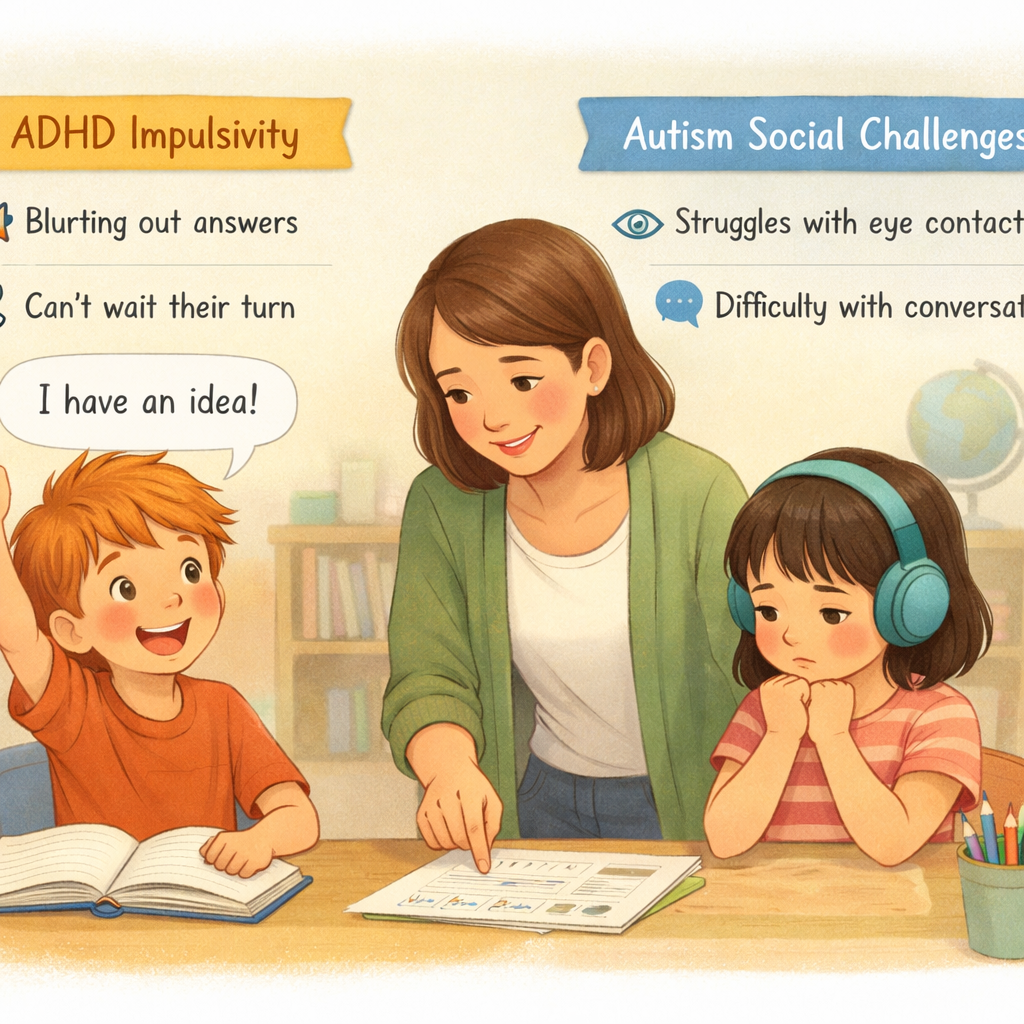
Impulsivity can manifest as acting without thinking, such as blurting out answers before a question is finished or having trouble waiting for a turn. Hyperactivity often appears as a constant need to be "on the go," with individuals feeling restless and unable to engage in quiet activities.
Here are some common hyperactive and impulsive ADHD symptoms:
- Fidgeting with or tapping hands or feet, or squirming in a seat.
- Leaving a seat in situations when remaining seated is expected.
- Talking excessively.
- Interrupting or intruding on others' conversations or games.
- Feeling an inability to play or do leisure activities quietly.
Core Symptoms of Autism Spectrum Disorder
The core symptoms of Autism Spectrum Disorder (ASD) are primarily defined by two areas: challenges with social communication and the presence of restricted or repetitive behaviors. These autistic traits are central to understanding the condition.
Many individuals with ASD also experience sensory issues, where they may be highly sensitive or undersensitive to sights, sounds, or textures. These symptoms can vary widely from person to person, reflecting the "spectrum" nature of the disorder. Let's look closer at these defining features.
Social Communication Differences
Autism is characterized by a unique approach to social communication, which can impact social skills across different settings. For example, some autistic individuals may struggle to start or maintain conversations and have difficulty interpreting nonverbal cues like body language, tone, or facial expressions. This stems from differences in how the brain processes social information, not from lack of interest. Eye contact may also feel uncomfortable.
These challenges differ from ADHD, where issues are usually due to inattention or impulsivity, such as interrupting others. In autism, difficulties arise from trouble intuitively understanding and using unwritten social rules.
Repetitive Behaviors and Restricted Interests
Repetitive behaviors and restricted interests are hallmark traits of autism that are not typically seen in ADHD. These behaviors often serve as a way to self-regulate, manage sensory input, or find comfort in a predictable world that can otherwise feel chaotic.
These behaviors can take many forms, from repetitive body movements like hand flapping or rocking to a strict adherence to routines. A sudden change in schedule can be very distressing and lead to sensory overload. Restricted interests refer to an intense, focused passion for specific topics, where an individual might learn everything they can about a particular subject.
Some examples include:
- Lining up toys or flipping objects.
- Repeating certain words or phrases (echolalia).
- Having an extreme fascination with lights or movement.
- Showing a strong attachment to unusual objects.
Overlapping Symptoms Between ADHD and Autism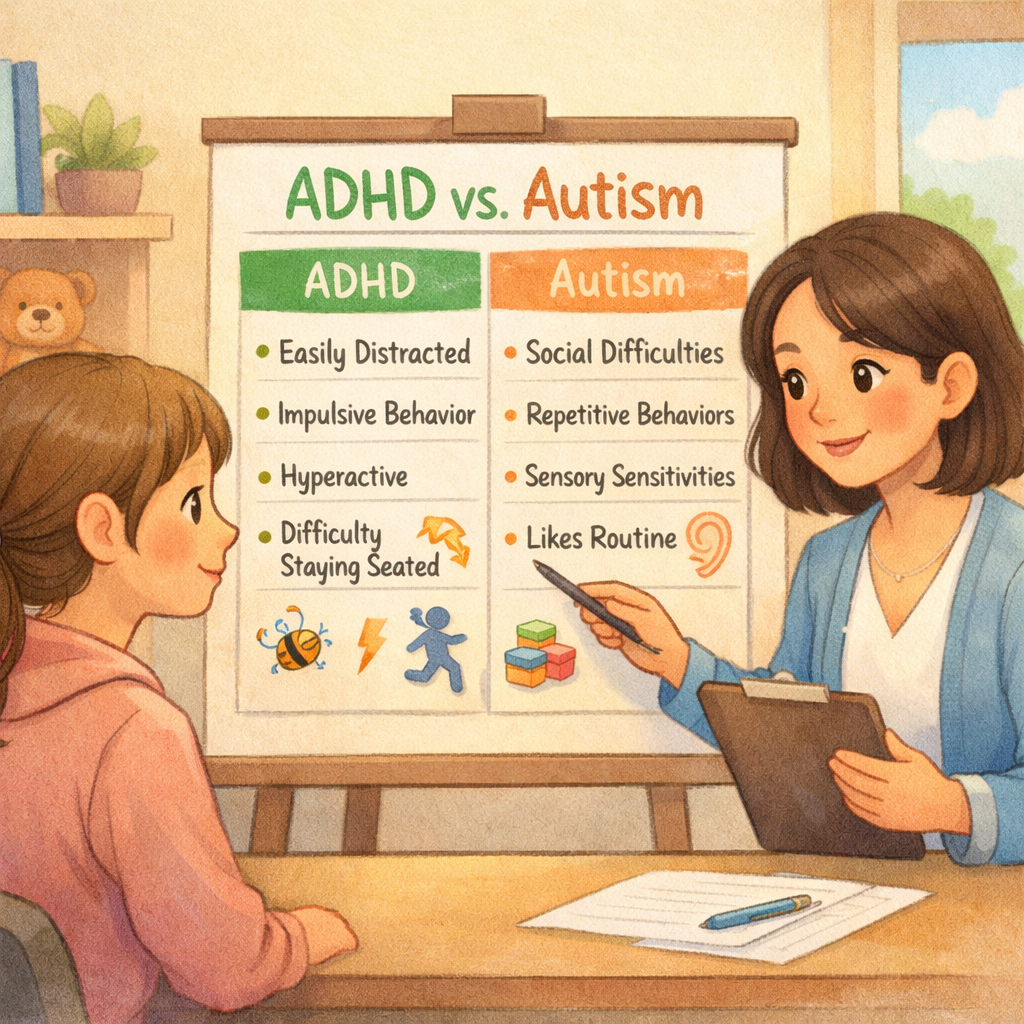
While ADHD and autism are distinct mental health conditions, they share a surprising number of symptoms. This overlap is partly due to a potential genetic overlap between the two neurodevelopmental conditions, which can make diagnosis tricky.
Both conditions can involve challenges with executive functioning, emotional regulation, and attention deficit. For instance, difficulty following instructions is a common trait in both. Understanding these shared characteristics is key to appreciating the complexities of each condition.
Shared Behavioral Characteristics
Many behaviors are alike in both ADHD and autism. This can make it hard to tell them apart. Both may cause problems with friends or family, but the reasons are often not the same.
Trouble with planning and remembering is a key problem that both shares. This affects things like keeping tasks in order, planning steps, and recalling facts. It is hard for people with ADHD or autism to stay focused on what they are doing.
Both groups also have a tough time managing strong feelings. This can lead to anger, sadness, or outbursts that are hard to control.
People with these conditions may notice sounds, lights, or touch much more than others do. They might avoid certain things because they feel too much discomfort. Or, they might look for things that give them new feelings.
These shared signs show why it is so important to have a careful check-up. Only then can doctors find out which condition is present and make a plan that helps best.
Challenges with Focus and Routine
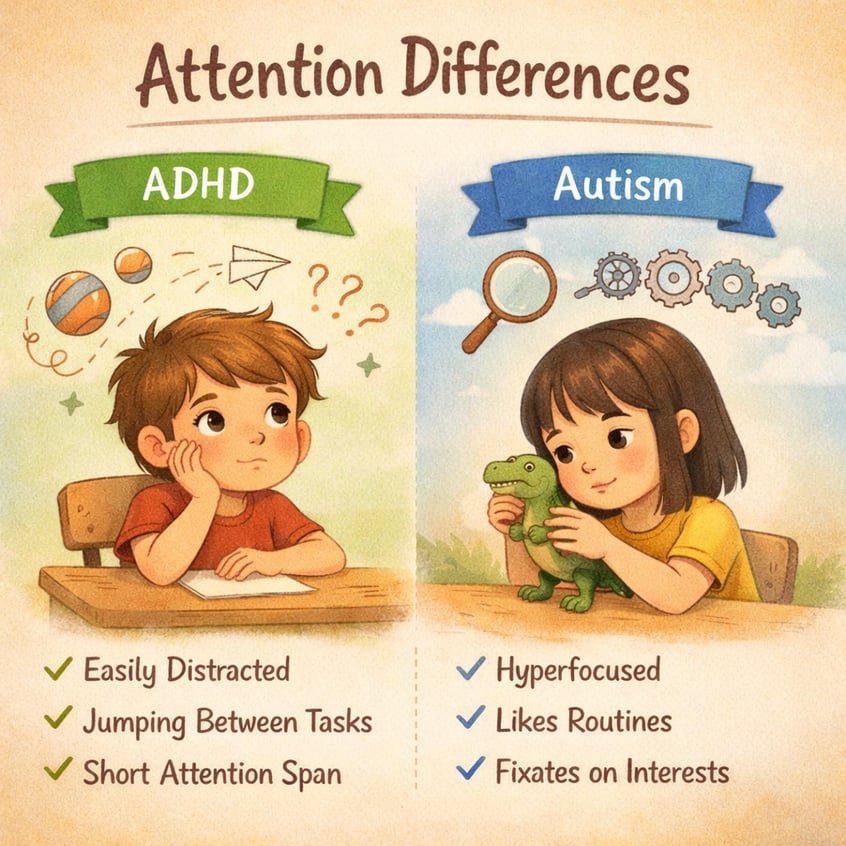
Difficulties with focus and routine affect daily life for people with ADHD and autism, but in different ways. People with ADHD often struggle to maintain attention, especially on uninteresting tasks, leading to disorganization and chaos.
In contrast, autistic individuals may become hyper-focused on a specific interest, making it hard to shift attention or follow instructions. They strongly prefer predictable routines, and disruptions can cause distress.
For autistic people, routine difficulties are often related to managing sensory input and anxiety. For those with ADHD, challenges stem from executive functioning issues that make routines hard to start or follow. These differences are important when distinguishing between ADHD, autism, or both.
Key Differences in Behavior
Beyond the overlaps, there are key behavior differences that help distinguish ADHD from autism. These distinctions are crucial for understanding how each condition impacts daily life, from social interaction to personal interests.
For instance, the way individuals approach social situations, manage their attention, and respond to sensory processing varies greatly. Differences in body language and communication styles are also notable. Looking closely at these behaviors helps clarify the unique profile of each condition.
Social Interaction: ADHD vs. Autism
The challenges in social interaction for people with ADHD and autism can look similar on the surface, but the underlying reasons are quite different. These differences are vital for developing effective social skills and navigating social situations.
An adult with ADHD might talk excessively, interrupt others, or seem restless in social settings. These behaviors are often driven by impulsivity and difficulty regulating attention, not a lack of understanding social cues. They may miss cues simply because they were distracted.
In contrast, an autistic adult may struggle with the fundamental back-and-forth of conversation or have difficulty interpreting nonverbal cues like body language and eye contact. They may prefer to avoid social situations altogether or find them draining because they have to consciously analyze social rules that others pick up intuitively.
|
Feature |
ADHD |
Autism |
|---|---|---|
|
Social Motivation |
Generally wants to engage socially but may struggle with impulsivity and inattention. |
May have less inherent interest in social interaction or find it overwhelming. |
|
Conversation Style |
May interrupt, talk excessively, or have trouble staying on topic due to distractibility. |
May struggle with reciprocal conversation, prefer to talk about specific interests, or be nonverbal. |
|
Understanding Cues |
Can typically read social cues when focused but may miss them due to inattention. |
Has an inherent difficulty interpreting non-verbal cues like body language, tone, and facial expressions. |
|
Eye Contact |
Can usually make eye contact but may be inconsistent due to distraction. |
May find eye contact uncomfortable or unnatural, often avoiding it. |
Attention Span and Types of Interests
ADHD and autism differ in attention span and interests. ADHD often causes difficulty maintaining focus on routine tasks, but can lead to hyper-focus on novel or stimulating activities. Interests are typically broad and change frequently.
Autism, by contrast, involves highly restricted interests. Autistic individuals may deeply focus on a few specific topics for extended periods, becoming experts. This consistent, narrow focus distinguishes autism from the shifting attention seen in ADHD.
How Diagnosis Differs for ADHD and Autism
Obtaining an accurate diagnosis for ADHD and autism involves distinct processes, though both are recognized as serious mental health conditions. In the United States, a qualified health care provider follows specific diagnostic criteria to differentiate between them.
The evaluation for each condition uses different assessment tools and observational guidelines to ensure the diagnosis is correct. Misdiagnosis can lead to ineffective treatment, so understanding how these processes differ is crucial for anyone seeking clarity.
Diagnostic Criteria and Tools Used
The diagnostic criteria for both ADHD and autism are outlined in the Diagnostic and Statistical Manual of Mental Disorders (DSM-5). This manual provides a standardized framework that clinicians use to make an accurate ADHD diagnosis or autism diagnosis.
For ADHD, a diagnosis requires a persistent pattern of inattention and/or hyperactivity-impulsivity that interferes with functioning. Clinicians use rating scales and interviews to assess these symptoms. For an autism diagnosis, criteria include deficits in social communication and restricted, repetitive patterns of behavior.
A variety of assessment tools help clinicians gather information. These can include:
- Behavioral observation in different settings.
- Interviews with the individual, family members, and teachers.
- Standardized questionnaires like the Autism-Spectrum Quotient (AQ) or Adult ADHD Self-Report Scale (ASRS).
- Developmental history reviews.
The Role of Professionals in Assessment (Australia)
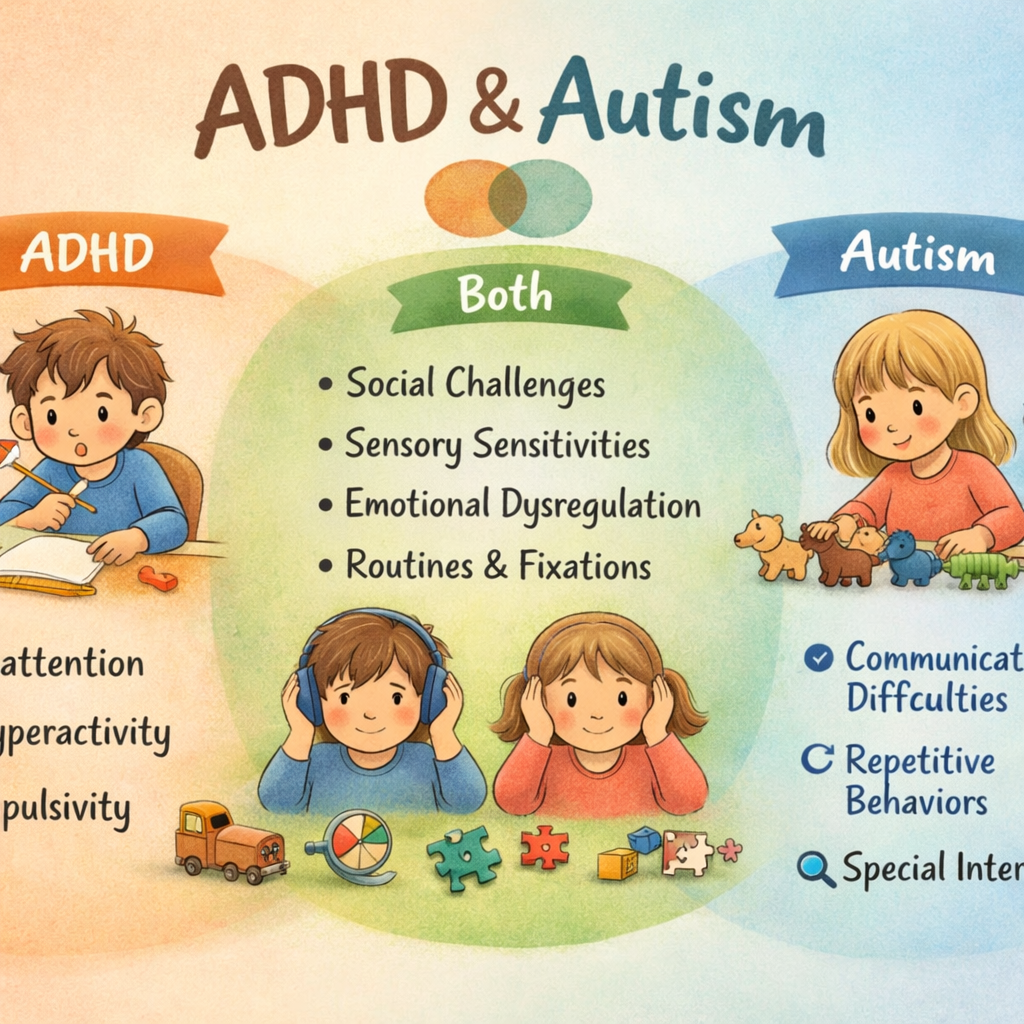
In Australia, getting an accurate diagnosis for ADHD or autism involves a multidisciplinary team of professionals. A health care provider, such as a general practitioner (GP), is usually the first point of contact. They can provide a referral to specialists for a comprehensive assessment.
For children, this team may include a pediatrician, child psychologist, and speech pathologist. They work together to evaluate the child's development, behavior, and communication skills. This collaborative approach is essential for differentiating between conditions and ensuring an early intervention plan is put in place.
For adults, the process may involve a psychiatrist or clinical psychologist. These professionals conduct detailed interviews and use diagnostic tools to assess symptoms and their impact on daily life. Their expertise is crucial for navigating the complexities of adult diagnosis, which can lead to better support in areas like employment and special education.
Conclusion
In conclusion, understanding the key differences between ADHD and Autism Spectrum Disorder is vital for proper diagnosis and support. While both conditions can share overlapping symptoms like challenges with focus and social interactions, the core features and behaviors can vary significantly. By recognizing these distinctions, individuals, families, and professionals can work together to create tailored strategies that address specific needs. It’s essential to approach these disorders with empathy and knowledge, ensuring that those affected receive the appropriate care and understanding.
If you have further questions or need assistance navigating these complexities, don’t hesitate to reach out for consultation or call daar at 02 9133 2500 for expert guidance.
Frequently Asked Questions
Can a person have both ADHD and autism at the same time?
Yes, it is possible for a person to have both ADHD and autism. This is known as a dual diagnosis. Since both are neurodevelopmental conditions, it's not uncommon for an individual to exhibit both ADHD symptoms and autistic traits. A thorough assessment by a health care provider is needed for an accurate diagnosis.
What are the main differences between ADHD and autism symptoms?
The main difference is that ADHD symptoms primarily involve attention deficit and hyperactivity, while Autism Spectrum Disorder is defined by challenges in social communication and the presence of restricted, repetitive behaviors. While both can affect focus, the underlying reasons for the difficulties are distinct for each condition.
Is treatment for ADHD different from treatment for autism?
Yes, treatment options are different. ADHD is often managed with medication and behavioral therapy to improve focus. Treatment for autism focuses on therapies to support social skills and manage sensitivities. A health care provider will tailor a plan based on individual needs, considering potential side effects and goals.
.svg)




.svg)