
.png?width=48&height=48&name=Group%201%20(3).png)
























Oliver (Name changed for privacy) is a bright and energetic boy with a passion for building complex worlds in Minecraft. He lives with his parents and younger sister. Oliver has a diagnosis of ADHD and experiences significant difficulty with emotional regulation, particularly during transitions.
Presenting Issues:
- Explosive Tantrums: Removing the iPad after game time would consistently trigger 30-minute meltdowns involving screaming, throwing the device, and physical aggression towards parents.
- Refusal to Engage: Oliver would often refuse to eat dinner or participate in family activities if he knew screen time was over, sulking in his room for hours.
- Sleep Disruption: The emotional intensity of the evening battles often left Oliver too dysregulated to sleep, leading to late nights and exhausted mornings.
The Challenge
For Oliver’s parents, the iPad had become a double-edged sword. It was the only thing that kept him quiet and focused, but the price they paid when it was time to turn it off was becoming unbearable.
Impact at Home & School:
- At Home: The "transition terror" cast a shadow over the entire evening. Parents would delay asking him to turn it off just to avoid the inevitable explosion. His younger sister was becoming frightened of his outbursts, and the parents' relationship was strained by constant arguments about how to handle the discipline.
- At School: The lack of sleep and the emotional hangover from the night before meant Oliver was often irritable and unfocused in the classroom. Teachers reported he was falling asleep at his desk and struggling to cope with minor frustrations.
- Parental Guilt: Oliver’s mother felt immense guilt, worrying she was "addicting" him to screens, yet feeling powerless to stop the cycle without professional help.
We used to feel like hostages in our own home, afraid to say 'time's up.' The strategies from daar didn't just stop the screaming; they gave us a way to connect with Oliver's world instead of fighting it.
daar Therapy Approach
Oliver’s family turned to daar for a solution. We implemented a Positive Behaviour Support (PBS) plan focused specifically on managing the "dopamine drop" and creating smoother transitions.
Key Interventions Implemented:
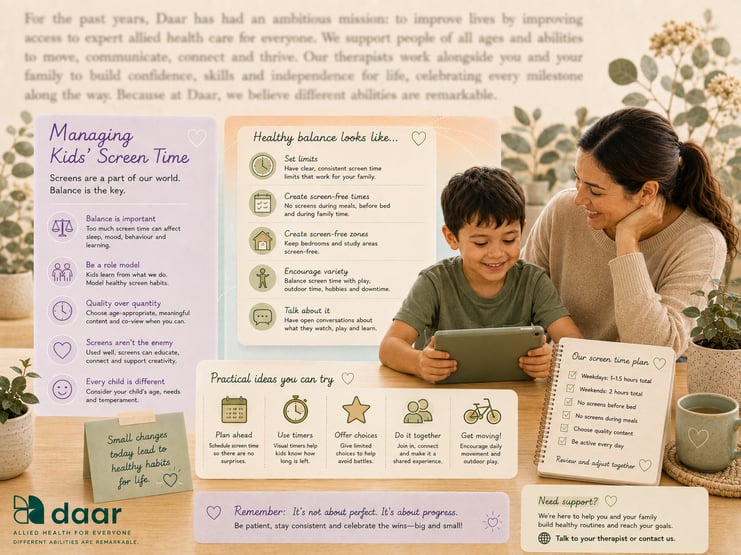
- Visual Countdown Timers: We replaced verbal warnings (which Oliver often ignored) with a visual timer placed right next to him. This allowed him to "see" time running out, reducing the shock of the transition.
- The "Bridge" Activity: We introduced a mandatory "bridge" activity between screen time and dinner. Before the screen went off, Oliver had to choose a high-energy physical activity (like 10 star jumps or a "wrestle" with Dad). This helped metabolize the frustration and shift his brain state.
- Consistent Boundaries: We worked with the parents to create a non-negotiable schedule. Screen time ended at 5:00 PM every day, regardless of behaviour. This consistency removed the "gambling" aspect where Oliver thought he could scream his way to more time.
- Co-Viewing: For the last 5 minutes of his session, a parent would sit with Oliver and ask him to show them what he built. This turned the end of screen time into a moment of connection rather than a demand from an authority figure.
- Token Economy: Oliver earned a "Minecraft Token" for every calm transition. These tokens could be traded for a special weekend movie night or a new Lego set, reinforcing the positive behaviour.
.svg)

Results and Progress
The change didn't happen overnight, but with consistency, the intensity of the battles began to fade. Oliver learned that the end of screen time wasn't the end of the world.
Measurable Improvements:
- Tantrum Duration: The duration of post-screen meltdowns dropped from 30+ minutes to under 2 minutes within 4 weeks.
- Physical Aggression: Incidents of throwing the device or hitting parents were completely eliminated after the second week of the new protocol.
- Sleep Quality: With the evening conflict resolved, Oliver is now falling asleep 45 minutes earlier on average, leading to better focus at school.
- Family Harmony: The family reports a 90% reduction in evening stress levels, and they are now able to enjoy dinner together without tears.
Key Outcomes
Oliver’s success demonstrates that gadget withdrawal tantrums are manageable with the right strategies.
- Biology, Not Bad Behaviour: Understanding the "dopamine drop" helped Oliver’s parents respond with empathy rather than anger, de-escalating the situation.
- Routine is Resilience: The predictable routine gave Oliver the safety he needed to regulate his emotions.
- Connection Over Correction: By joining Oliver in his digital world before asking him to leave it, parents built a bridge of trust that made compliance easier.
reduction in duration of withdrawal tantrums
incidents of physical aggression in last month
earlier sleep onset on average

Conclusion
Screens are a part of modern life, but they don't have to control your family life. At daar, we help families navigate the digital landscape with behaviour therapy for children that is practical, evidence-based, and compassionate.
If the battle for the "off" button is ruining your evenings, let us help you find a better way.
Ready to end the screen time wars?
Contact daar today to learn how our tailored behaviour support plans can bring peace back to your home.



Get access to quality, Efficient, and professional care.
Request a call to find out how daar can help you achieve your health goals.

Leading source of information for allied health news, studies and resources.

We support you to be self-determined and independent, giving you the control and freedom to achieve your individual goals

We provide superior quality, client-centric and innovative treatment to support you to realise your full potential
.svg)




.svg)