
.png?width=48&height=48&name=Group%201%20(3).png)
























Ben (Name changed for privacy) is a bright and energetic boy diagnosed with autism spectrum disorder (ASD) and Generalized Anxiety Disorder. He lives with his parents and younger sister. Ben has a passion for dinosaurs and building blocks but struggles significantly with flexibility and social interactions.
Presenting Issues:
- Aggressive Meltdowns: When routines were disrupted or demands were placed on him, Ben would often lash out physically, hitting or kicking caregivers.
- School Refusal: High anxiety levels led to frequent refusal to attend school, often resulting in morning standoffs that left the whole family distressed.
- Social Isolation: Ben found it difficult to play with peers, often misinterpreting their actions as hostile, leading to withdrawal or conflict.
The Challenge
Ben’s family was living in a state of constant high alert. The unpredictability of his behaviour meant they walked on eggshells, afraid that any small change could trigger a major meltdown.
Impact at Home & School:
- At Home: Mornings were a battleground. The stress of getting Ben to school was affecting his parents' work and their relationship. His younger sister was becoming fearful of his outbursts, retreating to her room whenever Ben became upset.
- At School: Ben was spending more time in the principal's office than in the classroom. Teachers were struggling to manage his aggression and were concerned about the safety of other students. He was falling behind academically, not because of ability, but because he wasn't in class to learn.
- The Cycle: The more Ben acted out, the more negative feedback he received, which only fueled his anxiety and belief that he was "bad."
We felt like we were failing him. The team at daar showed us that Ben wasn't giving us a hard time; he was having a hard time. Shifting our perspective changed everything. We have our happy, curious boy back.
daar Therapy Approach
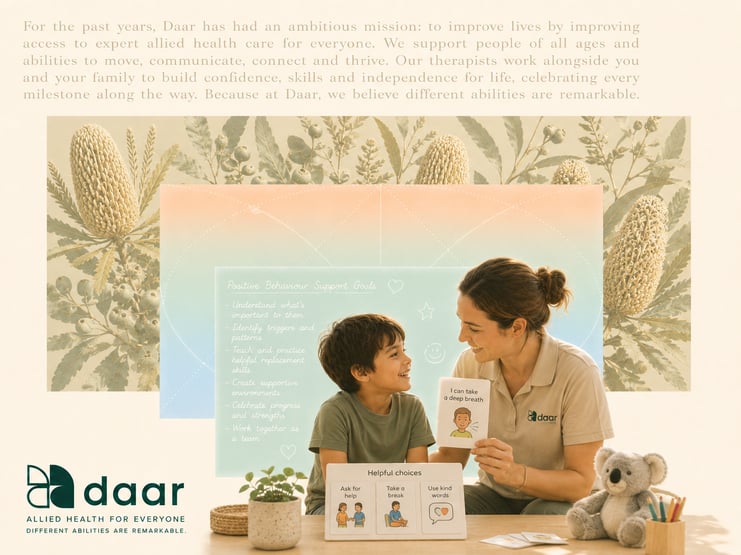
Ben’s family turned to daar for a comprehensive solution. We implemented a Positive Behaviour Support (PBS) plan, grounded in the understanding that behaviour is communication.
Key Interventions Implemented:
- Functional Behaviour Assessment (FBA): We started by observing Ben to understand the "why" behind his aggression. We discovered that his outbursts were often an escape mechanism from overwhelming sensory situations or academic demands he felt he couldn't meet.
- Proactive Strategies: We worked with the school to modify Ben’s environment. This included a visual schedule to provide predictability and a "quiet pass" he could use to take a break before he became overwhelmed.
- Skill Building: We used socialised behaviour therapy to teach Ben emotional regulation. He learned to identify his "volcano" feelings rising and use deep breathing or a sensory toy to cool down.
- Positive Reinforcement: We shifted the focus from punishment to praise. Ben earned "Dino Dollars" for positive behaviours like flexible thinking and gentle hands, which he could trade for extra building time.
- Family Collaboration: We trained Ben’s parents in PBS strategies, ensuring consistency between home and school. They learned to validate his feelings ("I see you're worried") while holding boundaries ("It's okay to be mad, but it's not okay to hit").
.svg)

Results and Progress
Over eight months, the shift from reactive management to proactive support transformed Ben’s life. The cycle of negativity was broken, replaced by a framework of understanding and growth.
Measurable Improvements:
- Reduction in Aggression: Physical aggression incidents dropped by 95%. Ben now uses his words or his "quiet pass" to manage frustration.
- School Attendance: Ben is attending school full-time with no refusal behaviours in the last three months. He walks into class with a smile.
- Social Connection: He has made two close friends at school and was invited to his first birthday party in years.
- Self-Regulation: Ben independently uses his calming strategies 8 out of 10 times when he feels anxious.
Key Outcomes
Ben’s journey illustrates the power of Positive Behaviour Support to change not just behaviour, but lives.
- Empowerment: Ben now has the tools to manage his own emotions. He feels capable and in control.
- Family Harmony: The morning battles are gone. The home is a place of peace and connection again.
- Academic Success: With his anxiety managed, Ben is thriving academically, catching up to his peers and enjoying learning.
reduction in physical aggression incidents
school attendance rate (up from 40%)
new consistent friendships formed at school

Conclusion
Behaviour is a message, and Positive Behaviour Support helps us decode it. By addressing the root causes and teaching new skills, we can help children like Ben move from surviving to thriving. daar is committed to guiding families through this comprehensive process.
If you are struggling with challenging behaviours, know that there is a positive path forward. daar is here to walk it with you.
Ready to build a better future?
Contact daar today to learn more about our comprehensive behaviour therapy for children and start your journey to positive change.



Get access to quality, Efficient, and professional care.
Request a call to find out how daar can help you achieve your health goals.

Leading source of information for allied health news, studies and resources.

We support you to be self-determined and independent, giving you the control and freedom to achieve your individual goals

We provide superior quality, client-centric and innovative treatment to support you to realise your full potential
.svg)




.svg)