
.png?width=48&height=48&name=Group%201%20(3).png)























9 March, 2026

What Support Can Autistic Children Get in School?
Key Highlights
- Autistic children can thrive in mainstream education with the right support services and a positive learning environment.
- Schools can provide classroom adjustments like visual schedules, quiet spaces, and sensory tools to help students.
- Specialist school staff, including support teachers and counselors, play a key role in meeting the individual needs of children on the autism spectrum.
- Individual Education Plans (IEPs) are essential for outlining specific goals and accommodations.
- Collaboration between families and schools improves social skills and academic outcomes.
- Government programs and community organizations offer additional support for families and schools.
Introduction
Autistic children can flourish in school when they receive the proper support. Understanding the available options and how to access them is key to helping young people on the autism spectrum thrive alongside their peers. Since support varies, it’s important to know what you can ask for. This guide explores the different ways schools can foster inclusive education and help your child meet their unique needs, ensuring they have every opportunity to learn and grow.
Types of Support Available for Autistic Children in Mainstream Schools
Every child on the autism spectrum is different, which is why a mainstream school can offer a variety of support strategies. These can range from in-class adjustments to dedicated support staff who help students navigate their school day. The goal is to create an environment where your child feels understood and capable.
The best way to find out what is available is to ask your child's school directly. By working together, you can tailor support to your child’s changing needs. Let's look at some common accommodations and the specialist staff who can help implement them.
Classroom accommodations and adjustments for autistic students
Australian law requires schools to make reasonable adjustments for students with disabilities, including autism. These modifications don’t lower educational standards but adapt the learning process to meet your child’s needs, fostering an inclusive environment.
Simple changes, like visual aids, can reduce anxiety and enhance engagement. Such accommodations help students become active participants in their education.
Common classroom adjustments include:
- Visual schedules and cue cards for clear expectations
- Access to quiet spaces for sensory breaks
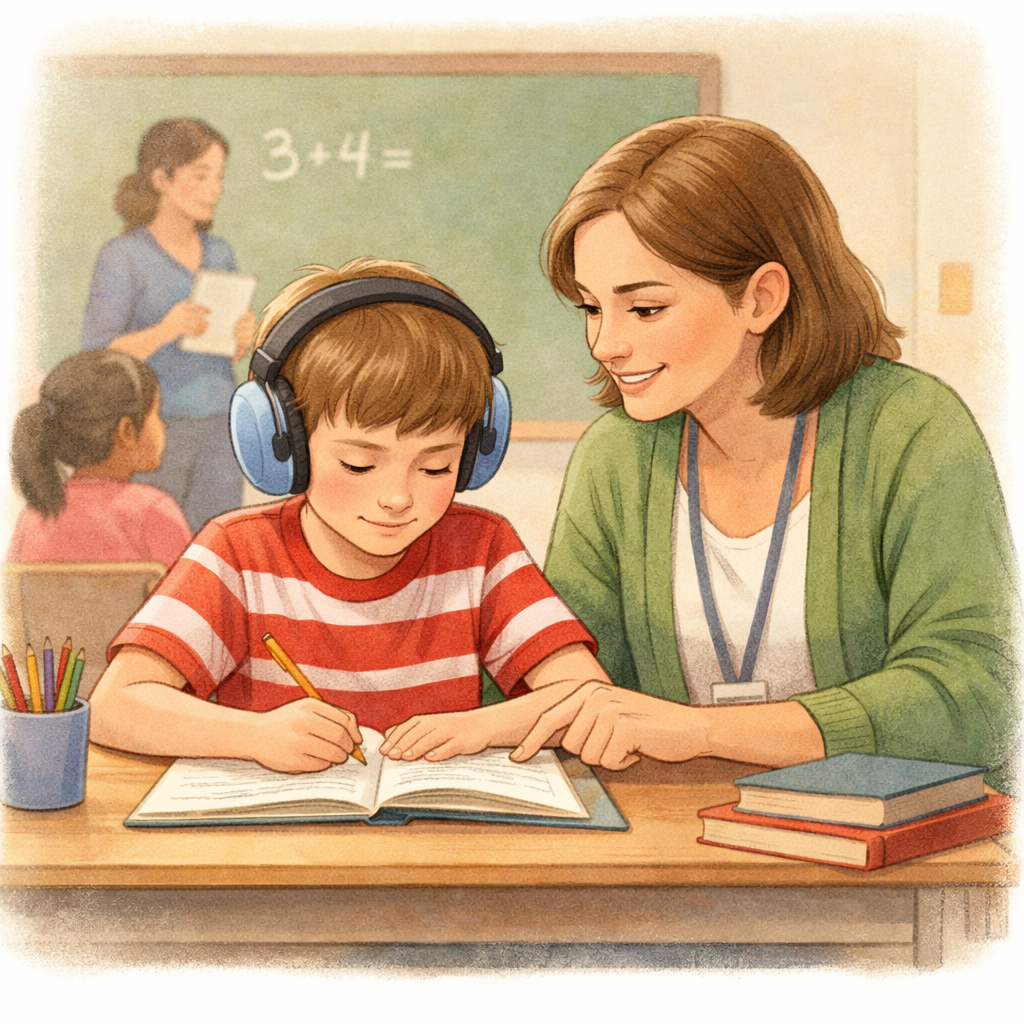
- Noise-canceling headphones to minimize distractions
- Preferential seating for better focus
Specialist staff and their roles in supporting autistic children
Schools employ specialist staff to support students with additional needs. These professionals collaborate with teachers, families, and students to address individual requirements—essential for effective strategies and a supportive school environment.
Support staff, from classroom aides to counselors, bridge home and school. They assist with academics and emotional well-being, ensuring comprehensive support. Some schools also use ABA therapy for specific behavioral goals.
Key roles include:
- Learning and Support Teachers: Provide specialist help to students and work with teachers to address needs.
- Student Learning Support Officers (SLSOs): Assist under teacher supervision with routines and classroom activities.
- School Counselors: Help students facing challenges and offer psychological assessments.
Support programs and services offered by Australian schools
Australian schools provide various support programs and services for students with additional needs, guided by frameworks like the Disability Standards for Education to ensure equal opportunities. Many schools partner with organizations such as the National Autistic Society for resources and training.
Support can range from specialized learning programs to help navigate school life. Availability varies, so check with your school about specific offerings.
Each state and territory also has its own government support:
|
State/Territory |
Government Support Program |
|---|---|
|
NSW |
Inclusive Learning Support – NSW Government |
|
VIC |
Support at School for Students with Autism – VIC Government |
|
QLD |
Supports at School for Students with Autism – QLD Government |
|
ACT |
Students with Disability – ACT Government |
|
SA |
Supporting Children and Students on the Autism Spectrum – SA Government |
|
WA |
Children with Special Education Needs – WA Government |
|
NT |
Student Wellbeing and Inclusion – NT Government |
|
TAS |
Support in Schools for Students with Disability – TAS Government |
Creating an Inclusive Learning Environment
Creating an inclusive learning environment is about more than just physical adjustments; it's about fostering a culture of acceptance and understanding throughout the school community. A supportive environment helps autistic students feel safe, valued, and ready to learn. This involves the entire school, from the principal to the students.
When teachers and staff are trained in inclusive practices, they can better support every student. The goal is to build a classroom where diversity is seen as a strength. Let’s explore some practical strategies teachers can use to foster inclusion and address specific needs.
Strategies for teachers to foster inclusion in the classroom
Teachers can foster inclusion by adopting flexible teaching methods and ongoing professional development about autism and support strategies. Recognizing each student's unique strengths and challenges allows teachers to tailor their approach, such as using varied explanations or breaking tasks into steps.
Effective strategies include:
- Setting clear expectations and using straightforward language.
- Applying positive reinforcement for desired behaviors and effort.
- Maintaining structured routines for security.
- Pursuing continuous training in inclusive teaching practices.
Visual supports and sensory considerations
Addressing sensory needs is key to creating a comfortable learning environment for autistic students. Many experience sensitivities to bright lights, loud noises, or crowded spaces, which can cause sensory overload. The right support helps prevent this and improves focus.
Visual supports are especially helpful. Tools like visual schedules and picture instructions make routines predictable, reduce anxiety, and ease transitions.
Common supports include:
- Visual Schedules: Use images or symbols to outline daily activities.
- Sensory-Friendly Classrooms: Feature non-fluorescent lighting and quiet zones.
- Sensory Breaks: Scheduled time for calming activities in a designated space.
Building peer awareness and encouraging social interaction
Developing social skills is essential for every child’s school experience. For autistic students, social interactions can be challenging, but schools can help by raising peer awareness and creating opportunities for positive connections. This reduces social exclusion and encourages friendships.
Structured activities and targeted training are effective. Social skills programs teach communication and social norms in clear, accessible ways. School-wide autism awareness fosters a more accepting peer environment.
Schools can support social interaction through:
- Peer Mentors: Pairing autistic students with peers to promote integration and support.
- Social Skills Training: Using role-playing, social stories, and activities to teach social rules.
- Interest-Based Clubs: Creating clubs around shared interests provides natural opportunities for connection.
Individual Education Plans (IEPs) and Their Role
Individual Education Plans (IEPs) play a crucial role in creating a supportive environment for autistic students. These tailored plans outline specific learning goals and highlight the unique needs of each child, ensuring they receive appropriate support services. Utilizing visual aids, social skills training, and effective teaching methods, IEPs foster an inclusive education experience. Moreover, open communication between school staff and families enables a collaborative approach, promoting emotional regulation and academic success while facilitating the development of essential social interactions.
What is an IEP and how does it help autistic students?
An Individual Education Plan (IEP) is a tailored document designed to address the unique educational needs of autistic students. It outlines specific goals, accommodations, and services to support their learning, ensuring they receive personalized attention and resources essential for academic success.
How are IEP goals set and reviewed in Australian schools?
IEP goal setting and review in Australian schools is a collaborative process tailored to each student's needs. It starts with a thorough assessment involving educators, specialists, the student, and their family.
Goals are SMART (specific, measurable, achievable, relevant, time-bound), focusing on areas like academics, communication, social skills, or behavior to improve educational outcomes. Family involvement ensures goals are meaningful both at school and home.
IEPs are reviewed regularly—usually once per term or semester—to monitor progress and adjust as needed. The process includes:
- Collaborative meetings with the student’s support team
- Ongoing data collection and progress monitoring
- Regular reviews to update goals and strategies
Involving families and education teams in IEP development
The active involvement of families in the IEP process is essential for creating a successful plan. As a parent or caregiver, you have a deep understanding of your child’s needs, strengths, and challenges. Sharing this knowledge with the education team ensures that the IEP is truly personalized and effective.
A strong partnership between the family and the school community is built on open communication and mutual respect. When everyone works together, the child benefits from consistent support across all environments. This collaborative spirit helps create a plan that is not just a document but a dynamic tool for success.
To ensure effective family involvement, it is important to:
- Encourage parents to share insights about their child’s needs at home.
- Maintain regular, open communication between home and school.
- Work together to set and review goals, celebrating successes along the way.
Collaborating with Families for Positive Outcomes
A strong partnership between schools and families is one of the most powerful tools for supporting an autistic child's education. When everyone works together using a collaborative approach, it creates a consistent and supportive network for the student. Open communication and shared goals are at the heart of this partnership.
This collaboration allows for strategies like positive reinforcement to be used consistently at home and school, reinforcing progress. It also empowers families to become effective advocates for their children. Let's examine how communication, transition planning, and advocacy contribute to this vital partnership.
Communication between schools and families
Effective and open communication is the foundation of a successful school-family partnership. When parents and teachers share information regularly, they can better understand and respond to a child’s needs in the school environment. This collaborative approach ensures that everyone is aligned in their efforts to support the student.
A year advisor or a designated contact person can often serve as a bridge, making it easier to discuss progress, concerns, and strategies. Frequent updates, whether through meetings, emails, or a communication book, help maintain a consistent support system for the child. This teamwork is key to fostering strong communication skills in the student as well.
To build a strong communication channel, consider these practices:
- Establish a primary contact person at the school.
- Schedule regular check-in meetings to discuss progress and challenges.
- Share successes and strategies that work well at home.
Supporting transitions from primary to high school
The transition from primary to high school can be especially challenging for students on the autism spectrum due to changes in routine, environment, and expectations. Proactive preparation is essential to help students manage this change and support their emotional well-being.
Planning should start early and involve the student, family, and staff from both schools to ensure a smooth, predictable process. Familiarizing the student with their new high school can greatly reduce anxiety.
Effective strategies include:
- Organizing orientation visits to meet teachers and explore the campus
- Using visual supports like maps and schedules to explain routines
- Creating transition plans detailing specific supports for the student
Advocacy and partnership for ongoing student success
Advocacy means speaking up for your child to ensure their needs are met. When families and schools work together, advocacy becomes a collaborative process, providing consistent support throughout your child’s education.
As a parent, you are your child's main advocate. Stay informed about your rights and available support options. Request meetings, ask questions, and partner with the school to find solutions. You can also advocate for broader changes, like increased autism training for teachers.
For effective advocacy:
- Request all necessary supports first, then collaborate to prioritize.
- Communicate openly and often with staff.
- Address concerns as your child's needs change so strategies can be adjusted.
Accessing Government and Community Support
Beyond the school gates, a wealth of government and community support is available to assist autistic children and their families. Organizations like the National Autistic Society and Autism Speaks provide valuable resources, information, and advocacy. Government programs also offer funding and services to ensure students receive the support they need.
Navigating these systems can sometimes feel complex, but they are designed to provide additional layers of support. Knowing where to look and what you are eligible for can make a significant difference. Let's explore some national programs and how to navigate funding opportunities.
National and state support programs for autistic students
In Australia, national and state programs support autistic students, guided by the Disability Standards for Education. These standards require schools to make reasonable adjustments so students with disabilities can participate equally.
Organizations like the National Autistic Society and Autism Speaks provide resources—from advocacy toolkits to information on local services—helping families find support and community.
State and territory governments also offer:
- Funding for teacher training and resources
- Access to specialist support teams across schools
- Guidelines for implementing inclusive practices
Navigating funding opportunities and eligibility in Australia
Navigating funding for your child can feel overwhelming, but understanding the basics helps. In Australia, eligibility usually depends on a formal diagnosis and an assessment of your child’s needs, supported by the Disability Discrimination Act 1992.
Start by documenting your child’s diagnosis and its impact on learning. This is required when applying for school accommodations or programs like the National Disability Insurance Scheme (NDIS).
Key steps:
- Get comprehensive documentation of your child’s autism diagnosis from a healthcare provider.
- Work with the school to assess needs and determine necessary accommodations.
- Use government websites and advocacy services to learn about eligibility and applications.
Conclusion
Supporting autistic children in school requires a comprehensive approach with strategies, accommodations, and resources. Inclusive environments and Individual Education Plans (IEPs) help meet each student’s unique needs. Collaboration with families and community support further enhances care, empowering autistic students to thrive academically and socially.
For more guidance or information, contact us for a consultation or call daar at 02 9133 2500.
Frequently Asked Questions
How are accommodations for autistic children decided in Australian schools?
Accommodations are decided through a collaborative process involving school staff, parents, and specialists. Based on the Disability Discrimination Act, schools make reasonable adjustments to meet a student's individual needs. This can include changes to daily routines, learning materials, and the classroom environment to ensure equitable access to education.
What support is available during transitions to high school?
During transitions to high school, support services include orientation visits, visual schedules of new routines, and peer mentoring programs. These proactive steps help reduce anxiety and support emotional regulation. Schools work with families to create personalized transition plans that make the move to high school as smooth as possible.
How can schools support autistic children’s social skills and friendships?
Schools can support social skills by offering structured social skills training, using social stories to explain social situations, and creating peer awareness programs. They can also facilitate structured social interactions through interest-based clubs and peer mentoring, which helps reduce social exclusion and encourages the development of friendships.
.svg)




.svg)