
.png?width=48&height=48&name=Group%201%20(3).png)























9 March, 2026

Engaging Activities to Replace Screen Time for Kids

Key Highlights
- Discover engaging alternative activities to replace your child's screen time and support their development.
- Learn why finding a healthy balance between digital media and real-world experiences is crucial for child development.
- Explore fun ideas for physical activity, creative projects, and family bonding that don't involve screens.
- Understand the impact of excessive screen time on mental health, sleep, and social skills.
- Get practical tips for setting screen time rules and creating play zones in your home.
- Involve your children in choosing activities to build a healthy relationship with technology.
Introduction
In today's world, screens are everywhere, making it a challenge for parents to manage their kids' digital habits. While technology offers benefits, excessive screen time can affect young children and their development. Finding a healthy balance is key. It's not about banning screens entirely but about integrating them wisely into your child's life, as recommended by the Child Mind Institute. This guide offers practical ways to reduce screen reliance by introducing fun, engaging activities that promote well-being, creativity, and family connection, helping you navigate the digital age with confidence.
Engaging Fun Activities to Replace Screen Time for Kids
Reducing screen time for young kids can seem challenging, but it creates opportunities for fun and connection. Engaging activities can make kids forget about their devices, helping them develop a healthy relationship with technology.
These alternatives support growth by encouraging movement, social interaction, and creativity. Here are some ideas to help your family enjoy screen-free fun together.
1. Outdoor Adventures – Parks, Nature Walks, and Backyard Games
Getting outdoors helps break screen habits and supports your child’s growth through exercise and exploration. Activities like park visits, nature walks, or backyard play improve motor skills, boost movement, and lead to better sleep. Be mindful of blue light exposure from devices to promote healthier screen habits. If you're looking for free resources to manage screen time, parents can consider printable screen time charts available online, use built-in parental controls on devices, or explore educational websites like Common Sense Media for tips and tools. These options offer guidance and practical ways to help parents set healthy boundaries around digital device use while encouraging more outdoor activities.
Time in nature also reduces stress and sharpens focus. Kids can run, jump, and play freely—building social skills that screens can't provide and promoting valuable face-to-face interaction. To encourage a balanced digital technology routine for your child, consider using checklists that include daily outdoor activities, limits on screen time, and scheduled social play. For example, you can include items such as: spend at least one hour outside, complete all homework or chores before leisure screen use, and participate in one in-person activity with friends or family each day. These steps help balance screen exposure with essential real-world engagement. Try these simple ideas: Go on a nature scavenger hunt.
Try these simple ideas:
- Go on a nature scavenger hunt.
- Take a family bike ride or walk.
- Play tag or set up an obstacle course.
- Have a picnic at the park.
2. Creative Arts and Crafts Projects at Home
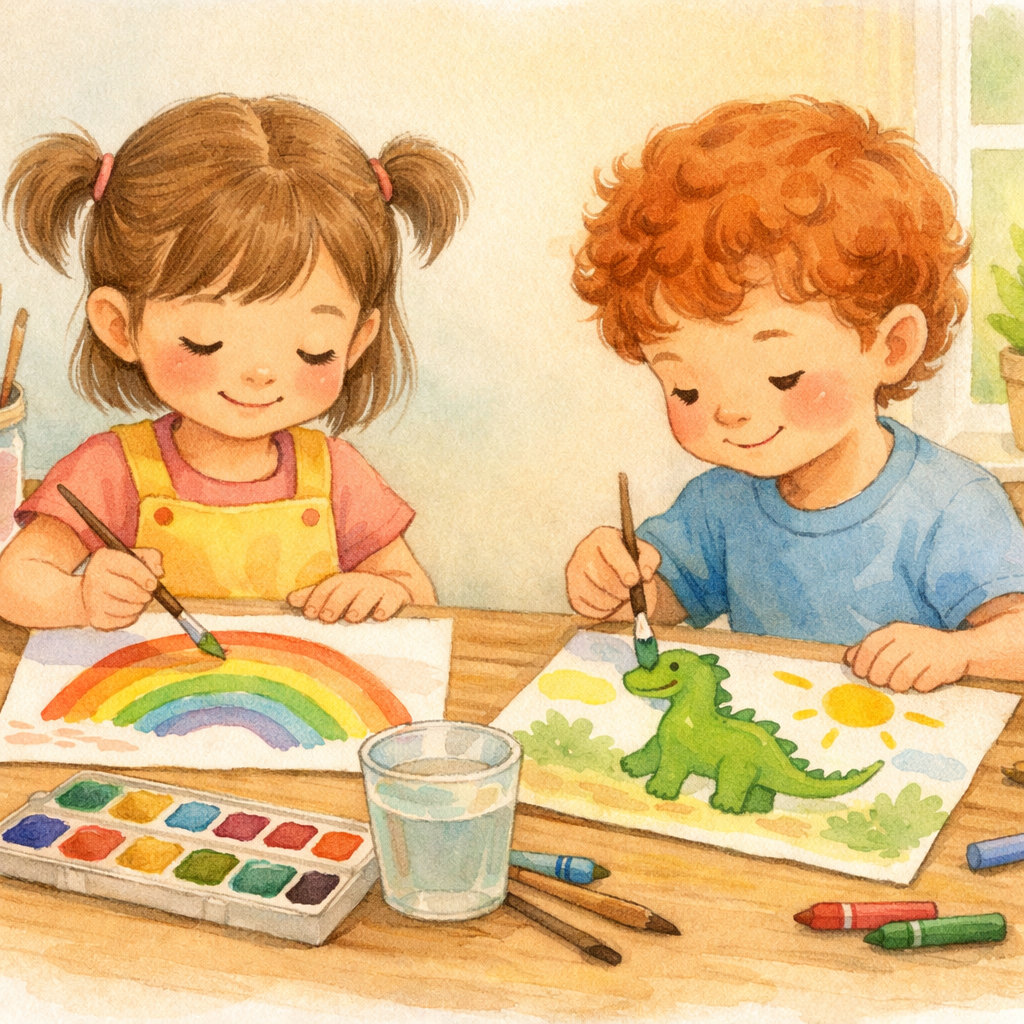
Arts and crafts are a great screen-free way to spark your child’s creativity while also providing a break from excessive child’s screen time. Hands-on projects let kids express themselves, experiment with materials, and bring their ideas to life. This play builds fine motor skills and supports executive function as children plan and complete tasks.
Creating together also strengthens family bonds. Unlike passive screen time, making art actively engages both mind and body, helping balance digital habits with real-world activities, as recommended by the American Academy of Pediatrics.
Try these simple arts and crafts at home:
- Build a fort with cardboard boxes and blankets.
- Make characters from play-dough or clay.
- Paint using watercolors or finger paints.
- Create a collage with old magazines and craft paper.
3. Family Board Game or Card Game Nights
Swapping social media platforms scrolling for a family board game night is an excellent way to connect and have fun. Board games and card games create an environment for friendly competition and teamwork, which helps build strong social skills. They teach children about taking turns, following rules, and being a good sport, all while strengthening your family's healthy relationship.
Unlike the isolation that can come with individual screen use, game nights bring everyone together for a shared experience, helping to alleviate potential sleep issues. It’s a simple way to set aside digital distractions and focus on each other. You can even set time limits for the evening to make it a special, anticipated event each week.
Looking for some game night inspiration? Consider these options:
- Classic board games like Monopoly or Scrabble.
- Cooperative games where you work together to win.
- Simple card games like Uno or Go Fish.
- Strategy games that encourage problem-solving.
4. Cooking and Baking Together as a Family
Transforming your kitchen into a family activity hub is a fun way to cut down on screen time, including TV time. Cooking and baking together offer hands-on learning—teaching kids life skills like following directions, measuring, and kitchen safety. These activities also encourage communication, teamwork, and social skills.
While not always strenuous, tasks like stirring, kneading dough, and supervised chopping keep kids active. Following a recipe boosts planning, organization, and focus—a great workout for executive function. Plus, it’s a rewarding way to connect as a family.
Try these kid-friendly cooking ideas:
- Bake cookies or a simple cake together.
- Make homemade pizzas with personalized toppings.
- Prepare an easy family meal as a team.
- Mix up a fruit salad for a healthy snack.
5. Sports, Dance, and Movement Activities
Getting your child's body moving is one of the best antidotes to excessive screen time. Sports, dance, and other movement activities are essential for healthy development, both physically and mentally. Regular physical activity helps build strong muscles and bones, improves coordination and motor skills, and supports overall mental health by releasing endorphins.
Engaging in these activities can also boost social skills. Team sports teach collaboration and communication, while dance classes can build confidence in a group setting. Even just having a spontaneous dance party in the living room can be a fun way to connect and blow off steam.
Here are some ways to get your family moving:
- Sign up for a local youth sports team like soccer or basketball.
- Find a dance or gymnastics class your child might enjoy.
- Go for a family bike ride or hike on a local trail.
- Hold a dance party in your living room to your favorite playlist.
6. Building and Construction Play – LEGO, Blocks, and Forts
Building activities engage children’s minds and hands, promoting healthy development without screens. Playing with LEGOs, video games, blocks, or building a pillow fort boosts creativity, problem-solving, and spatial awareness. These hands-on tasks also strengthen fine motor skills and hand-eye coordination.
Such play supports executive function—kids plan, make decisions, and adapt when things don’t go as expected in a predictable space. It teaches cause and effect in a fun, low-pressure way. Balancing structured activities with free play is important.
Try these simple building ideas:
- Challenge your child to build the tallest block tower.
- Use LEGOs to create a vehicle or favorite animal.
- Build a cozy blanket fort together.
- Make a castle or robot from cardboard boxes.
7. Reading Aloud and Storytelling Sessions
Cuddling up with a good book is a timeless, screen-free activity that greatly benefits child development, especially compared to much screen time. Reading aloud together strengthens your bond, creates lasting memories, and boosts vocabulary, listening skills, and attention span—benefits digital media often lacks.
Storytelling sessions, where you or your child invent stories, also ignite imagination and creativity. This shared activity builds social skills and emotional awareness as you explore characters and scenarios. Additionally, making reading and storytelling a part of your routine can promote personal hygiene by reducing unhealthy screen time and encouraging a lifelong love of books.
Tips to make reading and storytelling special:
- Visit the local library and let your child choose books.
- Create a cozy reading nook at home.
- Take turns reading from a chapter book each night to help limit screen time and encourage more engaging activities.
- Start a story and have each family member add a sentence.
8. Science Experiments and DIY Discovery Kits
Bring the thrill of discovery into your home with simple science experiments. These hands-on activities are a great way to make learning fun and can easily replace time spent on screens. Conducting experiments teaches children about basic life functions and scientific principles, while also encouraging them to be mindful of sharing personal information in online environments. It's a fantastic boost for their mental health, sparking curiosity and a sense of accomplishment.
Planning and executing an experiment also requires focus and follow-through, which helps develop executive function skills. While some experiments require more physical activity than others, they all get kids up and engaged with the world around them, much like virtual reality can enhance learning experiences. This kind of interactive learning is a powerful part of a child's life.
Try these easy and fun science experiments at home:
- Make a classic volcano with baking soda and vinegar.
- Grow crystals using sugar and water.
- Build a simple circuit with a battery, wires, and a lightbulb.
- Create slime with household ingredients.
9. Music Time – Singing, Instruments, and Dance Parties
Making music together is a joyful and energetic way to disconnect from screens, especially compared to playing online games. Whether it’s singing your favorite songs, playing with simple instruments, or having a full-blown dance party, music engages the body and mind. This form of physical activity is great for mental health, helping to lift moods and relieve stress for the whole family.
Spending time creating music helps find a healthy balance in your child's day. It requires listening, rhythm, and coordination, which can support executive function. Best of all, it's an activity you can do anywhere, anytime, without any special equipment, allowing you to manage the amount of time you spend on screens. It's all about having fun and expressing yourselves together.
Here are some musical ideas to get you started:
- Put on a playlist and have a family dance party.
- Make your own instruments using household items like pots and pans.
- Sing karaoke to your favorite tunes.
- Learn to play a simple song on an instrument like a ukulele or keyboard.
10. Gardening or Plant Care as a Family Activity
Gardening is a great family activity that connects kids with nature and teaches life skills. Caring for plants gets everyone outdoors, encourages teamwork, and builds patience and responsibility. Planting seeds and watching them grow also boosts mental health.
Time in the garden helps develop social skills through shared tasks like digging and watering. It’s a peaceful, screen-free way to spend time together.
Start your family gardening adventure:
- Plant a small vegetable or herb garden in the backyard.
- Grow potted plants on a windowsill or balcony.
- Visit a nursery to choose seeds or seedlings together.
- Let your child care for their own plant.
Tips for Parents to Encourage Screen-Free Fun
Encouraging less screen use is about more than just offering alternatives; it involves creating a supportive environment for new habits to take root. Start by setting limits on screen time and communicating the reasons behind these rules. Striking a healthy balance is a family effort, and it's important to lead by example with your own screen time habits, ensuring that everyone in the family learns to set limits effectively.
Using tools like parental controls can help enforce boundaries, but the real magic happens when you actively engage with your kids in screen-free activities. Below, you'll find some of the most effective ways to create family rules that stick, setting up inviting play areas, and involving your kids in the planning process to make the transition to less screen time a positive one.
Creating Family Screen Time Rules That Work
Establishing clear and consistent family screen time rules is the cornerstone of managing digital device use. The key to making these rules work is to create them together as a family. When kids have a say in setting limits, they are more likely to understand and respect them. Discuss why time limits are important, addressing everything from sleep to social media, and agree on consequences for not following the rules.
Parental controls can be a helpful tool to enforce the time limits you’ve agreed upon, especially for younger children. However, open communication is just as important. Make sure your rules are realistic and flexible enough to adapt to special circumstances. For example, you might have different rules for weekdays versus weekends.
Here is a sample table you can adapt for your family's screen time plan:
|
Rule Category |
Guideline |
|---|---|
|
Screen-Free Times |
No screens during meals or one hour before bedtime. |
|
Screen-Free Zones |
No devices in bedrooms overnight. |
|
1 hour on school days, 2 hours for older children on weekends. |
1 hour on school days, 2 hours on weekends. |
|
Content Rules |
Only watch or play age-appropriate, pre-approved shows and games. |
|
Earning Screen Time |
Complete homework and chores before screen time is allowed. |
Setting Up Inviting Play Zones in Your Home
Creating dedicated play zones at home makes screen-free activities involving electronic devices more appealing. When toys, art supplies, and books are organized and easy to reach, kids are more likely to use them independently. A defined play space removes guesswork and encourages creativity or active play.
These zones don’t have to be big or elaborate—a small corner with a bookshelf and beanbag can be a cozy reading nook, while a table set aside for crafts can spark creativity. The goal is to balance your home environment so that opportunities for physical activity, imaginative play, and the avoidance of inappropriate content are as available as screens. This structure also helps children build executive function skills by organizing their materials and managing playtime.
Ideas for creating play zones:
- Establish a “quiet corner” with books and pillows, where kids can relax and enjoy their favorite show during downtime.
- Create a “building zone” with LEGOs or blocks.
- Establish a “quiet corner” with books and pillows.
- Keep a basket of balls and outdoor toys near the door for easy access.
Involving Kids in Choosing and Planning Activities

One of the best ways to encourage screen-free fun is to involve your kids in planning activities. When children help choose what to do, they're more excited and engaged. This teamwork also strengthens your relationship and shows you value their opinions, and it can help prevent kids from spending too much time on devices.
Brainstorm screen-free ideas together, making sure to consider each child’s interests with guidance from a clinical psychologist. This process builds social skills like negotiation and compromise and teaches that family fun is a team effort—important for healthy development.
Ways to involve your kids:
- Make a “boredom buster” jar with activity ideas from everyone.
- Hold a weekly family meeting to plan special activities.
- Let each child be the “activity director” for a day.
- Offer simple choices, like “Do you want to go to the park or bake cookies?”
Conclusion
Replacing screen time with engaging activities benefits both kids and families, strengthening bonds and promoting a healthier lifestyle that is essential for your child’s life. Outdoor adventures, creative projects, and family game nights offer enriching experiences that support your child’s development. Setting clear screen time rules and creating inviting play spaces make these options more appealing. The goal is to inspire curiosity, creativity, and connection without digital distractions.
For personalized strategies, contact us for a consultation or call daar at 02 9133 2500 today!
Frequently Asked Questions
How can I tell if my child is addicted to screens?
Signs of screen addiction can include irritability when devices are taken away, a loss of interest in other activities, and dishonesty about screen use. You may also notice negative impacts from excessive screen time, such as declining sleep quality, shorter attention spans, or changes in their mental health like increased anxiety; the key is finding the right balance in screen time management.
What are some strategies for reducing screen addiction in neurodivergent children?
For neurodivergent children, including autistic children, focus on their individual needs rather than strict limits. Use predictable routines and visual timers to manage transitions away from screens and engage them in online communities. Collaborate with them to find appealing alternatives. While parental controls can help, a supportive and understanding approach that respects their need for predictability is often more effective.
What are some fun outdoor activities for kids to replace screen time?
Fun outdoor adventures and engaging offline activities are a great way to increase physical activity and replace screen time. Try going on a nature scavenger hunt, having a picnic in the park, riding bikes, or playing classic backyard games like tag. These activities boost social skills and are vital for healthy child development.
.svg)




.svg)