
.png?width=48&height=48&name=Group%201%20(3).png)
























19 May, 2026

Transforming Lives Through Science and Empathy: Your Guide to Becoming a Behaviour Support Practitioner
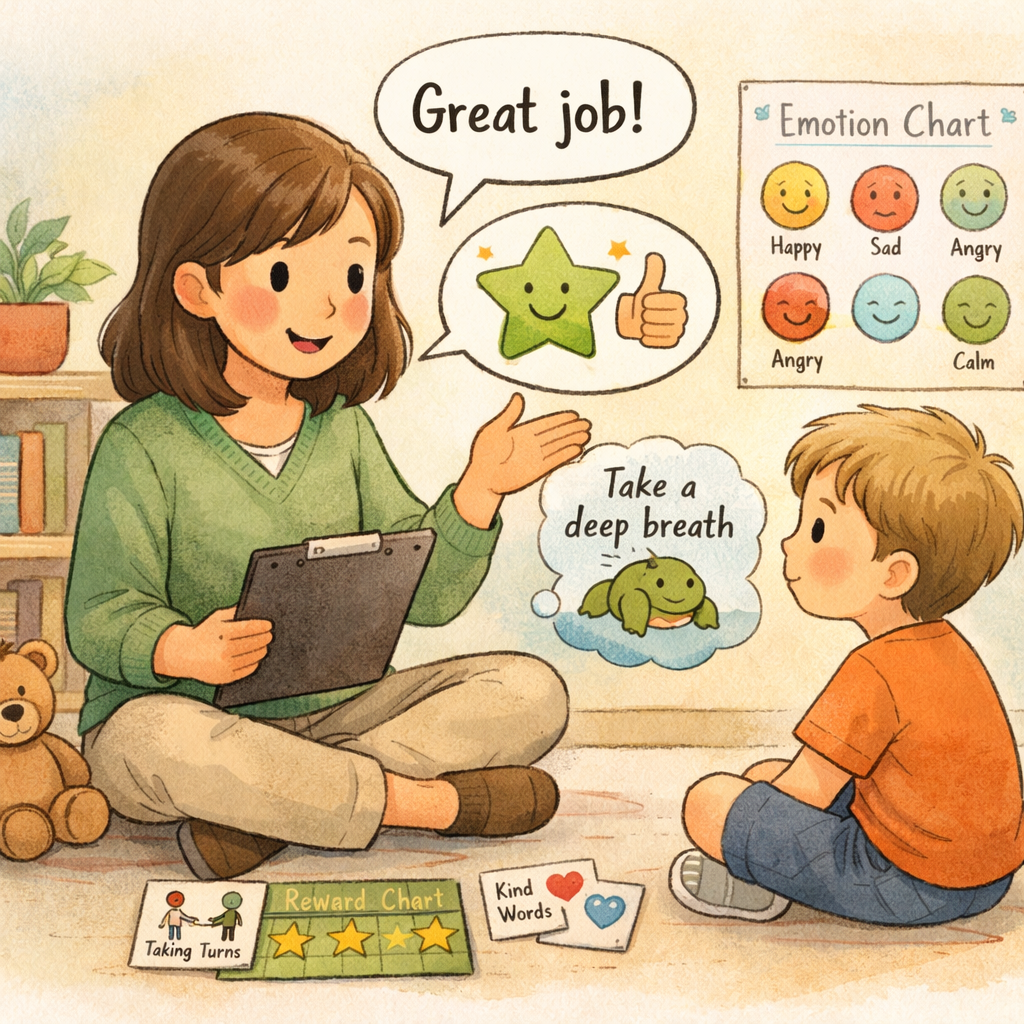
The Australian disability landscape is experiencing a profound evolution. With the maturation of the National Disability Insurance Scheme (NDIS), there is a resounding national call for higher standards of care, greater participant autonomy, and a fierce commitment to upholding human rights. At the forefront of this movement is a highly specialised, deeply compassionate, and analytically rigorous professional: the Behaviour Support Practitioner and speech pathology specialist.
But what exactly is a Behaviour Support Practitioner? What do they do on a day-to-day basis? And if you are passionate about advocating for individuals with disabilities, how do you leap to become one?
Whether you are already working in the disability sector, completing your undergraduate degree in allied health, or contemplating a pivotal career change, this comprehensive guide will unpack everything you need to know. We will explore the critical definitions provided by Behaviour Support Practitioners Australia (BSPA), the regulatory landscape of the NDIS, and the gold-standard educational pathways to get you there—with a special focus on the Master of Applied Behaviour Analysis at Monash University.
Part 1: Defining the Role — What is a Behaviour Support Practitioner?
To understand the role, we must first look at the official definitions that guide the industry. According to Behaviour Support Practitioners Australia (BSPA), Behaviour Support Practitioners (often referred to as PBS practitioners) are professionals who assess the environmental, social, and psychological influences on a person’s behaviour. Their overarching goal is twofold: to design interventions that increase a person’s overall quality of life, and to safely reduce behaviours of concern.
Unlike traditional disciplinary models that simply sought to punish or suppress "bad" behaviour, the modern practitioner operates on the philosophy of Positive Behaviour Support (PBS). PBS is rooted in the understanding that all behaviour serves a function, especially when addressing behavioural challenges. It is a form of communication. When an individual with a disability exhibits a challenging behaviour, it is often because they lack a more conventional way to communicate a need, express physical pain, or escape an overwhelming sensory environment.
Who Can Become a Practitioner?
The beauty of this profession is its multidisciplinary nature. BSPA highlights that practitioners do not come from a single professional background. They are a diverse cohort comprising:
- Allied Health Professionals: Such as occupational therapists, speech pathologists, and psychologists.
- Developmental Educators: Experts in disability support and policy.
- Behaviour Analysts: Professionals meticulously trained in the science of human behaviour.
- Teachers and Social Workers: Individuals with a deep grounding in education and community welfare.
What Do They Actually Do?
The day-to-day work of a practitioner is dynamic, challenging, and incredibly rewarding. At the core of their duties is the Functional Behavioural Assessment (FBA), which is part of the functional behaviour assessments used by practitioners. The practitioner acts as a behavioural detective, gathering data through direct observation, interviews with family, and reviews of incident reports. They seek to understand the antecedents (what triggers the behaviour) and the consequences (what sustains the behaviour).
Following the assessment, they write a comprehensive Behaviour Support Plan (BSP). According to BSPA, this plan includes a range of tailored components:
- Physical Environment Improvements: Altering a room to reduce noise or visual clutter.
- Communication Approaches: Introducing tools like picture exchange systems or speech-generating devices.
- Stimulus Management: Proactively removing known triggers.
- Skill Teaching: Teaching the individual new, functional, and socially acceptable behaviours to replace the challenging ones.
A massive part of a practitioner's job is collaborative capability building. They do not just write a plan and walk away; they spend hours measuring behaviour changes and painstakingly training the support network—family members, support workers, and educators—to implement the strategies effectively.
Part 2: The NDIS Landscape and the Protection of Human Rights
To fully grasp the gravity of the Behaviour Support Practitioner’s role in Australia, you have to understand the regulatory ecosystem they inhabit: the NDIS Quality and Safeguards Commission.
Behaviour support is considered a high-risk, high-skill area of practice. Under the NDIS, practitioners are not just clinicians; they are frontline defenders of human rights. BSPA notes that some individuals desperately need a PBS plan to enable a "good life" and to reduce—and ultimately eliminate—restrictive practices.
The Battle Against Restrictive Practices
Restrictive practices are serious infringements on human rights. They include:
- Physical Restraint: Using force to prevent a person's free movement.
- Chemical Restraint: Prescribing medication strictly to control behaviour, rather than to treat an underlying medical or psychiatric condition.
- Environmental Restraint: Locking doors or cupboards to restrict access.
- Seclusion: Placing a person in a room from which they cannot exit.
- Mechanical Restraint: Using devices (like specialized clothing) to prevent movement in certain situations, such as in an alternative assessment pathway for evaluating the need for restraints.
Historically, these practices were overused to manage challenging behaviours in people with disabilities. Today, the NDIS Commission mandates that any use of a regulated restrictive practice must be temporary, a last resort, and outlined in a Behaviour Support Plan developed by a registered practitioner. The practitioner carries the profound responsibility of creating alternative strategies so that these restrictive practices can be phased out completely.
The NDIS Positive Behaviour Support Capability Framework
Because the stakes are so high, the NDIS Commission regulates who can call themselves a registered NDIS provider and an NDIS Behaviour Support Practitioner. You cannot simply decide to start writing Behaviour Support Plans. You must submit a portfolio of evidence to the Commission, demonstrating your skills against the Positive Behaviour Support Capability Framework.
This framework assesses a practitioner across multiple domains, including person-centred practice, functional assessment, plan development, and the reduction of restrictive practices. Practitioners are tiered into levels (Core, Proficient, Advanced, and Specialist) based on their proven experience and education. This is exactly why specialized, high-tier tertiary education is becoming a non-negotiable asset for serious practitioners.
Part 3: The Educational Pathway — Why Specialised Training Matters
While an undergraduate degree in psychology or social work is a fantastic starting point, the specific, granular skills required by the NDIS Capability Framework—especially the mechanics of Functional Behavioural Assessments and data-driven intervention design—often require dedicated postgraduate study as outlined in the NDIS guidelines.
This is where the science of Applied Behaviour Analysis (ABA) comes in. ABA is the scientific study of learning and behaviour. It provides the exact theoretical framework and evidence-based toolkit that PBS is built upon. For those looking to excel as NDIS Behaviour Support Practitioners, earning a Master's degree in Applied Behaviour Analysis is a gold-standard pathway.
Spotlight on Monash University: Master of Applied Behaviour Analysis
When exploring where to gain this critical education, Monash University’s Master of Applied Behaviour Analysis consistently ranks as a premier choice on the BSPA qualifications list. Located within one of Australia's leading education faculties, this two-year course is tailor-made for those who want to master the intricacies of human behaviour and apply them within disability contexts.
The Monash Curriculum: Built for Impact
The Monash program does not just teach abstract theory; it is relentlessly focused on application. Here is how the course structure aligns with the life of a Behaviour Support Practitioner:
- Orientation to Education and Learning: The course roots you in the fundamental theories of how humans learn, adapt, and grow, providing the empathetic and educational framework needed for disability support.
- Professional Studies in ABA – Assessment: This is the bread and butter of the practitioner. You will learn the exact methodologies for conducting Functional Behavioural Assessments, calculating baseline data, and identifying the true functions of complex behaviours, including the importance of strong communication skills.
- Design and Implementation: You will learn how to write robust, NDIS-compliant Behaviour Support Plans provided by registered NDIS providers. Furthermore, Monash focuses heavily on the implementation phase—how to train support workers and families to actually execute these plans in real-world environments.
- Evaluation and Data: Behaviour support services are not a guessing game. Monash teaches students how to use empirical data to evaluate whether a plan is working, allowing practitioners to pivot and adjust their strategies effectively.
- Professional Inquiry: The course instils a commitment to ethical practice and ongoing research, critical for anyone dealing with restrictive practices and human rights.
Alignment with Global and National Standards
Crucially, the coursework at Monash is verified to meet the academic requirements needed to sit for the international Board Certified Behavior Analyst (BCBA) examination. While the NDIS handles practitioner suitability locally in Australia, the assessment process for possessing BCBA-level knowledge signals to employers and the NDIS Commission that your understanding of behaviour science is elite, rigorous, and internationally benchmarked.
Conclusion
Becoming a Behaviour Support Practitioner is more than a career path; it is a profound ethical commitment to vulnerable populations. It requires the dual capacity to view human behaviour through a lens of scientific objectivity and profound empathy.
By leveraging the insights provided by bodies like Behaviour Support Practitioners Australia (BSPA), understanding the stringent, rights-focused framework of the NDIS, and arming yourself with elite education—such as asking the detailed, structural questions about the Master of Applied Behaviour Analysis at Monash University—you can position yourself at the vanguard of disability support.
If you believe in a society where every individual is afforded dignity, autonomy, and the right to a "good life," the role of a Behaviour Support Practitioner is waiting for you. It is a journey of continuous learning, relentless advocacy, and the application of effective strategies for transformative impact.
.svg)




.svg)