
.png?width=48&height=48&name=Group%201%20(3).png)























5 June, 2026

How Cortisol Affects Autistic Children: Key Insights
Key Highlights
- Research suggests many autistic children show a stronger cortisol response to stress than neurotypical peers.
- In the autism spectrum, stress levels may rise with novelty, sensory strain, and medical procedures.
- The stress response system, especially the HPA axis, may stay activated longer after a stressor. Some findings show higher peak cortisol and slower recovery in autistic children. Chronic stress may affect daily function, behaviour, and mental health. Research suggests there may be a connection between peripheral cortisol levels and the severity of autism spectrum disorder, with more significant alterations in the stress response potentially reflecting greater symptom severity in autistic children.
- Some findings show higher peak cortisol and slower recovery in autistic children.
- Chronic stress may affect daily function, behaviour, and mental health.
- Better stress tracking can support practical stress management for families and clinicians.
Introduction
Why do some children on the autism spectrum seem to react so strongly to change, noise, or unfamiliar settings? One important clue is the cortisol response. Cortisol helps the body handle stress, but research shows stress levels may rise differently in autistic children than in other children. In some cases, the response is stronger and lasts longer. Understanding that pattern can help you make sense of behaviour, daily challenges, and the need for better support around stress.
Overview of Cortisol as a Stress Hormone in Autism
Cortisol is a stress hormone linked to the body’s stress response and to HPA axis activity. In children with autism spectrum disorders, studies have reported mixed findings at rest, but clearer differences during stressful experiences or novel situations.
One key pattern stands out. Compared with neurotypical children, some autistic children show higher peak levels of cortisol after a stressor and a slower return to baseline. That means the cortisol response may be more intense and more prolonged, even when resting levels of cortisol look similar.
What Is Cortisol and Its Role in the Body
Cortisol is often called the stress hormone, but it does far more than respond to pressure. Your body uses it every day to support normal function. It helps manage blood sugar, supports blood pressure, and plays a role in energy use.
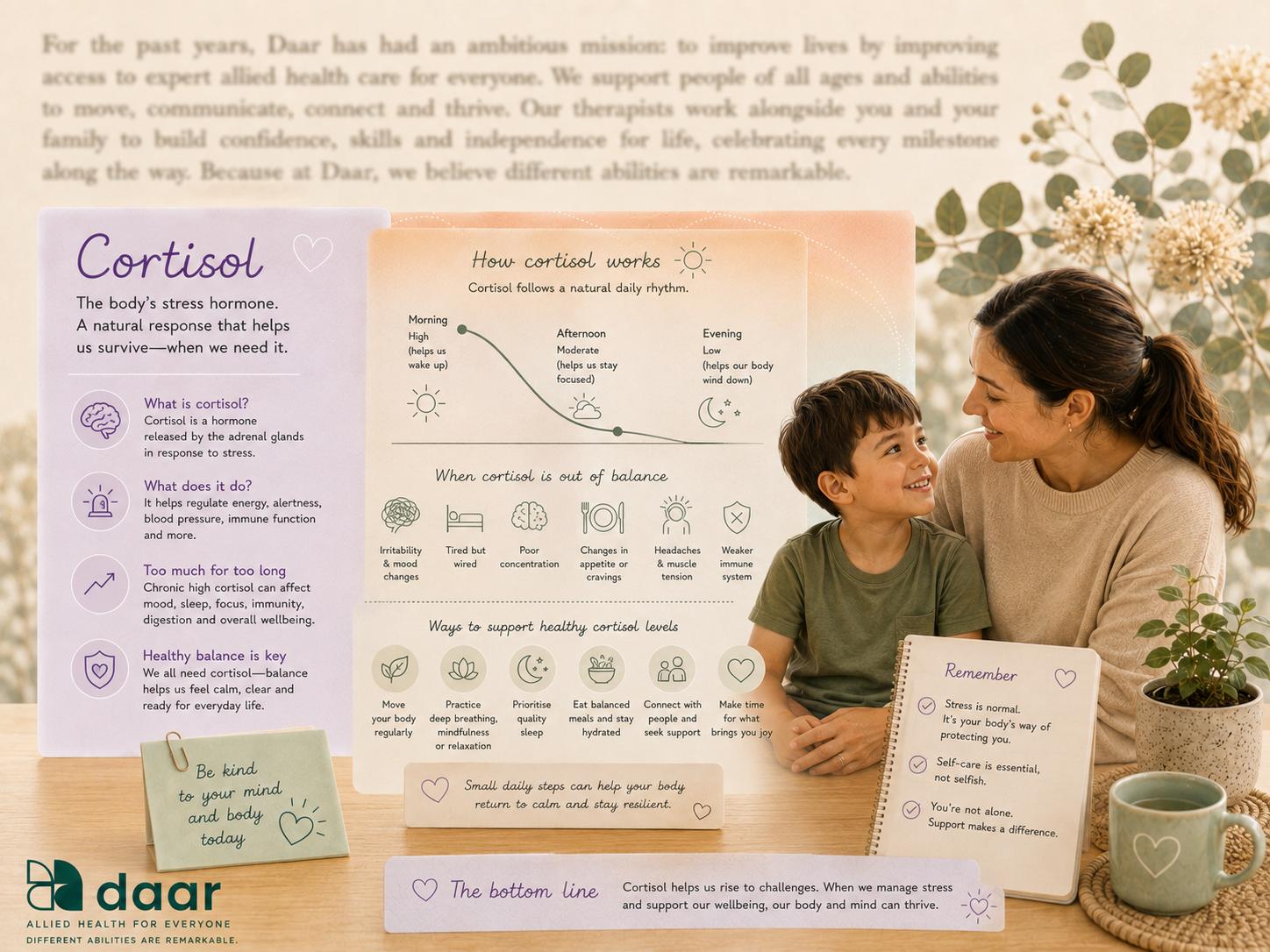
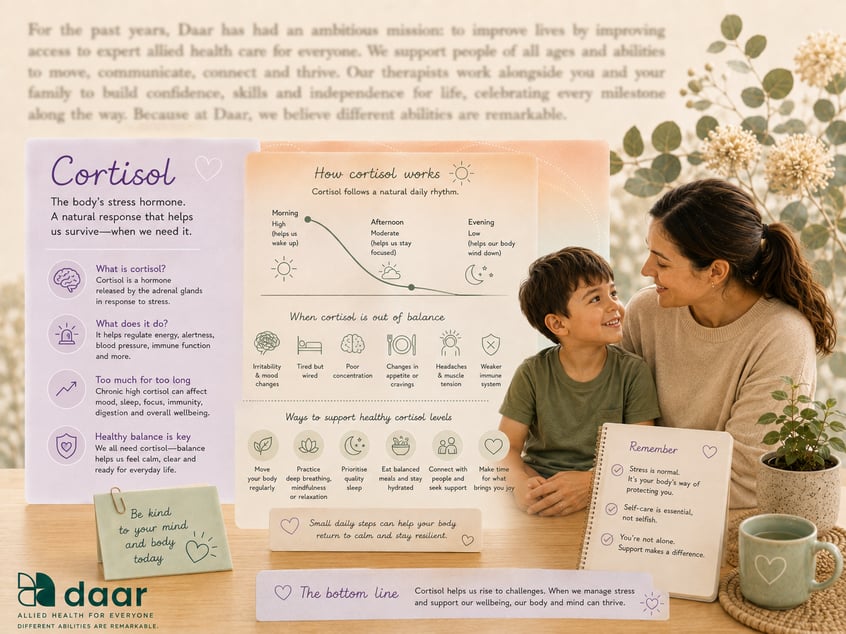
It also affects the immune system, pain sensitivity, and even parts of memory and alertness. Cortisol naturally rises and falls across the day, and that rhythm helps the body stay balanced. A healthy cortisol response is part of normal life, not something harmful by itself.
The concern starts when stress levels stay high too often or when the cortisol response becomes poorly regulated. In autistic children, understanding this process matters because stress can shape behaviour, daily comfort, and coping. When you understand how the body reacts, stress management becomes more focused and more practical.
Understanding the Stress Response System
The stress response system is the body’s built-in alarm and recovery network. When a child faces a challenge, the body prepares to respond. That response can include faster heart rate, muscle tension, and changes in attention and behaviour.
At the same time, cortisol secretion increases as part of physiological stress. This is useful in the short term. It helps the body deal with change, uncertainty, or discomfort. In many children, the system turns on and then settles back down once the event passes.
For autistic children, emotional stressors may affect cortisol more strongly. A novel place, social pressure, or even anticipation of a difficult event can raise stress levels. Some studies suggest the response may be bigger and recovery slower, which means the body stays activated longer than expected after the stress has ended.
Introduction to the Hypothalamic–Pituitary–Adrenal (HPA) Axis
The HPA axis is the main hormonal pathway behind the stress response. It links the brain and adrenal glands through a chain of signals. When stress is detected, this system triggers cortisol production so the body can respond quickly.
Under normal conditions, the HPA axis also helps with daily balance. It supports wakefulness, energy use, and regular stress hormone rhythms. Once enough cortisol is released, the body should slow the signal down through feedback control.
In autism, research points to possible differences in stress reactivity within this system. Some children appear to have a stronger or longer response after a stressor. Chronic stress may also affect cortisol rhythms, especially later in the day, though findings vary. That is why the HPA axis is central to understanding both short-term strain and longer-term stress levels.
How Cortisol Is Measured in Children
Cortisol can be measured in several ways, and each method shows something slightly different. Researchers often use cortisol samples from saliva, blood, urine, or hair depending on what they want to study. Timing matters because cortisol changes across the day.
Salivary cortisol is common in child research because it is less invasive and can capture change before and after a stressor. Blood cortisol can show response in a medical setting, while first morning urine may reflect overnight activity. Each cortisol level gives a different piece of the picture.
Hair testing is also discussed because it may reflect longer-term exposure rather than a short reaction. That means hair cortisol can offer insight into ongoing stress levels in autistic children. Even so, no single test explains everything, so the context around the child remains important.
Defining Autism Spectrum Disorder and Stress Sensitivity
Autism spectrum disorder is a neurodevelopmental condition within the broader group of developmental disabilities. Common symptoms of autism include differences in social communication, repetitive patterns of behaviour, and varied responses to change or sensory input.
Stress reactivity can be especially important here. Some autistic children appear more sensitive to novelty, environmental demands, and social strain, which may raise stress levels quickly. Common signs of altered cortisol regulation can include stronger reactions, slower calming after stress, and greater day-to-day variability. The next sections explain these features more closely.
Core Features of Autism in Children
Children on the autism spectrum often show differences in social interaction, language, and behaviour. The symptoms of autism usually include challenges in social communication, a strong preference for sameness, and repetitive behaviors such as repeated actions or narrow interests.
Some children also have intellectual disabilities, while others do not. That range is one reason autism is described as a spectrum. Communication skills can vary widely too. One child may speak fluently but struggle with back-and-forth interaction, while another may need significant language support.
Researchers have explored whether peripheral cortisol levels connect with the severity of autism spectrum disorder. Findings are not consistent. In one study, cortisol measures did not clearly match autism severity scores. That suggests stress biology may be important, but it does not neatly track with symptom severity in every child.
Sensory Processing and Responses to Environmental Stressors
For many autistic children, sensory sensitivities shape daily life. Bright lights, touch, crowds, and loud noises can feel overwhelming. What seems ordinary to one child may feel intense or even threatening to another.
These environmental stressors can become major stress triggers. A noisy classroom, a new waiting room, or an unexpected routine change may raise stress levels fast. That helps explain why some children react strongly in situations other people would not find difficult.
Emotional stressors can add to that load. Anticipation, uncertainty, or social confusion may increase cortisol in children with autism, especially when sensory strain is already present. When both emotional and sensory pressures build together, the body may show a stronger stress response and a longer recovery period after the event ends.
Prevalence and Diagnosis of Autism in Australia
Autism is increasingly recognized in Australia, and rising prevalence reflects better awareness and broader identification. Diagnosis of autism is based on behavioural features rather than a cortisol test. Clinicians typically use structured assessments and developmental history.
The framework for diagnosis follows criteria aligned with the Statistical Manual of Mental Disorders. While the outline mentions the Australian Psychiatric Association, the compiled information mainly points to structured diagnostic tools and formal criteria rather than separate cortisol-based diagnostic markers. Mean age at diagnosis can vary depending on support access and symptom presentation.
|
Area |
Key Point |
|---|---|
|
Prevalence |
Autism is now recognized as one of the more common developmental conditions |
|
Diagnosis of autism |
Based on behavioural assessment, developmental history, and structured tools |
|
Diagnostic framework |
Uses criteria from the Statistical Manual of Mental Disorders |
|
Early signs |
Strong stress reactions, difficulty calming, and sensitivity to routine change may raise concern, but they are not diagnostic on their own |
Unique Stress Profiles in Autistic Children
Not every child has the same stress profile. That is especially true for autistic children. Some show mild stress reactions in daily settings, while others have large responses to novelty, sensory input, or social demands. Individual differences matter a great deal.
Research suggests some children have higher cortisol levels during stressful events, while others mainly show altered daily rhythms. A child may seem calm on the outside and still have elevated biological stress. Another may show clear behaviour changes even when testing results are mixed.
There is some evidence that higher cortisol levels are linked to increased stereotypic behaviours in children with autism, especially in groups with added sensory or intellectual challenges. Still, the relationship is not identical across all children. That means behaviour and biology should be understood together, not as one simple pattern.
Comparing Cortisol Responses: Autistic vs. Neurotypical Children
A clear question for parents and clinicians is how the cortisol response differs between autistic children and neurotypical peers. Research suggests the biggest contrast often appears during stress, not always at rest. That is an important distinction.
In several studies, autistic children showed a stronger stress hormone reaction, higher peak values, and slower recovery after a challenge. Stress levels may also vary more across the day. To understand that better, it helps to look at morning, evening, and event-based cortisol patterns one at a time.
Morning Cortisol Patterns in Autism
Morning cortisol is usually highest soon after waking. That pattern helps the body get started for the day. In the autism spectrum, research on morning cortisol patterns has shown mixed results rather than one uniform finding.
Some studies found no major difference in first morning measures between autistic children and comparison groups. Others reported a less typical morning rise or more variability. That tells you stress levels cannot be judged from a single early reading alone.
There is also no consistent proof that higher levels of peripheral cortisol in the morning directly match the severity of autism spectrum disorder. In the compiled study, symptom ratings did not strongly correlate with cortisol measures. Morning values can still be useful, but they do not fully explain behaviour or stress burden by themselves.
Evening and Diurnal Cortisol Rhythms
Cortisol follows diurnal rhythms, meaning it changes from morning to night. In most children, levels fall over the day as part of normal circadian rhythms. That decline supports rest, sleep, and recovery.
In the autism spectrum, some research suggests these rhythms may be less stable. Higher evening cortisol, greater day-to-day shifts, and unusual circadian rhythms have all been reported in some groups. This does not happen in every child, but it appears often enough to matter.
Chronic stress may contribute to these altered patterns. If the body is repeatedly pushed into stress mode, cortisol may stay elevated later in the day or become more erratic. That can affect sleep, regulation, and next-day coping, which is why diurnal rhythms deserve close attention in autism research.
Contrasts in Stress Hormone Regulation
The clearest difference between autistic individuals and neurotypical individuals often appears after a stressor. In one study, both groups showed a rise after a blood draw, but the autism group had a larger increase and took longer to recover.
That pattern suggests the stress hormone system may react more strongly and stay active longer in some autistic children. A similar event can produce a very different biological stress reaction depending on the child and the setting.
- Autistic individuals may show a higher peak cortisol response after stress.
- Recovery can be slower, with cortisol staying elevated longer.
- Neurotypical individuals often return to baseline more quickly.
- Novel settings may affect cortisol even before the main stressor occurs.
Findings from Australian Population Studies
The compiled information does not provide a direct Australian population cortisol study with detailed results. Still, the broader evidence summarized in autism research is relevant when Australian families search Google Scholar or clinical resources for guidance.
Across studies, the cortisol response in the autism spectrum often points to higher levels during specific stressors, more variability, or altered daily timing. These findings do not mean every child will show the same pattern, but they support the idea of increased biological sensitivity in many cases.
Elevated cortisol may affect autism symptoms by increasing anxiety, emotional strain, social withdrawal, and repetitive behaviour during difficult moments. It can also make recovery slower after stress. For families in any setting, including Australia, that helps explain why support plans should focus on both behaviour and stress load.
Chronic Stress, Cortisol Patterns, and Daily Life
Chronic stress is more than a bad day. It is repeated strain that keeps the body’s alarm system active. In the autism spectrum, this can shape cortisol patterns, especially when stressors happen often at home, school, or in the community.
Yes, chronic stress may affect cortisol rhythms in autistic children. When that happens, daily living can become harder. Sleep, emotional control, and flexibility may all suffer. That is why stress management is not just a comfort issue. It can support better function across the whole day.
Evidence for Ongoing High Cortisol Levels
Some research points to higher cortisol levels not just during a single event, but across repeated or ongoing stress exposure. Elevated evening values, prolonged responses after stress, and greater variability all suggest the possibility of ongoing stress in at least some autistic children.
When cortisol concentrations stay high too often, the body may have fewer chances to reset. That can increase stress levels across the week, not just during one difficult moment. A child may then seem more reactive to everyday changes because the system is already strained.
Do stress-reducing interventions help regulate this? The compiled information suggests they may. Supportive routines, behavioural help, and relaxation-based strategies are discussed as useful ways to lower stress burden. While cortisol changes are not guaranteed, reducing chronic stress is a logical and practical target.
Health Implications of Dysregulated Stress Response
A dysregulated stress response can affect more than mood. Over time, repeated cortisol elevation may influence sleep, coping, physical comfort, and daily function. In children with autism spectrum disorders, this can add pressure to challenges that already require effort.
The negative effects may show up in both body and behaviour. Higher stress can make it harder for a child to settle, adapt, or manage social demands. It may also worsen mental health concerns such as anxiety or low mood, especially when strain is frequent.
- Elevated cortisol may intensify repetitive behaviour and emotional distress.
- Ongoing stress can affect sleep, energy, and recovery.
- Mental health may worsen when stress remains high.
- Daily demands may feel harder to manage after repeated activation of the stress response.
School, Family, and Community Stress Factors
Stress does not come from one place alone. Many autistic children face stressful events across several environments. School stress may include noise, transitions, peer demands, and unfamiliar expectations. Each one can raise biological and emotional strain.
Family stress can also play a role, even in caring homes. Busy schedules, inconsistent routines, or repeated conflict can make coping harder. Community stress may come from crowded places, medical visits, or social situations that feel unpredictable.
Emotional stressors in these settings can increase cortisol because the child is trying to manage uncertainty, anticipation, or overload. When coping mechanisms are limited or the demands pile up, the body may react strongly. That is why support should extend beyond one room and consider the child’s full daily context.
Burnout and Functional Consequences in Australian Settings
Burnout is a useful term for the exhaustion that can follow repeated overload. In autistic children, chronic stress may build through sensory strain, social effort, and constant adaptation. When that happens, the functional consequences can become clear in daily living.
A child may become less flexible, less engaged, or more distressed by ordinary demands. Autism symptoms may seem worse during these periods, even if the core condition has not changed. What has changed is the child’s capacity to cope.
In Australian settings, the same principle applies: when stress keeps stacking up, cortisol rhythms may become less steady and recovery may slow. Families, schools, and clinicians can reduce burnout risk by noticing patterns early and adjusting expectations, supports, and environments before overload becomes a constant state.
Methods of Assessing Cortisol Levels in Autistic Children
If you want to understand stress biology, measurement matters. Researchers use different techniques to assess cortisol levels in autistic children because each one captures a different time frame or type of response. No single method tells the full story.
Salivary cortisol is useful for short-term changes around a stressor. Hair cortisol may provide clues about longer-term exposure. Blood and urine can add more context. The sections below explain what each method can and cannot show, and why interpretation should stay careful.
Salivary and Blood Cortisol Tests
Salivary cortisol and blood cortisol are common tools for studying immediate stress response. Saliva is less invasive and can be collected several times around an event. Blood testing may capture response in a clinical setting, though the procedure itself can act as a stressor.
In the compiled study, salivary cortisol was taken before and after a blood draw, while serum levels were measured during the procedure. That approach helped show both the peak response and how long levels of cortisol stayed elevated after the stressor.
- Salivary cortisol is useful for repeated sampling around stressful moments.
- Blood cortisol can reflect response during a medical event.
- Cortisol samples should be timed carefully because levels change across the day.
- The dexamethasone suppression test has also been used in some autism research to examine feedback regulation.
Hair Cortisol Analysis for Long-Term Stress
Hair cortisol is appealing because it may reflect longer-term cortisol exposure rather than a brief response to one event. That makes it useful when the question is not just “What happened today?” but “What has stress looked like over time?”
For autistic children, that can matter a lot. Many stress challenges come from repeated demands, not one isolated moment. Hair cortisol may therefore offer insight into stress levels linked to ongoing stress or chronic stress across weeks or months.
Still, hair cortisol does not replace other measures. It cannot show a child’s immediate reaction to a blood draw, social interaction, or novel setting. Instead, it adds another layer by helping researchers estimate longer-term cortisol concentrations. Used with behaviour and context, it can strengthen the overall picture.
Limitations and Accuracy of Measurement Techniques
Every method has limitations. Cortisol changes by time of day, setting, anticipation, food intake, and the type of stressor. That means accuracy depends on careful procedures, not just the lab result itself. A single reading can be misleading.
Researchers have tried to improve accuracy by standardizing timing, meals, and collection conditions. Even then, individual differences remain large. One child may find a clinic mildly stressful, while another may experience it as overwhelming before any test begins.
That is why cortisol samples should be interpreted with caution. Hair cortisol can help with long-term patterns, but it does not solve all the limitations. The best approach uses multiple sources of information, including behaviour, routines, environmental context, and repeated measures where possible.
Considerations for Australian Healthcare Providers
For Australian healthcare providers, cortisol findings should support care, not replace clinical judgment. In the autism spectrum, the diagnosis of autism still depends on developmental and behavioural assessment. Stress biology can add insight into how a child responds to daily demands.
That can be useful when planning early intervention and stress management. If a child shows strong reactions to novelty or medical procedures, providers can adapt the setting and work with families on preventive support rather than waiting for repeated crises.
- Use cortisol findings as supportive information, not a stand-alone diagnostic tool.
- Consider sensory load and routine disruption during appointments.
- Build early intervention plans around the child’s likely stress triggers.
- Discuss practical stress management steps with parents, schools, and allied providers.
Biological and Environmental Influences on Cortisol in Autism
Cortisol patterns in the autism spectrum do not come from one cause. Biological influences and environmental influences work together. Genetic contributors, brain development, sensory profile, and life experiences can all shape how a child reacts to stress.
Understanding the cortisol response matters because it helps explain why stress levels differ so much from one child to another. That knowledge can guide better support. Instead of treating behaviour as random, you can view it as part of a body-and-environment interaction that needs thoughtful management.
Genetic and Neurobiological Contributors
Autism is described as a biologic, brain-based condition with genetic and non-genetic causes. That makes it reasonable to ask whether genetic contributors and other neurobiological factors also influence the stress hormone system.
Research suggests they might. Variations in neurobiological development may affect how the brain detects and processes threat, novelty, or uncertainty. If the system is more easily activated, the cortisol response can be stronger or more prolonged after stress.
Even so, the connection between peripheral cortisol levels and the severity of autism spectrum disorder remains unclear. Some studies found no strong link between cortisol measures and symptom severity scales. So biology likely shapes stress sensitivity, but it does not create a simple one-to-one match with overall autism severity.
Early Life Experiences Affecting Stress Hormone Response
Early life experiences can shape the stress response over time. Research on child development shows that repeated stress in early life may affect how easily the body’s alarm system turns on later. That idea is relevant across developmental disabilities, including autism spectrum conditions.
For autistic children, early experiences may include sensory overload, difficult transitions, medical procedures, or limited fit between the child and the environment. These repeated demands can teach the body to stay on alert more often than needed.
This also helps explain why supportive interventions matter. If stress patterns are shaped early, reducing strain and improving regulation may help the child over time. The compiled material points toward practical supports, structure, and coping-focused care as sensible ways to reduce the burden on the stress hormone system.
Impact of Sensory Sensitivities
Sensory sensitivities are one of the strongest everyday influences on stress levels in autistic children. A child who feels overwhelmed by sound, touch, or visual input may enter stressful situations far more often than others realize.
That repeated overload can affect autism symptoms in visible ways. You may see more shutdown, agitation, avoidance, or repetitive movements during times of stress. These responses often help the child cope with a body that feels pushed too far.
Research also suggests high cortisol levels may be linked to increased stereotypic behaviours in some children with autism. The relationship is not universal, but the pattern appears often enough to matter. In practice, reducing sensory strain can be an important way to lower stress and support more stable behaviour.
Interaction With Diet, Sleep, and Lifestyle
Daily habits can either support or disrupt cortisol rhythms. In research settings, even breakfast timing is controlled because diet may influence cortisol production. Sleep is just as important because cortisol follows a daily pattern linked to wakefulness and rest.
For autistic individuals, lifestyle factors can shape how stress is carried through daily living. If sleep is poor or routines are unstable, recovery becomes harder. Elevated cortisol may then worsen irritability, anxiety, and behaviour during the next day.
- Diet can influence the body’s hormonal response under stress.
- Sleep problems may disturb normal cortisol rhythms.
- Predictable lifestyle routines can support calmer daily living.
- Physical activity may help reduce strain and support regulation.
Strategies for Managing Cortisol and Stress in Children with Autism
Stress cannot always be removed, but it can be managed better. For autistic children, good stress management starts with understanding triggers, building coping mechanisms, and reducing overload before behaviour escalates. That makes intervention more realistic and more supportive.
The compiled information suggests behavioural interventions, predictable routines, and relaxation techniques may help lower stress burden. These steps may not change every cortisol pattern, but they can improve recovery, reduce distress, and support better daily functioning. The next sections focus on practical ways to do that.
Behavioural Interventions and Coping Skills
Behavioural interventions can help children understand triggers and build better responses. When a child has clearer routines and more effective coping skills, stressful situations may feel less threatening. That can reduce the size of the stress reaction over time.
ABA therapy is often discussed in this context because it can build communication, social behaviour, and adaptive skills. The compiled material suggests that when children feel more capable and understood, stress levels may become easier to manage in daily life.
- Teach the child to recognize early signs of overload.
- Practice coping skills before difficult situations happen.
- Use ABA therapy to strengthen communication and flexibility.
- Reinforce calm responses and predictable routines to support recovery.
Mindfulness and Relaxation in Clinical Practice
Mindfulness and relaxation techniques are often used to lower stress levels and help the body settle after activation. The goal is not perfect stillness. It is giving the child simple ways to pause, calm down, and recover more efficiently.
In clinical practice, these tools may include breathing exercises, quiet sensory breaks, or other calming routines that fit the child’s needs. The compiled information also points to relaxation as one part of broader stress support, especially when anxiety and overload are frequent.
These approaches may support mental health by reducing repeated physiological strain. They are most useful when they are predictable, brief, and individualized. A child is more likely to use a calming strategy when it feels safe, familiar, and matched to their preferences rather than imposed in the moment.
Supportive Environments at Home and School
A child’s environment can either lower stress or increase it. Supportive environments at home and school reduce avoidable pressure and help children recover faster after demands. Small changes often make a big difference.
At home, consistency, clear expectations, and calmer routines can reduce stress triggers. At school, sensory awareness, predictable transitions, and flexible support can reduce overload. Better communication skills also help because children cope more effectively when they can express discomfort or ask for help.
Emotional stressors often raise cortisol when a child feels confused, trapped, or unable to predict what comes next. Supportive environments reduce that uncertainty. They do not remove every challenge, but they give the child a better chance to stay regulated and return to baseline after stress.
Collaboration With Medical and Allied Health Professionals
Stress support works best when people work together. Medical professionals and allied health teams can help families understand whether a child’s reactions are linked to sensory strain, anxiety, health issues, or broader stress patterns in the autism spectrum.
That shared view improves stress management. It also helps early intervention plans become more targeted. Instead of focusing only on behaviour after it happens, teams can anticipate high-stress settings and build support around them in advance.
- Coordinate goals across pediatric, psychology, therapy, and school teams.
- Share information about triggers, routines, and recovery patterns.
- Use early intervention to build coping before stress becomes entrenched.
- Review whether medical visits or assessments are creating avoidable strain.
Conclusion
In conclusion, understanding the enhanced cortisol response to stress in children with autism is crucial for fostering their well-being. By recognizing the unique stress profiles and environmental stressors that impact these children, caregivers and healthcare professionals can implement effective strategies to manage cortisol levels. From behavioural interventions to creating supportive environments at home and school, the focus should always be on enhancing the quality of life for these children. If you're looking for tailored advice or support in managing stress and cortisol levels for children with autism, don't hesitate to reach out for a free consultation. Together, we can make a difference!
Reach out for a consultation or call daar at 02 9133 2500 for expert guidance tailored to your child’s needs.
Frequently Asked Questions
How does stress affect cortisol in children with autism?
In the autism spectrum, stress may lead to a larger cortisol response and slower recovery after the event ends. Some children show greater stress reactivity to novelty, sensory strain, or emotional pressure. This means the stress hormone system may stay active longer, raising stress levels and making recovery harder.
Can lowering cortisol improve autism symptoms?
Lowering cortisol is not a cure for autism symptoms, but better stress management may reduce distress, anxiety, and overload. Effective strategies such as supportive routines, coping support, and calming environments can improve mental health and daily functioning, which may make some stress-related behaviours less intense or less frequent.
What are the early signs of altered cortisol regulation in autistic children?
Early signs of altered cortisol regulation in the autism spectrum may include strong reactions to change, difficulty calming after stress, sleep disruption, and more repetitive behaviours during strain. In early childhood, these patterns can appear before the mean age of formal recognition, though they are not diagnostic on their own.
.svg)




.svg)