
.png?width=48&height=48&name=Group%201%20(3).png)























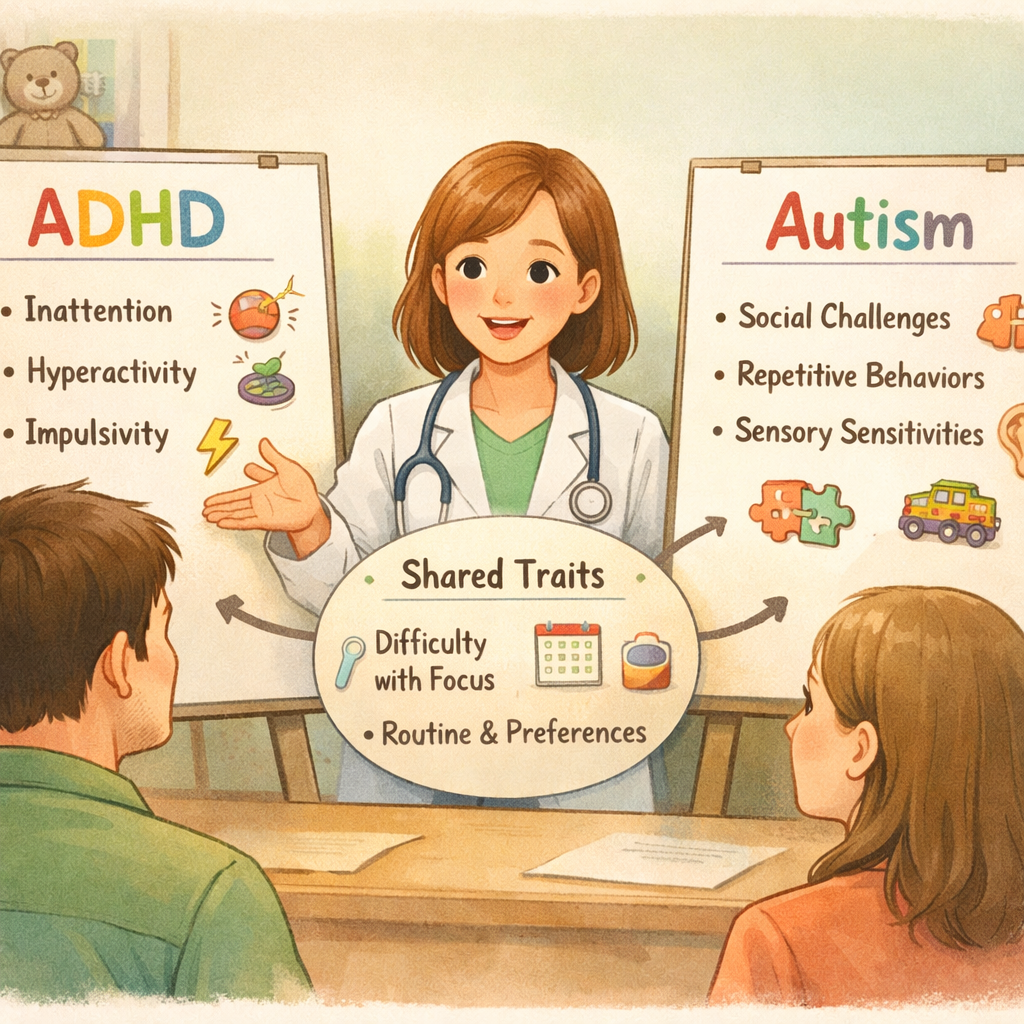
9 March, 2026

ADHD vs Autism: Signs, Symptoms, & Differences
Key Highlights
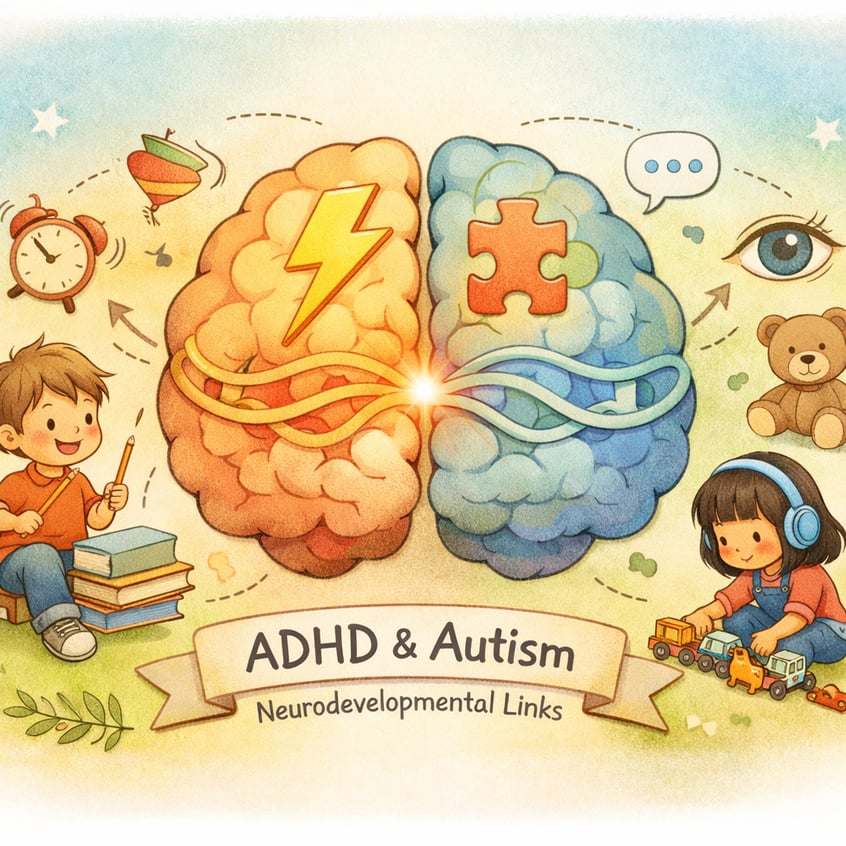
- Attention Deficit Hyperactivity Disorder (ADHD) and Autism Spectrum Disorder (ASD) are distinct neurodevelopmental disorders, but they share many overlapping symptoms.
- Key differences lie in social communication, attention patterns, and response to routines; an autistic person often craves structure, while a person with ADHD may seek novelty.
- Commonly shared traits include challenges with executive function, sensory differences, and emotional regulation.
- A dual diagnosis of both ADHD and autism is possible and increasingly recognized.
- Understanding the overlapping symptoms and core differences is crucial for an accurate diagnosis and effective support.
Introduction
Have you ever wondered about the connection between Attention Deficit Hyperactivity Disorder (ADHD) and Autism Spectrum Disorder (ASD)? It’s easy to see why these two conditions can be confused. As neurodevelopmental disorders, they share some similarities, especially in areas like social interaction and focus. This can make it tricky to tell them apart. Understanding both the unique and overlapping traits of ADHD and autism is the first step toward getting the right support and improving quality of life for individuals and their families.
ADHD Symptoms Explained
ADHD (Attention Deficit Hyperactivity Disorder) is marked by persistent inattention, hyperactivity, and impulsivity that disrupt daily life. These symptoms can impact school, relationships, and mental health.
The key difference between ADHD and autism lies in the reasons behind behaviors—for instance, someone with ADHD may be distracted by external stimuli, while an autistic person’s inattention often comes from being absorbed in their own thoughts. Below, we’ll look more closely at ADHD’s core symptoms.
Inattention and Distractibility
One key sign of ADHD is difficulty regulating attention—not a total inability to focus, but trouble staying on tasks that aren’t highly engaging. People with ADHD are easily distracted by thoughts or their environment, leading to problems with time management and organization. While ADHD and autism are distinct conditions, they are both classified as neurodevelopmental disorders, which means they share some characteristics and may co-occur, but they are not different types of the same condition and exist as separate diagnoses within the neurodevelopmental spectrum.
These attention issues are part of broader executive functioning challenges. Tasks needing sustained effort, like homework or long projects, can feel overwhelming. You might notice forgetfulness, losing items, or trouble following conversations. While ADHD and autism are both neurodevelopmental conditions and can share symptoms like inattention and distractibility, they are considered distinct diagnoses. However, many experts recognize that there is overlap between them, and some individuals may have both ADHD and autism.
These behaviors reflect symptoms of a neurodevelopmental disorder, not laziness or lack of intelligence. Because some symptoms overlap, they may sometimes be mistaken for autism.
Hyperactivity and Impulsivity
In Attention Deficit Hyperactivity Disorder, hyperactivity typically manifests as a persistent urge to move, which may include restlessness, frequent fidgeting, or squirming while seated. Within social contexts, this excessive activity can also appear as talking non-stop or struggling to remain quiet when required, and such behaviors are defining markers of the hyperactivity aspect of the disorder.
Another primary characteristic, impulsivity, is the tendency to act without adequately considering potential consequences. Individuals with ADHD may have difficulty restraining themselves, leading to frequent interruptions, blurting out responses, or making quick, unplanned decisions; these impulsive actions are linked to executive function difficulties, which impede the ability to pause and reflect before taking action.
Although impulsiveness can occur in both autism and ADHD, the underlying causes often vary: for those with ADHD, such behaviors are usually motivated by a craving for novelty or instant reward, while for autistic individuals, impulsive actions tend to stem from sensory overload or disruptions to their routines.
Emotional Regulation Challenges
Many people with ADHD struggle to regulate their emotions, even though it's not a formal diagnostic criterion. This often appears as intense reactions that seem out of proportion, making self-control difficult.
These outbursts are linked to executive functioning challenges. The brain's "braking system," which manages impulses and emotions, may be less effective, leading to issues like rejection sensitivity and feeling overwhelmed.
Both ADHD and autism involve emotional regulation difficulties, but triggers differ. ADHD outbursts often stem from frustration or boredom, while autistic meltdowns are usually caused by sensory overload or unexpected changes. Recognizing these differences is crucial for effective support.
Autism Symptoms Detailed
Autism Spectrum Disorder (ASD) is a developmental disorder that affects how a person communicates, interacts with others, and experiences the world. The autism symptoms are varied, which is why it's called a spectrum. Core characteristics include challenges with social interaction and the presence of restricted or repetitive behaviors.
Sensory processing differences are also a key part of the autism spectrum. Individuals may be over- or under-sensitive to sounds, lights, textures, or other sensory input. Let's take a closer look at the specific signs of autism.
Social Communication and Interaction Differences
A core feature of autism is differences in social communication and interaction, making social situations challenging. Autistic individuals may struggle to interpret non-verbal cues like body language, facial expressions, or tone of voice, leading to misunderstandings.
Support often focuses on building communication skills. Autistic people might have trouble with conversational flow or forming social connections. While someone with ADHD may eagerly join conversations but interrupt, an autistic person might avoid social interaction entirely or engage in a one-sided way.
These challenges aren’t due to a lack of interest in others but reflect a different way of processing social information. Sometimes, these difficulties are mistaken for the inattention seen in ADHD, illustrating the overlap between the two conditions.
Restricted, Repetitive Patterns of Behavior
One of the defining autistic traits is the presence of restricted and repetitive behaviors. This can include repetitive movements like hand-flapping or rocking, repeating certain words or phrases, or insisting on sameness in daily activities. These actions can be a way for an autistic person to self-soothe or manage anxiety.
Another aspect of this is having a very intense focus on specific interests, sometimes called "special interests." An individual might become an expert on a particular topic, spending hours learning everything about it. This is different from the hyperfocus sometimes seen in ADHD, which can be less sustained over the long term.
A strong need for routine is also common. Autistic individuals often feel safest and most comfortable when their day follows a predictable pattern. An unexpected change can be very distressing and may lead to significant anxiety or a meltdown. This preference for routine is a key difference from many people with ADHD, who often crave novelty and dislike rigid structures.
Sensory Sensitivities and Processing
Sensory sensitivities are a core feature of autism. Individuals may be hypersensitive, making everyday sounds, lights, smells, or textures feel overwhelming or painful, leading them to avoid certain situations. Others may be hyposensitive and seek more sensory input, such as strong flavors or loud noises. These differences stem from the way the autistic brain processes sensory information.
People with ADHD can also have sensory challenges, like restlessness or a need for movement, but in autism, these issues are usually more central and persistent. Behaviors such as covering ears or avoiding certain foods often help autistic people manage their sensory environment.
Comparing ADHD vs Autism: What Are the Key Differences?
While ADHD and autism are both developmental disabilities with some overlapping traits, there is a significant difference between them. Understanding this comparison is crucial for a correct differential diagnosis, which in turn ensures individuals receive the most appropriate support to enhance their quality of life. The core distinctions often lie in the underlying reasons for certain behaviors.
For example, a child with ADHD might struggle to pay attention due to external distractibility, while an autistic child might seem inattentive because they are internally focused. The following sections will break down these key differences.
Attention Span and Focus
A key difference between ADHD and autism is attention span and focus. People with ADHD struggle to maintain attention across most activities, even those they enjoy, and are easily distracted—a major executive function challenge.
In contrast, autistic individuals may intensely focus on their special interests for hours ("hyper-focus"), but have difficulty paying attention to other tasks. Their attention is selective rather than short.
Understanding this distinction is crucial for recognizing their unique attention challenges.
|
Feature |
ADHD |
Autism |
|---|---|---|
|
Attention Span |
Short; easily distracted across most tasks |
Long for interests (hyper-focus); poor for others |
|
Focus |
Difficulty maintaining focus, even on enjoyable activities |
Intense focus on narrow interests; struggles to shift |
|
Distractibility |
Easily pulled away by external/internal stimuli |
Inattention from absorption in own world or sensory overload |
Social Skills and Communication Style
While both conditions involve social challenges, the difficulties differ. People with ADHD are often eager to socialize but may interrupt, talk excessively, or struggle to listen due to impulsivity, which can strain interactions.
In contrast, autistic individuals typically have trouble understanding and using non-verbal cues. They might avoid eye contact, misinterpret body language or tone, and find social rules confusing. Their conversations may be one-sided or focused on their own interests.
In short, those with ADHD usually understand social rules but struggle to follow them, while autistic individuals may not instinctively grasp these rules at all.
Routine, Flexibility, and Coping with Change
One of the key differences between ADHD and autism lies in how each handles routine and flexibility. Individuals with autism usually prefer predictability and consistent routines, as these offer security and help them manage a world that often feels overwhelming; unexpected changes can trigger significant anxiety and distress, making it harder for them to function. In contrast, those with ADHD often find routines dull and confining—they’re drawn to novelty and quickly lose interest in repeated tasks. For autistic individuals, a preference for sameness drives their rigidity, whereas people with ADHD seek stimulation and resist routine for excitement rather than comfort. This fundamental difference influences everyday experiences and overall well-being; while an autistic person might rely on repetitive behaviors to establish order, someone with ADHD tends to behave impulsively to escape boredom. Recognizing this contrast is crucial in tailoring support strategies to help each cope with daily challenges.
Overlapping Features: Where ADHD and Autism Meet
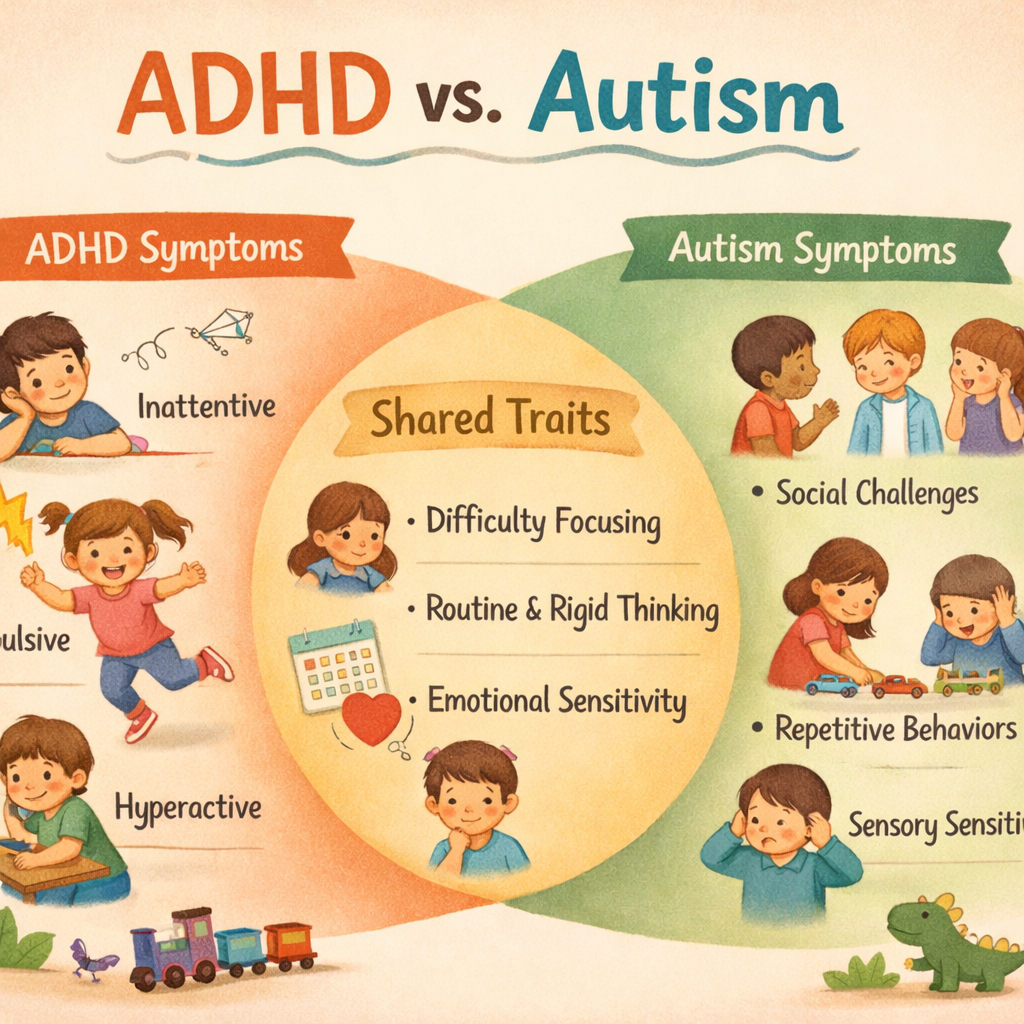
Despite their differences, ADHD and autism share a surprising number of overlapping traits. This comorbidity is why a dual diagnosis is possible and why one condition can sometimes be mistaken for the other. These overlapping symptoms often revolve around challenges with executive functioning, sensory processing, and emotional regulation.
Scientific evidence, including family and genetic studies, suggests a biological link between the two neurodevelopmental disorders, which helps explain these shared characteristics. Below, we'll explore some of the most common areas where ADHD and autism intersect.
Shared Symptoms That Can Cause Confusion
Yes, ADHD symptoms can easily be mistaken for symptoms of autism, and vice versa, due to the significant number of overlapping symptoms. This confusion is common for parents, teachers, and even clinicians, making an accurate diagnosis challenging. Both developmental disabilities can manifest in ways that look similar on the surface.
For example, a child who struggles to follow a conversation could have ADHD and be distracted, or they could be autistic and have difficulty with social communication. Similarly, someone who has emotional outbursts could be reacting to frustration (common in ADHD) or sensory overload (common in autism).
Some of the most frequently confused overlapping symptoms include:
- Social Difficulties: Both can struggle with making and keeping friends, but for different reasons.
- Inattention: Difficulty focusing can be a sign of distractibility in ADHD or intense internal focus in autism.
- Fidgeting or Restlessness: This can be hyperactivity in ADHD or a self-regulating repetitive behavior (stimming) in autism.
- Emotional Outbursts: Both can experience intense emotions, but the triggers often differ.
Executive Functioning and Self-Regulation Issues
Both ADHD and autism involve significant challenges with executive functioning—skills like planning, organizing, time management, and impulse control. These difficulties lead to overlapping symptoms, especially issues with self-regulation. This can appear as trouble focusing, starting or finishing tasks, managing emotions, and impacts everything from schoolwork to daily chores. Such deficits often contribute to anxiety and depression.
While the underlying causes differ, behaviors often look similar. For instance, a messy room may stem from ADHD's organizational problems or autism's executive function difficulties. This shared struggle highlights how both conditions affect the brain’s "management system."
Emotional and Behavioral Outbursts
Emotional and behavioral outbursts are common in both ADHD and autism, though their triggers and expressions differ. Both stem from challenges with emotional regulation and impulse control.
In ADHD, outbursts are usually quick, intense reactions to setbacks or boredom due to poor impulse control. These flare-ups tend to resolve quickly.
In autism, outbursts—often called meltdowns—are triggered by sensory overload, changes in routine, or social overwhelm. They result from reaching a neurological breaking point, not just impulsivity. Recognizing these differences is key to effective support.
Co-occurrence: Can You Have Both ADHD and Autism?
Yes, a person can absolutely have both ADHD and autism. This is known as a dual diagnosis, and research shows high rates of co-occurrence. Until 2013, the diagnostic manual used by clinicians did not allow for a dual diagnosis, but this has since changed to reflect the reality many people experience.
The presence of ADHD in individuals with an autism diagnosis, and vice versa, is quite common. Having both conditions creates a unique and often complex experience, as the traits of each can interact in challenging ways.
Scientific Evidence on Dual Diagnosis
A growing body of research shows significant overlap and frequent dual diagnosis of ADHD and autism. Studies, including those on Google Scholar, report high comorbidity rates: about 21% of children with ADHD also meet criteria for autism, and roughly 28% of autistic children also have ADHD.
Family studies further support a connection, revealing shared genetic factors and traits between both conditions. Brain pathways involved in attention, social processing, and executive function are affected in both disorders.
This scientific consensus has led to changes in diagnosis. Clinicians now recognize that ADHD and autism often co-exist, allowing for more accurate diagnoses and better-targeted support.
Unique Experiences and Needs When Both Conditions Co-Occur
When ADHD and autism co-occur—sometimes called "AuDHD"—individuals often face unique and conflicting challenges. They may feel like a "walking contradiction," as autism's need for routine clashes with ADHD’s desire for novelty. This can lead to making structured plans but abandoning them impulsively, resulting in frustration and anxiety. Overlapping traits like sensory sensitivities and executive dysfunction can also be more intense.
Autistic individuals with ADHD may experience:
- Internal conflict between craving routine and seeking new experiences
- Greater difficulty regulating emotions due to triggers from both conditions
- Intense hyperfixations, followed by sudden loss of interest
- More social challenges, managing both missed cues and impulsivity
Challenges in School and Community Settings
Children and teens who have both ADHD and autism experience distinctive challenges within the school environment. These overlapping developmental differences result in a multifaceted profile that can be challenging for educators to interpret and respond to effectively. For example, one student might benefit from a predictable, calm classroom to address autistic preferences yet simultaneously require frequent chances for movement due to ADHD-driven restlessness.
Their social interactions often present added complexity; they might have difficulty grasping social norms because of autism, while also engaging in impulsive actions during social exchanges due to ADHD, which complicates forming relationships with peers. Their concentration issues are intensified—external distractions easily sidetrack them, and they may also drift off into their own inner worlds.
Securing appropriate community and school-based services is vital but often complex. Support strategies must be designed to address both conditions at once. For instance, while a visual schedule can establish needed routine, it should also be adaptable to incorporate frequent brain breaks. Achieving meaningful support requires a tailored and coordinated effort among teachers, parents, and professionals.
Diagnosis: How Experts Tell the Difference
Getting an accurate diagnosis is the most important step toward effective support. Experts use a comprehensive assessment process to tell the difference between ADHD and autism, a practice known as differential diagnosis. This involves carefully evaluating a person's developmental history, behaviors, and challenges against the specific diagnostic criteria for each condition.
Because of the symptom overlap, this process can be complex. Clinicians must look beyond the surface behavior to understand the underlying reasons for it. Let's examine how this assessment is conducted and the criteria used to make a diagnosis.
Screening and Assessment Processes in Australia
In Australia, ADHD and autism assessments follow national guidelines for accurate diagnosis. The process usually starts with a visit to a General Practitioner (GP), who refers the individual to a specialist such as a pediatrician, psychiatrist, or psychologist.
Assessment is multidisciplinary and gathers information from various sources, including interviews with the individual and family, developmental history reviews, and standardized questionnaires. For children, observations at home and school are often essential.
Mental health professionals look for consistent behavioral patterns that meet criteria for ADHD, autism, or both. The aim is to develop a clear understanding of the person’s strengths and challenges to guide diagnosis and support planning.
Key Diagnostic Criteria for ADHD vs Autism
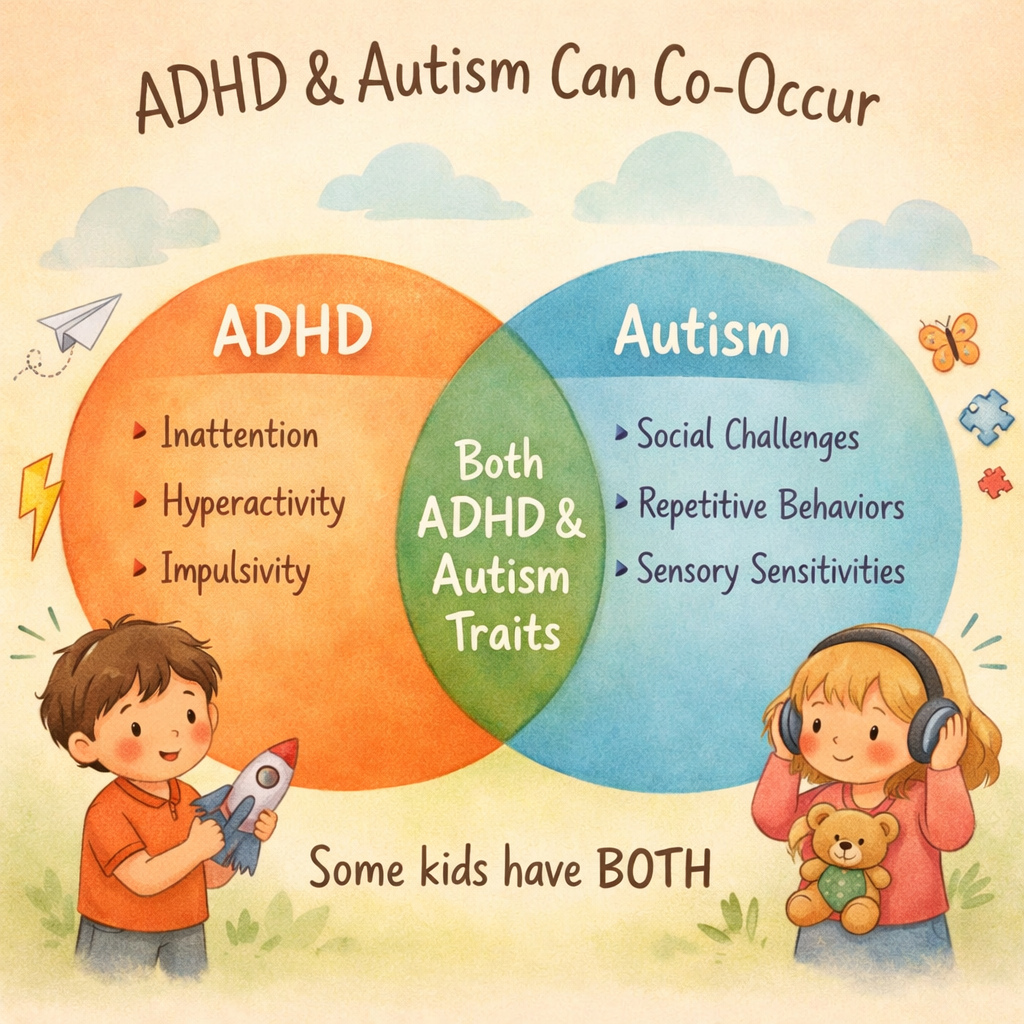
The diagnostic criteria for ADHD and autism are outlined in the Diagnostic and Statistical Manual of Mental Disorders (DSM-5), published by the American Psychiatric Association. For an ADHD diagnosis, a person must show a persistent pattern of inattention and/or hyperactivity-impulsivity that interferes with functioning or development.
For an autism diagnosis, an individual must exhibit persistent deficits in social communication and interaction across multiple contexts. They must also show restricted, repetitive patterns of behavior, interests, or activities. These symptoms must be present from early childhood and cause significant impairment in daily life.
The main challenge in diagnosing both together is that some symptoms can fit the criteria for either developmental disorder. The table below summarizes the core criteria.
|
Feature |
ADHD Diagnostic Criteria (DSM-5) |
Autism Diagnostic Criteria (DSM-5) |
|---|---|---|
|
Social/Communication |
May talk excessively, interrupt, or have trouble waiting their turn. |
Deficits in social-emotional reciprocity, nonverbal communication, and developing/maintaining relationships. |
|
Behavior/Interests |
Hyperactivity (e.g., fidgeting, restlessness) and impulsivity (acting without thinking). |
Restricted, repetitive patterns of behavior, interests, or activities (e.g., stereotyped movements, insistence on sameness, fixated interests). |
|
Onset |
Several inattentive or hyperactive-impulsive symptoms were present prior to age 12. |
Symptoms must be present in the early developmental period. |
|
Context |
Symptoms must be present in two or more settings (e.g., home, school). |
Symptoms cause clinically significant impairment in social, occupational, or other important areas of functioning. |
Common Diagnostic Challenges and Potential for Misdiagnosis
The significant overlap in symptoms between ADHD and autism creates common diagnostic challenges and a real potential for misdiagnosis. When conducting a differential diagnosis, clinicians must be careful to distinguish between behaviors that look similar but have different root causes. A misdiagnosis can lead to ineffective support strategies and frustration for the individual and their family.
For instance, a child's social difficulties could be incorrectly attributed to one condition when the other is the primary cause, or when both are present. The presence of overlapping symptoms often makes it hard to see the full picture, especially if one condition presents more prominently than the other.
Key factors contributing to diagnostic challenges and misdiagnosis include:
- Symptom Overlap: Core features like inattention, emotional outbursts, and social difficulties are present in both developmental disorders.
- Masking: Some individuals, particularly girls and women, may learn to "mask" or hide their symptoms, making them harder to identify.
- Co-occurring Conditions: The presence of other conditions like anxiety or learning disabilities can further complicate the diagnostic picture.
Treatment Approaches for ADHD and Autism
Treatment approaches for ADHD and autism are tailored to each individual's unique needs. For ADHD, treatment often includes a combination of medication management, such as stimulant medications, and behavioral interventions. For autism, the focus is primarily on behavioral, educational, and therapeutic support to build skills and manage challenges.
When a person has both conditions, treatment becomes more complex. It requires an integrated approach that addresses the symptoms of both disorders simultaneously. This might involve carefully considering medication options while also providing robust behavioral and educational support.
Medication Options and Considerations
Medication management is a common component of treatment approaches for ADHD. Stimulant medications are often prescribed to help improve focus, reduce impulsivity, and manage hyperactivity. While these can be very effective, they are not a cure and work best as part of a comprehensive treatment plan that includes therapy and support.
For autistic individuals who also have ADHD, medication can be beneficial, but there are special considerations. Autistic people may be more sensitive to medications and experience different side effects. Therefore, doctors usually start with a very low dose and monitor the person's response carefully. There are no medications that treat the core symptoms of autism, but they can help manage co-occurring conditions like ADHD or anxiety.
Important considerations for medication include:
- Sensitivity: Autistic individuals may have a higher sensitivity to medication, requiring careful dosage adjustments.
- Side Effects: It's crucial to monitor for side effects, which might present differently in someone with a dual diagnosis.
- Holistic Approach: Medication should always be combined with behavioral and educational interventions for the best outcomes.
Behavioral and Educational Interventions
Behavioral and educational interventions are cornerstone treatment approaches for both ADHD and autism. These strategies focus on teaching new skills, managing challenging behaviors, and adapting the environment to better suit the individual's needs. This form of individualized support is essential for long-term success.
For a person with ADHD, behavioral interventions might include parent training in behavior management, organizational skills coaching, and classroom accommodations. The goal is to provide structure and strategies to help manage inattention, hyperactivity, and impulsivity.
For an autistic individual, interventions often focus on developing social communication skills, managing sensory sensitivities, and establishing predictable routines. When both conditions are present, these strategies must be integrated. For example, a social skills group would need to address both the communication challenges of autism and the impulsivity of ADHD.
Support Strategies for Families and Caregivers
Supporting a loved one with ADHD, autism, or both requires effective support strategies for families and caregivers as well. Your well-being is crucial, and having the right tools can significantly improve the quality of life for everyone. Education is the first step; learning as much as you can about the conditions helps you understand your child's behavior and advocate for their needs.
Connecting with other families and accessing community resources can provide a valuable support network. Sharing experiences and advice with others who understand your journey can reduce feelings of isolation and provide practical solutions. Many organizations offer parent training programs that teach effective strategies for managing behavior and supporting skill development.
Here are some key support strategies for families:
- Create Structure: Establish clear and consistent routines at home to provide predictability, which benefits both ADHD and autism.
- Use Positive Reinforcement: Focus on praising effort and rewarding positive behaviors to build self-esteem and motivate your child.
- Prioritize Self-Care: Taking care of your own mental and physical health is essential. You cannot pour from an empty cup, so find time for yourself.
Living with ADHD, Autism, or Both
Understanding the relationship between ADHD and autism is vital because it directly impacts daily life. For autistic children or individuals with an ADHD diagnosis, navigating school, social situations, and home life can be challenging. A clear understanding allows for the development of strategies that improve quality of life and foster success.
Living with one or both of these conditions means adapting to a different way of thinking and experiencing the world. With the right support and strategies, individuals can not only manage their challenges but also leverage their unique strengths.
Navigating Daily Life: Tips for Children, Teens, and Adults
Navigating daily life with ADHD, autism, or both requires practical, personalized strategies. For children, teens, and adults alike, finding what works for you is key. Simple tools and adjustments can make a significant difference in managing challenges related to time management, social skills, and sensory input.
Establishing a routine can provide a comforting structure, especially for autistic individuals, while building in flexibility can accommodate the ADHD need for novelty. Using visual aids like planners, calendars, or apps can help keep track of tasks and appointments, supporting executive function weaknesses.
Here are a few tips to help navigate daily life:
- Break Down Tasks: Large projects can be overwhelming. Break them into smaller, manageable steps to make them feel more achievable.
- Create Sensory-Friendly Spaces: Designate a quiet, comfortable space at home or work where you can go to decompress when feeling overwhelmed by sensory input.
- Practice Social Scenarios: Role-playing conversations or social situations with a trusted friend or therapist can help build confidence and social skills.
Building Strengths and Fostering Success
It is crucial to remember that both ADHD and autism come with unique strengths. Fostering success is not just about managing challenges but also about identifying and nurturing these positive traits. Understanding this relationship helps shift the focus from deficits to abilities, which is essential for building self-esteem and improving quality of life.
People with ADHD are often highly creative, energetic, and excellent problem-solvers. Autistic individuals may have an incredible eye for detail, a strong sense of justice, and deep expertise in their areas of interest. When both are present, a person might possess a unique combination of big-picture thinking and detail-oriented focus.
By focusing on these strengths, individuals can find paths to success that align with their natural talents. Whether it's pursuing a career that values creativity or a hobby that leverages an intense focus, building on what a person does well is a powerful way to support their growth and happiness.
Accessing Help and Community Resources in Australia
Accessing help is a vital step in navigating life with ADHD and autism. In Australia, there are numerous community resources and support networks available for individuals and their families. These organizations provide information, advocacy, and practical support strategies to help improve mental health and well-being.
Your GP is a great starting point for finding Australian support services. They can provide referrals to specialists and connect you with local mental health services. National organizations also offer a wealth of information, online forums, and support groups where you can connect with others who have similar experiences.
Here are some avenues for finding support:
- National Disability Insurance Scheme (NDIS): If eligible, the NDIS can provide funding for therapies, support workers, and other resources.
- Autism and ADHD-Specific Organizations: Groups like Autism Awareness Australia and the ADHD Foundation offer resources, workshops, and advocacy.
- Local Support Groups: Connecting with local parent or peer support groups can provide a sense of community and practical advice.
Conclusion
Understanding the distinctions between ADHD and autism is essential for providing effective support to those affected by these conditions. Both present unique challenges, yet they can also share overlapping features that may confuse diagnosis and treatment options. By being informed about symptoms, co-occurrence, and treatment strategies, you can foster a more supportive environment for individuals navigating these conditions. Whether you're a parent, educator, or caregiver, recognizing these differences and similarities is crucial in helping your loved ones find the right resources and support.
If you’re looking for more tailored guidance, don’t hesitate to reach out and get a consultation or call daar at 02 9133 2500 with our experts.
Frequently Asked Questions
Can ADHD be mistaken for autism, or vice versa?
Yes, absolutely. The two conditions share many overlapping symptoms, such as difficulties with social interaction, inattention, and emotional regulation. This makes it easy to mistake ADHD symptoms for autism, and vice versa. A thorough differential diagnosis by a qualified professional is essential for an accurate diagnosis.
Are ADHD and autism connected or part of the same spectrum?
ADHD and autism are considered separate neurodevelopmental disorders, not part of the same spectrum. However, they are closely connected. They share genetic factors and have many overlapping traits. The high rate of co-occurrence suggests a strong underlying biological link between the two distinct conditions.
What should parents look for when seeking a diagnosis?
When seeking a diagnosis, parents should look for persistent patterns of behavior present from early childhood. Note specific signs of ADHD, like inattention and hyperactivity, and symptoms of autism, such as social communication challenges and repetitive behaviors. Documenting examples of how these affect daily life will be helpful for the assessment.

.svg)




.svg)