
.png?width=48&height=48&name=Group%201%20(3).png)























3 April, 2026

Expert Tips on Stuttering Therapy Canterbury You Should Know

Key Highlights
- Effective stuttering therapy in Canterbury helps improve communication skills and build confidence.
- Early intervention is key for successful language development and can significantly improve a child's quality of life.
- Therapy sessions are tailored to individual needs, using evidence-based methods to manage stuttering.
- Speech pathologists provide expert support to help reduce the frequency of stuttering.
- Funding options, including the NDIS, make speech therapy accessible for many families.
- A variety of services, from clinic-based to at-home therapy, are available to suit your family's needs.
Introduction
If you or your child struggles with stuttering, finding the right support can feel overwhelming. The good news is that expert stuttering therapy in Canterbury can make a significant difference. This specialized speech therapy focuses on building fluent, confident communication skills and providing valuable industry experience. By working with a qualified professional, individuals can learn practical strategies to manage speech disorders and express themselves more easily. This guide will explore the therapy options available, how to access them, and the positive impact they can have on daily life.
Understanding Stuttering and Its Impact in Canterbury
Stuttering is a speech disorder characterized by repetitions, prolongations, or blocks in the flow of speech, which can sometimes co-occur with articulation disorders. These communication difficulties can vary from person to person and may change depending on the situation. For many in Canterbury NSW, it can be a source of frustration and anxiety.
Understanding its impact is the first step toward seeking help. Stuttering can affect social skills and confidence, but professional support is readily available. Your first stuttering therapy session in Canterbury will typically involve a friendly chat to understand your concerns and an assessment to determine the best approach for you or your child, making a meaningful difference in their communication journey. Let's look closer at the causes and effects of stuttering.
Common Causes and Types of Stuttering
Stuttering is a complex issue with no single cause. For many, it begins in early childhood during a period of rapid language development, where children can learn new skills. Genetics often plays a role, as stuttering can run in families. In some cases, it may result from a brain injury or other neurological factors that affect the coordination of speech muscles.
These factors can lead to different types of stuttering, which can present as various communication challenges. A speech therapist can identify the specific patterns a person is experiencing, including deficits in phonological awareness. Understanding these types is crucial for creating an effective therapy plan.
Common types include:
- Repetitions: Repeating sounds, syllables, or words (e.g., "li-li-like this").
- Prolongations: Stretching out speech sounds (e.g., "sssssssee me").
- Blocks: Pauses where no sound comes out, often due to difficulty starting a word.
How Stuttering Affects Communication and Daily Life
Living with a stutter can significantly impact daily communication and social interaction. Simple tasks like ordering food, speaking in class, or making a phone call can become stressful. This can lead to feelings of anxiety or a reluctance to speak, which may affect one's language skills and quality of life. The emotional toll is just as important to address as the physical act of stuttering.
The challenges extend beyond just speaking. Stuttering can influence career choices, academic performance, and the ability to form relationships. It often requires a great deal of emotional regulation to navigate conversations confidently and ultimately achieve clear speech. Finding a qualified speech therapist for stuttering in Canterbury is a key step toward managing these difficulties.
With the right support, individuals can learn strategies to communicate more easily and build self-assurance. Therapy focuses not only on speech fluency but also on developing receptive language skills and the confidence to participate fully in all aspects of daily living.
Stuttering Therapy Options Available in Canterbury
Families and individuals in the Canterbury region have access to a range of effective stuttering therapy options. Local clinics provide specialized speech pathology services designed to address communication difficulties in a supportive setting. These therapy sessions are tailored to the latest updates on the unique needs of each person, whether they are a young child or an adult.
You can get speech pathology support for stuttering at local Canterbury clinics that offer evidence-based programs, including daar’s programs. The goal is to build smoother, more confident speech. Below, we'll explore both clinic-based approaches and the convenience of mobile services that bring therapy right to your doorstep.
Clinic-Based Speech Therapy Approaches
Clinic-based speech therapy in Canterbury provides a structured and professional environment for addressing stuttering and motor skills development. When you visit a clinic, a speech therapist will conduct a thorough assessment to understand the specific needs related to the speech disorder. This allows them to create a personalized plan using proven methods.
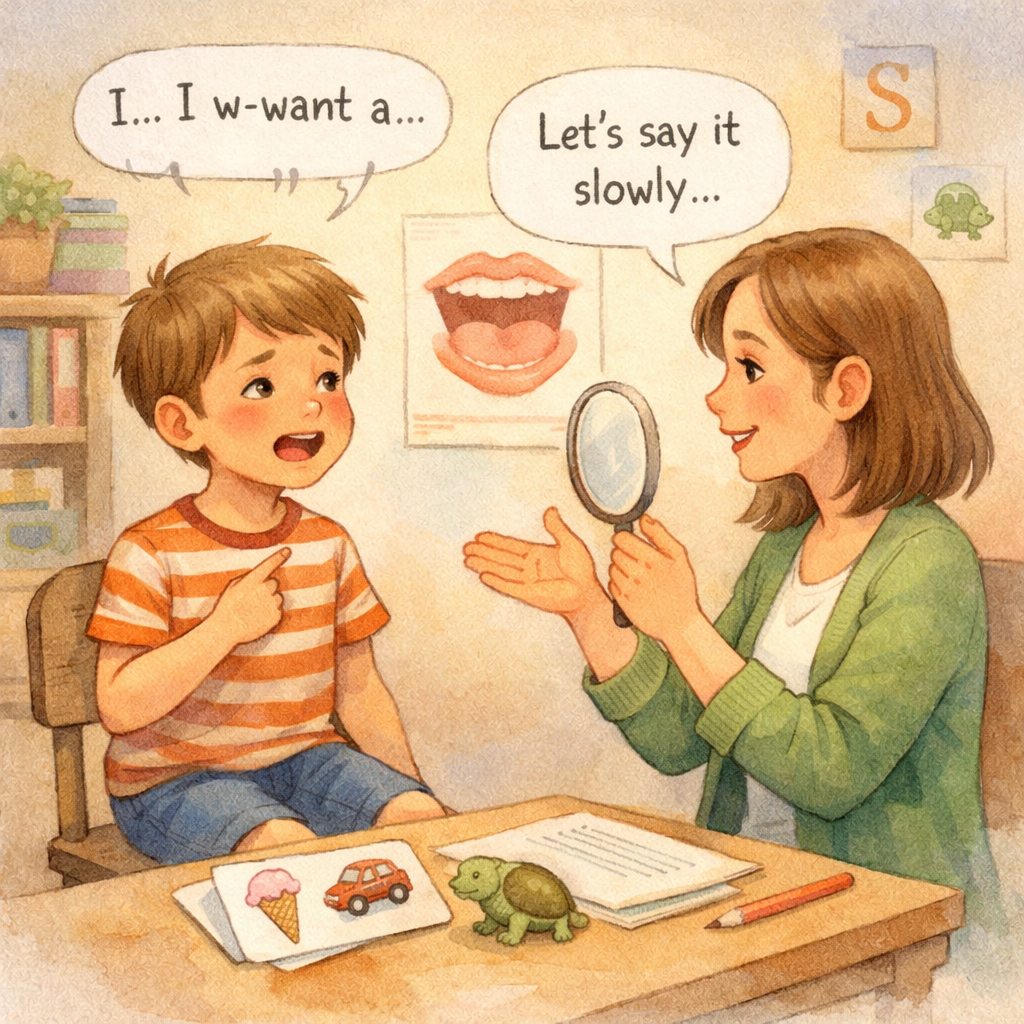
One of the most effective stuttering therapy options available in Canterbury is direct treatment programs. These speech therapy sessions involve one-on-one work with a therapist who guides you through exercises and strategies to improve fluency, making a meaningful difference in everyday lives. For children, these sessions are often play-based to keep them engaged and motivated.
Clinics often use well-researched programs tailored to different age groups. These evidence-based approaches, including real stories from past successes, are considered the gold standard in stuttering treatment.
|
Therapy Program |
Target Age Group |
Focus |
|---|---|---|
|
Lidcombe Program |
Preschool-aged children |
Parent-led behavioral treatment that provides positive reinforcement for fluent speech. |
|
Westmead Program |
School-aged children |
Focuses on gentle, prolonged speech patterns to reduce stuttering without direct feedback on fluency. |
At-Home and Mobile Stuttering Services
For many families in Canterbury, convenience is key. At-home and mobile stuttering therapy services bring expert support directly to you, creating a comfortable and familiar environment for learning practical skills. This option is particularly beneficial for young children who may feel more at ease in their own homes, which can positively impact child development.
A supportive team of mobile therapists can visit you at home, school, or preschool to provide important information during therapy sessions. These therapy sessions are just as effective as clinic-based ones, delivering the same evidence-based strategies in a setting that works for your schedule. This flexibility ensures that therapy can be integrated seamlessly into your daily routine.
Mobile therapy services offer several advantages:
- Therapy is conducted in a natural environment where communication happens every day.
- It saves you time and the stress of traveling to a clinic.
- Parents and caregivers can be more involved in the sessions.
Accessing Stuttering Therapy Through NDIS and Other Funding in Canterbury
Navigating funding for stuttering therapy can seem complicated, but there are several pathways available to families in the Canterbury LGA. The National Disability Insurance Scheme (NDIS) is a primary source of funding for many, providing therapy support to upskill caregivers and eligible individuals with a disability that impacts their communication.
As an NDIS-registered provider, local services can help you maximize your funding to achieve your child’s unique personality and communication goals. Understanding how the NDIS and other funding options work is the first step to accessing the support you need. We will now look at how the NDIS supports stuttering therapy and what other financial assistance is available.
How NDIS Supports Stuttering Therapy
The National Disability Insurance Scheme (NDIS) can be a fantastic resource for accessing stuttering therapy, especially for children with Autism Spectrum Disorder (ASD). If stuttering is part of a disability that has a significant impact on daily life, NDIS funding can cover the costs of therapy sessions. This support is typically funded under the "Capacity Building – Improved Daily Living" category in an NDIS plan.
For young children, the NDIS offers early intervention support, which is critical for addressing developmental concerns at a young age. Autism daar provides this funding to help children build foundational communication skills and can provide comprehensive support that includes speech therapy, positive behaviour support, and other services. Knowing how NDIS funding works for stuttering therapy in Canterbury can open doors to essential services.
Whether your plan is agency-managed, plan-managed, or self-managed, NDIS-registered providers can work with you to use your funding effectively. They provide assessments that support your psychological health, deliver ongoing therapy, and supply reports for plan reviews, ensuring you receive continuous and goal-oriented support.
Other Funding Options and Referrals

Beyond the NDIS, there are other ways to access funding support for stuttering therapy in Canterbury, particularly for Canterbury families. Some private health insurance plans offer rebates for speech pathology services, so it is worth checking your policy to see what you are covered for. This can help reduce the out-of-pocket costs for therapy.
Another common option is a Chronic Disease Management (CDM) plan, formerly known as an Enhanced Primary Care (EPC) plan, which may also be part of a graduate program focused on health management. If you are eligible, your GP can provide a referral that allows you to claim a Medicare rebate for a limited number of allied health sessions per year. The process for getting a referral to stuttering therapy in Canterbury via a CDM plan starts with a visit to your doctor.
Private Health Insurance: Check your "extras" cover for speech pathology rebates, including daar’s workshops.
- Private Health Insurance: Check your "extras" cover for speech pathology rebates.
- Chronic Disease Management (CDM) Plan: Obtain a referral from your GP to access Medicare rebates.
- Direct Payment: You can always pay for services directly without a referral.
Conclusion
In conclusion, navigating the landscape of stuttering therapy in Canterbury doesn't have to be overwhelming. By understanding the different options available—whether it's clinic-based speech therapy or at-home services—you can find the right approach that suits your needs and make a meaningful impact on your communication skills. Remember, support is accessible through NDIS and other funding streams, ensuring that everyone can receive the help they deserve. Prioritizing effective communication is essential for personal and professional growth.
If you're ready to take the next step toward improving your speech, don’t hesitate to reach out for consultation or call daar at 02 9133 2500 for assistance. Consider exploring the therapy options available in your area.
Frequently Asked Questions
Are group stuttering therapy sessions available in Canterbury?
Yes, some speech pathology services in the Canterbury area may offer group therapy sessions as part of their student placement programs. These groups provide a valuable opportunity to practice social communication skills in a supportive environment with peers who have similar experiences. The Canterbury team can advise if a group setting is suitable for your specific needs.
Is online or telehealth stuttering therapy offered locally?
Absolutely. Many local providers now offer telehealth speech therapy, allowing you to access sessions online from the comfort of your home. This convenient option supports the development of a child’s communication abilities by providing the same expert support, practical resources, and evidence-based strategies as in-person visits, ensuring you stay connected and receive continuous care.
Does Canterbury provide stuttering therapy for both children and adults?
Yes, speech pathologists in Canterbury offer stuttering therapy for people of all ages, addressing a variety of communication disorders. Services are tailored for young children, older children, and adults, recognizing that communication needs change throughout life. Whether it is early intervention for child development or strategies for adults, expert language therapy is available.
.svg)




.svg)