
.png?width=48&height=48&name=Group%201%20(3).png)























6 April, 2026

Understanding Sugar and Behavior Children: Key Insights

Key Highlights
Here are the key takeaways about sugar and your child's behavior:
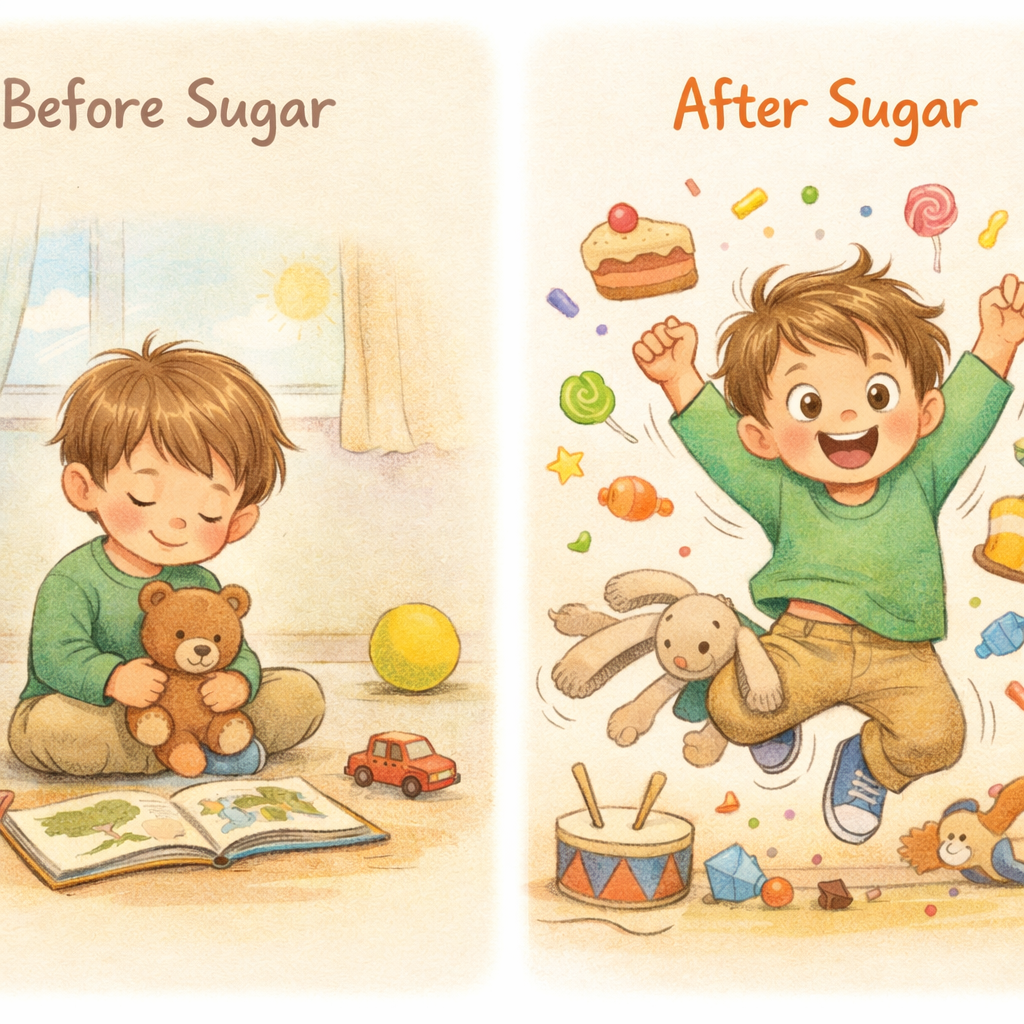
- Despite popular belief, scientific research consistently finds that sugar intake does not cause hyperactivity or behavioral problems in children.
- The link between sugar and attention deficit hyperactivity disorder (ADHD) is not supported by evidence; studies show no significant impact on behavior.
- Situations where kids eat a lot of sugar, like birthday parties, often cause excitement that is mistaken for a "sugar high."
- Parental expectations can influence how a child's behavior is perceived after consuming sugary foods.
- While sugar doesn't cause bad behavior, high sugar consumption is linked to other health risks like obesity and dental cavities.
Introduction
Many parents have watched their child become energetic after eating sweets and wondered about the connection. It's a common experience to attribute a burst of activity or a tantrum to a "sugar high," especially after parties or holidays. But does sugar really harm children's behavior? This article explores what the research says about sugar intake and your own reaction to its effects on children’s health. We'll examine the relationship between your child's diet and their conduct, helping you make informed decisions for your family.
Understanding Sugar and Its Role in the Diet of Australian Children
Sugar is a common part of many diets, but how much is too much for your child as part of a meal? Understanding the role of sugar is crucial for managing your child's diet and overall well-being. From obvious sweets to hidden sugars in everyday foods, navigating sugar intake can be a challenge for parents.
This section will help you understand the different kinds of sugar, the recommended daily limits for kids in Australia regarding the consumption of sugar, and where you might find hidden sugars. Knowing this information can better equip you to make healthy choices that support your child's development without unnecessary stress.
Types of Sugar Found in Common Foods
Understanding sugar consumption starts with knowing what to look for. Sugars are found in many foods and drinks—some occur naturally in fruits and milk, while others are added during processing.
Added sugars are the biggest contributors to high sugar intake, especially in popular items at events like birthday parties. Common sources include:
- Soft drinks and fruit juices
- Candies, chocolates, and lollipops
- Cakes, cookies, and ice cream
Knowing these sources helps you manage your child's sugar intake. Reading labels and checking ingredients allows you to make healthier choices—even during special occasions.
Recommended Daily Intake for Kids in Australia
To protect children's health, public health organizations provide guidelines on recommended sugar intake. These recommendations focus on limiting "free" or "added" sugars—those not naturally found in whole foods like fruits. Navigating this complicated topic, following these guidelines can help prevent long-term health issues.
For Australian children, the goal is to keep added sugar consumption to a minimum in their daily lives. The World Health Organization suggests that free sugars should make up less than 10% of total energy intake, with further benefits seen by reducing it to below 5%. This translates to about 6 teaspoons (24 grams) of sugar per day for an average child.
To put this into perspective, here are the approximate recommended limits based on age: | Age Group | Recommended Max Added Sugar (grams/day) | Equivalent in Teaspoons | 4-8 years | 12-16 grams | 3-4 teaspoons | | 9-13 years | 20-24 grams (amount of sugar) | 5-6 teaspoons |
Hidden Sugars in Snacks and Drinks
One of the main challenges in managing sugar intake is hidden sugars. Many snacks and drinks marketed as healthy contain added sugars, making it easy to exceed daily limits unknowingly.
Hidden sugars are common in processed foods aimed at families and children. Breakfast cereals, yogurt, and pasta sauces can have several teaspoons per serving—even savory snacks often include added sugar for flavor.
Watch for hidden sugars in:
- Flavored yogurts and milks
- Muesli bars and breakfast cereals
- Bottled sauces and dressings
Check nutrition labels for ingredients like corn syrup, dextrose, and fructose to spot and reduce hidden sugars in your child’s diet.
Sugar and ADHD Symptoms in Children
Many parents worry that sugar may cause or worsen ADHD symptoms, but scientific research does not support this belief. Studies have found no direct link between sugar intake and children's behavior, including those with ADHD and autism spectrum disorders.
Although a balanced diet is important, blaming sugar for ADHD symptoms lacks evidence. Next, we’ll review expert opinions, relevant studies, and practical advice for parents.
What Medical Professionals Say About Sugar and ADHD
Medical experts agree that a high dose of sugar does not cause ADHD or directly trigger hyperactivity. While parents often report "sugar rushes," clinical studies show no significant effect of sugar on children's behavior or cognitive function, even in so-called "sugar-sensitive" kids.
Research suggests that energetic behavior is more likely due to stimulating environments—like parties—where sugar is often consumed, rather than the sugar itself.
Studies Examining Sugar’s Link to ADHD
Research consistently shows no link between sugar consumption and attention deficit. In one study, children followed diets high in sugar, aspartame, or saccharin, where the placebo taste was also included, but researchers found no differences in behavior, attention, or mood. Another study found that even though most children consumed more sugar than recommended, there was no connection to behavioral or sleep issues. While these studies show correlation rather than causation, the evidence strongly suggests that sugar is not a primary cause of ADHD symptoms or attention problems.
Practical Implications for Parents of Children with ADHD
If your child has ADHD, you may wonder how this research applies to you. While reducing sugar won’t cure ADHD symptoms, a balanced diet remains important for your child’s health, according to studies found in Google Scholar. Focus on realistic expectations and what truly helps.
A key takeaway is the impact of parental expectations. Studies show parents who believe their child consumed sugar often rate behavior as more hyperactive—even after a placebo. Your own perspective and perceptions can shape how you view your child’s actions.
Instead of targeting sugar, try these strategies:
- Identify underlying causes of challenging behavior, like attention needs, sensory overload, or skill gaps.
- Keep routines and meals consistent to support overall well-being.
- Collaborate with your child’s doctor or therapist to use evidence-based ADHD management tools.
Effects of Sugar on Attention, Mood, and Aggression
Beyond hyperactivity, many parents worry that high sugar intake can affect their child's mood, leading to irritability, aggression, or even a child’s challenging behavior and a shorter attention span. It's easy to blame a sudden meltdown on the candy they just ate, but the connection is more complex than it appears.
Research has explored these links, and the findings may surprise you. In fact, some studies suggest sugar can even have temporary benefits for focus. The following sections will explore whether sugar causes inattentiveness, its connection to mood swings, and how it compares to other dietary factors.
Does Sugar Cause Inattentiveness or Shorter Attention Spans?
Contrary to popular belief, research does not support the idea that sugar causes inattentiveness in middle school students and other children. In fact, some studies show that glucose, the brain's main energy source, can temporarily boost memory and classroom performance.
One study found that children who drank a high-sugar beverage performed better than those who had a sugar-free drink, leading to significant results. Another study showed no difference in attention or overall performance between high-sugar and low-sugar diets.
Blaming sugar for lack of focus is misguided; factors like sleep, environment, and routine play a much bigger role in a child's concentration.
Links Between Sugar and Irritability or Aggressive Behavior
The belief that sugar causes irritability or aggressive behavior in children is common among parents. While tantrums after sugary treats might seem linked to diet, scientific studies have found no consistent connection between sugar intake and more challenging behavior or negative mood.
Research shows no reliable link between how much sugar children consume and their mood or irritability. In controlled studies, varying sugar levels in diets did not affect children's behavior.
Mood swings are more likely due to the circumstances surrounding sugar consumption, such as fatigue after a busy event, not the sugar itself. Blaming sugar can distract parents from real causes like tiredness or overstimulation.
Comparing Sugar to Other Dietary Factors Affecting Behavior
While sugar gets a lot of attention, it's important to consider other dietary factors that might influence a child's behavior. Some research has explored the effects of things like food additives and colorings; however, a limitation of these experiments is that the evidence remains a topic of debate and further study.
The belief that sugar causes bad behavior is so strong, largely due to parental expectation and social reinforcement. When a parent expects a "sugar high" from a particular sugary food, they are more likely to interpret their child's normal energy as hyperactivity. This idea is often reinforced by other adults who share similar beliefs, creating a powerful, shared narrative.
When considering diet and behavior, it's useful to look at the whole picture. Other factors to consider include:
- A balanced diet: Ensuring your child gets enough nutrients from all food groups.
- Artificial additives: Some parents anecdotally report sensitivity to certain food colorings or preservatives.
- Caffeine: This stimulant, found in some soft drinks and chocolate, can impact energy and sleep.
How Sugar Affects the Developing Brain in Children
Sugar plays a complex role in the body, especially when it comes to the developing brain. On one hand, the brain needs glucose (from sugar and carbs) to function. On the other hand, a consistently high sugar consumption can have potential long-term consequences on health. Understanding this balance is key for parents.
This section will explore how glucose fuels brain function, the potential long-term risks of a high-sugar diet, and the immediate effects of sugar on energy and mood. This will provide a clearer picture of how sugar intake impacts your child's cognitive functioning and overall well-being.
Role of Glucose in Brain Function
Glucose is the brain's primary source of fuel. When your child eats sugary or carbohydrate-rich foods, their body breaks them down into glucose, which then enters the bloodstream. This glucose is an important energy source that powers everything from thinking and learning to memory.
Some researchers speculate that children's brains may require more glucose to operate efficiently compared to adult brains. This could explain why some studies find short-term improvements in memory and academic performance immediately after children consume sugar, although critics argue that the time period following sugar consumption may be too short to see significant results. A quick supply of glucose can give the brain a temporary boost.
However, the key is balance. While the brain needs glucose, it functions best with stable blood sugar levels. A diet that causes constant spikes and crashes in blood sugar can be less effective than one that provides a steady supply of energy from more complex carbohydrates and balanced meals.
Potential Long-term Impacts of High Sugar Consumption
While sugar might not be the culprit behind behavioral issues, a diet with high sugar consumption is linked to significant long-term health risks. These health complications are supported by consistent evidence and are a primary reason why public health experts advise limiting added sugars in children's diets.
Consistently consuming too much sugar can lead to a range of serious health issues. The most well-known risk is an increased risk of obesity, which in turn can lead to other problems. A diet high in sugar is also a major contributor to dental cavities in children.
Over time, these habits can set the stage for more severe health complications later in life, including the impacts of sugar, such as an elevated risk for type 2 diabetes and cardiovascular disease. Focusing on these proven health risks is a more effective way to motivate a reduction in sugar intake than focusing on unproven behavioral effects.
Short-term Effects on Energy and Mood
The immediate effect of sugar intake, specifically the impact of sugar, is a quick spike in blood sugar, providing a rapid burst of energy. This is why some studies have observed temporary improvements in cognitive tasks like memory shortly after a child has a sugary snack or drink. The brain gets a quick fuel-up, which can enhance performance for a short time.
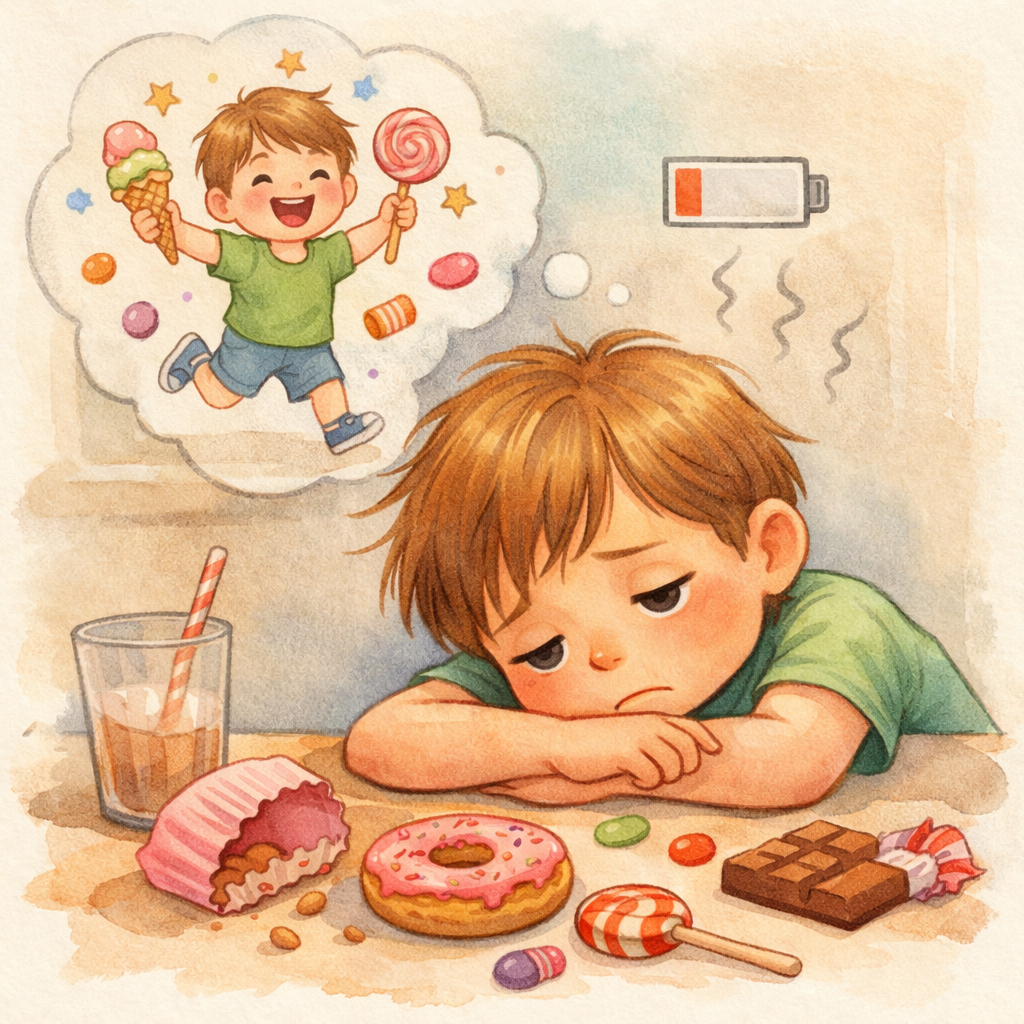
However, this energy boost is often followed by a "crash." As the body rapidly processes the sugar, blood sugar levels can drop, which may lead to feelings of tiredness or lethargy. While this cycle is often mistaken for a behavioral problem, it is a normal physiological response to a rapid influx of simple sugars.
This fluctuation in energy levels might be misinterpreted as a negative change in mood or children's behavior, which can include an uncharacteristic tantrum. Instead of seeing it as a behavioral issue, it helps to view it as the body's natural response. Providing balanced meals with complex carbohydrates can help maintain more stable energy levels throughout the day.
Managing Sugar Intake for Better Behavior
Even though the link between sugar and children's behavior is a myth, managing sugar intake is still a cornerstone of a healthy diet. Reducing excess sugar helps prevent long-term health risks and promotes healthy eating habits. In some cases, this may lead to a tendency towards controlling behavior around sugar. The goal isn't to eliminate sugar completely but to approach it with moderation and strategy.
There are many practical tips you can use to manage sugar in your household without making it a source of conflict. From reading labels to finding tasty alternatives, small changes can make a big difference. The following sections offer simple ideas for reducing sugar in meals, choosing healthier snacks, and encouraging community support.
Practical Tips for Reducing Sugar in Everyday Meals
Incorporating less sugar into your family's daily meals can be easier than you think, especially in terms of how this change reflects in real life. A key strategy recommended by researchers is using "covert control" rather than strict restriction. This means you make subtle changes to the food environment at home, which can foster a healthy lifestyle without making sugar a forbidden fruit.
Strictly forbidding sugary foods can backfire, making children more preoccupied with them and more likely to overindulge when given the chance, negatively impacting children’s behavior. Instead, try serving less dessert or offering it alongside the main meal. Research shows that children actually eat less dessert when it's served with their meal rather than as a special treat afterward.
Here are a few more practical tips:
- Don't keep a lot of sugary snacks and drinks in the house.
- Model healthy eating by avoiding sweets in front of your children.
- Read labels to choose products with lower sugar content, like plain yogurt instead of flavored varieties.
Healthy Snack Alternatives for Australian Families
Snack time is often when sugar intake can creep up, but it's also a great opportunity to introduce nutritious and delicious alternatives. Having healthy snack alternatives readily available makes it easy for kids to make good choices and supports a healthy diet.
Instead of reaching for pre-packaged, processed snacks that are often high in added sugar, focus on whole foods. These options provide essential nutrients and sustained energy without the sugar crash. With a little preparation, you can have a variety of tasty snacks on hand that your kids will love.
Consider these simple and healthy snack ideas:
- Fresh fruit, like apple slices, berries, or bananas.
- Vegetable sticks (carrots, cucumbers, bell peppers) with hummus.
- Plain yogurt topped with fruit or a sprinkle of cinnamon.
- A small handful of unsalted nuts or seeds (for older children).
How Schools and Communities Can Support Lower Sugar Consumption
Creating healthy eating patterns isn't just a job for parents; schools and the wider community play a vital role in supporting lower sugar consumption. When everyone works together, it creates an environment where making healthy choices is the easy choice. This is a key aspect of public health.
Schools can make a significant impact by implementing a strong school policy on nutrition. This could involve offering healthier food options in the canteen, providing fresh water fountains to discourage sugary drinks, and integrating nutrition education into the curriculum. Community sports clubs and local events can also contribute by offering healthy food and drink choices.
Here are ways schools and communities can help:
- Promote "water only" policies at school and sporting events.
- Offer non-food rewards and fundraising options.
- Provide cooking classes or workshops that teach families how to prepare healthy, low-sugar meals.
Conclusion
In summary, understanding the relationship between sugar and children's behavior is crucial for parents. By being aware of the types of sugars found in common foods and their recommended daily intake, you can make informed decisions that positively impact your child's health and mood. The research linking sugar to ADHD symptoms and its effects on attention, aggression, and overall brain development underscores the importance of managing sugar intake, especially in cases that may involve a lack of skills related to emotional regulation. By implementing practical strategies to reduce sugar consumption and promote healthier alternatives, you can help your child thrive both physically and emotionally. Remember, small changes can lead to significant improvements in behavior and well-being.
If you’re ready to take the next step in supporting your child’s health, consider booking a consultation or call daar at 02 9133 2500 with our experts for personalized guidance.
Frequently Asked Questions
Is sugar directly responsible for hyperactivity in children?
No, research consistently shows that sugar intake is not directly responsible for hyperactivity. Studies comparing sugar to a placebo have found no significant impact on children's behavior, although there may be a specific instance where parents believe otherwise. The "sugar rush" is more likely caused by the exciting situations where sugar is consumed, not the sugar itself.
Can cutting back on sugar really improve my child’s behavior?
While reducing sugar intake is great for a healthy diet, it is unlikely to directly improve your child's behavior, executive functioning, or mood. Research shows no link between sugar and behavior, even when considering different variables. Instead, focusing on routine, sleep, and addressing the root causes of behavior is more effective.
Are there any debunked myths about sugar and children’s moods?
Yes, the biggest myth is that sugar causes bad moods or hyperactivity. Studies show that parental expectation and their own expectations play a huge role; parents who think their child had sugar rate their behavior as more hyperactive, even when the child was given a sugar-free placebo. This demonstrates the power of perception.
.svg)




.svg)