
.png?width=48&height=48&name=Group%201%20(3).png)























21 January, 2026

Engaging Speech Therapy for Kids: Tips for Success
Introduction
Language development plays a vital role in your child’s ability to connect with the world. Through effective communication, children express their thoughts, build relationships, and navigate their environment. Sometimes, a child may face challenges that impact their ability to communicate clearly. This is where speech therapy can make a significant difference. By providing specialized support, speech therapy helps enhance your child’s communication and language skills, giving them the tools they need to express themselves confidently.
Key Highlights
-
Engaging speech therapy sessions are vital for improving your child's communication skills and confidence.
-
Early intervention is essential, as children who receive support for communication challenges early on often see the best results.
-
Speech therapists use personalized, evidence-based plans to address articulation, language delays, and social communication skills.
-
The assessment process helps identify a child's unique needs to create an effective therapy plan.
-
Parental involvement plays a critical role in reinforcing skills learned in therapy and supporting a child's speech development.
Identifying When Kids Need Speech Therapy
It can be difficult to tell if your child’s speech is developing normally or if there may be language challenges. Signs like trouble pronouncing words, a limited vocabulary for their age, or difficulty following directions may indicate a communication disorder that could benefit from professional help.
If you’re concerned about your child’s speech, consulting a speech therapist is a good first step. They can explain typical milestones and decide if an assessment is needed. Early recognition allows you to seek support promptly. Let’s look at key signs and ages to watch for.
Early Signs and Symptoms in Childhood Development
Recognizing early signs of communication challenges is crucial for getting your child the support they need. Early intervention can greatly improve language development and help prevent future social and academic difficulties. While children develop at different rates, certain red flags suggest a professional evaluation may be needed.
Communication challenges can involve receptive language (what your child understands) or expressive language (what your child says). For example, a toddler struggling to respond to their name or point to objects may show early signs of concern.
Key signs to discuss with a speech pathologist include:
-
Not babbling by 6 months or making limited eye contact
-
Using fewer than 10 words by 18 months
-
Speech that is hard for family members to understand by age 2–3
Key Ages for Considering Pediatric Speech Pathology
Development varies, but key ages and milestones can guide when to seek help from a speech pathologist. Monitoring these stages allows for early intervention if delays are present, leading to better outcomes.
From infancy to preschool, children rapidly build speech and language skills. Delays during these years may signal underlying issues that benefit from targeted therapy. For example, by age two, children should know about 50 words and start forming simple phrases.
Here’s a quick guide to red flags at different ages that may warrant a speech pathologist assessment:
|
Age Range |
Signs That Merit SLP Referral |
|---|---|
|
Birth – 12 months |
No babbling by 6 months; little eye contact or social smiling |
|
12 – 24 months |
Under 10 words by 18 months; doesn’t point; rarely responds |
|
2 – 3 years |
Fewer than 50 words or no two-word phrases by age two; hard to understand speech |
The Assessment Process in Speech Pathology
When you decide to seek therapy services, the first step is a comprehensive assessment. A speech pathologist will evaluate to understand your child's specific language challenges and communication abilities. This process is designed to be child-centered, blending standardized tests with play-based observations to get a full picture of their skills.
The goal of the assessment process is to identify strengths and areas needing support. This detailed profile allows the therapist to create a tailored intervention plan that addresses your child's unique needs. Now, we'll look at how these evaluations are performed and what tools are used.
How Speech Pathologists Evaluate Speech and Language Issues
During assessment, a speech pathologist uses various methods to evaluate your child's communication skills in different situations. This process goes beyond testing; it involves observing play, speech clarity, and language understanding to create a complete communication profile.
The evaluation covers:
-
Articulation and phonology (how sounds are made and used)
-
Receptive and expressive language (understanding and using words)
-
Social communication skills (such as turn-taking and body language)
This holistic approach ensures therapy is both comprehensive and targeted.
Common Diagnostic Tools Used in Pediatric Speech Therapy
To get a clear picture of your child's abilities, speech pathologists use various diagnostic tools. These tools help measure skills against age-appropriate benchmarks and identify specific areas of difficulty. The combination of formal and informal measures provides a well-rounded view before therapy sessions begin.
Standardized tests are often used to assess vocabulary, grammar, and language comprehension. In addition, informal observations during play give the therapist insight into your child's natural communication style and social interactions. This blend of tools ensures the therapy plan is built on accurate and relevant information.
Here are some common types of assessments used to evaluate a child's speech and language.
|
Type: What |
What It Measures |
|---|---|
|
Standardized Tests |
Compares a child's skills in areas like vocabulary and grammar to their peers. |
|
Play-Based Observation |
Evaluates how a child communicates naturally during play, including social skills and expressive language. |
|
Parent/Caregiver Interviews |
Gathers essential information about a child's developmental history and communication at home. |
What Happens During a Speech Therapy Session for Kids?
So, what can you expect from speech therapy sessions? Each session is carefully designed to be fun, engaging, and tailored to your child’s unique needs. The speech therapist creates individualized therapy plans that focus on specific goals, whether it's improving articulation, expanding vocabulary, or building social communication skills.
Therapy is not a one-size-fits-all approach. Sessions are often play-based, especially for younger children, making learning feel natural and motivating. The therapist uses evidence-based techniques to help your child build new skills in a supportive environment. The following sections will detail the structure of these sessions and the activities used.
Structure of Engaging Sessions in Speech Therapy Liverpool
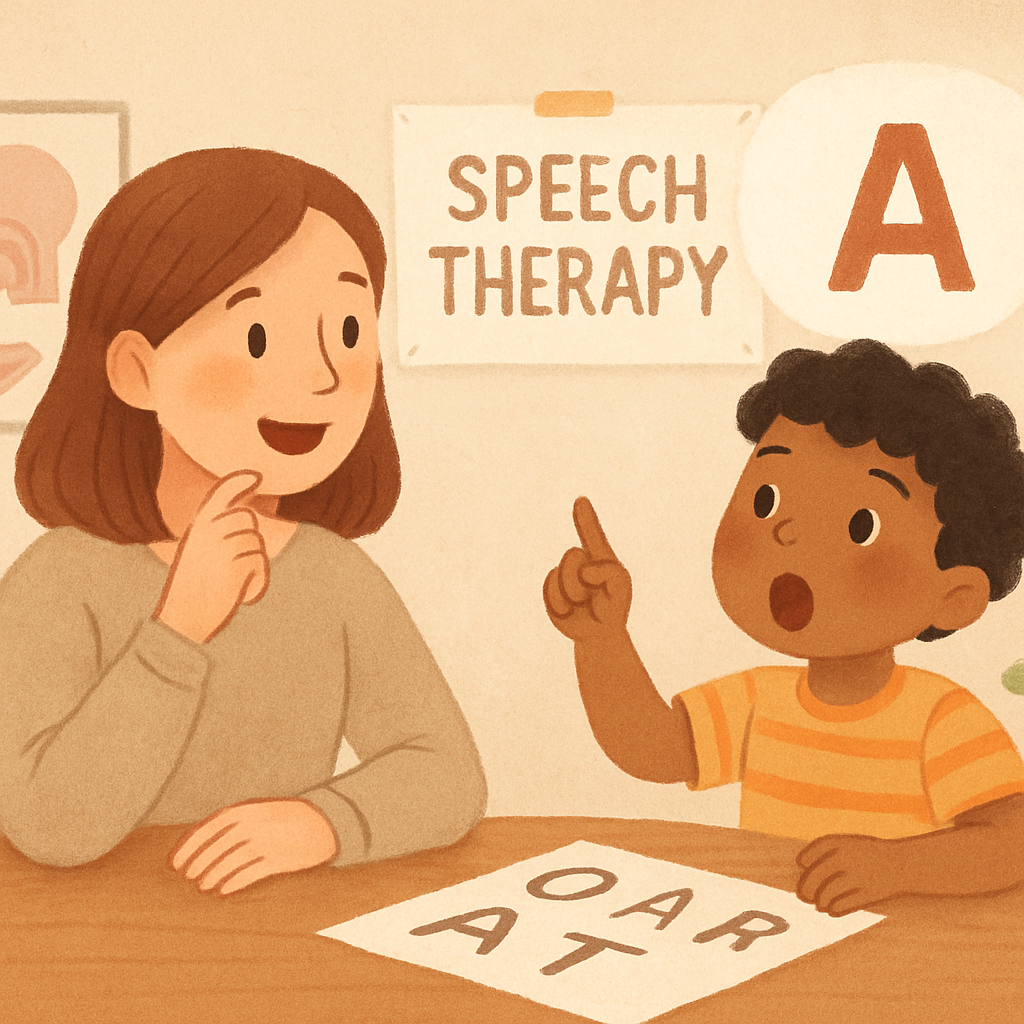
Effective speech therapy centers on engaging sessions. Therapists in Liverpool and beyond create fun, supportive environments where children feel comfortable learning. Sessions are flexible and tailored to each child's needs and attention span.
Typically, sessions blend structured activities with play-based learning—starting with a warm-up game, moving to targeted skill-building, and ending with a fun exercise. This variety keeps children motivated and involved.
Session structure often includes:
-
Play-based activities that naturally support communication goals
-
Structured tabletop tasks for focused skill-building
-
Short breaks to maintain attention and engagement
Activities and Techniques Used for Young Children
For young children, speech therapy makes learning fun. Therapists use playful activities to target goals like sound production and vocabulary building, so kids learn naturally while playing.
Common techniques include interactive games, storytelling, and creative play. For example, a therapist might use a board game to practice turn-taking and speech sounds, making learning engaging and effective.
Examples of therapy activities:
-
Reading stories aloud to build vocabulary and comprehension
-
Using picture boards or flashcards to practice naming objects and sounds
-
Playing with toys like bubbles or Play-Doh to encourage expressive language
Parental Involvement and Support at Home
Your role as a parent is crucial to your child's success in speech therapy. Parental involvement ensures that the skills learned during therapy sessions are carried over into everyday life. When family members are engaged, children tend to make faster progress and achieve better outcomes.
You can support your child by practicing the techniques your therapist recommends and creating a language-rich environment at home. This collaboration helps reinforce new communication skills and makes learning a continuous process. Let's look at some practical ways you can help at home and work with your speech pathologist.
Tips for Reinforcing Speech Therapy Progress at Home
Supporting your child’s therapy goals at home can be simple and effective. By weaving easy practices into daily routines, you boost their speech development and reinforce therapy progress.
A great way to help is by narrating your activities—talk during meals, bath time, or errands. This gives your child natural exposure to new vocabulary. Ask your speech therapist for specific activities suited to your child.
Tips for home support:
-
Practice your therapist’s strategies for a few minutes daily.
-
Read together and ask questions about the story.
-
Encourage your child to express their needs and thoughts throughout the day.
Collaboration Between Families and Speech Pathologists
A strong partnership between your family and the speech pathologist is key to your child's success. Working together keeps everyone aligned and focused on shared goals. When families actively participate in therapy, children feel fully supported.
Your therapist will collaborate with you to create therapy plans, share updates, and suggest strategies for home use. Ask questions and share observations—your input helps tailor therapy for the best results.
Effective collaboration includes:
-
Communicating regularly about progress and challenges
-
Joining sessions to learn strategies firsthand
-
Matching home activities to therapy goals
Conclusion
Engaging speech therapy sessions help kids develop vital communication skills that support their overall growth. When parents recognize the need for therapy and participate actively, they create a supportive environment and boost its effectiveness. Collaboration between families and speech pathologists ensures strategies are reinforced at home. With consistent support, children gain confidence in expressing themselves.
To learn more about how speech therapy can benefit your child, consider scheduling a consultation or call daar at 02 9133 2500!
Frequently Asked Questions
Can speech therapy for kids be covered under the NDIS in Australia?
Yes, speech therapy for kids can be covered by the NDIS. If your child has an NDIS plan, you can use the funding for therapy services with a registered speech pathologist. This support helps children with disabilities access the interventions they need to improve their communication skills and achieve their goals.
What qualifications should a pediatric speech therapist have?
A qualified pediatric speech therapist, or speech-language pathologist (SLP), should hold a master's degree in the field and a Certificate of Clinical Competence (CCC-SLP). They must also be licensed in their state. These qualifications ensure they have the expertise to assess and treat a range of communication disorders.
Is speech therapy effective for children with developmental delays?
Absolutely. Speech therapy is highly effective for children with developmental delays. Through early intervention, therapists can target specific challenges and help children build essential communication skills. This support improves their ability to interact with others, learn in school, and achieve their therapy goals for more effective communication.
.svg)




.svg)