
.png?width=48&height=48&name=Group%201%20(3).png)























3 December, 2025

Introduction
Understanding and managing a child's difficult behaviours can feel overwhelming for any parent or caregiver. If you're looking for a way to create lasting positive change, specialised positive behaviour support offers a path forward. Unlike traditional behaviour therapy, this approach focuses on understanding the "why" behind a child's actions. It provides specialised support by creating personalized strategies that not only address behaviours of concern but also empower your child with new skills, fostering independence and enhancing their overall wellbeing. Families seeking local specialised behaviour support services for children can start by reaching out to their family doctor, school counselor, or regional pediatric clinics. Additionally, many communities offer directories and online resources, such as local government websites and early intervention service centers, where parents can find qualified behaviour support professionals in their area.
Key Highlights
In a world where every child deserves the opportunity to thrive, understanding Positive Behaviour Support (PBS) is crucial. PBS is not just a set of strategies; it's a holistic approach designed to enhance children's development while addressing their unique behavioural needs. As parents and caregivers, recognizing when your child may require specialized support can be the first step toward fostering an environment of growth and positivity. In this blog, we will delve into the heart of PBS—discussing its benefits, how to develop effective support plans, and the pivotal role families play in this journey. By equipping ourselves with knowledge and tools, we can empower our children to navigate their emotions, build social connections, and blossom into confident individuals. Let’s explore how you can make a difference in your child’s life through understanding and implementing Positive Behaviour Support. When considering a children’s behaviour specialist, it’s important that they hold relevant qualifications in fields such as psychology, education, or child development, as well as specialized training in Positive Behaviour Support (PBS). Experience working with children and knowledge of evidence-based practices are also key to providing effective guidance and tailored support.
Understanding Positive Behaviour Support (PBS)

Positive Behaviour Support (PBS) is an evidence-based framework designed to enhance the quality of life for children exhibiting challenging behaviours. By focusing on proactive strategies, PBS aims to identify underlying triggers and unmet needs, leading to effective communication and emotional regulation. This holistic approach not only fosters the development of new skills but also promotes positive actions. Behaviour support practitioners utilize thorough assessments and tailored support plans, ultimately enabling children to thrive within a supportive environment that nurtures their growth and potential.
Identifying the Signs That Your Child Needs Behaviour Support
Recognizing when a child may benefit from behaviour support is essential for fostering their development. Look out for persistent challenging behaviours that disrupt daily life or hinder social interactions. Indicators such as difficulty in communication, emotional dysregulation, and resistance to new activities can suggest unmet needs. Additionally, changes in behaviour during transitions or heightened sensory sensitivities might signal the necessity for support. Addressing these signs early through tailored strategies can significantly improve overall quality of life and pave the way for successful communication and social skills.
How Specialised Support Enhances Child Development
Specialised support plays a pivotal role in fostering holistic child development, particularly for those facing developmental disabilities. By utilizing targeted positive behaviour support strategies, children can acquire new skills, enhance communication abilities, and navigate social interactions more effectively. Tailored interventions not only address challenging behaviours but also nurture emotional regulation. This supportive environment empowers children to reach their full potential, ensuring their individual needs are met while laying the foundation for improved quality of life and future success.
Main Benefits of Positive Behaviour Support for Children
The advantages of positive behaviour support extend far beyond just managing difficult behaviours. This approach equips children with valuable new skills that they can use for the rest of their lives, significantly improving their overall quality of life. The focus is on empowerment, helping your child build confidence in their ability to navigate the world.
From better communication skills to stronger social skills, the benefits are comprehensive. The behaviour support strategies used are designed to foster independence and promote healthier relationships. Below, we'll look at how this support improves emotional control and fosters social inclusion.
Improved Emotional Regulation and Communication Skills
One of the greatest benefits of positive behaviour support is the development of emotional regulation and communication skills. Many challenging behaviours stem from a child's inability to understand or express their feelings. Through careful behaviour analysis, practitioners identify these gaps and teach children how to recognize and manage their emotions in a healthy way.
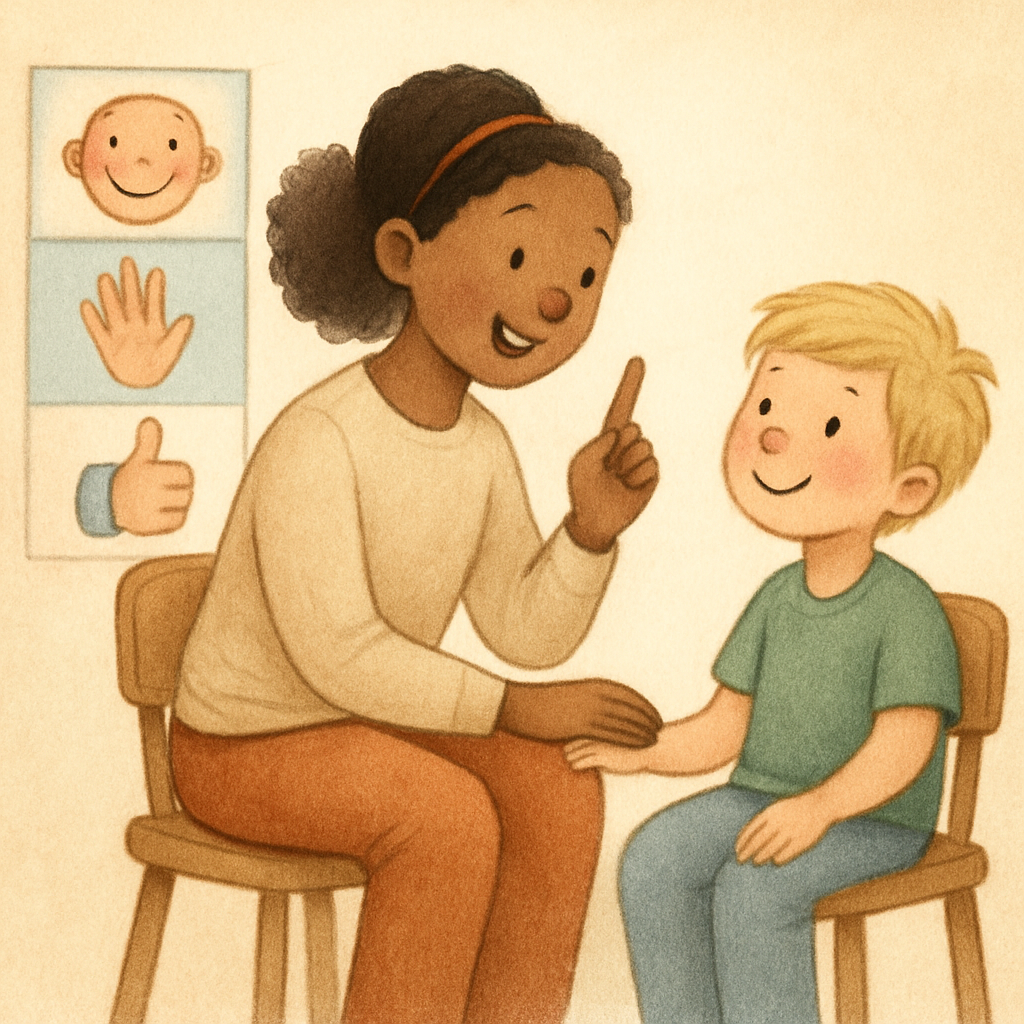
Effective communication is another key outcome. When children learn how to express their wants and needs clearly, they are less likely to resort to challenging behaviours. This could involve verbal language, sign language, or picture systems, depending on the child's abilities. Better communication directly leads to more successful social interactions with peers and family.
This skill-building approach helps children in many ways, including:
-
Recognizing feelings like frustration or anxiety.
-
Learning strategies to calm down before becoming overwhelmed.
-
Expressing needs and wants clearly to others.
-
Building stronger, more positive relationships.
Fostering Independence and Social Inclusion
Fostering independence is essential for children, particularly those with developmental disabilities, as it paves the way for enhanced social inclusion. By implementing positive behaviour support strategies, children can develop essential communication skills and adaptive behaviours crucial for daily life. Behaviour support practitioners utilize tailored approaches to help children navigate social interactions and engage more effectively with their peers.
Encouraging positive actions allows children to experience success in various environments, boosting their confidence and overall quality of life. Early intervention is vital, as it enables children to build new skills and discover their strengths, fostering a sense of community. Through proactive strategies, families can create a supportive environment that promotes both independence and meaningful relationships, paving the way for lasting positive change in their lives.
Steps in Developing a Positive Behaviour Support Plan
Creating an effective positive behaviour support plan is a thoughtful and collaborative process. It begins with a deep dive into your child's specific needs, using principles from applied behaviour analysis to understand their behaviour from every angle. This isn't a quick fix but a structured approach to creating lasting change.
A practitioner will work closely with you, your family, and any support workers to gather information and develop strategies that are practical and personalized. The two main steps in this process are conducting a thorough assessment and then creating a customized plan, which we will explore next.
Conducting Functional Assessments and Understanding Triggers
The first step in creating a support plan is conducting a functional assessment. This is one of the most important parts of the process, as it involves thorough assessments to understand the "why" behind behaviours of concern. A practitioner will observe your child in different settings and talk to family members to gather information.
This behaviour analysis helps identify specific triggers—the events or situations that happen right before the behaviour occurs. It also looks at the consequences, or what the child gains from the behaviour, such as getting attention or escaping a difficult task. Understanding these patterns is key to developing effective strategies.
Here is a simple example of what a functional assessment might uncover:
|
Trigger |
Behaviour of Concern |
Consequence/Function |
|---|---|---|
|
Asked to do a difficult school task |
Throws books on the floor |
Escapes the task and is sent to a quiet corner |
By pinpointing these details, the team can start to build a plan that addresses the root cause, not just the surface-level action.
Creating Customized Strategies and Monitoring Progress
Once the assessment is complete, the next step is to create a customized support plan filled with effective strategies. These strategies are tailored to your child's unique needs, strengths, and preferences. For these strategies to be implemented effectively for children with different needs, the plan must be flexible and person-centered.
The focus is on proactive strategies that prevent challenging behaviours before they start. This involves using positive reinforcement to encourage desired actions and teaching alternative skills. For example, instead of just saying "don't hit," the plan will teach the child to say "I'm angry" and ask for a break.
Monitoring progress is essential to ensure the plan is working. The team will regularly review data and get feedback from you to make adjustments as needed. Key components of a successful plan include:
-
Clear instructions for everyone involved.
-
Consistent use of positive reinforcement.
-
Teaching new skills as alternatives to old behaviours.
-
Regularly checking in to see what’s working and what isn’t.
The Role of Parents and Families in Behaviour Therapy
As a parent or caregiver, you play a crucial role in your child's behaviour therapy journey. You know your child best, and your involvement is essential for the success of any support plan. Family members provide the consistency needed to reinforce new skills and behaviours at home and in the community.
This process is built on collaboration between you and the professionals supporting your child. Through parent training and active advocacy, you become an empowered partner in your child's development. Let's look at how this teamwork functions and why your involvement is so important.
Collaboration Between Families and Specialists
Families are the cornerstone of a child's support system, and true collaboration is key to success in specialised behaviour support. Behaviour support practitioners work with you, not just for you. This partnership ensures that the strategies developed are practical for your family's daily life and align with your values and goals for your child.
This teamwork often extends to a wider circle, including teachers, support workers, and other health professionals like speech therapists or psychologists. When everyone is on the same page, your child receives consistent messages and support across all environments, which helps reinforce learning and new behaviours more effectively.
Your role in this collaboration includes:
-
Sharing insights about your child's strengths, challenges, and preferences.
-
Working with the practitioner to set meaningful goals.
-
Implementing strategies consistently at home.
-
Providing feedback on what is and isn't working. This teamwork ensures the support plan remains relevant and effective as your child grows.
Parent Training, Involvement, and Advocacy
Parent training is a fundamental part of the positive behaviour support process. It equips you with the skills and confidence to implement the support plan effectively. This training helps you understand the reasons behind your child's behaviour and provides you with practical strategies to use in everyday situations, contributing to your professional growth as a parent.
Your active involvement ensures that the strategies become a natural part of your family's routine. When you are engaged, you can help your child practice new skills in real-world settings, which is where true progress happens. However, parents often face challenges like navigating complex systems, finding the right provider, and advocating for their child's unmet needs.
Advocacy is another powerful role you play. You are your child’s strongest voice, ensuring they receive the services and accommodations they need at school and in the community. Your insights help professionals understand what truly works for your child, making you an indispensable part of the support team.
How NDIS Supports and Funds Specialised Behaviour Support

The National Disability Insurance Scheme (NDIS) can be a great resource for families seeking specialised behaviour support. This disability insurance scheme is designed to give NDIS participants more choice and control over the support they receive, including funding for important therapy services.
If your child has a disability and displays behaviours of concern, you may be able to use your NDIS funding to access these services. A well-structured support plan can be included as part of your child's overall NDIS plan. Let's explore how to access this funding and find the right providers.
Eligibility, Application, and Funding Pathways
To access funding for specialised behaviour support through the NDIS, you first need to determine your child's eligibility. The NDIS funds "reasonable and necessary" supports related to a person's disability. For NDIS participants, this can include behaviour support if it helps them achieve their goals, such as improving relationships or community participation.
The application process involves providing evidence of your child's disability and how it impacts their daily life. The NDIS approves funding by assessing how the proposed support will help your child build skills and reduce the impact of their disability. Once approved, the funding is allocated to your child's support plan in specific categories, like "Improved Relationships" for behaviour support.
Here are the basic eligibility criteria for the NDIS:
|
Eligibility Question |
Requirement |
|---|---|
|
Are you under 65 years old? |
Yes |
|
Are you an Australian citizen or resident? |
Yes |
|
Do you live in Australia? |
Yes |
|
Do you have a permanent and significant disability? |
Yes |
If you answered yes to all, you may be eligible to apply for NDIS funding.
Approved Providers and Navigating NDIS Services
Accessing appropriate behaviour support services through the National Disability Insurance Scheme (NDIS) begins with selecting approved providers. These practitioners are equipped with the necessary expertise in autism spectrum disorder and developmental disabilities, ensuring the delivery of tailored support plans that meet each child's individual needs. Navigating NDIS services becomes easier by leveraging the insights and experiences of behaviour support practitioners who understand the specific challenges faced by families.
Effective communication with your chosen provider is crucial. Establishing a collaborative relationship allows for ongoing monitoring of progress and adjustments to behaviour support strategies as needed. By actively participating in this process, families can advocate for their child's needs, ensuring that all therapy services align with the goal of fostering a supportive environment for positive behaviour change.
Get a free consultation today or call 02 9133 2500 and discover how positive behaviour management can make a difference in your life!
Frequently Asked Questions
What is specialized behaviour support, and how does it differ from general behaviour management techniques?
Specialized positive behaviour support uses behaviour analysis to understand the root cause of a child's actions. Unlike general techniques that may focus on stopping a behaviour, it uses effective strategies to teach new skills. Led by behaviour support practitioners, it aims to reduce or eliminate the need for restrictive practices by creating positive, long-term change.
How can positive behaviour support strategies be effectively implemented for children with different needs?
Effective implementation relies on customization. Behaviour support strategies are tailored to a child's individual needs by creating a supportive environment and using positive reinforcement. This person-centered approach ensures that whether a child has communication difficulties or sensory sensitivities, the plan is practical, respectful, and designed to help them succeed.
What are some common challenges parents face when seeking specialized behaviour support for their children?
Parents often face challenges in navigating complex systems to find the right services for their child’s unmet needs. Strong advocacy is required to secure an appropriate support plan. Building effective collaboration with professionals and engaging in opportunities for professional growth can help overcome hurdles in getting the right support.
.svg)




.svg)