
.png?width=48&height=48&name=Group%201%20(3).png)























18 August, 2026

Socialised Behaviour Therapy: Unlocking Your Child's Potential
Key Highlights
- Socialised behaviour therapy helps children build social skills for smoother social interactions at home, school, and in the community.
- This form of behaviour therapy focuses on communication skills, emotional regulation, and positive change through guided practice.
- Children can learn in a safe space using role-play, group tasks, and positive reinforcement.
- It can support kids with autism spectrum disorder, social anxiety, and other developmental disabilities.
- Families also benefit as children use new skills more confidently in daily life.
Introduction
Strong social skills shape friendships, learning, and confidence. Yet for some children, social situations feel confusing, stressful, or overwhelming. That is where behaviour therapy can help. Socialised behaviour therapy gives your child practical support to improve communication, emotional awareness, and everyday interactions. It is a structured approach that supports child development by teaching skills step by step in a supportive environment. When children get the right help early, they are better prepared to connect, participate, and grow.
Understanding Socialised Behaviour Therapy for Children
Socialised behaviour therapy is a form of therapy designed to improve how children handle social interactions, communication, and behavior in daily life. It focuses on practical skills that help children respond more positively in group settings, at home, and at school.
Using behaviour analysis, therapists look at patterns, triggers, and responses. This helps them teach new skills in ways that match your child’s development and individual needs. To understand its value, it helps to look at what it is and how it compares with other approaches.
What Is Socialised Behaviour Therapy?
At its core, socialised behaviour therapy is a structured way to help children improve how they interact with others. It combines behaviour therapy with social skills training, so your child can learn how to join conversations, read social cues, and respond in more positive ways.
Just as important, it gives children a safe space to practice. Instead of expecting change to happen all at once, therapists break social situations into small steps. Children can rehearse new responses, get guidance, and build confidence without pressure.
This helps in real and lasting ways. A child may become better at sharing, listening, taking turns, or managing frustration. Socialised behaviour therapy also supports emotional regulation, which can make daily routines, peer interactions, and family life feel more manageable for everyone.
How Socialised Behaviour Therapy Differs from Other Behavioral Therapies
Many types of behaviour therapy focus on reducing one specific behavior, such as refusal, aggression, or rule-breaking. Socialised behaviour therapy takes a wider view. It looks at how your child functions with others and teaches skills that improve social participation.
There can be some overlap with behavioural therapy, especially when thoughts and feelings affect behavior. Still, this approach stays strongly focused on observable actions in social settings. Children practice what to say, how to respond, and how to handle group situations more effectively.
Another difference is personalization. Therapists tailor activities to your child’s individual needs, strengths, and goals. The aim is not only to reduce challenging behavior but also to build positive behaviour, stronger relationships, and more success in everyday life.
Why Socialised Behaviour Therapy Matters for Kids
Children face social situations every day, from classroom discussions to playground games. When these moments feel hard, stress can grow quickly. Over time, that can affect confidence, behavior, and mental health.
Socialised behaviour therapy matters because it gives children tools they can actually use. With the right support, they can build positive relationships, handle interactions with less fear, and feel more capable in daily life. The benefits often reach beyond the child and support the whole family too.
Key Benefits for Children and Families
The biggest benefit is practical progress. Children are not just told what to do. They are shown, guided, and encouraged until new behaviors start to feel natural. That makes social skills easier to use in daily life.
Parents often notice changes at home as well. When therapy uses positive reinforcement, children are more likely to repeat helpful behaviors. This can reduce stress around routines, play, and communication.
Benefits may include:
- Better social skills during peer interactions and family activities
- Stronger communication and listening in everyday situations
- Improved emotional regulation during frustration or change
- More confidence in school, community, and group settings
- Better quality of life for both children and caregivers
These gains can make home life calmer and help children feel more successful across different environments.
Who Can Benefit: Autism, Social Anxiety, and More
This therapy can help a wide range of children. That includes kids with autism spectrum disorder, oppositional defiant disorder, conduct-related behavioral challenges, and other developmental disabilities that affect social communication and behavior.
For children on the autism spectrum, socialised behaviour therapy provides clear teaching, repetition, and structured practice. It helps them work on social cues, conversation, eye contact, and peer interactions while building on their individual strengths.
It can also support children with social anxiety. In a supportive environment, they can practice small social steps without feeling overwhelmed. Over time, therapy sessions can reduce avoidance and increase confidence. The approach is flexible, which means support can be matched to your child’s needs, pace, and goals.
How Socialised Behaviour Therapy Works in Practice
In practice, therapy sessions start with understanding your child’s challenges, strengths, and goals. Therapists use observation and behaviour analysis to identify what is getting in the way and what skills need support first.
From there, sessions focus on teaching and practicing practical responses. Positive behaviour support is used to encourage success, while routines and strategies are adjusted to fit everyday life. When children receive the right support consistently, progress becomes easier to carry into home, school, and community settings.
Common Techniques Used During Therapy Sessions
Therapists use several hands-on methods to support skill development. These may include modeling, role-playing, direct teaching, guided practice, and feedback. The goal is to make communication skills and social responses easier to learn and repeat.
Positive behaviour support is a central part of the process. When children show helpful behaviors, they receive praise or another meaningful reward. This increases the chance that they will use those behaviors again in daily life.
Here is a simple view of common techniques used in therapy services:
|
Technique |
How it helps |
|---|---|
|
Role-playing |
Lets children practice conversations, sharing, or problem-solving in a safe setting |
|
Modeling |
Shows children what positive social behavior looks like before they try it |
|
Positive reinforcement |
Rewards progress to strengthen helpful responses |
|
Behaviour analysis |
Identifies triggers, patterns, and underlying causes of challenging behaviours |
|
Structured practice |
Builds consistency through repeated use of new skills |
Group Activities and Peer Learning Opportunities
Children often learn best by doing. Group activities create chances to practice with other kids in a supportive environment. That matters because many social skills are easier to develop when children can try them in real-time with peers.
These sessions also support peer interactions at your child’s own pace. A therapist can guide turn-taking, joining in, listening, and responding while keeping the setting calm and structured. This makes group learning feel safer and more manageable.
Group work may include:
- Taking turns during games or shared tasks
- Practicing greetings and small talk with peers
- Learning how to join a group activity appropriately
- Using problem-solving during minor disagreements
Over time, these experiences can build confidence and help children use strong social skills outside therapy too.
Social Skills Development Through Therapy
Social skills development is one of the main goals of this therapy. Children need more than rules about behavior. They need practical ways to connect, respond, and participate with others in daily life.
That is why therapy focuses on meaningful connections, not just correction. Children work on specific challenges such as listening, joining conversations, reading body language, and managing frustration. The next sections look at two key areas that often make a big difference: communication and conflict handling.
Building Communication and Listening Skills
Communication skills are at the center of successful social interactions. In therapy, children learn how to start conversations, respond clearly, and stay engaged with others. These are necessary skills for school, friendships, and everyday life.
Therapists also teach active listening. That means helping children notice what another person is saying, wait their turn, and respond in a way that fits the moment. This strengthens social communication and reduces common misunderstandings.
Practice often happens in group settings or structured one-on-one activities. A child may rehearse asking for help, joining a discussion, or comfortably using eye contact. As these new skills improve, children often feel more confident speaking up and connecting with others in a calm, respectful manner.
Encouraging Assertiveness and Conflict Resolution
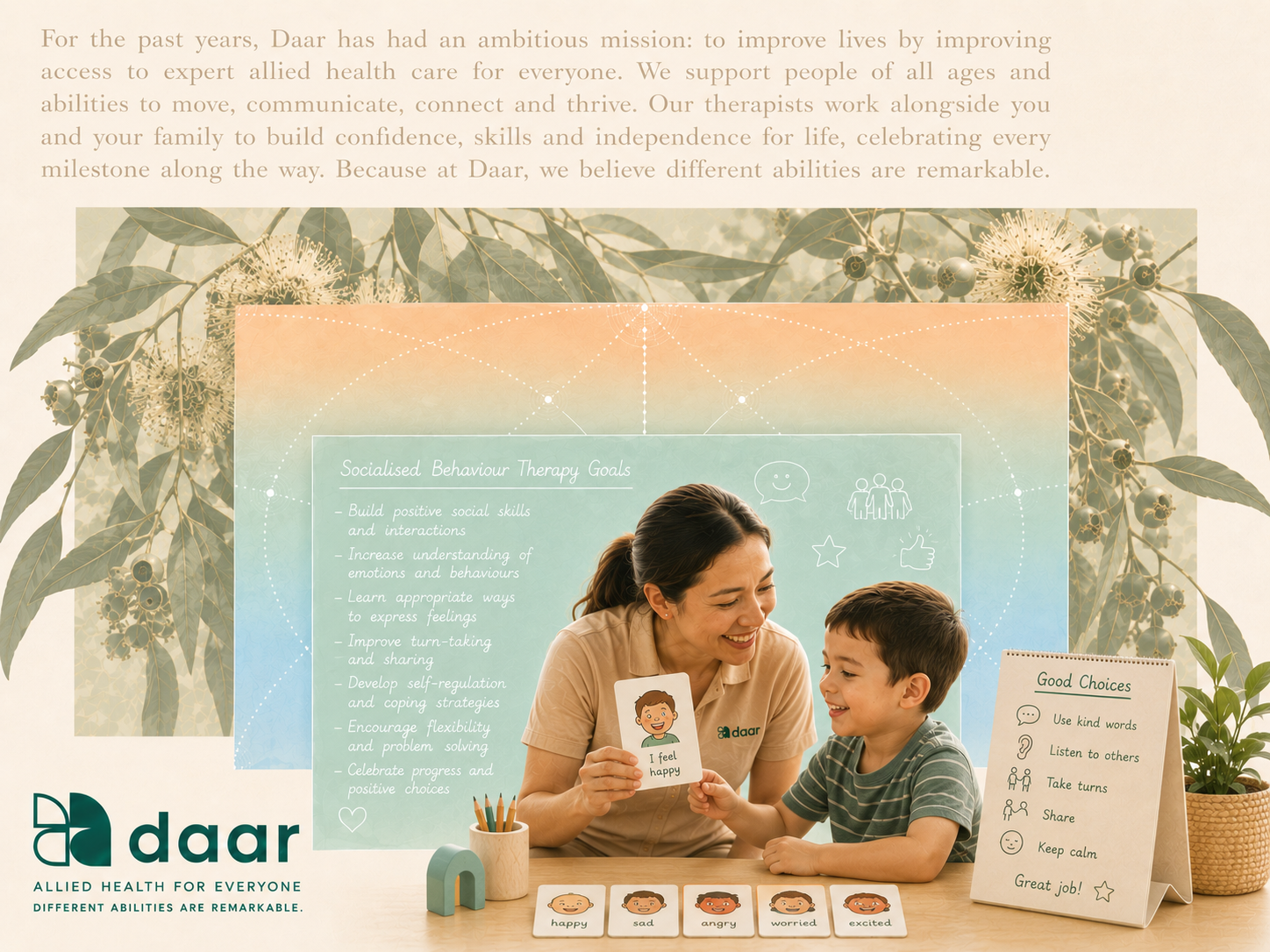
Some children avoid speaking up. Others react too quickly when upset. Socialised behaviour therapy helps with both by teaching assertiveness in a simple, respectful way. Children learn how to express needs, say no, and ask for space without aggression.
Conflict resolution is another key area. Therapists guide children through common problems such as sharing issues, disagreements, or frustration during play. They learn steps for staying calm, using words, and finding a better response.
A big part of this is noticing social cues and body language. Children practice reading facial expressions, tone, and posture so they can respond more appropriately. These skills support healthier relationships and help children handle social challenges with more control and confidence.
Conclusion
In conclusion, Socialised Behaviour Therapy is a powerful tool that can unlock your child's potential by enhancing their social skills and emotional well-being. By focusing on group interactions and peer learning, this therapy not only helps children with autism and social anxiety but also supports a broader range of developmental challenges. With techniques that foster communication, assertiveness, and conflict resolution, children can thrive in social settings and develop lifelong skills. If you're considering this approach for your child, remember that every step taken in therapy is a step toward a brighter future.
Don’t hesitate to reach out for consultation or call daar at 02 9133 2500 ; together, we can make a difference!
Frequently Asked Questions
Does socialised behaviour therapy really work for social anxiety or autism?
Yes, it can help. For children with social anxiety or autism spectrum disorder, therapy sessions provide structured practice for social skills in a safe setting. With consistent support, many children show positive outcomes in communication, confidence, and peer interactions across daily life.
How long does it take to see results with socialised behaviour therapy?
It depends on your child’s individual needs, goals, and how often therapy sessions occur. Some families notice changes within weeks, while others need more time. Early intervention often helps, and steady behaviour therapy supports stronger skill development over time.
Can I use my NDIS funding for socialised behaviour therapy?
In many cases, yes. NDIS funding may cover therapy services such as behaviour therapy and positive behaviour support when they match your child’s goals and approved plan. It is best to check your funding details and speak with your provider about available support services.
.svg)




.svg)