
.png?width=48&height=48&name=Group%201%20(3).png)























19 August, 2026

Mastering Positive Behaviour Support for Children Tips
Key Highlights
- Positive behaviour support helps you understand why challenging behaviour happens and what your child may be trying to communicate.
- A strong support plan focuses on teaching safer, more useful skills instead of only reacting after problems begin.
- Proactive strategies can reduce triggers at home, school, and in everyday routines.
- Behaviour support practitioners work with family members and other supports to build consistent responses.
- The long-term goal is better relationships, greater independence, and improved quality of life.
Introduction
Positive behaviour support is a practical, child-focused way to help young people build safer and more effective habits. Instead of asking only how to stop a behaviour, it asks why it is happening and what support will help most. That is how positive behaviour support works. It looks at triggers, communication, routines, and unmet needs, then teaches better alternatives. When used well, it can improve relationships, reduce stress, and support a child’s overall quality of life across daily settings.
Understanding Positive Behaviour Support for Children
Positive behaviour support is an individualised approach built on a simple idea: all behaviour serves a purpose. A child may be expressing distress, avoiding something hard, or trying to get a need met. Behaviour support practitioners begin by understanding that purpose.
From there, behaviour support strategies are chosen and shaped into a support plan. The aim is not just to stop a behaviour in the moment. It is to teach better skills, adjust the environment, and improve quality of life. The next sections explain the principles behind this approach and how it differs from older discipline methods.
Core Principles of Positive Behaviour Support
At its core, positive behaviour support starts with understanding. If your child shows challenging behaviour, the first step is to ask what that behaviour is achieving or communicating. This might relate to stress, communication difficulty, sensory needs, or another unmet need.
Just as important, this is a holistic approach. It looks beyond the behaviour itself and considers the child’s environment, routines, strengths, and relationships. Support strategies are then built around the child’s real life, not a one-size-fits-all method.
Another key principle is respect. Positive behaviour support aims to protect human rights and dignity while teaching safer, more effective ways to communicate and cope. Families, teachers, and professionals work together so support is consistent, practical, and focused on long-term positive change.
How Positive Behaviour Support Differs from Traditional Approaches
Traditional discipline approaches often focus on what happens after a problem behaviour appears. That can mean correction, consequences, or other punitive measures. While those responses may stop a moment, they do not always explain why it happened.
Positive behaviour support takes a different path. It uses proactive strategies to identify triggers, communication barriers, and routine problems before behaviour grows. This personalised approach helps adults teach alternatives instead of relying only on reaction.
There is also a strong focus on reducing restrictive practices. The goal is to support safety and learning while protecting rights, not limiting freedom unless necessary. In plain English, positive behaviour support looks for causes, teaches new responses, and builds lasting skills rather than short-term compliance.
Key Benefits of Positive Behaviour Support in Childhood
Positive behaviour support can make daily life easier for children and the adults around them. A well-built support plan helps children learn communication, coping, and participation skills that support emotional regulation and better routines.
Over time, this can improve quality of life, strengthen social skills, and reduce pressure in home or school settings. It can also help reduce challenging behaviours by teaching safer replacements. The next two sections look more closely at emotional growth and behaviour change.
Enhancing Emotional Wellbeing and Social Skills
This approach strengthens emotional wellbeing by helping children feel safer and more settled through clear routines, communication, and early support.
Positive behaviour support also builds social skills. Children learn to ask for help, manage frustration, and interact better with others—improving relationships at home, school, and in the community.
For families and teachers, it offers practical guidance with clear responses and teaching steps that encourage positive behaviour. This structure reduces stress for everyone and helps children feel more capable, connected, and included.
Reducing Challenging Behaviours in Children
Positive behaviour support can reduce challenging behaviours in children by addressing what happens before, during, and after the behaviour. This helps adults understand its causes.
A behaviour support plan then targets triggers and teaches safer skills to meet the same needs. For example, a child who gets frustrated may learn communication or emotional regulation instead of acting out.
These strategies are used in real-life settings, not just therapy. With consistent support at home and school, children practice positive behaviours daily. Over time, difficult behaviours decrease as better options become available.
Positive Behaviour Support Strategies at Home
Home is one of the most important places for a support plan to work well. Children spend much of everyday life there, so routines, responses, and relationships at home can shape progress in powerful ways.
That is why family members play a central role. With the right support strategies and a strong support network, you can use proactive strategies that reduce triggers and teach better habits during normal routines. The next sections share practical tips and simple reinforcement ideas you can use at home.
Tips for Caregivers to Encourage Positive Behaviour
Caregivers have a central role in making positive behaviour support work. You know your child’s patterns, interests, and stress points better than anyone. When home responses match the wider plan, children are more likely to feel secure and succeed.
A good place to start is with simple, consistent support strategies. Clear expectations, calm routines, and regular praise can go a long way. If support workers are involved, keeping everyone aligned helps your child get the same message across settings.
Helpful steps include:
- Set clear expectations before activities and transitions.
- Use positive reinforcement right away when your child shows effort or progress.
- Practice communication skills during meals, play, or getting ready routines.
- Share updates with teachers, therapists, and support workers.
- Keep responses calm and consistent when behaviour becomes difficult.
Examples of Everyday Positive Reinforcement Techniques
Positive reinforcement means noticing and rewarding behaviours you want to see more often. In everyday life, that can be praise, a preferred activity, extra choice, or another meaningful reward. The key is to connect the reward to the helpful behaviour as soon as possible.
For children with autism, these approaches are often paired with communication skills teaching, clear routines, and predictable support from the support team. This helps children learn new ways to ask for help, manage distress, or move through transitions.
Here are simple examples you can use:
|
Situation |
Positive reinforcement idea |
Skill supported |
|---|---|---|
|
Child asks for help calmly |
Give praise and quick help |
Communication skills |
|
Child follows a new routine |
Offer a favorite activity after |
Flexibility |
|
Child uses words instead of yelling |
Acknowledge effort right away |
Emotional regulation |
|
Child completes a transition |
Give a sticker or extra choice |
Independence |
Developing an Effective Positive Behaviour Support Plan
An effective positive behaviour support plan begins with assessment, teamwork, and clear goals. Behaviour support practitioners gather information about the child’s needs, triggers, routines, and strengths before deciding what should change.
From there, the support team builds a support plan that can be used across home, school, and other settings. In Australia, this kind of help may be funded through the National Disability Insurance Scheme for eligible children with disability. The next sections explain assessment and goal setting in more detail.
Conducting Functional Behaviour Assessments
A functional behaviour assessment looks at the reason behind a child’s behaviour instead of making assumptions. It considers what happens before the behaviour, what the child does, and what happens after. This helps identify what the behaviour may be communicating or achieving.
In practice, the support team may use observation, family input, and information from school or therapy services. Physical causes may also need to be ruled out, because discomfort or illness can affect behaviour in major ways.
Once the pattern is clearer, the findings shape the support plan. This makes school implementation more effective because teachers can respond to the child’s behaviour with strategies that match the real cause. It also gives families and professionals a shared starting point for action.
Setting Realistic Goals and Monitoring Progress
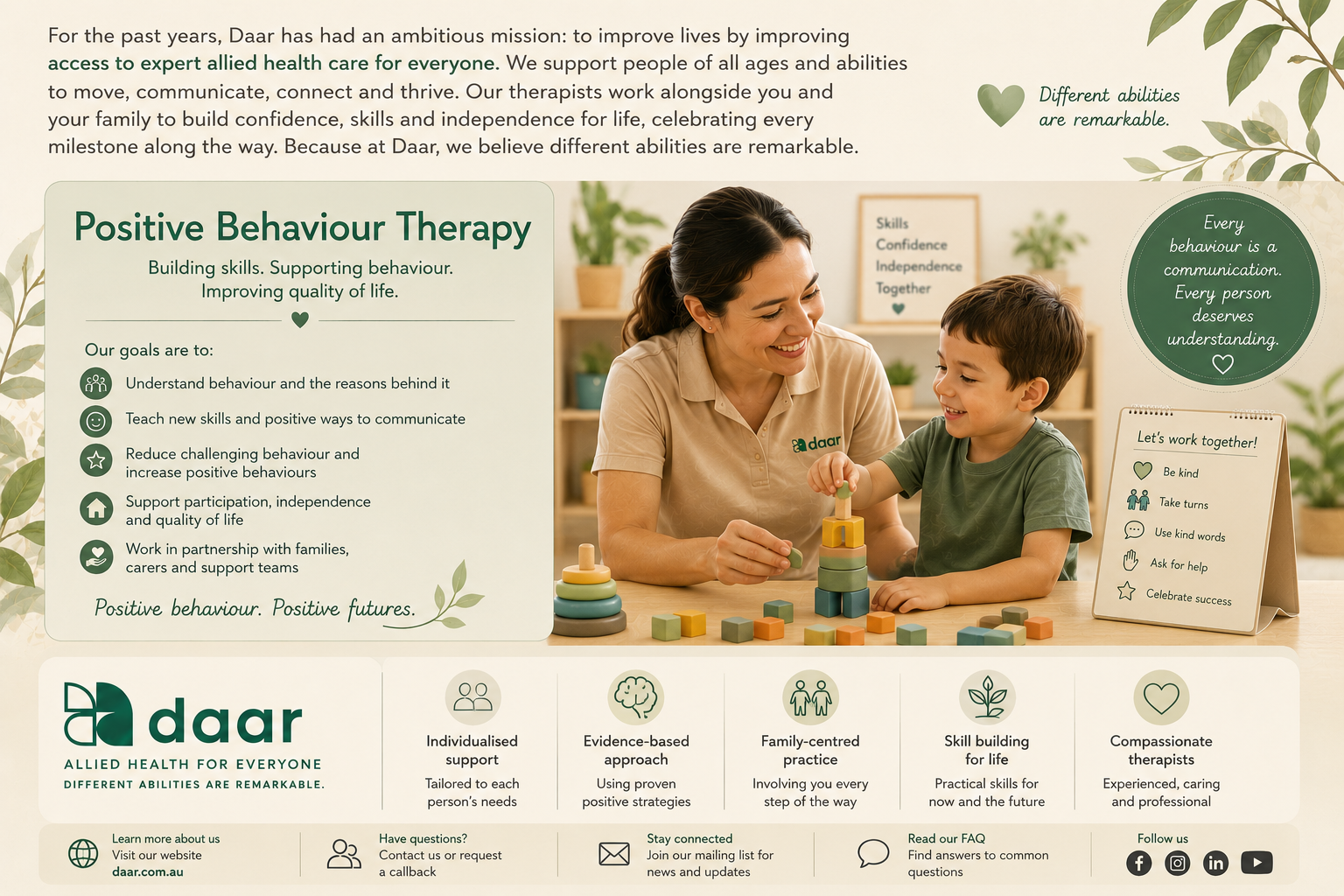
After assessment, the next step is setting goals that are clear and realistic. A related goal might be helping a child ask for a break, manage transitions, or join a group activity with less stress. Small goals are often more useful than broad ones.
A positive behaviour support plan should also include how progress will be tracked. Families, schools, and other members of the support network can note what works, what changes, and where more help is needed. This keeps the plan active rather than fixed.
Monitoring matters because children grow and environments change. Regular review helps adults adjust strategies so they still fit the child’s needs. Over time, this can support personal satisfaction, stronger participation, and more inclusive environments where the child can do well.
Conclusion
In conclusion, mastering Positive Behaviour Support (PBS) for children can significantly transform their emotional well-being and social skills. By understanding the core principles of PBS and implementing effective strategies at home, caregivers can foster an environment that promotes positive behaviour changes. Utilisng techniques such as functional behaviour assessments and setting realistic goals can lead to measurable progress. Remember, creating a supportive atmosphere enables children to thrive and reduces challenging behaviours, setting them up for long-term success.
If you’re ready to dive deeper into positive behaviour support and want personalised guidance, don't hesitate to reach out for a consultation or call daar at 02 9133 2500.
Frequently Asked Questions
Can Positive Behaviour Support help children in foster or kinship care?
Yes. Positive behaviour support can help children in foster care or kinship care by creating a clear support plan around their routines, stress points, and communication needs. With consistent support services and caregiver input, children can learn safer ways to cope, communicate, and feel secure.
Are restrictive practices part of Positive Behaviour Support for children?
Positive behaviour support aims to reduce and eliminate restrictive practices, not depend on them. A behaviour support plan should focus on teaching skills, changing triggers, and protecting human rights. The support team works toward safer, less restrictive responses that support dignity and long-term progress.
How can families and schools work together for effective Positive Behaviour Support?
Families and schools work best as one support team. When family members and the child’s teachers share updates, use the same support plan, and agree on responses, the child gets more consistent help. That collaborative team approach makes skill-building clearer and more effective across settings.
.svg)




.svg)