
.png?width=48&height=48&name=Group%201%20(3).png)























10 April, 2026

NDIS Support for Screen Time Management: Behaviour Therapy Strategies in Australia
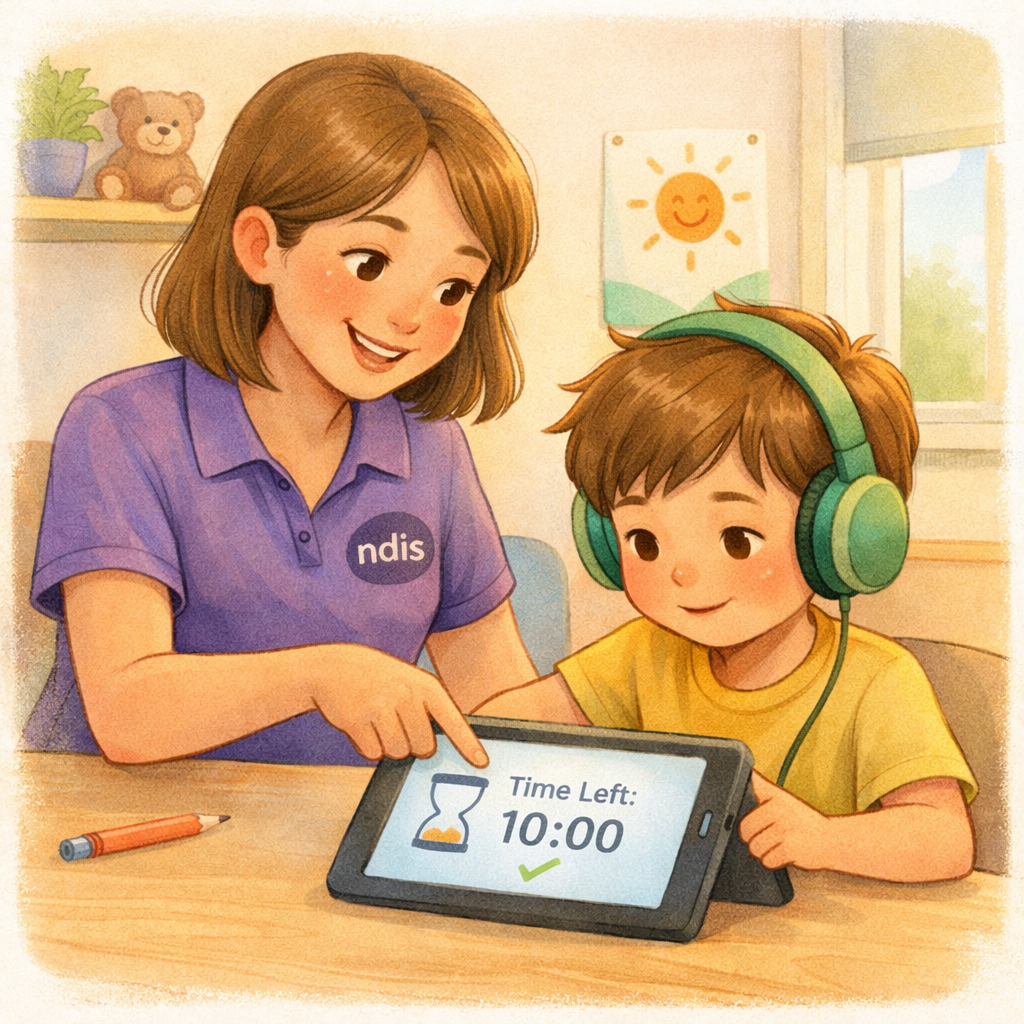
Managing screen time is a growing concern for many Australian families, particularly those caring for children with developmental delays, autism, ADHD, or behavioural challenges. While screens can offer educational and calming benefits, excessive use can negatively affect communication, emotional regulation, sleep, and social development.
For families accessing the National Disability Insurance Scheme (NDIS), there is good news: support for screen time management can often be included under behaviour therapy and capacity-building services. With the right plan and professional guidance, parents and carers can implement structured strategies to reduce screen dependence and promote healthier routines.
This blog explores how NDIS funding can support screen time management through behaviour therapy approaches, what services may be covered, and how to make the most of your child’s plan.
Why Screen Time Management Matters for Children with Additional Needs
Children with developmental or behavioural conditions often have a stronger attachment to screens due to:
- Predictable and repetitive content
- Reduced social demands
- Sensory stimulation
- Emotional regulation support
However, excessive screen use can lead to:
- Increased behavioural challenges
- Reduced communication and social interaction
- Sleep disturbances
- Difficulty transitioning between activities
For children supported under the NDIS, managing screen time is not just a parenting goal—it is often a therapeutic priority linked to developmental outcomes.
What are the NDIS and How Does It Help?
The National Disability Insurance Scheme (NDIS) provides funding to Australians with permanent and significant disabilities to support their independence, development, and participation in daily life.
NDIS plans are tailored to individual needs and may include funding for therapies, supports, and interventions that address behavioural challenges—including screen dependency.
Is Screen Time Management Covered by the NDIS?
Yes—indirectly. The NDIS does not fund “screen time reduction” as a standalone item. However, it does fund therapies and supports that address behaviours linked to excessive screen use.
These supports are typically included under:
- Capacity Building – Improved Daily Living
- Capacity Building – Improved Relationships
- Core Supports (in some cases)
If a child’s screen use is impacting their development, behaviour, or daily functioning, behaviour therapy strategies targeting this issue can be funded.
Behaviour Therapy and Screen Time Management
Behaviour therapy focuses on understanding why behaviours occur and how to modify them using structured strategies. For screen time management, this involves:
- Identifying triggers (e.g., boredom, anxiety)
- Replacing screen use with alternative behaviours
- Reinforcing positive habits
- Reducing reliance on screens for emotional regulation
NDIS-funded therapists often use evidence-based approaches such as:
- Applied Behaviour Analysis (ABA)
- Positive Behaviour Support (PBS)
- Occupational therapy strategies
Types of NDIS Supports That Can Help
1. Behaviour Support Practitioners
NDIS-registered behaviour support practitioners develop Positive Behaviour Support Plans (PBSPs) tailored to the child’s needs.
These plans may include:
- Structured routines to limit screen use
- Strategies for managing transitions
- Techniques to reduce screen-related meltdowns
2. Occupational Therapists
Occupational therapists help children build skills for daily life, including:
- Sensory regulation
- Play skills
- Attention and focus
They can recommend alternatives to screen time that meet a child’s sensory needs, such as physical play or calming activities.
3. Speech Pathologists
For children who rely on screens due to communication difficulties, speech therapy can:
- Improve language skills
- Encourage social interaction
- Reduce dependence on passive screen engagement
4. Support Workers
Support workers can assist with:
- Implementing screen-free routines
- Engaging children in structured activities
- Providing supervision and consistency
Behaviour Therapy Strategies Funded by NDIS
1. Functional Behaviour Assessment (FBA)
An FBA identifies why a child is using screens excessively. For example:
- Is it to avoid difficult tasks?
- Is it for sensory comfort?
- Is it due to lack of alternatives?
Understanding the function of behaviour is key to effective intervention.
2. Positive Reinforcement Systems
Children are rewarded for reducing screen time or engaging in alternative activities.
Examples include:
- Token systems
- Reward charts
- Verbal praise
These systems are often designed and monitored by therapists.
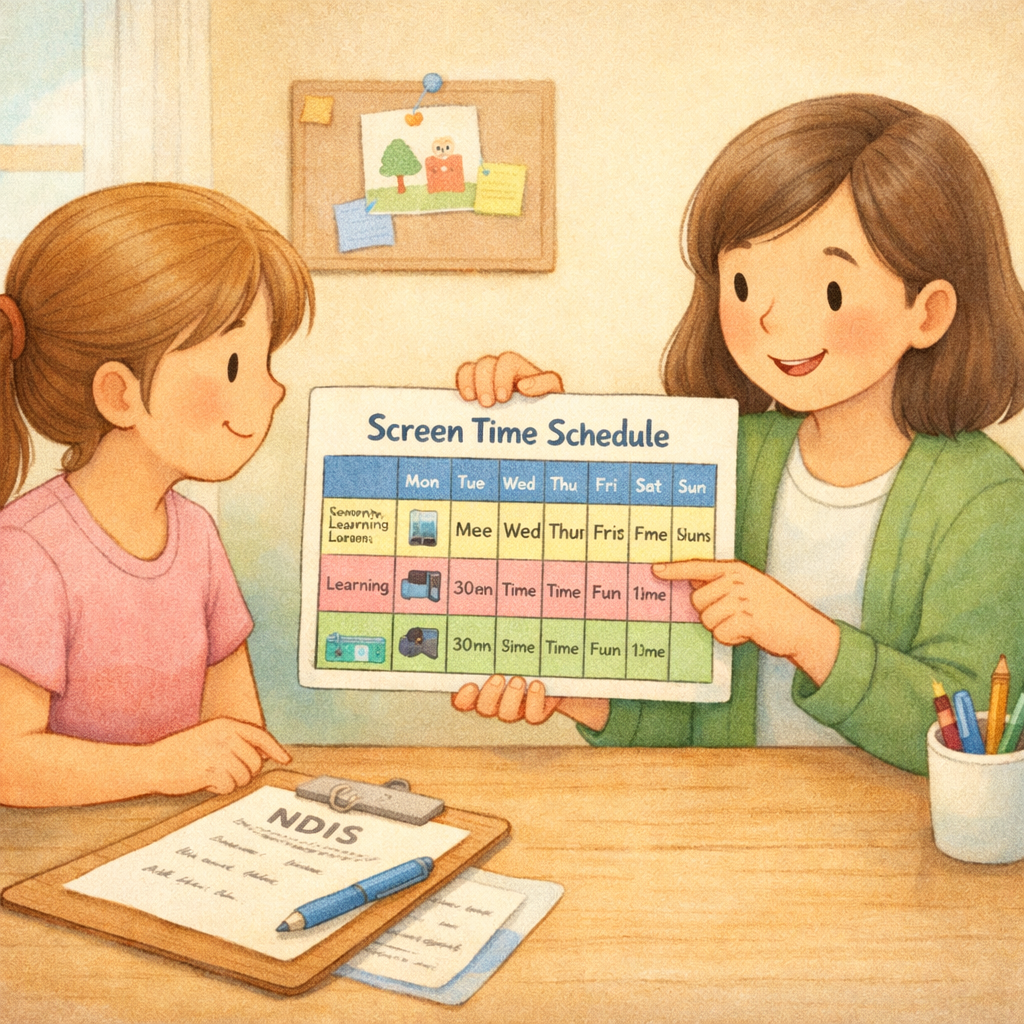
3. Structured Routines and Visual Supports
Visual schedules help children understand:
- When screen time is allowed
- What activities come next
This reduces anxiety and resistance during transitions.
4. Gradual Reduction Plans
For children heavily dependent on screens, therapists may implement step-by-step reduction plans to avoid distress.
5. Skill Building
Children are taught skills such as:
- Emotional regulation
- Independent play
- Social interaction
These skills reduce reliance on screens over time.
How to Include Screen Time Goals in a NDIS Plan
To access support, screen time management should be linked to broader developmental goals.
Example Goals:
- “Improve ability to transition between activities without distress”
- “Increase engagement in social play”
- “Develop independent play skills”
During planning meetings, parents can:
- Highlight concerns about screen dependency
- Provide examples of its impact
- Request behaviour therapy supports
Tips for Parents Using NDIS Supports
Be Clear About Your Concerns
Document how screen use affects your child’s behaviour, sleep, or development.
Collaborate with Therapists
Work closely with your child’s therapy team to ensure strategies are consistent across settings.
Stay Consistent at Home
Therapy strategies are most effective when applied daily.
Track Progress
Monitor changes in behaviour and screen use to evaluate what’s working.
Challenges and How to Overcome Them
Resistance to Change
Children may initially resist reduced screen time. Consistency and gradual change are key.
Limited Access to Services
In some areas of Australia, access to therapists may be limited. Telehealth services can help bridge the gap.
Parental Burnout
Managing behaviours can be exhausting. Use NDIS supports to share the load with professionals and support workers.
Long-Term Benefits of NDIS-Supported Screen Management

With the right support, children can develop:
- Better communication skills
- Improved emotional regulation
- Stronger social connections
- Increased independence
Reducing screen reliance also supports long-term educational and developmental outcomes.
Conclusion
Managing screen time for children with additional needs can be complex, but the National Disability Insurance Scheme (NDIS) provides valuable support through behaviour therapy and capacity-building services. By focusing on the underlying reasons for screen use and implementing structured, evidence-based strategies, families can create healthier routines and improve developmental outcomes.
The key is to align screen time management with your child’s broader goals and work collaboratively with professionals to ensure consistent and sustainable change.
If you’re concerned about your child’s screen time and are accessing the NDIS, now is the time to take action. Speak with your support coordinator or therapist about incorporating behaviour therapy strategies into your plan.
Reach out for a consultation or call daar at 02 9133 2500 for expert guidance tailored to your child’s needs.
Frequently Asked Questions
1. Can NDIS fund devices to replace screen time?
Generally, NDIS does not fund toys or general devices unless they are considered assistive technology and directly related to a disability.
2. What professionals should I include in my NDIS plan?
Behaviour support practitioners, occupational therapists, and speech pathologists are commonly involved.
3. Can support workers help reduce screen time?
Yes, support workers can implement routines and engage children in alternative activities.
.svg)




.svg)