
.png?width=48&height=48&name=Group%201%20(3).png)























25 August, 2026

NDIS Behaviour Therapy: A Path to Better Outcomes
Key Highlights
- NDIS behaviour support helps you understand why behaviours happen and what can improve them.
- Positive behaviour support focuses on practical, respectful strategies that build skills over time.
- A behaviour support practitioner usually starts with assessment, planning, and regular reviews.
- Your support plan is tailored to your goals, routines, relationships, and daily living needs.
- NDIS funding may cover these therapy services through relevant capacity building areas.
- Families, carers, and providers work together so support stays consistent and effective.
Introduction
Living with disability can affect routines, relationships, and emotional wellbeing. Under the National Disability Insurance Scheme, behaviour therapy gives you a structured and evidence-based way to build safer habits, stronger communication, and more confidence in daily life. It is not just about reducing difficult moments. It is about understanding what is happening underneath them and creating support that fits your goals. When the right strategies are in place, behaviour therapy can improve comfort, independence, and overall quality of life.
How NDIS Behaviour Therapy Works
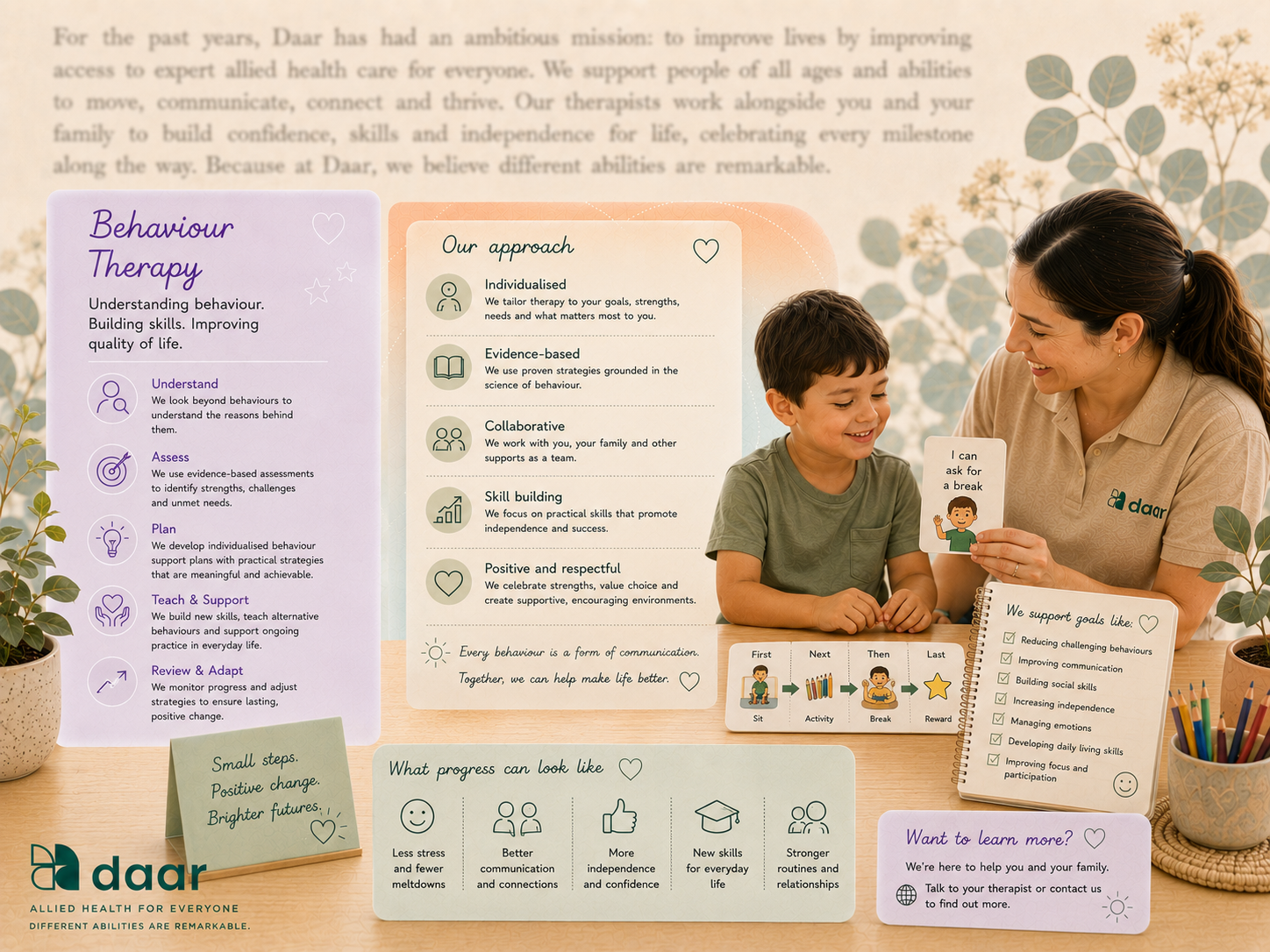
NDIS behaviour therapy is a structured form of behaviour support that helps you understand and reduce challenging behaviour in a respectful, practical way. It looks at triggers, routines, and the purpose behind certain actions so support is based on real needs, not guesses.
From there, a tailored support plan is created. Therapy sessions are then used to teach helpful skills, guide responses, and build consistency. Your support team, including family and carers, helps use these strategies in everyday settings. The next steps explain that process more clearly.
Main steps and processes in therapy
Most therapy services begin with listening. The practitioner meets with you and the people involved in your care to understand concerns, goals, and what happens before and after certain behaviours. This early behaviour assessment helps shape the direction of support.
A functional behaviour assessment is then used to explore patterns and likely causes. Based on that, the practitioner creates a support plan for behaviour management that is practical and individualised. The process often includes:
- an initial consultation with you and your support team
- observation, interviews, and behaviour tracking
- a written plan with clear strategies and goals
Once the plan is in place, strategies are used in daily settings and reviewed over time. Therapy is adjusted as needed, so the support stays useful, realistic, and focused on long-term progress.
The collaborative role of families, carers, and providers
Behaviour support works best when everyone is involved. Families, carers, and providers each see different parts of daily life, so their input helps build a more accurate picture of what is working and what still needs attention. That shared view strengthens the support plan.
In practice, your support network helps apply strategies in ways that feel consistent and calm. A support provider may guide routines, while support workers reinforce goals during daily activities. Families often help track patterns, celebrate progress, and encourage better communication skills at home and in the community.
If you want to access positive behaviour support through the NDIS, this teamwork matters from the start. It helps assessments reflect real needs, keeps strategies aligned across settings, and gives you stronger, more reliable support in everyday life.
Eligibility for NDIS-Funded Behaviour Therapy
Eligibility for NDIS-funded behaviour therapy depends on your individual support needs and whether behaviour support is considered reasonable and necessary in your NDIS plan. These services are usually considered when behaviours affect safety, relationships, or daily functioning.
Children and adults may be eligible, including people with developmental delay, autism, intellectual disability, or other disability-related needs. What matters most is how those challenges affect everyday life and whether structured support could improve outcomes. The sections below explain the criteria and the types of needs commonly addressed.
Criteria for accessing behaviour support
Access usually starts with your NDIS plan. If behaviours are affecting safety, participation, relationships, or daily functioning, behaviour support may be included under the right funding category. The goal is to show that support is linked to clear needs and practical outcomes.
Eligibility is not based on a label alone. It depends on how disability-related challenges show up in everyday settings and whether behaviour analysis can guide useful strategies. In many cases, funding is considered when you need:
- support for behaviours that place you or others at risk
- structured planning to improve daily life and relationships
- specialist input to understand patterns and responses
A practitioner uses assessment findings to connect those needs to a support approach. If behaviour support fits your goals and circumstances, it can become part of a broader plan for safer routines, stronger participation, and better long-term progress.
Types of disabilities and support needs addressed
Behaviour therapy can support people of all ages when disability-related challenges affect emotional regulation, routines, communication, or relationships. The support is tailored, which means it is shaped around the person rather than using the same approach for everyone.
The NDIS commonly funds this kind of help for participants with autism, intellectual disability, and developmental delay. It may also sit alongside care for mental health concerns, communication difficulties, or other specific needs that influence behaviour and daily participation. What counts is the impact on day-to-day life.
Because support needs vary so much, therapy is adjusted to fit the setting, goals, and stage of development. A child may need help with routines and expression, while an adult may need support with safety, independence, or community participation. The plan responds to those real-life differences.
Types of Behaviour Support Covered by the NDIS
The NDIS can fund different forms of behaviour support when they relate to disability and daily functioning. In most cases, therapy services focus on understanding the causes of challenging behaviour, building replacement skills, and creating safer, more supportive environments.
A common approach is positive behaviour support, which is person-centered and proactive. Some plans may also address restrictive practices, though these are tightly controlled and only considered in limited situations. To understand what is covered, it helps to look at both supportive strategies and the rules around higher-risk interventions.
Positive Behaviour Support (PBS) explained
Positive behaviour support is a respectful approach that looks beyond the behaviour itself. Instead of trying to control someone, it asks why a behaviour is happening and what supports could help create positive change. That makes it both practical and person-centered.
PBS focuses on skill development and prevention. It aims to reduce stress, build confidence, and improve participation in daily living. Practical strategies often include:
- teaching safer or more effective ways to communicate needs
- adjusting routines or environments to reduce triggers
- reinforcing helpful actions so they happen more often
Over time, this approach helps replace unhelpful patterns with useful alternatives. It supports independence, emotional regulation, and stronger relationships. Because it is tailored to real situations, positive behaviour support can lead to steady progress that carries over into home, school, and community life.
Restrictive practices and their regulation
Restrictive practice sits at the most regulated end of NDIS behaviour support. It is not a first response. It may only be considered when there are serious behaviours of concern and a clear need to reduce risk. Even then, the focus remains on reducing and eliminating its use over time.
The NDIS Commission oversees important rules in this area. Practitioners must work within formal processes, and supports must align with participant rights, safety, and ethical care. Positive strategies should always remain central.
|
Area |
What it means |
|---|---|
|
Purpose |
Used only to respond to significant risk linked to behaviours of concern |
|
Oversight |
Regulated through the NDIS Commission |
|
Use in practice |
Considered limited, controlled, and not a routine therapy response |
|
Wider goal |
Reduce reliance on restrictive practice through supportive planning |
This is why careful planning, review, and professional accountability matter so much.
Funding Categories for Behaviour Support
Behaviour therapy is often funded through NDIS funding categories linked to Improved Relationships or other capacity building supports. If your NDIS plan includes behaviour-related goals or safety concerns, these areas may help cover assessment, planning, and ongoing therapeutic input.
That funding can also connect with support coordination, especially when you need help understanding services and putting the right team in place. Since plans differ, it helps to know how behaviour therapy fits within broader capacity building and how to navigate the process clearly.
Capacity building supports linked to behaviour therapy
Capacity building supports are designed to help you grow skills that improve how you manage daily life. In behaviour therapy, that means support is not only about reducing risk. It is also about building skills that last beyond formal sessions.
This type of funding can support work that helps you learn new skills and move toward greater independence. It may include:
- teaching communication or coping strategies
- improving routines, participation, and problem-solving
- helping carers and supports respond in more effective ways
The long-term aim is progress you can use in real settings. When capacity building supports are matched well to your goals, behaviour therapy can strengthen confidence, increase participation, and make everyday tasks feel more manageable. That is what makes this funding area so important for meaningful change.
Navigating NDIS funding for behaviour therapy
For many NDIS participants, the first step is checking whether behaviour therapy is already included in the plan. Funding is commonly connected to Improved Relationships or Capacity Building, depending on the person’s goals, risks, and support needs.
Next, you may need to connect with a registered provider who offers specialist support in this area. If the process feels unclear, support coordination can help you understand available services, compare options, and organize the right help. This can make the funding pathway easier to manage.
Clear communication matters throughout. Ask how services match your goals, what assessments are involved, and how progress will be reviewed. When NDIS funding is aligned with your needs and delivered by the right team, behaviour support becomes much more practical and effective in everyday settings.
Guidelines and Best Practices for Practitioners
A behaviour support practitioner plays an important role in making sure support services are safe, respectful, and useful. Their work should reflect best practices, with plans based on assessment, collaboration, and the person’s individual goals rather than quick fixes.
Professional standards also matter because behaviour support can affect rights, wellbeing, and long-term outcomes. Practitioners are expected to use evidence-based methods, review progress, and work within NDIS requirements. The next sections look at qualifications and the ethical guidance that shapes good practice.
Required qualifications for behaviour support professionals
A behaviour support practitioner needs the right qualifications and practical knowledge to assess behaviour, create plans, and guide safe implementation. The compiled guidance highlights that these services should be delivered by qualified professionals working within NDIS expectations.
Relevant backgrounds may include psychology services, applied behaviour analysis, and related fields that support assessment and intervention. In practice, this means professionals should be able to:
- understand behaviour patterns, triggers, and function
- design person-centered strategies based on assessment
- work within the systems used by a registered NDIS provider
If you are wondering what steps are involved in applying to become an NDIS behaviour support practitioner, the key point is that formal qualifications, evidence-based practice, and NDIS-aligned professional capability are essential. Participants should always look for providers who are clear about their experience and methods.
Standards and ethical guidelines for NDIS practitioners
Good NDIS behaviour support must protect dignity, rights, and safety. That is why ethical guidelines and best practices are so important. Support should be person-centered, based on real assessment, and focused on improving quality of life rather than simply controlling behaviour.
The support plan should reflect the participant’s preferences, goals, and circumstances. It should also involve families, carers, and other professionals where appropriate, so strategies remain consistent and realistic. Ongoing review is part of ethical care because needs can change over time.
The NDIS Commission also has a key role in setting expectations around accountability, especially where higher-risk responses are involved. Practitioners are expected to use evidence-based approaches, avoid unnecessary restrictions, and keep the person’s wellbeing at the center of every decision they make.
Conclusion
In summary, NDIS Behaviour Therapy offers a comprehensive approach to improving the lives of individuals with disabilities. By understanding its processes and eligibility criteria, families and caregivers can better navigate the complexities of accessing much-needed support. The collaborative efforts of professionals, families, and the NDIS enhance the effectiveness of behaviour therapy, ensuring tailored strategies that meet unique needs. With a focus on positive behaviour support and ethical practices, this therapy not only addresses immediate challenges but also fosters long-term growth and development.
If you’re ready to explore how NDIS Behaviour Therapy can make a difference, don’t hesitate to reach out for a consultation or call daar at 02 9133 2500 for further assistance or information.
Frequently Asked Questions
What are the main benefits of NDIS behaviour therapy?
NDIS behaviour support can help reduce stress, improve relationships, and build practical everyday skills. It supports skill development, emotional regulation, and safer responses to challenges. Over time, that can strengthen mental health, increase confidence, and improve overall quality of life for both participants and those around them.
Is ABA therapy covered under NDIS behaviour support?
Applied behaviour analysis is recognised as an evidence-based approach within behaviour support. Under NDIS funding, therapy services may draw on ABA principles when they fit your goals and needs. A qualified behaviour support practitioner can explain how those methods may be used within an individualised support approach.
How long does it take to see progress with behaviour therapy?
Progress with behaviour therapy varies from person to person. Some people notice positive change within weeks, while others need ongoing support over a longer period. Results often depend on consistency, regular therapy sessions, and how well the support plan is used across home and daily routines.
.svg)




.svg)