
.png?width=48&height=48&name=Group%201%20(3).png)























27 August, 2026

NDIS Positive Behaviour Support: Enhancing Client Outcomes
Key Highlights
- Positive behaviour support looks at why behaviours happen, not just what you can see.
- A behaviour assessment helps identify triggers, patterns, and the function of behaviour.
- The process focuses on the participant’s needs, safety, and practical support strategies.
- A behaviour support plan guides families, carers, and teams in daily support.
- Restrictive practices are treated as a last resort and should be reduced over time.
- The goal is better independence, participation, and overall quality of life.
Introduction
Under the National Disability Insurance Scheme, behaviour support helps people understand behaviours of concern and build safer, more independent daily lives. It is not only about reducing difficult moments. It is also about improving quality of life, strengthening skills, and helping support workers respond in more helpful ways. When the right plan is in place, you and your team can focus on what matters most: wellbeing, participation, and support that fits everyday life.
Understanding NDIS Positive Behaviour Support
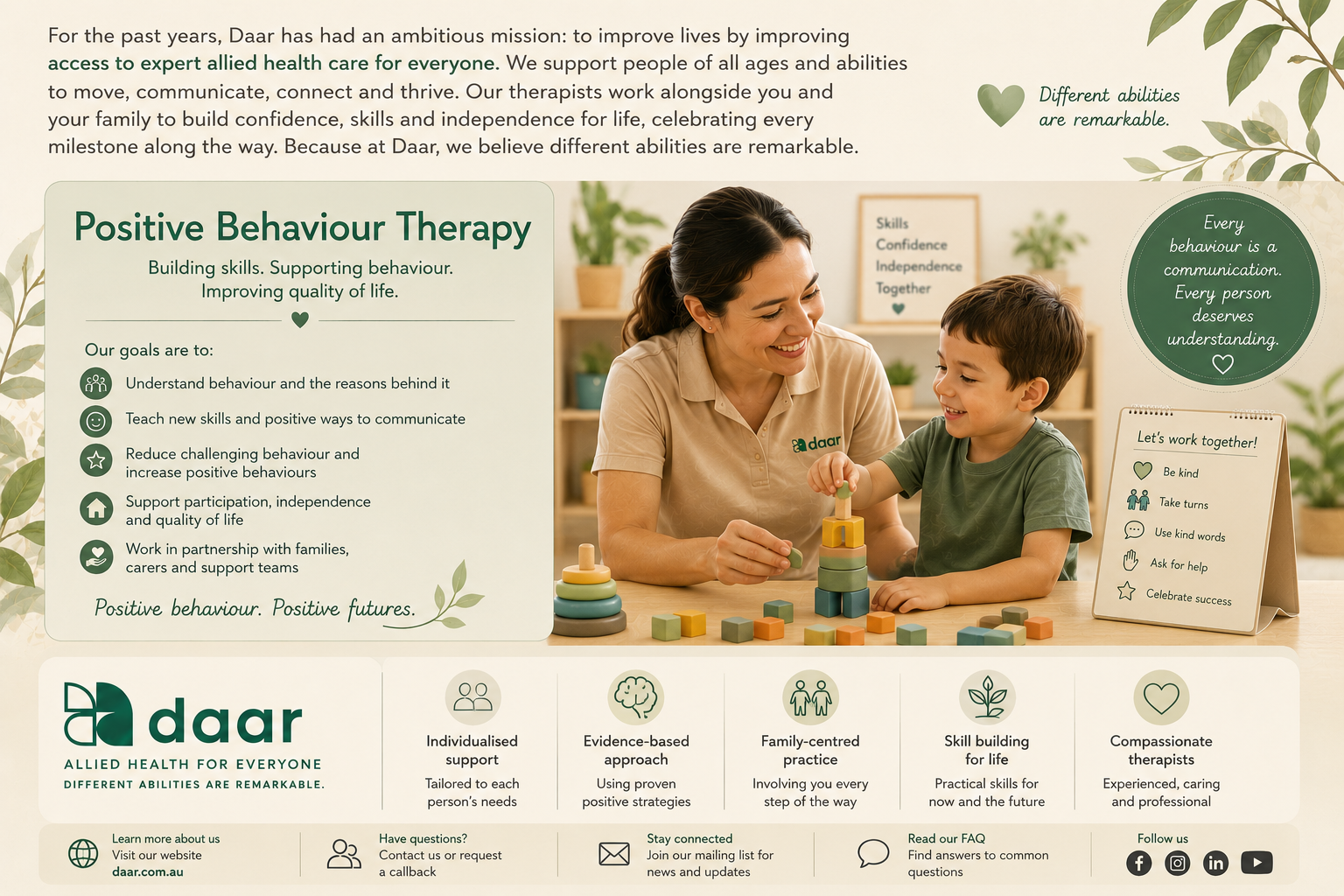
NDIS behaviour support is a structured process that helps an NDIS participant understand the reasons behind behaviours of concern and challenging behaviours. It looks at the person’s behaviour in context, including behaviour patterns, support needs, and environmental factors that may affect daily life.
Its main goals are to reduce risk, build positive behaviour, and improve overall quality of life. This happens through a collaborative approach with the participant, family, and wider support network. To do that well, assessment comes first.
What Is NDIS Behaviour Assessment?
An NDIS behaviour assessment examines concerning behaviours, the situations in which they occur, and what the person may be communicating. Its goal is to understand root causes rather than just react to surface behaviours, leading to more effective and respectful support.
The assessment reviews the person’s daily environments, routines, and interactions with support staff. It also includes input from family, carers, therapists, and others in their support network for a complete understanding across different settings.
Most importantly, it identifies why the behaviour happens. With this insight, support teams can choose safer and more effective strategies. This makes behaviour assessments essential for planning support.
Key Goals of Behaviour Support within NDIS
Behaviour support under the NDIS is fundamentally about empowering individuals to lead safer, more fulfilling lives, focusing on understanding, teaching, and adapting interventions to fit genuine support needs rather than using punishment. Behaviour support practitioners rely on assessment results to direct their efforts.
An effective behaviour support plan is designed to foster positive changes that work in day-to-day environments, such as home, school, workplace, and community settings, emphasising positive behaviours, skill development, and strategies that contribute to long-term stability.
Common objectives include:
- decreasing concerning behaviours and minimising potential harm
- teaching essential communication, routines, and emotional regulation skills
- coaching caregivers and teams on consistent responses to support requirements
- enhancing involvement, independence, and overall quality of life
Who Can Conduct a Behaviour Support Assessment in Australia?
In Australia, behaviour support assessments are carried out by behaviour support practitioners with the right training and experience. Compiled information shows these practitioners may come from fields such as social work, occupational therapy, mental health, developmental education, psychology, and related disciplines.
They often work as part of registered NDIS provider services and alongside support teams. Where specialist behaviour support involves restrictive practices, reporting and monitoring also connect with the NDIS Commission. To understand who is suitable for this role, it helps to look at qualifications and duties.
Qualifications and Requirements for Assessors
The people who complete these assessments need more than technical knowledge. Support practitioners and behaviour support practitioners must be able to understand behaviour, work with families, and build trust across different settings. Strong communication skills matter because the process depends on clear teamwork.
The compiled information highlights that practitioners may have backgrounds in social work, occupational therapy, mental health, developmental education, psychology, and similar fields. Ongoing training is also important, especially when services are delivered through a registered NDIS provider and must align with NDIS quality expectations.
Here is a simple text table that sums up key requirements:
|
Requirement |
What it means in practice |
|---|---|
|
Relevant professional background |
Experience in fields linked to behaviour, disability, or mental health |
|
Specialist behaviour support capability |
Ability to assess behaviours of concern and plan safe support |
|
Communication skills |
Working clearly with participants, carers, and teams |
|
Provider alignment |
Practice delivered within registered NDIS provider and NDIS quality requirements |
Responsibilities of Practitioners under NDIS
Behaviour support practitioners play a broad role under the NDIS. They do more than observe and write reports—they gather information across settings, listen to participants and families, and use assessments to understand daily support needs.
A key part of their work is data collection. Practitioners track when behaviours occur, possible triggers, and responses. This evidence guides planning and may include assessing abilities, routines, environments, and support people.
They then advise teams on practical strategies, help develop plans, coach carers, and review progress. If restrictive practices are used, practitioners ensure safe management and work toward reducing their use.
Developing Positive Behaviour Support Plans under NDIS
A behaviour support plan is the practical guide that comes from assessment. In NDIS behaviour support, it is created with the participant and the people around them, including family, carers, and other support people. The plan explains how support should happen day to day.
If restrictive practices are already being used, an interim behaviour support plan is prepared within 30 days. A comprehensive behaviour support plan follows within six months and includes more detailed findings, tested intervention strategies, and behaviour support strategies shaped around support needs.
Components of an Effective Support Plan
An effective support plan gives clear guidance that people can actually use. It should reflect the participant’s needs, the settings where support happens, and the goals that matter most to the person. A comprehensive plan is strongest when it is practical, specific, and easy for teams to follow.
It also needs to move beyond reacting to bad behaviour. The focus should stay on positive behaviour, predictable support, and safer environments. Good plans help teams understand what to do before a problem grows, not only after it starts.
Important components often include:
- proactive strategies that reduce triggers in home, school, or community settings
- clear support strategies for communication needs, routines, and emotional regulation
- intervention strategies for responding safely to behaviours of concern
- guidance that helps everyone support the same goals in consistent ways
Aligning Plans with NDIS Guidelines
A behaviour support plan needs to fit the NDIS framework, especially when it includes regulated restrictive practices. The compiled information shows clear timeframes and reporting steps. An interim plan is required within 30 days when restrictive practices are in place, while a more detailed comprehensive plan follows within six months.
These plans should not be based on guesswork. They need an evidence base drawn from assessment, observation, and tested strategies. That helps support teams use approaches that are safer, more consistent, and more likely to work in real life.
There are also formal oversight requirements. If a plan contains restrictive practices, it is sent to the relevant state or territory senior practitioner for authorisation and to the NDIS Commission for monitoring. That process supports accountability and safer practice.
Connecting Behaviour Assessment to Restrictive Practices
A behaviour assessment is closely linked to restrictive practices because it helps explain why behaviours of concern are happening and what safer responses may be possible. Without that understanding, it is harder to reduce the risk of harm or plan support that respects the person’s rights.
When restrictive practices are present, the assessment informs the behaviour support plan and the support strategies used by support people and the wider support network. It also supports reporting obligations linked to regulated restrictive practices and the NDIS Commission.
When Are Restrictive Practices Considered?
Restrictive practices are considered only as a last resort. The compiled information states that they are usually used in response to behaviours of concern that place the person or others at risk of harm. They limit rights or freedom of movement, so they must never be the starting point.
Before they are used, support practitioners should understand the person’s support needs, daily environment, and possible unmet needs. This includes looking at mental health, routines, communication, and the role of the support network. The aim is always to find safer alternatives first.
They may be considered when:
- there is a serious and immediate risk of harm
- other intervention strategies have not been enough to keep people safe
- formal assessment and planning show the need for closely regulated use
Reporting and Safeguards under NDIS
Once restrictive practices are included in a plan, reporting rules apply. The compiled information explains that plans with restrictive practices are sent to the relevant Office of the Senior Practitioner in the state or territory for authorization. They are also sent to the NDIS Commission for monitoring.
This reporting process is an important safeguard. It helps make sure behaviour support services do not rely on restrictive responses without oversight. It also pushes providers and support teams to review whether the practice is still needed and whether less restrictive options can be used.
The wider goal remains clear: reduce and, wherever possible, eliminate restrictive practices. That supports dignity, independence, and quality of life. Safeguards are not just paperwork. They help keep the focus on rights, safety, and meaningful progress in everyday settings.
Conclusion
In conclusion, NDIS Positive Behaviour Support is a vital framework that enhances client outcomes by focusing on individualised assessments and tailored support plans. By understanding the key components of behaviour assessment and aligning them with NDIS guidelines, practitioners can effectively address the unique needs of each client. This approach not only fosters positive behaviours but also safeguards the rights of individuals receiving support. As we continue to advocate for improved mental health and well-being, it’s essential to prioritize strategies that promote understanding and compassion.
If you’re seeking more insight or assistance, please reach out for a consultation or call daar at 02 9133 2500; we’re here to help you navigate the NDIS landscape effectively.
Frequently Asked Questions
How can families access an NDIS behaviour support assessment?
Families can access NDIS behaviour support when the NDIS participant has funding such as Improved Relationships or Behaviour Support in their plan. They can contact behaviour support services directly, ask for a free consultation where offered, and involve their support network to begin the referral or intake process.
What information is included in a behaviour support assessment report for NDIS?
A behaviour assessment report usually includes findings from data collection, details about behaviour patterns, possible triggers, the function of behaviour, and recommendations for support strategies. These findings are then used to guide a behaviour support plan that is practical for everyday settings and support teams.
Are there official templates for NDIS behaviour support assessments?
The compiled information points to formal NDIS quality requirements rather than a single public template. What matters is that each behaviour support plan, including a comprehensive behaviour support plan, follows reporting rules, meets NDIS Commission expectations where needed, and is built on a clear evidence base.
.svg)




.svg)