
.png?width=48&height=48&name=Group%201%20(3).png)























1 October, 2026

How NDIS Applied Behavioural Analysis Supports Children

Key Highlights
- Applied behaviour analysis is a structured way to build useful skills under the NDIS.
- aba therapy often supports children on the autism spectrum with communication, routines, and social growth.
- Families can use behaviour support options that match their child’s goals and daily challenges.
- The NDIS may include ABA when it fits the child’s plan and support needs.
- Positive reinforcement is central to helping children learn new behaviours and skills.
- Comparing ABA with PBS helps you choose the best support pathway.
Introduction
Choosing support for your child can feel like a big first step. If you are looking at applied behaviour analysis through the NDIS, it helps to understand how this approach works in real life. ABA is used to teach practical skills, strengthen communication, and support daily living in ways that are structured and measurable. For many families, the goal is simple: find support that helps their child grow with confidence. The sections below explain what ABA is, how funding works, and what benefits it may offer.
Understanding Applied Behavioural Analysis (ABA) and NDIS
Applied behaviour analysis is a structured form of behaviour analysis based on how people learn and respond to their environment. In practice, ABA therapy uses planned strategies, including positive reinforcement, to teach useful skills and support behaviour change.
Under the National Disability Insurance Scheme, this type of behaviour support may be used to improve communication, social participation, and daily routines. The focus is on your child’s needs, with therapy shaped around functional goals. To understand that better, it helps to look at what ABA behavioural therapy involves day-to-day.
What Is ABA Behavioural Therapy?
ABA therapy is a structured approach that uses behaviour analysis to understand why a child does certain things and how those patterns can be shaped over time. It is based on the science of learning and focuses on teaching skills in clear, manageable steps. You might hear both behaviour analysis and applied behaviour analysis used to describe the same field.
For children on the autism spectrum and those with other developmental disabilities, ABA often targets communication, social interaction, and daily routines. Sessions are usually planned around specific behaviours, with goals broken into smaller parts so progress can be tracked more clearly.
In many programs, therapists use repetition, practice, and rewards to build s skills and independence. This makes it easier for a child to learn different skills in a way that feels consistent, practical, and connected to everyday life.
The Role of ABA in Supporting Children with Disability
For many families, applied behaviour analysis is used to support children’s development in a practical and targeted way. Rather than taking a broad approach, it focuses on behaviours and skills that affect daily life. That can include how your child communicates, follows routines, or responds in social settings.
A big part of this work is positive reinforcement. When a child practices a desired action and receives encouragement, it can support behaviour change over time. This structure can help autistic children and other children with disabilities learn in ways that feel clear and predictable.
Common areas ABA may support include:
- communication skills during play, routines, and shared activities
- social skills and participation with family, school, or community
- useful skills for independence, regulation, and everyday tasks
ABA Behavioural Therapy Under the NDIS in Australia
Across Australia, the NDIS gives families a framework for accessing supports that match a child’s goals and developmental needs. Within this disability insurance scheme, behaviour therapy may be considered when it is linked to outcomes such as communication, daily routines, and participation.
That means funding is not just about the therapy name. It depends on whether an aba provider or other service providers can show how the support fits the child’s plan. From here, the key question becomes whether ABA is funded for children with autism and how families can access it.
Is ABA Funded by NDIS for Children with Autism?
Yes, ABA therapy can be funded through an NDIS plan if it aligns with the child’s goals and needs. The NDIS supports therapies that improve function, independence, and daily participation, so ABA may be considered for children with autism.
However, funding is based on individual plans, not blanket approval for one therapy. Families must show how ABA addresses specific outcomes like communication, behaviour, or social skills.
Wording in your NDIS plan matters. If supports are listed as therapy services, behaviour support, or skill building, ABA can fit more easily. The next step is to request and organize these services through your plan.
How to Access ABA Services Through Your NDIS Plan
Getting started with ABA services usually begins with your child’s NDIS plan. Review the listed goals to see if they relate to communication, daily living, social participation, or behaviour support. If so, autism and related therapy services may support an ABA approach.
Next, consult an ABA provider or clinician about connecting services to those goals. They can explain how sessions build skills, reduce barriers, and support progress at home, school, and in the community.
The typical process includes:
- Reviewing your NDIS plan goals and funded services
- Discussing supports with an ABA provider
- Matching sessions to practical outcomes for your child
Key Features and Principles of ABA Behavioural Therapy
ABA works through clear, repeatable steps. Its main ABA principles include observing what happens before and after a behaviour, identifying a target behaviour, and using structured teaching to build new skills. This makes progress easier to measure over time.
Another important feature is that behaviour support is individualised. A behaviour analyst or therapist looks at what your child needs, what motivates them, and where support is most useful. Once those foundations are clear, specific strategies can be used to teach skills and shape change.
Evidence-Based Strategies Used in ABA
ABA uses structured strategies from behaviour analysis and learning science to help children consistently practice skills. These methods are scientifically tested and closely observed.
Key ABA techniques include:
- Positive reinforcement to encourage desired behaviours
- Discrete trial training for clear, focused skill practice
- Breaking tasks into smaller steps for easier learning
Setting Individual Treatment Goals for Children
Strong ABA planning starts with individual goals. Instead of using the same targets for every child, therapists look at what matters most in that child’s daily life. That may involve language, routines, social interaction, or independence. The aim is not just progress on paper, but better participation and comfort at home and in the community.
A behaviour analysis approach also considers your child’s strengths. When goals match what motivates them and what the family values, ABA therapy programs can feel more relevant and easier to carry into everyday routines.
Goals often focus on:
- building on the child’s strengths and current abilities
- improving communication, participation, and independence
- supporting long-term quality of life for the child and family
ABA Versus Positive Behaviour Support (PBS)
Families often compare positive behaviour support with applied behaviour analysis because both can sit within NDIS services. They share an interest in helping children learn, reduce barriers, and improve participation, but they do not work in the same way.
ABA principles are usually more structured and focused on shaping specific actions through reinforcement and step-by-step teaching. Positive behaviour support takes a broader view of behaviour support, looking at the child, environment, and prevention. That difference becomes clearer when you compare both approaches side by side.
Core Differences Between ABA and PBS Approaches
At a practical level, positive behaviour support and applied behaviour analysis may aim for better outcomes, but they differ in structure and focus. ABA is more likely to use planned teaching, reinforcement, and skill tracking. PBS looks more broadly at the reasons behind behaviour and how the environment can be adjusted.
ABA is closely linked with formal behaviour systems and may involve practitioners who follow standards associated with the Behaviour Analyst Certification Board. PBS, by contrast, emphasises a wider behaviour support lens and a broader scope of practice around quality of life and prevention.
|
Aspect |
ABA |
PBS |
|---|---|---|
|
Main focus |
Teaches and shapes specific behaviours through structured methods |
|
|
Approach |
Uses step-by-step teaching and reinforcement |
|
|
Broader view |
Looks at environment, triggers, and prevention |
|
|
Delivery style |
Often more structured than positive behaviour support |
|
|
Scope of practice |
PBS is typically wider in whole-of-life planning |
Choosing the Right Intervention for Your Child’s Needs
There’s no one-size-fits-all approach for every child. The best choice depends on your child’s needs, learning style, and your family’s preferred support. Some children thrive with the structure of ABA therapy, while others benefit more from positive behaviour support’s broader focus.
Consider your family situation: Do you want highly structured skill teaching, or support that emphasises environment, routines, and caregiver involvement? Your answers will help guide your decision.
When deciding, think about:
- the skills or challenges your child faces right now
- how much structure suits your family
- which approach—ABA therapy or positive behaviour support—feels like the best fit
Effectiveness and Benefits of ABA Behavioural Therapy for Children
ABA is often valued because it links behaviour change to practical goals in daily life. Instead of staying theoretical, an ABA program focuses on skills families can see and use, such as following routines, asking for help, or joining in play. That clear focus is one reason many parents explore it.
When support is individualised and consistent, children may show better outcomes in communication skills, participation, and independence. To understand why, it helps to look at what early intervention research and family experiences tend to highlight.
Outcomes Demonstrated in Early Intervention Research
In early childhood, ABA is often used to build essential skills that support later learning. Research shows early intervention helps children develop core communication and developmental abilities. This is why ABA therapy is frequently included in support plans for children with developmental disabilities.
The main focus of ABA is skill building. Through structured teaching, repetition, and reinforcement, children practice useful responses until they become consistent in daily life. Over time, this can increase independence and quality of life.
Common outcomes include:
- Learning new communication and daily living skills
- Improved participation at home, school, and in the community
- Enhanced quality of life through consistent early intervention
Success Stories and Parent Perspectives
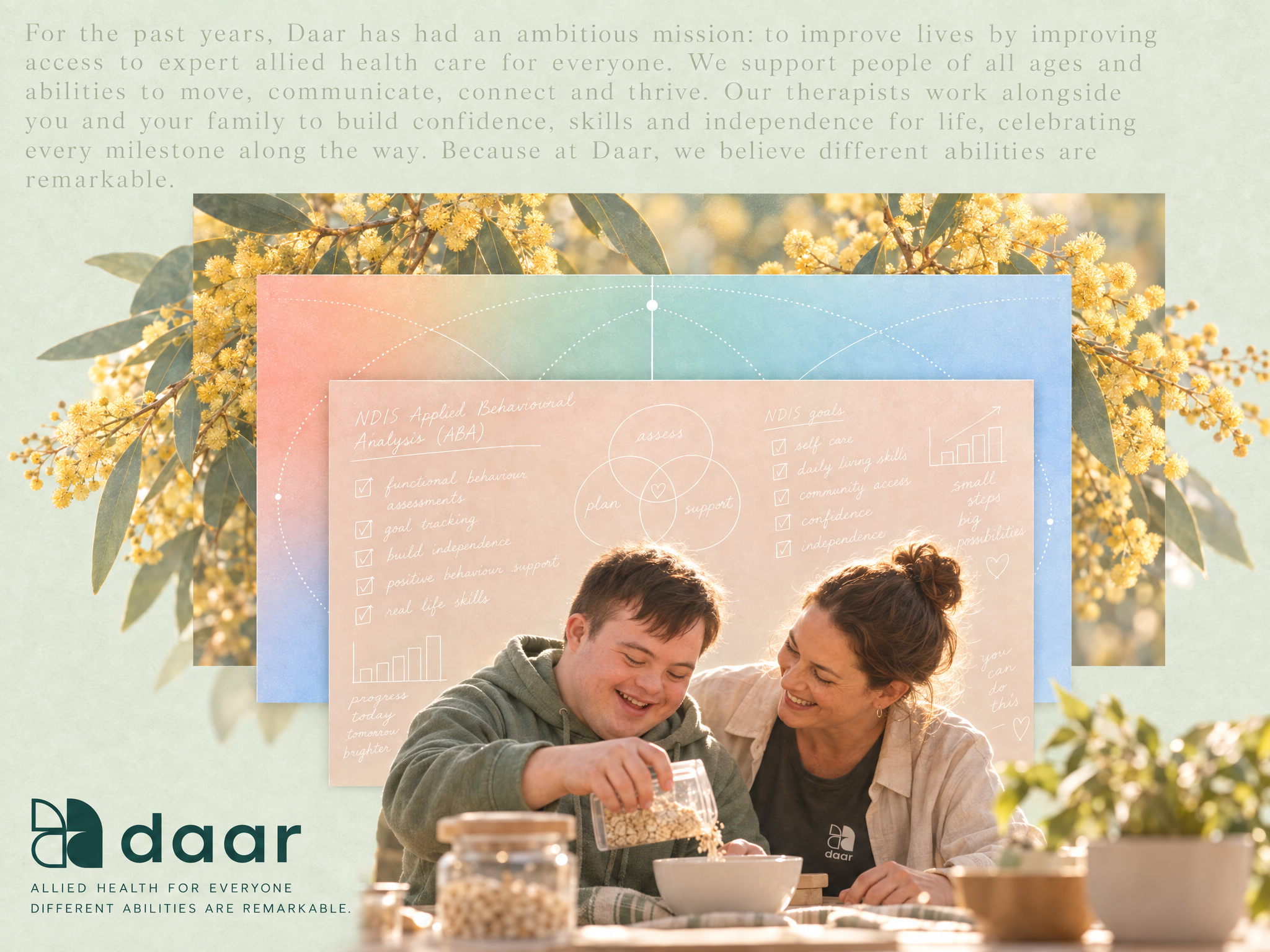
For many families, ABA’s value is seen in small, meaningful changes. Parents often notice life gets easier—routines go smoother, needs are expressed more clearly, and transitions cause less stress. These improvements make daily life more manageable.
ABA sessions are most appreciated when they align with family goals. Parents see the most progress when support improves communication, play, and participation in everyday settings. The biggest impact comes when children use new skills outside of therapy.
Families commonly report:
- stronger communication during daily routines
- improved social skills with siblings, peers, or adults
- increased confidence and independence between sessions
Conclusion
Understanding how NDIS Applied Behavioural Analysis (ABA) supports children with disabilities is key for parents seeking effective interventions. ABA uses structured, evidence-based methods to encourage positive behaviour and skill development. By accessing NDIS services, you can tailor support to your child’s unique needs, leading to meaningful progress and a better quality of life.
For more information or a consultation or call daar at 02 9133 2500, contact us to discuss how we can help.
Frequently Asked Questions
Why might my child not be approved for ABA funding under NDIS?
A child may not be approved if the NDIS plan does not clearly link ABA therapy to functional goals in daily life. Under the disability insurance scheme, supports need to fit the plan and the provider’s scope of practice. A behaviour analyst approach must match the child’s documented needs.
Are there alternatives to ABA therapy funded through NDIS?
Yes. The NDIS can also fund positive behaviour support, often called PBS, when it suits the child’s goals and environment. These behaviour interventions focus more on prevention, communication, and whole-of-life planning. For some families, this kind of behaviour support may be a better fit than ABA.
.svg)




.svg)