
.png?width=48&height=48&name=Group%201%20(3).png)























20 August, 2026

ABA Early Intervention: Strategies for Success
Key Highlights
- Early intervention gives young children on the autism spectrum support when learning happens quickly.
- ABA therapy uses behaviour analysis to teach communication skills, daily routines, and social growth.
- A professional assessment helps you understand your child’s unique needs and plan next steps.
- Families often begin with funding, provider research, and a simple home setup for sessions.
- Qualified therapists track progress, adjust goals, and focus on meaningful skills for everyday life.
- Parent involvement helps children practice new behaviours across home, school, and community settings.
Introduction
If you are wondering how to support your child after noticing developmental differences, early intervention is often the first step. For many families navigating the autism spectrum, starting services early can build a stronger path for learning and daily life. ABA therapy is one evidence-based option that helps children grow in communication, social participation, and independence. The process may feel big at first, but with the right guidance, you can move forward with more clarity and confidence.
Beginner’s Guide to Getting Started with ABA Early Intervention
Getting started with early intervention does not have to feel confusing. ABA therapy uses behaviour analysis to understand how your child learns, what support they need, and how to teach new skills in small, clear steps. That structure can help families feel more prepared.
At the beginning, most parents focus on assessment, services, funding, and finding the right team. From there, a provider can build a plan around your child’s strengths and needs. The next two sections break down what you need first and how to choose support.
What Families Need to Begin ABA (Resources, Funding, and Equipment)
Before starting ABA therapy, gather essentials that support early intervention. Begin with a professional assessment or referral and collect reports outlining your child’s needs, as these help guide access to services and funding.
Consider parent resources on therapy options, costs, and home strategies. Many providers offer info packs, training, or introductory calls to simplify the process. For sessions focused on communication, play, and daily routines, a basic home setup is usually sufficient:
- Assessment reports or referral notes
- Funding details (NDIS or other support)
- Quiet space with simple toys or learning materials
- Parent guides, intake forms, or provider info packs
With these basics in place, you can consult clinics to find an approach that fits your child’s needs and goals.
Finding a Qualified ABA Therapist Near You
Finding the right ABA therapist starts with looking at qualifications, supervision, and how the provider works with families. Many parents look for clinicians such as a BCBA or BCaBA, along with teams that use measured outcomes and evidence-based autism therapy. Ask how their early intervention services are tailored to your child.
It also helps to review whether the clinic offers parent training, school readiness support, or coordinated services. Some providers combine behaviour analysis with occupational therapy or related supports, which may better fit your child’s learning style and daily life.
|
What to Check |
Why It Matters |
|---|---|
|
Clinical credentials |
Shows the therapist has formal training in ABA programs and supervision |
|
Family collaboration |
Helps you carry strategies into home and community settings |
|
Progress tracking |
Uses data-informed decisions to measure growth and adjust support |
|
Service options |
May include behaviour therapy, parent coaching, or school readiness programs |
When you compare providers this way, choosing a qualified therapist becomes much easier.
Step-by-Step Guide to Starting ABA Early Intervention
Starting ABA therapy in early childhood usually follows a clear path. You notice concerns, seek an assessment, explore support, and connect with a provider who understands your child’s needs. Each stage builds on the last, so you do not have to solve everything at once.
This step-by-step approach helps families move from uncertainty to action. It also shows how early intervention services can be shaped around everyday routines, learning goals, and family priorities. Let’s walk through the four key steps you are likely to take.
Step 1: Recognising Early Signs and Seeking Assessment
Early intervention starts with noticing patterns in your child’s development. Children on the autism spectrum may show delays in speech, social skills, or play, and may respond differently to people, routines, or changes.
A formal assessment clarifies strengths and support needs and determines if services like ABA can help. ABA teaches skills step by step through encouragement and repetition.
Common signs include:
- limited eye contact or joint attention
- delayed babbling or language
- repetitive behaviours or strong resistance to change
- low interest in playing with peers
If you notice these signs, schedule an assessment with a pediatrician, developmental specialist, or qualified clinician promptly.
Step 2: Accessing Funding and Support (NDIS and Other Programs)
After assessment, many families look at funding and support options. In Australia, NDIS may help cover early intervention services when they align with your child’s goals and documented needs. Funding can reduce pressure and make it easier to start therapy sooner.
Why does this matter? Support that begins early can be especially useful for toddlers because this is a key period for learning communication, routines, and social engagement. The compiled information consistently shows that children often make stronger progress when intervention starts young and stays consistent.
You may need to prepare:
- assessment reports and supporting documents
- a plan showing therapy goals and recommended services
- provider details and pricing information
Ask each provider how they work with NDIS goals, parent training, and measurable outcomes so your support plan stays practical and focused.
Step 3: Setting Goals and Designing an Individualised ABA Plan
After services are approved, the provider completes intake and planning. This stage uses behaviour analysis to identify how your child learns and where support is needed. Effective goals are specific, realistic, and connected to daily life.
The plan should reflect your child’s unique needs and your family’s priorities. Goals may target communication, play, following instructions, emotional regulation, school readiness, or daily routines. Strong ABA programs break big targets into smaller steps for steady progress.
Common areas include:
- requesting help or breaks
- building social skills and turn-taking
- improving transitions and daily living skills
With a well-designed plan, many children gain meaningful skills, independence, and confidence at home, school, and in the community.
Step 4: Monitoring Progress and Adjusting Strategies
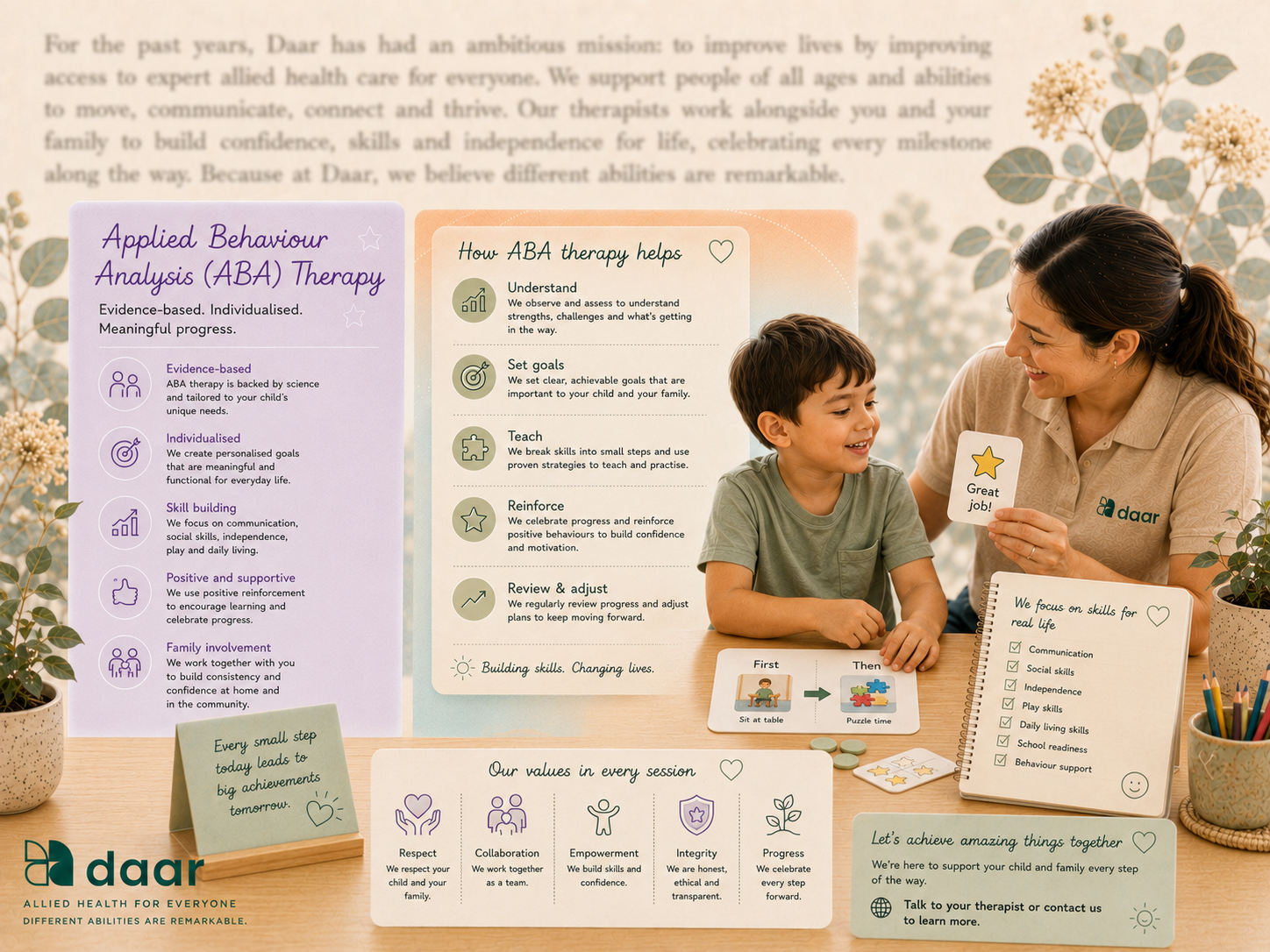
Starting therapy is important, but ongoing review keeps it effective. In ABA therapy, therapists track progress during sessions to guide decisions and adjust strategies as needed.
Early support gives children more time to build foundational skills before school demands grow. Families may see improved communication, smoother routines, and more positive behaviours over time. Since progress isn’t always linear, regular reviews ensure goals stay relevant and realistic.
Teams typically monitor:
- skill growth at home, in clinics, and in the community
- responses to teaching methods and reinforcement
- areas where goals need updating or simplifying
This approach supports steady progress and helps your child gain greater independence.
Conclusion
In conclusion, ABA early intervention is a vital tool for guiding children towards meaningful progress. By recognising early signs and accessing the right resources, families can set their children up for success with tailored plans and ongoing support. This journey requires commitment and collaboration, but the positive outcomes can greatly enhance a child's development and future opportunities. Remember, being proactive and informed is key.
If you're ready to take the next step in your child's journey, reach out to a qualified ABA therapist near you for a consultation or call daar at 02 9133 2500 today!
Frequently Asked Questions
Can ABA early intervention be used for children without an autism diagnosis?
Yes. Early intervention and aba therapy may also support young children with developmental disorders or related delays, depending on their unique needs. The approach still focuses on teaching useful skills, improving routines, and helping children learn in clear, manageable steps with family support.
Is ABA therapy covered by NDIS in Australia?
In many cases, NDIS funding may support aba therapy or related early intervention services when they match a child’s goals and assessed needs. Coverage depends on the plan, supporting documents, and approved supports, so families should check provider guidance and current funding requirements.
What outcomes should parents expect from ABA early intervention?
Parents often look for meaningful skills in communication, social participation, daily routines, and independence. With consistent aba therapy, many children show greater progress over time, which can support child’s development, reduce learning barriers, and improve overall quality of life at home and beyond.
.svg)




.svg)