
.png?width=48&height=48&name=Group%201%20(3).png)























21 September, 2026

Exploring How Effective Is Telehealth Behaviour Support
Key Highlights
- It is a highly valid question for parents to ask: how effective is telehealth behaviour support compared to traditional in-person visits?
- Clinical outcomes show that virtual support is exceptionally effective because it shifts the therapeutic focus from episodic care (one hour a week in a clinic) to continuous care (empowering parents 24/7 at home).
- Rigorous telehealth behaviour support yields highly accurate Functional Behaviour Assessments (FBAs) by removing the unnatural variables and anxiety of a sterile clinic environment.
- When parents wonder, "is telehealth behaviour support effective for severe or complex presentations?" the answer lies in the safety of remote observation, which prevents clinician-induced escalation.
- Operating right across Australia, daar utilises a secure, nationwide digital platform to connect families with elite practitioners, ensuring geographic isolation never compromises the quality of your NDIS support.
Introduction
When investing your hard-fought NDIS funding into allied health services, you want absolute confidence in the clinical outcomes of ABA therapy. Naturally, when presented with the option of remote care, the first question parents ask is, "Exactly how effective are telehealth platforms and services for behaviour support in ABA therapy, really?" While telehealth platforms for behaviour support offer convenience and accessibility, there are some challenges and limitations to consider, including limited access to certain resources. These may include difficulty in building rapport, technological barriers, and the potential inability to fully observe certain behaviours in a home environment, which can impact the assessment and intervention process.
For years, society has been conditioned to believe that premium healthcare requires sitting in a waiting room, reading outdated magazines, and speaking to a professional across a desk. However, applied behaviour science defies this traditional model. Neurodivergent distress does not happen in a vacuum; it happens in the messy, unstructured reality of daily life, particularly in underserved areas. At daar, our entire practice is built on the clinical reality that the home is the most powerful therapeutic environment and natural environment for effective healing. Let’s look at the data-driven reasons behind the success of telehealth sessions for behaviour support and why it frequently outperforms traditional in-person models. Telehealth behaviour support can be effectively used to manage restrictive practices by providing real-time guidance and intervention in the home environment. Remote sessions enable our support team to help families and individuals as they navigate daily challenges, which can reduce reliance on restrictive practices and ensure that interventions are both ethical and evidence-based.
The Myth of the Clinical Vacuum
To understand how effective telehealth behaviour support is, we must first critically examine the traditional clinic model.
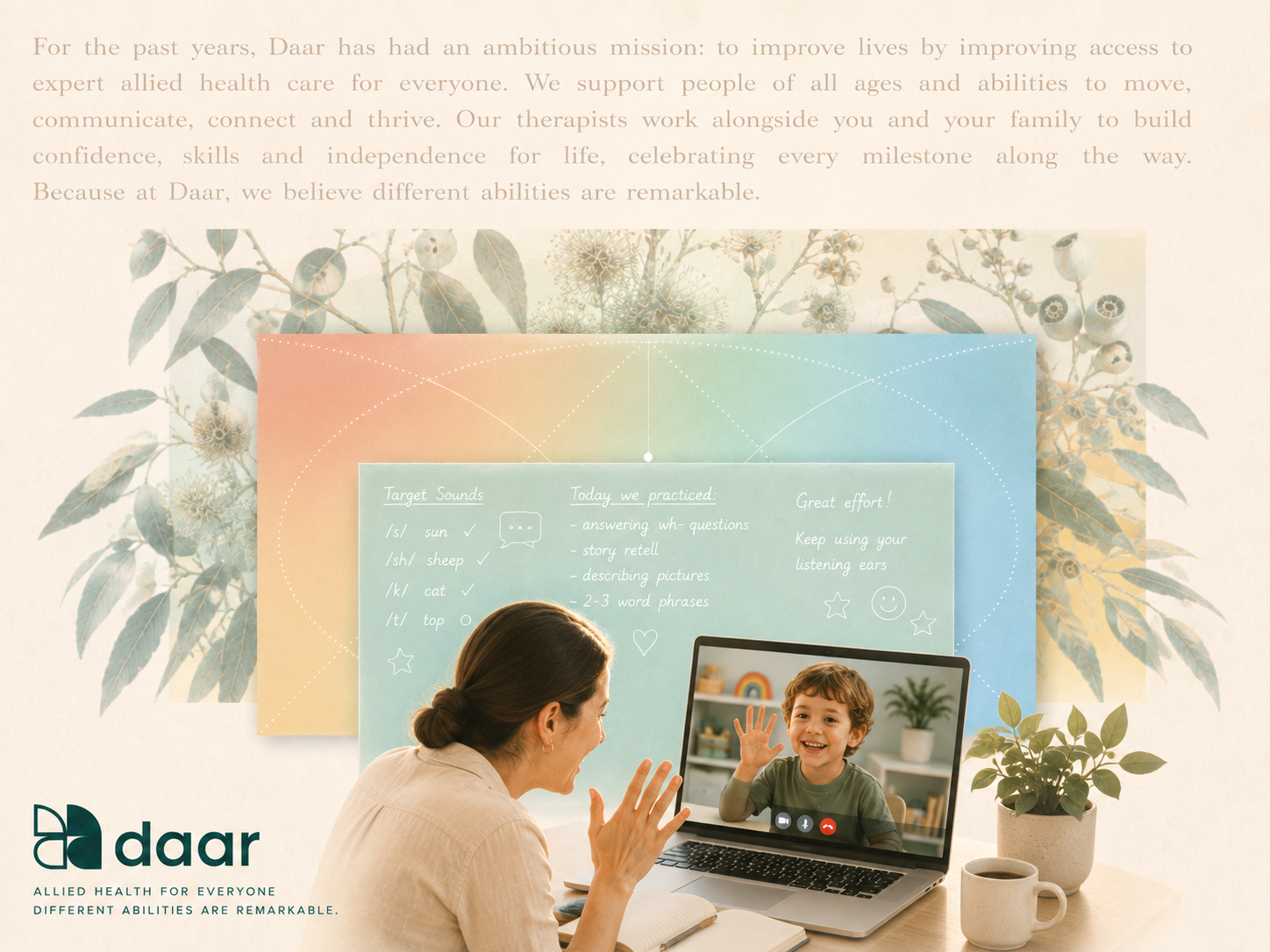
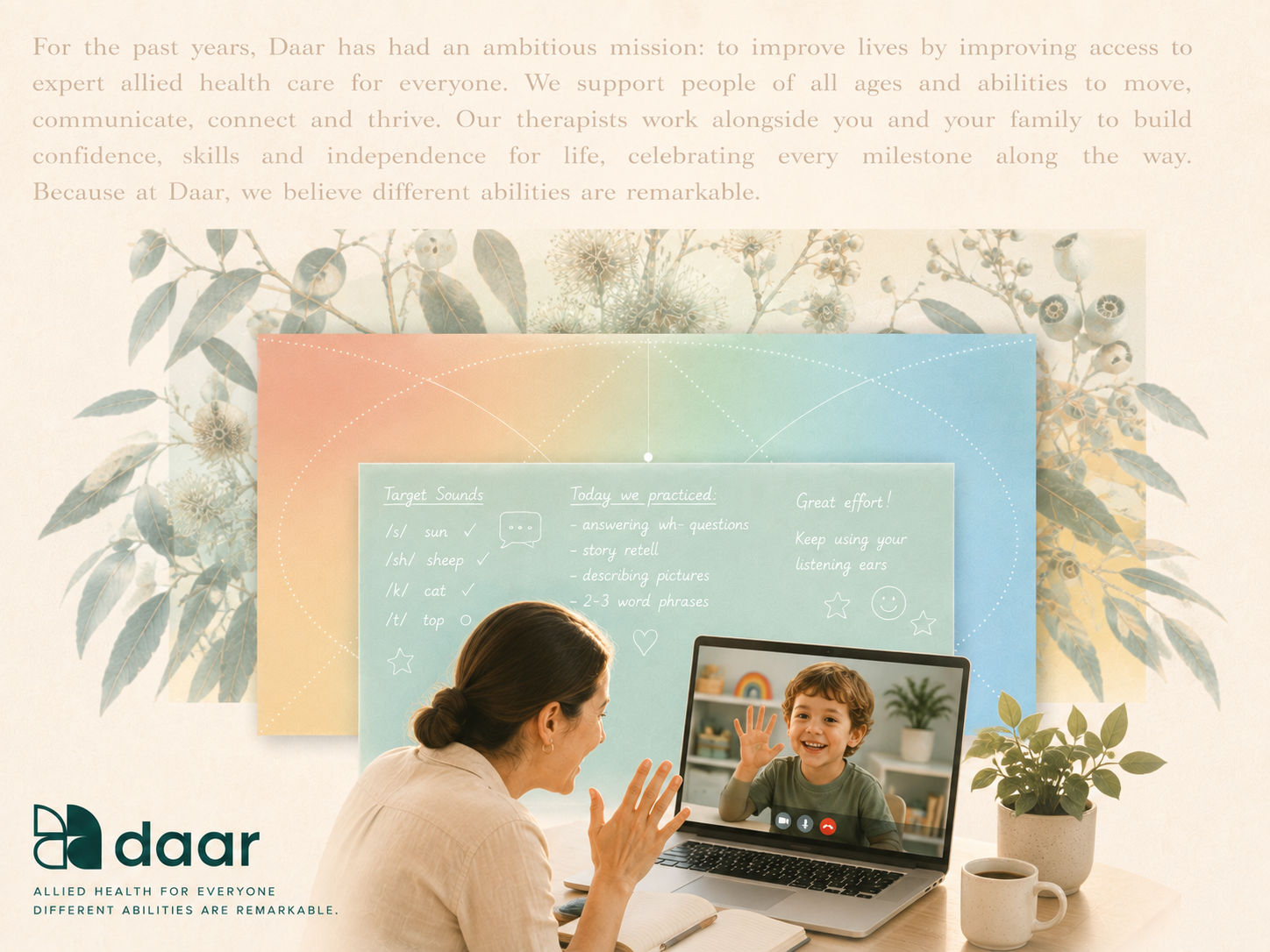
When a child is taken to a clinic, they are removed from their natural triggers. The lighting is different, the demands are different, and their siblings are not present to argue over a toy. A clinician might spend 50 minutes interacting with a highly compliant, "masked" child, or conversely, a child who is so anxious about the new environment that they completely shut down. The strategies developed in this artificial vacuum frequently fail to translate when the family returns home to the reality of the dinner rush. Telehealth bypasses the vacuum entirely, bringing the clinical expertise straight to the source of the friction.
Data Integrity: Why Remote Observation Works
One of the most crucial elements of behaviour therapy is the Functional Behaviour Assessment (FBA). The practitioner must observe the child to understand the antecedents (triggers) to their distress.
If a practitioner physically visits your home to observe, their presence alters the data. This is known in psychology as the Hawthorne effect—people change their behaviour simply because they know they are being watched. Some children will hide; others will become hyper-aroused. So, is telehealth behaviour support effective for data collection? Yes, because it enables "fly-on-the-wall" observation. By setting up a tablet or laptop in the corner of the room, the clinician observes the family's genuine, unaltered dynamics seamlessly, resulting in a vastly more accurate functional assessment and, subsequently, a more effective support plan.
From Episodic to Continuous Care
The ultimate measure of therapeutic effectiveness is long-term sustainability, including daily living skills and positive outcomes. If a therapist manages a child's behaviour perfectly for one hour on a Tuesday afternoon during virtual sessions on online platforms, but the parents are left helpless for the remaining 167 hours of the week, the therapy has failed.
Telehealth behaviour support is built entirely on building adult capacity through the "mediator model." Our clinicians don't try to be the hero for your child. Instead, we coach you live in your ear, supporting early intervention strategies, enhancing communication skills, and strengthening support networks. We guide you on exactly when to lower your vocal tone, how to adjust the environment to create a familiar environment, and how to co-regulate. By upskilling the parent, the intervention transforms from episodic weekly care into continuous, resilient, round-the-clock support.
Elite Matching Without Geographic Limits
The effectiveness of any therapy hinges largely on the therapeutic alliance between the family and the practitioner, especially when addressing issues like anxiety disorders and providing emotional support with the involvement of speech therapists. If you are forced to settle for a local clinic's generic practitioner as a first step simply because they are within driving distance, the clinical outcomes will be compromised.
daar’s nationwide telehealth model shatters these geographic boundaries. Whether you are navigating complex ADHD, severe demand avoidance, or specific autistic sensory profiles, distance is no longer a barrier to elite care. We prioritise clinical alignment over postcodes. To ensure your family is paired with an expert whose niche perfectly matches your daily reality, discover telehealth therapy and find your perfect match with our extensive network today.
Conclusion
The clinical evidence is clear: when interventions are designed and coached within the very environment where busy families live, especially in underserved, rural areas, the retention of skills skyrockets. Telehealth, along with virtual reality, is not a backup plan; it is a highly evolved, neuro-affirming method of delivering transformative allied health support, including that from support workers.
You deserve care that works in the real world, not just in a clinic room. Premium, NDIS-aligned guidance, including telehealth positive behaviour support, online therapy, and social skills development face-to-face appointments, is available anywhere in Australia.
Reach out to explore a consultation or call daar directly at 02 9133 2500 to find your perfect match today.
Frequently Asked Questions
Is telehealth behaviour support effective if my child with autism spectrum disorder (ASD) is non-speaking or has very limited communication?
Absolutely. Because our model focuses on parent coaching (the mediator model), the child's expressive language capacity does not limit the effectiveness of the therapy sessions tailored to individual needs. Our clinicians observe your child's non-verbal cues and behaviour—which is their primary form of communication—and coach you on how to introduce safe environmental scaffolding and Augmentative and Alternative Communication (AAC) strategies right in your own home, fostering essential social interaction.
Does the NDIS consider telehealth behaviour support, including video calls, an effective use of funds?
Yes. The NDIS Quality and Safeguards Commission fully recognises and regulates telehealth, including methods like video calls, as an evidence-based method of service delivery that enhances emotional regulation. They understand that for many participants, remote delivery provides faster access to specialised support and often results in more sustainable positive behaviour capacity-building for the family unit.
What happens if a severe meltdown occurs during a video conferencing session in remote areas or different locations?
This is actually one of the most powerful opportunities for our clinicians to help. If an escalation occurs while we are connected, our practitioner, thanks to flexible scheduling, is present to provide live, immediate crisis coaching. They can objectively guide you through safe de-escalation strategies step-by-step, ensuring you feel supported and confident in the heat of the moment, without the added pressure of a physical visitor in the room.
.svg)




.svg)