
.png?width=48&height=48&name=Group%201%20(3).png)























9 March, 2026

Understanding the Neurodiverse Family

Key Highlights
- Understanding neurodiversity is the first step toward improving family life for everyone.
- Creating a supportive home environment with predictable routines can reduce stress for the entire neurodiverse family.
- Adapting communication styles and practicing emotional regulation helps strengthen bonds between all family members.
- A positive mindset focuses on a neurodivergent child's strengths rather than trying to change their natural differences.
- Building a strong support network is crucial for managing the unique challenges and improving the mental health and inclusion of a family with a child on the autism spectrum.
Introduction
Navigating family life when you have a child on the autism spectrum or with other neurodivergent traits is a unique and often rewarding journey. For parents, understanding and embracing your child's way of processing the world is key to fostering a positive neurodiverse family dynamic. This path involves learning new ways to communicate, connect, and create a home that supports everyone's mental health. By shifting your perspective and focusing on connection, you can build a resilient and understanding family unit where every member feels valued.
Challenges and Strengths of Raising Neurodiverse Children
Raising a neurodivergent child brings unique challenges and strengths that shape family life. Neurodiversity means adapting to different ways of thinking, managing sensory sensitivities, supporting emotional regulation, and navigating social situations that others may find easy. Parents often experience extra stress and isolation.
Yet, this journey also reveals remarkable strengths. Families gain new perspectives and celebrate unique talents. Embracing these differences fosters deeper connections and resilience. Recognizing both the challenges and strengths is the first step toward a happier home.
Understanding Everyday Obstacles for Parents and Siblings
Parents of neurodivergent children often face daily challenges managing their emotional, mental, and physical energy. Even simple outings, like going to the park, can be overwhelming and lead to meltdowns caused by overstimulation. Public incidents may attract judgmental looks, increasing parents’ feelings of shame and frustration as they try to help their child.
Constantly anticipating and managing situations impacts the mental health of the whole family. Parents may feel inadequate when typical strategies don’t work, leading to self-doubt. Siblings can feel pressure since routines often revolve around the neurodivergent child. Everyone must continually adjust.
Common challenges include:
- Handling difficult social situations and public outings
- Allowing extra time for transitions and daily tasks
- Managing intense emotions and physical frustration
- Feeling isolated or misunderstood
Recognizing Unique Strengths and Superpowers of Neurodiverse Family Members
Neurodiverse families face challenges, but they also have unique strengths. Neurodivergent individuals often see the world creatively, bringing fresh perspectives and humor to family life. Their intense interests can lead to impressive expertise and passion.
Celebrating these qualities is key. Instead of focusing on what a neurodivergent child lacks, practice acceptance and embrace their quirks. This builds self-esteem and a positive family culture. Positive reinforcement for new skills or shared interests helps everyone feel valued.
Recognizing these strengths can transform your home:
- Appreciating creative thinking and problem-solving.
- Celebrating deep focus and subject expertise.
- Fostering honesty and directness in the household.
Building a Supportive Home Environment
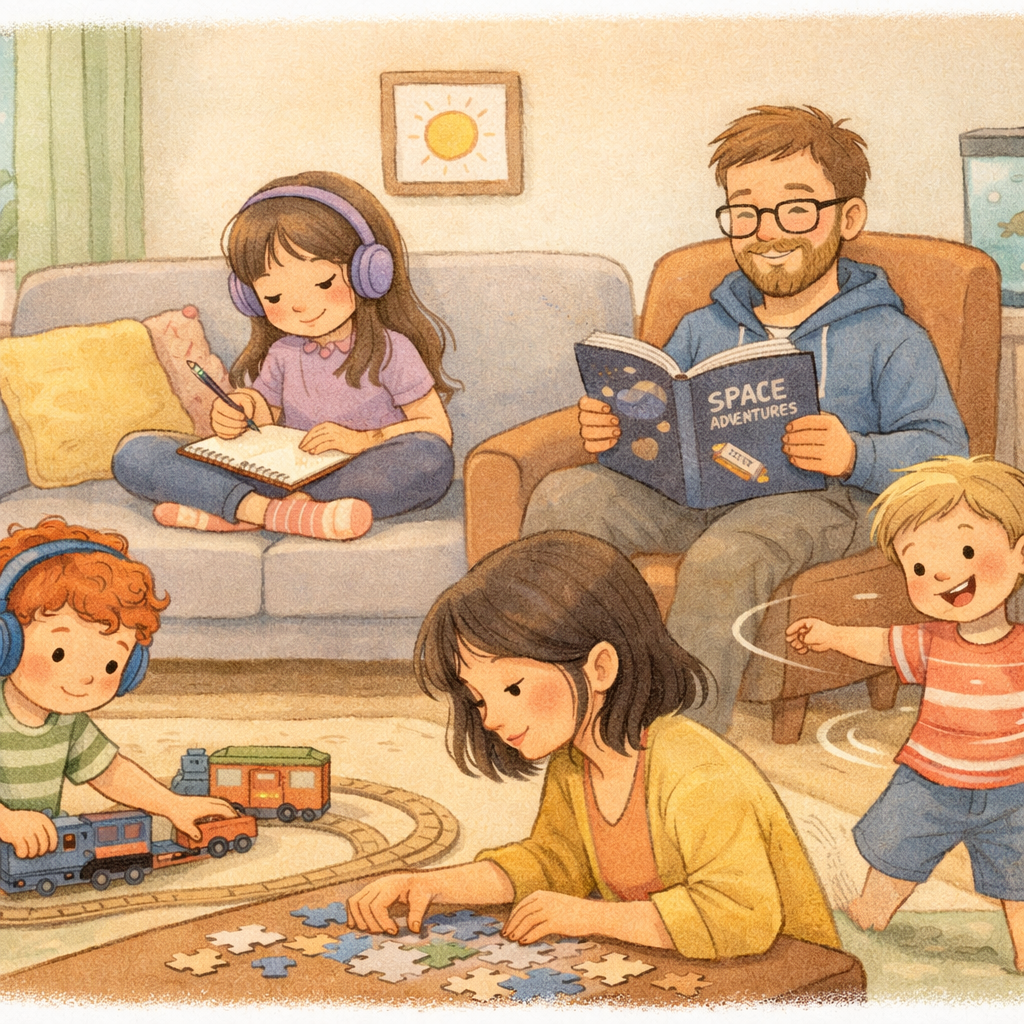
Creating a supportive home is essential for your child’s well-being and sense of belonging. Design spaces that respect their needs, especially sensory preferences, and honor how they experience the world. When your child feels safe and understood, they can be themselves. Predictability and routines help reduce anxiety and create calm.
Small changes can have a big impact. Fostering empathy within the family helps everyone respond to each other’s needs more effectively. The goal is an environment where your child can thrive. Let’s look at practical ways to offer support and create sensory-friendly spaces.
Strategies for Autism Family Support at Home
After an autism diagnosis, finding support at home can feel overwhelming, but you’re not alone. Start by learning about the autism spectrum and available treatments. Connecting with professionals like psychologists or therapists offers guidance and a safe space to process emotions.
Joining online or local support groups links you with other parents who understand your journey. Sharing experiences reduces isolation and offers practical advice. Use positive reinforcement—praise your child for new skills or appropriate behavior to build their confidence.
Ways to find support:
- Join local or online parent groups.
- Seek help from neurodiversity specialists.
- Use respite care for breaks.
- Work with your child’s school to coordinate strategies.
Creating Predictable Routines and Sensory-Friendly Spaces
Children with autism spectrum disorder often thrive on predictability. Highly structured schedules and consistent routines provide a sense of security and help reduce anxiety caused by unexpected changes. Setting regular times for meals, school, therapy, and bedtime creates a stable foundation for their day. Visual aids like charts or checklists can make these routines easier to follow and foster independence.
Many neurodivergent children also have sensory sensitivities, becoming overwhelmed by lights, sounds, or textures that others might not notice. Pay attention to your child's body language to understand their triggers. Creating a calm, sensory-friendly space where they can decompress is crucial. This isn't a punishment but a supportive tool for self-regulation. A quiet corner with soft pillows or a weighted blanket can be a safe retreat.
|
Sensory Input |
Strategy for a Sensory-Friendly Space |
|---|---|
|
Light |
Use lamps or dimmable lights instead of harsh overhead fluorescent lighting. |
|
Sound |
Provide noise-canceling headphones or create designated quiet zones in the home. |
|
Touch |
Offer comforting textures like soft blankets, beanbag chairs, or weighted lap pads. |
|
Smell |
Avoid strong perfumes or air fresheners; use calming essential oils if they are well-tolerated. |
Communication and Connection for Neurodiverse Households
Strong family bonds are built on clear communication and mutual understanding. In a neurodiverse household, this means adapting to different communication styles to foster inclusion and empathy among all family members. You communicate not just with words but also with your tone of voice, body language, and facial expressions. Your child is also communicating, even if they don't speak.
Learning your child’s unique language is key to connection. By creating a safe space where everyone feels heard and validated, you build trust and strengthen your relationships. Let's look at how to explain neurodiversity within the family and foster effective communication for everyone.
Explaining Neurodiversity Within the Family
Explaining neurodiversity to family is key to building understanding at home. Present it as natural differences in how brains work—not a problem to fix. Neurodiversity means these variations are a normal part of being human. A neurodivergent person simply thinks differently from what’s considered “typical.”
Use simple, age-appropriate language so siblings and relatives can develop empathy. For younger children, use visual aids or social stories—for example, compare different brains to different hair colors. This helps normalize neurodiversity and encourages acceptance.
Tips:
- Highlight strengths and unique qualities, not just challenges.
- Use analogies to show everyone’s brain works differently.
- Invite questions to create an open, supportive discussion.
Fostering Effective Communication Between All Members

Effective communication in a neurodiverse family requires flexibility and varied strategies. Pay attention to nonverbal cues—body language, gestures, and tone—to better understand your child’s feelings. Practice active listening by giving full attention and validating emotions so your child feels heard.
For children with limited speech, tools like AAC devices or visual supports can help. While speech therapy offers personalized guidance, you can improve communication at home by being direct and clear. Avoid sarcasm or indirect language, as it may confuse. Use positive reinforcement when they express themselves to encourage open communication.
Try these strategies:
- Use visual aids like picture cards or written schedules.
- Learn your child’s unique communication style.
- Be patient and allow extra time for responses.
- Model empathy and calm during disagreements.
Conclusion
In summary, understanding and embracing neurodiversity within the family can lead to a more harmonious and supportive environment. By recognizing both the challenges and strengths that come with raising neurodiverse children, families can cultivate unique strategies tailored to their needs. Establishing predictable routines and fostering effective communication are vital steps in creating a nurturing atmosphere where every member feels valued and understood. Remember, every effort made towards understanding neurodiversity brings us closer to a cohesive family bond.
If you’re looking for more personalized support, don’t hesitate to reach out and get a consultation or call daar at 02 9133 2500 today.
Frequently Asked Questions
How can I help my child with autism thrive in daily life?
To help your neurodivergent child with autism spectrum disorder thrive, focus on their individual needs. Provide structure with consistent routines, use positive reinforcement to celebrate small successes, and start early intervention as soon as possible. Most importantly, create a loving and accepting environment where they feel safe to be themselves.
What support services and resources are available for neurodiverse families in Australia?
In Australia, families can access support through the National Disability Insurance Scheme (NDIS) for therapies and resources. Organizations like Autism Awareness Australia and local support groups offer community and advice. Seeking professional support from psychologists and pediatricians is also crucial for improving inclusion and your family’s quality of life.
Are there real stories or examples of neurodiverse family experiences?
Yes, many parents of neurodivergent children share their stories online through blogs, social media, and support groups. These real-life accounts of family life offer validation, practical tips, and a sense of community. Hearing from other carers helps build empathy and shows you that you are not alone on this journey.
.svg)




.svg)